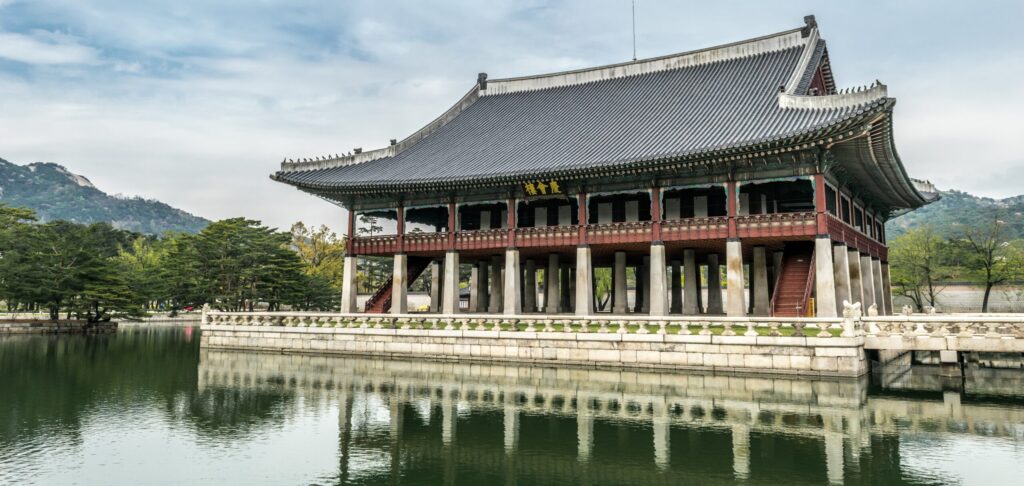
Where ancient dynasties meet hyper-modern technology and vibrant K-culture, inviting a transformative journey through dynamic cities, serene landscapes, and a rich tapestry of tradition and innovation.
🕰️ Historical Backdrop
South Korea’s history is a resilient saga of ancient kingdoms, profound artistic and intellectual achievements, and a dramatic rise to become a global leader in technology and culture. From the ancient Gojoseon dynasty and the powerful Three Kingdoms of Goguryeo, Baekje, and Silla, to the unified Goryeo and Joseon dynasties that shaped the nation’s cultural identity, Korea has been a beacon of innovation. Its story is told in the majestic palaces of Seoul, the serene beauty of its Buddhist temples, the invention of the Hangul alphabet, and the indomitable spirit of its people who have overcome immense adversity. Through centuries of cultural flourishing, conflict, and a post-war “Miracle on the Han River,” what endures is an unparalleled dedication to education, community, artistic expression, and a dynamic “ppalli-ppalli” (hurry, hurry) culture that drives its constant evolution. This is a land where every ancient temple, every neon-lit street, and every global K-Pop hit whispers tales of a civilization continually redefining its place in the world.
🌟 Local Experiences
Beyond the bustling cities, discover South Korea’s soul in the quiet contemplation of a traditional tea ceremony, the exhilarating energy of a K-Pop concert, or the communal warmth of a “jjimjilbang” (public bathhouse). Experience the vibrant chaos of a traditional market, savoring street food like “tteokbokki” and “hotteok,” witness the changing of the guard at a royal palace, or hike through a stunning national park in autumn. These are the textures, shared moments, and profound connections that reveal South Korea’s unique spirit, inviting you to connect with its enduring blend of deep tradition and forward-thinking dynamism.
🌄 Natural Wonders
- Jeju Island: A UNESCO World Heritage volcanic island, known for its lava tubes, stunning coastline, waterfalls, and Hallasan, South Korea’s highest peak.
- Seoraksan National Park: A UNESCO Biosphere Reserve famous for its dramatic rocky peaks, vibrant autumn foliage, and ancient temples.
- Boseong Green Tea Fields: Picturesque rolling hills covered in vibrant green tea plantations, offering beautiful landscapes and tea experiences.
- Suncheon Bay Wetland Reserve: A vast coastal marsh, renowned for its dense reed beds and as a vital habitat for migratory birds.
- Upo Wetland: The largest natural inland wetland in South Korea, a protected area with significant ecological importance.
🏙️ Must-See Cities
- Seoul: (Capital) A sprawling, 24/7 metropolis where ancient palaces and temples coexist with futuristic design, K-Pop culture, and a world-class culinary scene. (Dynamic, Historic, Modern)
- Busan: South Korea’s second-largest city, a vibrant port known for its beautiful beaches, fresh seafood markets, and colorful hillside villages. (Coastal, Vibrant, Scenic)
- Gyeongju: The ancient capital of the Silla Kingdom, often called a “museum without walls” for its vast number of historical sites, royal tombs, and temples. (Historic, Ancient, Cultural)
- Jeonju: The birthplace of “bibimbap” and a UNESCO City of Gastronomy, famous for its beautifully preserved “hanok” (traditional Korean house) village. (Culinary, Traditional, Charming)
- Incheon: A major port city and home to South Korea’s primary international airport, known for its modern developments, islands, and historic Chinatown. (Gateway, Modern, Coastal)
🏞️ National Parks & Nature Reserves
- Seoraksan National Park: Famous for its rugged peaks and stunning scenery, especially in autumn.
- Jirisan National Park: South Korea’s first and largest national park, a sacred mountain with vast forests and hiking trails.
- Bukhansan National Park: An urban oasis on the northern edge of Seoul, offering popular hiking routes with stunning city views.
- Hallyeohaesang National Marine Park: A coastal and marine park encompassing over 100 islands and beautiful seascapes.
🏛️ UNESCO World Heritage Sites
- Changdeokgung Palace Complex — An outstanding example of Far Eastern palace architecture and garden design.
- Gyeongju Historic Areas — Rich in temples, palaces, and royal tombs from the Silla Dynasty.
- Jongmyo Shrine — The oldest and most authentic of the Confucian royal shrines to have been preserved.
- Haeinsa Temple Janggyeong Panjeon, the Depositories for the Tripitaka Koreana Woodblocks — Home to the world’s most complete collection of Buddhist texts, engraved on 80,000 woodblocks.
- Jeju Volcanic Island and Lava Tubes — A unique system of lava tubes and a stunning natural landscape.
- For a complete list and more details, visit the official UNESCO World Heritage Centre for South Korea.
🖼️ Museums & Galleries
- National Museum of Korea (Seoul): The flagship museum of Korean history and art, from ancient times to the modern era.
- Leeum, Samsung Museum of Art (Seoul): Showcases a stunning collection of traditional Korean and contemporary international art in an architectural masterpiece.
- National Folk Museum of Korea (Seoul): Located on the grounds of Gyeongbokgung Palace, it explores the traditional life of the Korean people.
- Gyeongju National Museum: Houses a vast collection of artifacts from the Silla Kingdom.
🎉 Festivals & Celebrations
- Seollal (Lunar New Year): (January/February) One of Korea’s most important holidays, with family gatherings, ancestral rites, and traditional foods.
- Chuseok (Korean Thanksgiving): (September/October) A major harvest festival, celebrated with family visits, special foods like “songpyeon,” and ancestral rites.
- Boryeong Mud Festival: (July) A massive summer festival where locals and tourists play in nutrient-rich mud from the Boryeong mud flats.
- Jinju Namgang Yudeung (Lantern) Festival: (October) A beautiful festival featuring thousands of floating lanterns on the Namgang River.
🧽 How to Arrive
- ✈️ By Air
- Main International Airports: Incheon International Airport (ICN) (Seoul), Gimhae International Airport (PUS) (Busan), Jeju International Airport (CJU).
- Airlines offering regular connections (examples, check for current routes): Korean Air (national carrier), Asiana Airlines, Emirates, Qatar Airways (QA), Turkish Airlines, Cathay Pacific, Singapore Airlines, Delta Air Lines, United Airlines, Lufthansa.
- For comprehensive flight search, use: Skyscanner, Google Flights.
- 🚆 By Rail
- International Rail Connections: None.
- Key Domestic Lines: Korail operates an extensive and highly efficient rail network, including the KTX high-speed train connecting major cities.
- 🚗 By Road
- Border Crossings: The land border with North Korea is closed to civilians.
- Toll Info: Major expressways are toll roads, easily paid with cash or a Hi-pass card.
- Best Self-Drive Routes: South Korea has an excellent road network, making it easy to explore. Driving is on the right.
📶 Stay Connected
- SIM Cards & Telecom
- Top Providers: SK Telecom, KT, LG U+.
- Tourist SIMs and Data Package Options: Tourist-specific SIM cards and portable Wi-Fi eggs (pocket Wi-Fi) are widely available and offer excellent high-speed data coverage.
- Where to buy: Easily pre-booked online for airport pickup or purchased at arrival halls at Incheon International Airport.
- eSIM: Widely available from major providers and third-party travel sites.
🏨 Where to Stay
South Korea offers a diverse range of accommodations, from ultra-modern luxury hotels and global chains to traditional “hanok” guesthouses and unique themed motels.
- Notable Hotel Chains (local or international): The Shilla, Lotte Hotels & Resorts, Four Seasons, Marriott International, Hilton Worldwide, Accor Hotels, and many other international brands.
- Tips: Modern High-Rise vs. Traditional Charm:
- Seoul/Busan: Choose from luxury hotels in districts like Gangnam or Myeongdong, or trendy boutique hotels in areas like Hongdae.
- Gyeongju/Jeonju: Opt for an authentic stay in a traditional “hanok” guesthouse to experience classic Korean architecture.
- Unique Stays:
- Temple Stays: Participate in monastic life with an overnight stay at a Buddhist temple.
- Jjimjilbang (Bathhouse): For a budget-friendly and uniquely Korean experience, spend a night in a 24-hour spa.
- Hanok Guesthouses: Sleep on traditional ondol (heated) floors in a historic Korean house.
⛳ Unique Finds
- Cultural & Modern Experiences
- DMZ (Demilitarized Zone) Tour: A surreal and poignant visit to the heavily fortified border between North and South Korea.
- K-Pop Dance Class: Learn the moves to your favorite K-Pop hits in the heart of Seoul.
- Noraebang (Karaoke Room): A quintessential Korean social activity; private singing rooms for groups of friends.
- Jjimjilbang (Korean Spa) Experience: Relax, steam, and scrub in a traditional public bathhouse.
- Culinary Experiences
- Kimchi Making Class: Learn to make Korea’s most famous and essential side dish.
- Korean BBQ Feast: A must-do dining experience, grilling meat at your own table.
- Makgeolli (Rice Wine) Brewery Visit: Discover the art of making Korea’s traditional milky rice wine.
🤝 Cultural Guidance
- Greetings: A slight bow is a sign of respect. Handshakes are also common, especially among men.
- Respect for Elders: Confucian traditions mean that elders are highly respected. Use two hands when giving or receiving something from someone older than you.
- Dining Etiquette: Do not stick your chopsticks upright in your rice bowl. The oldest person at the table typically starts eating first.
- Tipping Norms: Tipping is not a customary practice in South Korea and is generally not expected in restaurants, taxis, or hotels.
- “Nunchi”: This is the subtle art of “reading the room” and understanding social cues, which is highly valued in Korean culture.
- Basic Phrases (Korean):
- Hello: “Annyeonghaseyo” (안녕하세요)
- Thank you: “Gamsahamnida” (감사합니다)
- Please: “Juseyo” (주세요) – used when asking for something
- Excuse me/Sorry: “Sillyehamnida” (실례합니다) / “Joesonghamnida” (죄송합니다)
- Yes / No: “Ne” (네) / “Aniyo” (아니요)
🛂 Entry & Visa Requirements
South Korea has a largely visa-free policy for tourists.
- K-ETA (Korea Electronic Travel Authorization): Citizens from many visa-waiver countries, including the US, UK, Canada, Australia, New Zealand, and most EU nations, are required to obtain a K-ETA online before traveling.
- Visa required for: Citizens from countries not eligible for the K-ETA or for those planning to stay long-term, work, or study.
- Official Source: For the most current and specific entry information, always consult the official Korea Electronic Travel Authorization (K-ETA) website and the Korea Visa Portal.
💰 Practical Essentials
- Currency: South Korean Won (KRW).
- Electricity: Type C and F (two round pins) sockets. Voltage is 220V at 60Hz.
- Taxes: A 10% Value Added Tax (VAT) is included in the price of most goods and services. Tourists can often get a VAT refund for purchases at participating stores.
- Safety: South Korea is an extremely safe country with very low crime rates. For specific advisories, check your government’s travel warnings, e.g., US Department of State Travel Advisories for South Korea.
- Climate: Temperate climate with four distinct seasons: hot, humid summers; cold, snowy winters; and pleasant springs and autumns.
✨ Bonus Tip
To truly embrace South Korea, dive into its cafe culture. From quirky themed cafes (animals, cartoons) to minimalist roasteries and traditional teahouses, cafes are central to modern Korean social life. It’s in these spaces, over a meticulously crafted coffee or a delicate traditional tea, that you can best observe the blend of trendsetting style and deep-rooted traditions that defines the country, and find your own evolving rhythm within it.
🔗 Featured Links
- Official Resources:
- National Tourism Board: VisitKorea (Korea Tourism Organization)
- Safety & Travel Advisories: Your Country’s Government Travel Advisory for South Korea
- Digital Nomad Info: South Korea has recently launched a Digital Nomad (Workcation) Visa. Consult official Korean immigration sites for details.