GoBeyondia Atlas 🗺️ Mediterranean Region 🗾
Tunisia: A crossroads of civilizations shaped by sun, sand, and sea.
Tunisia in 30 seconds
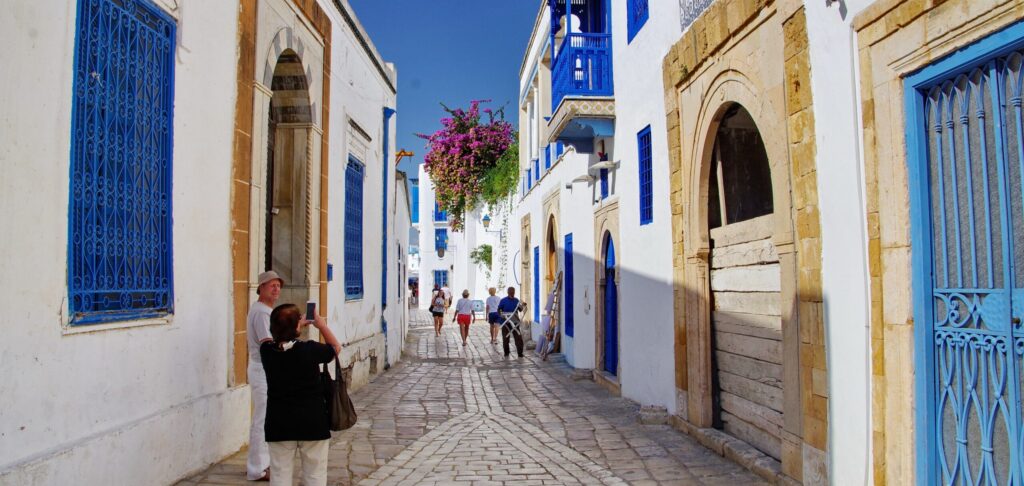
Tunisia moves quietly — but it carries depth. Roman amphitheaters rise from open plains, white-and-blue villages overlook the Mediterranean, and the Sahara begins where the road seems to end. Layers of Phoenician, Roman, Arab, and French influence blend into a culture that feels both grounded and fluid.You can wander ancient ruins in the morning, swim in turquoise water by afternoon, and watch the desert sky turn gold by evening. Tunisia isn’t loud about its history. It simply lives inside it — and invites you to move through it slowly.
Evoke – Why You Visit Tunisia
You come to Tunisia because you’ve been consuming history as entertainment — documentaries, podcasts, museum gift shops. You know facts but you don’t feel time. You need to stand where Carthage challenged Rome, where Berber and Arab and French and Ottoman layers compressed into a single street, and feel the weight of civilizations that built, fell, and built again on the exact same ground.
Explore – How You Experience Tunisia
Walk through the ruins of Carthage and touch stone that Hannibal’s army touched before marching elephants across the Alps. Lose yourself in the Tunis medina where every doorway leads to a courtyard that leads to a century you didn’t expect. Drive south to the Sahara and spend a night in a desert camp where the silence is so complete it becomes a sound. Visit the troglodyte homes of Matmata carved into the earth — not as a Star Wars set piece but as proof that humans will find shelter anywhere and make it beautiful. Eat brik at a street stall and let the egg burst and the tuna spill and understand that Tunisian food is not delicate, it’s alive.
Evolve – Who You Become in Tunisia
You leave Tunisia with a longer sense of time. Your problems feel younger, your anxieties more temporary. Standing where civilizations rose and fell and rose again teaches you that impermanence isn’t tragic — it’s the engine. You stop clinging to what’s crumbling and start building what’s next.
Your practical guide to Tunisia starts bellow 👇
🕰️ Tunisia Historical Backdrop
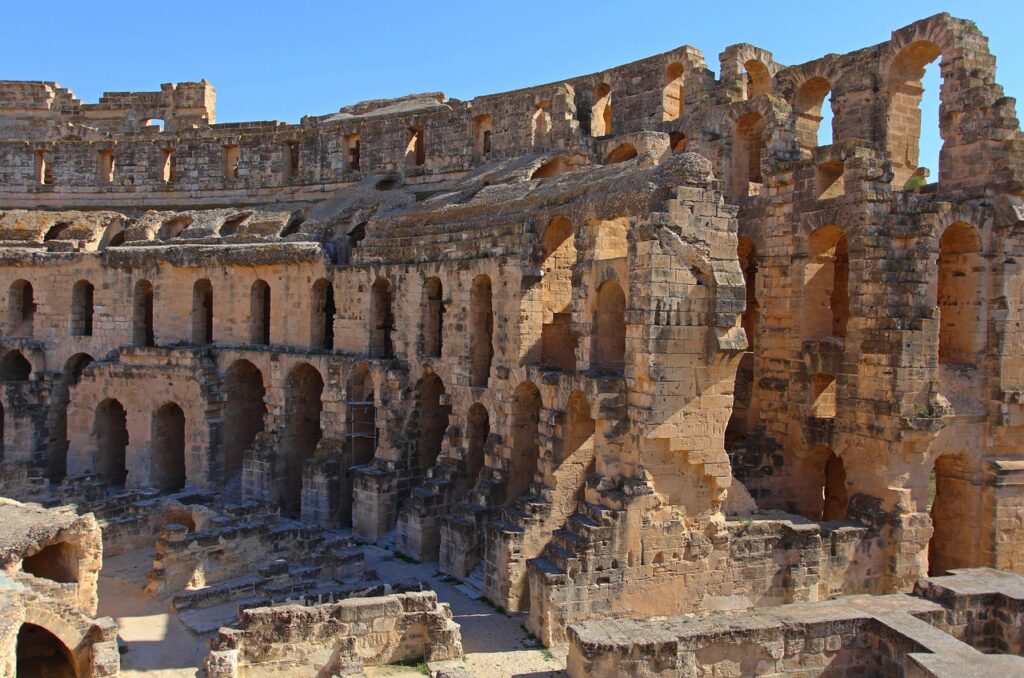
Tunisia’s history is a profoundly rich tapestry, woven from the legacy of mighty Carthage, the enduring influence of the Roman Empire, and centuries of Arab-Islamic civilization. From the bustling ancient port of Carthage, rival of Rome, to the magnificent amphitheater of El Jem that rivals the Colosseum, Tunisia has stood as a strategic crossroads of empires and cultures. Its story is told in the intricate mosaics of its museums, the labyrinthine alleys of its medinas, the stark beauty of its Saharan oases, and the vibrant resilience of its people. Through epochs of trade, conquest, and profound cultural fusion, what endures is an unparalleled dedication to heritage, hospitality, and a unique blend of North African, Arab, and Mediterranean traditions. This is a land where every ancient ruin, every fragrant spice stall, and every golden desert dune whispers tales of a civilization continually evolving while honoring its deep historical roots.
🌟 Tunisia Local Experiences
Beyond Tunisia’s iconic archaeological sites, discover its soul in the aromatic bustle of a traditional medina, the therapeutic warmth of a local hammam ritual, or the exhilarating silence of a desert safari under a canopy of stars. Experience the timeless tradition of a camel trek through the Saharan dunes, or savor the rich flavors of a traditional Tunisian couscous in a family-run restaurant. These are the textures, shared moments, and profound connections that reveal Tunisia’s unique spirit, inviting you to connect with its enduring mystique and vibrant authenticity.
🌄 Tunisia Natural Wonders
- Sahara Desert (Tunisian portion): Vast dunes, oases (e.g., Tozeur, Douz), and unique desert landscapes, including Star Wars film sets.
- Chott el Djerid: A massive, shimmering salt lake, creating stunning mirages and unique reflective surfaces.
- Cap Bon Peninsula: Offers beautiful beaches, citrus groves, and archaeological sites.
- Ichkeul National Park: A UNESCO World Heritage site, a vital wetland for migratory birds.
- Mount Zaghouan: Part of the Atlas Mountains, offering hiking and historical Roman aqueduct remains.
🏙️ Tunisia Must-See Cities
- Tunis: (Capital) A vibrant city with a UNESCO-listed medina, bustling souks, and close proximity to Carthage and Sidi Bou Said. (Historic, Cultural, Dynamic)
- Carthage: Ancient Phoenician and Roman ruins, a powerful historical site overlooking the Mediterranean. (Ancient, Historic, Coastal)
- Sidi Bou Said: A picturesque cliffside village famous for its iconic blue and white houses and artistic ambiance. (Picturesque, Artistic, Charming)
- Sousse: A lively coastal city with a well-preserved medina, ancient Ribat, and beautiful beaches. (Coastal, Historic, Resort)
- Kairouan: A UNESCO World Heritage city, one of Islam’s holiest cities, renowned for its Great Mosque and traditional crafts. (Spiritual, Traditional, Ancient)
- Djerba Island: A serene island retreat with sandy beaches, unique architecture (houches), and a rich Jewish heritage. (Island, Relaxed, Unique)
🏞️ Tunisia National Parks & Nature Reserves
- Ichkeul National Park: A UNESCO World Heritage site, a crucial wetland for wintering migratory birds.
- Boukornine National Park: Near Tunis, offering hiking trails, diverse flora, and panoramic views of the coast.
- El Feija National Park: Known for its dense cork oak forests and Barbary deer.
🏛️ UNESCO World Heritage Sites
- Archaeological Site of Carthage — Ruins of the powerful Phoenician city.
- Medina of Tunis — A well-preserved Islamic city.
- Amphitheatre of El Jem — A magnificent Roman amphitheater, one of the largest in the world.
- Dougga / Thugga — Well-preserved Roman city ruins in a rural setting.
- Kairouan — One of the holiest cities in Islam, with historic mosques and monuments.
- Punic Town of Kerkuane and its Necropolis — Unique example of a Phoenician-Punic town that was not rebuilt by the Romans.
- For a complete list and more details, visit the official UNESCO World Heritage Centre for Tunisia.
🖼️ Tunisia Museums & Galleries
- Bardo National Museum (Tunis): Houses one of the world’s finest and largest collections of Roman mosaics.
- Dar Essid Museum (Sousse): A charming traditional Sousse house offering insight into local life and customs.
- Carthage National Museum: Located on Byrsa Hill, showcasing artifacts from Phoenician, Punic, and Roman Carthage.
- Museum of Popular Arts and Traditions (Sidi Bou Said): Exhibits traditional Tunisian costumes, crafts, and domestic items.
🎉 Tunisia Festivals & Celebrations
- International Festival of Carthage: (July/August) Held in the ancient Roman amphitheater of Carthage, featuring international music, dance, and theatre.
- International Festival of Hammamet: (July/August) Another prominent arts festival hosted in the beautiful Hammamet amphitheater.
- Sahara Festival of Douz: (December) A celebration of desert culture, featuring camel racing, traditional music, and Bedouin ceremonies.
- Jazz à Carthage: (April) A popular international jazz festival.
🧽 How to Arrive
- ✈️ By Air
- Main International Airports: Tunis-Carthage International Airport (TUN) (Tunis), Enfidha-Hammamet International Airport (NBE), Djerba–Zarzis International Airport (DJE).
- Airlines offering regular connections (examples, check for current routes): Tunisair (national carrier), Air France, Lufthansa, Turkish Airlines, Emirates, Qatar Airways (QA), KLM, British Airways (BA), Royal Air Maroc, Transavia.
- For comprehensive flight search, use: Skyscanner, Google Flights.
- 🚆 By Rail
- International Rail Connections: No direct international passenger rail connections.
- Key Domestic Lines: The SNCFT (Société Nationale des Chemins de Fer Tunisiens) operates a national rail network connecting major cities like Tunis, Sousse, Sfax, and Gabès.
- 🚗 By Road
- Border Crossings: Tunisia shares land borders with Algeria (to the west) and Libya (to the southeast). Crossings with Algeria are commonly used by tourists.
- Toll Info: Major motorways have tolls.
- Best Self-Drive Routes: Exploring the coastlines, the Cap Bon Peninsula, or designated routes into the Sahara Desert (often with local guides). Driving is on the right.
📶 Stay Connected
- SIM Cards & Telecom
- Top Providers: Tunisie Telecom, Ooredoo Tunisia, Orange Tunisia.
- Tourist SIMs and Data Package Options: Prepaid SIM cards with various data and calling options are widely available for tourists upon arrival.
- Where to buy: Easily purchased at airports (upon arrival), official operator stores in cities, and some convenience stores. Bring your passport for registration.
- eSIM: Some major providers may offer eSIM activation. Check their official websites or inquire in-store for tourist eSIM plans.
🏨 Where to Stay
Tunisia offers a range of accommodations, from large beach resorts on its Mediterranean coast to charming traditional guesthouses (dars or riad-style) in its medinas, and unique desert camps.
- Notable Hotel Chains (local or international): El Mouradi Hotels, Marriott International, Hilton Worldwide, Accor Hotels, and numerous other international brands.
- Tips: Coastal Resorts vs. Medina Charm:
- Coastal Resorts: Ideal for beach holidays, with options in Hammamet, Sousse, and Djerba.
- Medina Guesthouses (Dars): Experience authentic local architecture and hospitality in Tunis, Sousse, or Kairouan.
- Unique Stays:
- Cave Dwellings (Matmata): Stay in traditional troglodyte homes.
- Desert Camps (Sahara): Experience overnight stays under the stars in the Sahara.
- Heritage Hotels in Roman Ruins: Very rare, but some small lodges near archaeological sites might offer unique charm.
⛳ Unique Finds
- Adventure & Desert Experiences
- Sahara Desert Safari (Douz/Tozeur): Explore the dunes by 4×4 or camel.
- Star Wars Film Set Tour (Ong Jmel/Matmata): Visit iconic filming locations from the Star Wars saga.
- Hot Air Balloon Ride (Hammamet/Tozeur): Enjoy panoramic views over coastlines or desert landscapes.
- Cultural & Culinary Experiences
- Mosaic Workshop (Tunis/Bardo): Learn about Tunisia’s rich mosaic heritage and create your own piece.
- Traditional Hammam Experience: Indulge in a local public bathhouse for a cleansing and relaxing ritual.
- Cooking Class (Couscous/Brik): Learn to prepare authentic Tunisian dishes.
- Pottery Visit (Nabeul/Djerba): Explore centers famous for their traditional ceramics.
🤝 Tunisia Cultural Guidance
- Respect Islamic Customs: Tunisia is a Muslim country. Dress modestly, especially when visiting religious sites. Avoid public displays of affection. Be mindful during the holy month of Ramadan.
- Greetings: A handshake is common. “Salam Alaikum” is a respectful greeting.
- Bartering in Souks: Haggling is expected and part of the shopping experience in the souks. Be polite and enjoy the process.
- Photography: Always ask permission before taking photos of people, especially women.
- Hospitality: Tunisians are generally very hospitable. Accepting offers of tea is a sign of respect.
- Tipping Norms: Tipping is customary. A service charge may be added to bills in hotels and restaurants; if not, 10% is appreciated. For guides and drivers, tips are expected.
- Basic Phrases (Arabic / French):
- Hello: “Aslema” (Tunisian Arabic), “Bonjour” (French)
- Thank you: “Chokran” (Arabic), “Merci” (French)
- Please: “Min fadlek” (Arabic), “S’il vous plaît” (French)
- Excuse me/Sorry: “Samahni” (Arabic), “Pardon” (French)
- Do you speak English?: “Tatkalem Anglizya?” (Arabic), “Parlez-vous anglais?” (French)
🛂 Tunisia Entry & Visa Requirements
Tunisia generally has a welcoming visa policy for tourists.
- Visa-Free/Visa on Arrival: Citizens of many countries, including the US, Canada, UK, most EU countries, Australia, and New Zealand, can enter Tunisia visa-free for short stays (typically up to 90 days) for tourism purposes.
- Visa required for: Citizens from countries not on the visa-waiver list.
- Official Source: For the most current and specific visa information based on your nationality, always consult the official website of the Ministry of Foreign Affairs, Tunisia or your country’s nearest Tunisian Embassy/Consulate.
💰 Practical Essentials
- Currency: Tunisian Dinar (TND). This is a closed currency, meaning it can only be bought and sold within Tunisia. ATMs are widely available.
- Electricity: Type C (two round pins) and Type E (two round pins with a hole for the socket’s earthing pin) sockets. Voltage is 230V at 50Hz.
- Taxes: A tourism tax may be included in hotel bills.
- Safety: Tunisia is generally safe for tourists, particularly in major tourist areas. Be mindful of petty crime (pickpocketing) in crowded souks. Avoid border regions with Libya and Algeria, which may be sensitive. For specific advisories, check your government’s travel warnings, e.g., US Department of State Travel Advisories for Tunisia.
- Climate: Mediterranean climate along the coast (hot, dry summers; mild, wet winters). Interior and southern regions are arid and part of the Sahara Desert.
✨ Bonus Tip
To truly embrace Tunisia, allow its ancient layers to speak to you. Wander through the Roman ruins and feel the echoes of empires, then immerse yourself in the vibrant, living medinas. Finally, gaze at the vastness of the Sahara and find profound stillness. It’s in this journey through millennia of human endeavor and natural grandeur that Tunisia’s transformative power and your own evolving perspectives truly reveal themselves.
🔗 Featured Links
- Official Resources:
- National Tourism Board: Tunisian National Tourist Office (ONTT)
- Safety & Travel Advisories: Your Country’s Government Travel Advisory for Tunisia
- Digital Nomad Info: Tunisia does not currently have a specific Digital Nomad Visa, but longer-term visas for professionals or investors may apply. Consult Tunisian immigration authorities for official details.

Beyondia
Trusted Travel CompanionReal digital nomad. I travel. I learn. I grow.
What about you? Where are you going?