GoBeyondia Atlas 🗺️ Nordic-Western Europe 🗾
Netherlands: Flat landscapes, sharp thinking, and cultural depth.
Netherlands in 30 seconds
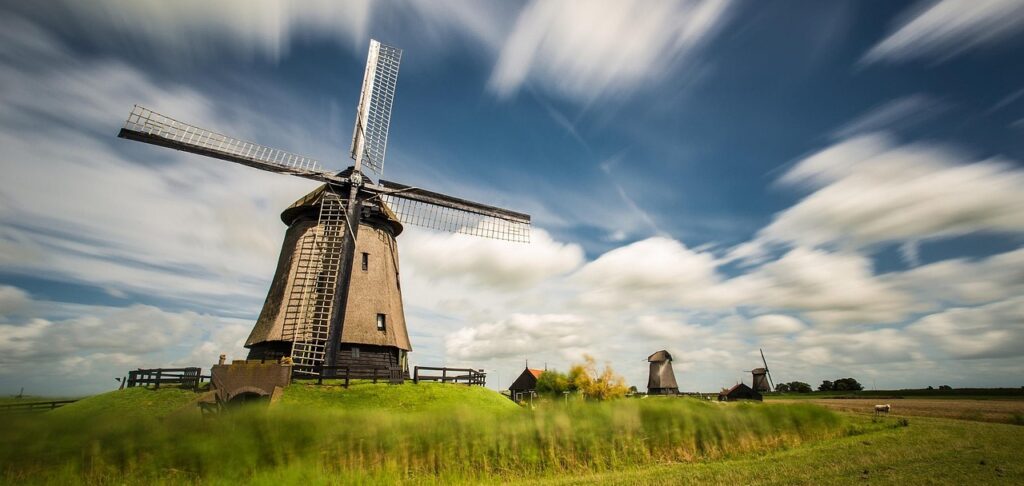
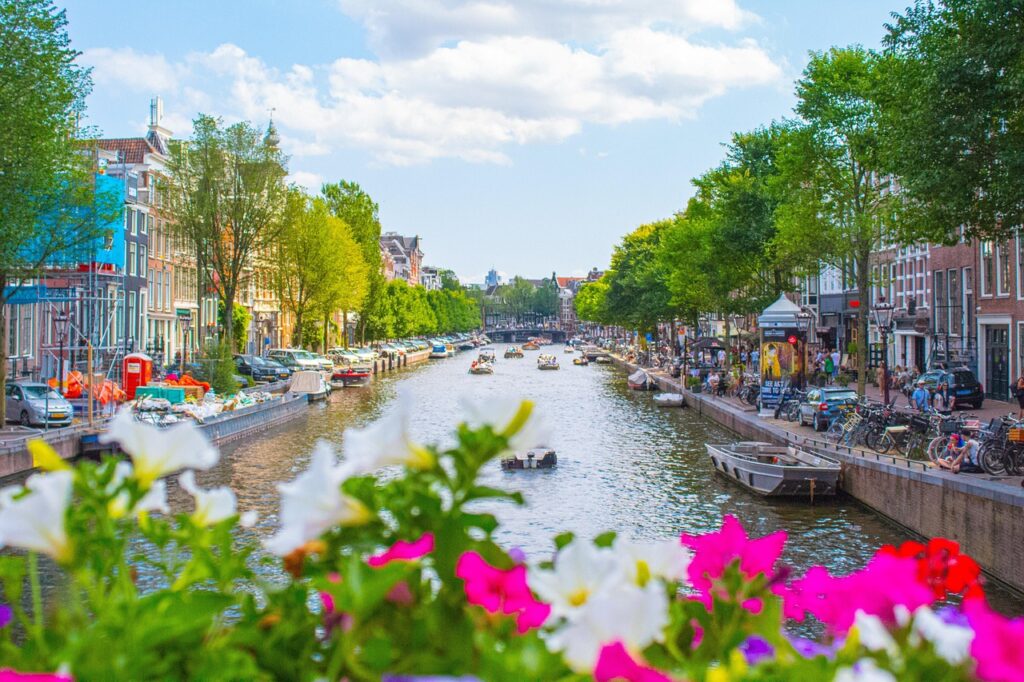
The Netherlands appears simple — but it is deliberate. Canals frame cities like Amsterdam, wind shapes open fields, and infrastructure reflects long-term thinking. Water management is not a feature here — it is survival turned into innovation. Art, trade, and pragmatism shaped this society. Bicycles move as efficiently as ideas. The Netherlands is not dramatic. It is functional intelligence expressed through culture.
Evoke – Why You Visit Netherlands
You come to the Netherlands because you’ve been circling your own life without committing to it. Moving through your days at a manageable distance from everything — the work, the relationships, the choices you keep deferring until conditions improve. You need a country where the physical act of cycling forces you into presence — no passenger seat, no autopilot, just your own momentum through a flat landscape that hides its depth in other ways. You need to see what humans build when their survival depends on cooperation — when the water doesn’t care about your individual ambition and the dike only holds if everyone maintains it. The Dutch didn’t romanticize their struggle with the sea. They engineered a solution and then painted the most luminous interiors in art history, because surviving isn’t enough — you also have to live beautifully inside whatever you build. You’re here because you forgot that second part.
Explore – How You Experience Netherlands
Rent a bike in Amsterdam before 8am and move through streets that belong entirely to you — along the Prinsengracht as the houseboats wake up, past the flower market before the tourists arrive, through the Jordaan where every courtyard hides a garden the city forgot to make public. Stand in the Rijksmuseum in front of Vermeer’s The Milkmaid and understand that he painted the light coming through that window so precisely that art historians have identified the exact room, the exact window, the exact time of morning — that’s not painting, that’s obsession with truth. Take the train to Haarlem and walk to the Frans Hals Museum where portraiture becomes a conversation about money, status, and the uncomfortable distance between what people are and what they want you to see. Cycle through the Keukenhof in April when thirty million bulbs have collectively decided that subtlety is overrated. Take the ferry across the IJ for free and watch Amsterdam recede into its own reflection. Eat raw herring with onion from a street cart the way the locals do — head tilted back, no apology — then sit with a jenever in a brown café where the walls have absorbed three hundred years of conversation. Drive to the Delta Works in Zeeland and stand on an engineering project so large it changed the tidal patterns of an entire coastline and understand that the Netherlands’ greatest export was always the belief that problems have solutions if you’re willing to think at sufficient scale.
Evolve – Who You Become in Netherlands
You leave the Netherlands more direct — not unkind, but done with the elaborate scaffolding you built around simple truths. The Dutch have a word, bespreekbaar, meaning something is “discussable” — open to honest conversation regardless of discomfort. You bring that back. You stop performing uncertainty when you actually have an opinion. You develop a new relationship with flatness — not as absence of drama but as clarity of horizon, the ability to see what’s coming from a long way off and decide how to meet it. You understand that Vermeer’s genius wasn’t invention, it was attention — the same light falls everywhere, most people walk past it. You start noticing windows. You carry something of the Dutch pragmatism that never became cynicism — the belief that water can be moved, land can be made, and the terms of your own existence are more negotiable than you assumed. You come home and cancel two things you were doing out of habit rather than intention. That’s a start.
Your practical guide to Netherlands starts bellow 👇
🕰️ Netherlands Historical Backdrop
The Netherlands’ history is a testament to a relentless struggle against the sea and a remarkable rise as a global maritime and economic power during its 17th-century Golden Age. From its early history of tribes living on low-lying lands to the ingenious development of dikes, polders, and windmills, the Dutch have literally shaped their own nation. This era of prosperity fostered an explosion of art, with masters like Rembrandt and Vermeer, and a spirit of tolerance and trade that defined its character. Its story is told in the elegant canal houses of Amsterdam, the masterpieces of the Rijksmuseum, the historic windmills of Kinderdijk, and the pragmatic, innovative spirit of its people. Through centuries of trade, artistic genius, and a commitment to social progress, what endures is an unparalleled dedication to design, efficiency, and a cherished quality of life known as gezelligheid.
🌟 Netherlands Local Experiences
Beyond the famous canals, discover the Netherlands’ soul in the simple pleasure of cycling along a dedicated path through the countryside, the cozy atmosphere (gezelligheid) of a traditional “brown cafe” (bruin café), or the delightful experience of eating a fresh stroopwafel from a street market. Experience the vibrant energy of King’s Day, when the entire nation dresses in orange, explore a traditional cheese market in Alkmaar or Gouda, or simply relax on a canal boat tour, seeing the cities from a different perspective. These are the textures, shared moments, and profound connections that reveal the Netherlands’ unique spirit, inviting you to connect with its enduring blend of charm, innovation, and conviviality.
🌄 Netherlands Natural Wonders
- Keukenhof Gardens: (Seasonal) One of the world’s largest and most famous flower gardens, showcasing millions of tulips, daffodils, and other spring bulbs.
- The Wadden Sea: A UNESCO World Heritage site, a unique and dynamic coastal wetland and intertidal zone, perfect for mudflat hiking (wadlopen).
- Hoge Veluwe National Park: A vast nature reserve known for its diverse landscapes of heathlands, sand dunes, and woodlands, as well as the Kröller-Müller Museum.
- The Biesbosch National Park: One of the last extensive freshwater tidal wetlands in Northwestern Europe, a haven for birdwatching and exploring by boat.
- The Dutch Polder Landscape: The iconic flat, reclaimed land crisscrossed with canals and dotted with windmills, showcasing centuries of water management.
🏙️ Netherlands Must-See Cities
- Amsterdam: (Capital) Famous for its historic canals, world-class art museums (Rijksmuseum, Van Gogh Museum), Anne Frank House, and vibrant nightlife. (Historic, Artistic, Lively)
- Rotterdam: A dynamic, modern city known for its bold, innovative architecture, bustling port, and vibrant cultural scene. (Modern, Architectural, Dynamic)
- The Hague (Den Haag): The seat of the Dutch government and home to international courts, offering a sophisticated blend of stately architecture, museums, and a seaside resort. (Governmental, Elegant, Coastal)
- Utrecht: A charming and historic university city with a unique two-level canal system, a lively atmosphere, and fewer crowds than Amsterdam. (Charming, Historic, Student City)
- Maastricht: One of the oldest cities in the Netherlands, known for its historic fortified center, cobblestone streets, and distinct Burgundian atmosphere. (Historic, European, Culinary)
🏞️ Netherlands National Parks & Nature Reserves
- Hoge Veluwe National Park: Combines nature with art, featuring free-to-use white bicycles for exploration.
- Veluwezoom National Park: The oldest national park in the Netherlands, known for its rolling hills and stunning purple heather in late summer.
- Oosterschelde National Park: The largest national park, a vast saltwater tidal habitat perfect for seal spotting and water sports.
- De Weerribben-Wieden National Park: A beautiful wetland area best explored by electric boat, canoe, or bicycle, famous for the village of Giethoorn.
🏛️ UNESCO World Heritage Sites
- Seventeenth-Century Canal Ring Area of Amsterdam inside the Singelgracht — A masterpiece of hydraulic engineering and urban planning.
- Mill Network at Kinderdijk-Elshout — An iconic landscape containing 19 historic windmills.
- Wadden Sea — A globally important intertidal ecosystem shared with Germany and Denmark.
- Rietveld Schröder House — An icon of the modern De Stijl architectural movement.
- Defence Line of Amsterdam — A historic 135-km ring of fortifications around Amsterdam.
- For a complete list and more details, visit the official UNESCO World Heritage Centre for the Netherlands.
🖼️ Netherlands Museums & Galleries
- Rijksmuseum (Amsterdam): The national museum of the Netherlands, showcasing 800 years of Dutch art and history, including Rembrandt’s “The Night Watch.”
- Van Gogh Museum (Amsterdam): Houses the world’s largest collection of artworks by Vincent van Gogh.
- Anne Frank House (Amsterdam): The poignant museum in the house where Anne Frank and her family hid during WWII.
- Mauritshuis (The Hague): A jewel box of a museum, home to masterpieces like Vermeer’s “Girl with a Pearl Earring.”
- Kröller-Müller Museum (Otterlo): Located in Hoge Veluwe National Park, it features the world’s second-largest Van Gogh collection and a vast sculpture garden.
🎉 Netherlands Festivals & Celebrations
- King’s Day (Koningsdag): (April 27) A nationwide street party celebrating the King’s birthday, with flea markets, music, and everyone dressed in orange.
- Amsterdam Light Festival: (December-January) A winter festival where international artists illuminate the city’s canals with light sculptures.
- Sinterklaas: (Early December) The Dutch celebration of Saint Nicholas, a beloved children’s holiday with parades and traditional treats.
- Rotterdam Summer Carnival (Zomercarnaval): (July) A vibrant Caribbean-style carnival with a street parade and music.
🧽 Netherlands How to Arrive
- ✈️ By Air
- Main International Airports: Amsterdam Airport Schiphol (AMS) – a major European hub. Eindhoven Airport (EIN) and Rotterdam The Hague Airport (RTM) are also key airports.
- Airlines offering regular connections (examples, check for current routes): KLM Royal Dutch Airlines (national carrier), Transavia, Emirates, Qatar Airways (QA), Turkish Airlines, British Airways (BA), Delta Air Lines, United Airlines, Lufthansa.
- For comprehensive flight search, use: Skyscanner, Google Flights.
- 🚆 By Rail
- International Rail Connections: The Netherlands is extremely well-connected by high-speed rail. NS International operates services connecting to Belgium (Eurostar), France (Eurostar), Germany (ICE), and the UK (Eurostar).
- Key Domestic Lines: Nederlandse Spoorwegen (NS) runs a dense, punctual, and efficient domestic rail network.
- 🚗 By Road
- Border Crossings: As part of the Schengen Area, there are no border controls with Germany and Belgium.
- Toll Info: There are no general toll roads for cars, but a few tunnels have tolls.
- Best Self-Drive Routes: The country’s compact size and excellent roads make it easy to drive. Scenic routes include the Delta Works route and drives through the tulip fields. Driving is on the right.
📶 Stay Connected
- SIM Cards & Telecom
- Top Providers: KPN, VodafoneZiggo, Odido (formerly T-Mobile).
- Tourist SIMs and Data Package Options: Prepaid SIM cards are widely available.
- Where to buy: Official operator stores, electronics stores (like MediaMarkt), and supermarkets (like Albert Heijn). Bring your passport for registration.
- eSIM: Available from major providers.
🏨 Where to Stay
The Netherlands offers a wide variety of accommodations, from luxurious canal-side hotels and modern design properties to cozy guesthouses, houseboats, and rural farm stays.
- Notable Hotel Chains (local or international): Marriott International, Hilton Worldwide, Accor Hotels, Hyatt Hotels, and Dutch brands like citizenM and Van der Valk.
- Tips: Canal House vs. Countryside:
- Cities: Stay in a historic canal house hotel for a classic Dutch experience or a sleek modern hotel for design-focused comfort.
- Rural Areas: Opt for a charming Bed & Breakfast (logies met ontbijt) or a farm stay (boerderijkamer) to experience the countryside.
- Unique Stays:
- Houseboats (Amsterdam): Stay directly on a canal for a unique and memorable experience.
- Windmill Stays: A few historic windmills have been converted into unique accommodations.
- Cube Houses (Rotterdam): Stay in one of the city’s iconic architectural experiments.
⛳ Unique Finds
- Cultural & Engineering Experiences
- Visit a Cheese Market (Alkmaar/Gouda): Witness the traditional cheese trading spectacle (seasonal).
- Explore Zaanse Schans: An open-air museum with historic windmills, wooden houses, and traditional craft demonstrations.
- See the Delta Works: A massive and impressive series of storm surge barriers and dams, a modern wonder of the world in water management.
- Everyday Dutch Life
- Rent a bike: The absolute best way to explore any Dutch city or the countryside like a local.
- Visit a “Brown Cafe” (Bruin Café): A traditional, cozy Dutch pub, perfect for a local beer or jenever (Dutch gin).
- Try Raw Herring (Hollandse Nieuwe): A Dutch delicacy, typically served with onions and pickles from a street-side cart.
🤝 Netherlands Cultural Guidance
- Directness: The Dutch are known for their direct and honest communication style. It is not intended to be rude.
- Punctuality: Being on time is very important.
- Cycling Etiquette: Respect the bike lanes! They are like roads for cyclists; do not walk in them.
- Tipping Norms: Service is included in the bill. Tipping is not obligatory, but rounding up the bill or leaving 5-10% for excellent service is appreciated.
- Gezelligheid: A key Dutch concept that doesn’t translate directly but encompasses a feeling of coziness, conviviality, and a warm atmosphere.
- Basic Phrases (Dutch):
- Hello: “Hallo”
- Thank you: “Dank u wel” (formal) / “Dank je wel” (informal)
- Please: “Alstublieft” (formal) / “Alsjeblieft” (informal)
- Excuse me/Sorry: “Pardon” / “Sorry”
- Do you speak English?: “Spreekt u Engels?” (English is almost universally spoken).
🛂 Netherlands Entry & Visa Requirements
The Netherlands is a member of the Schengen Area.
- Visa-Free: Citizens of many countries, including the US, UK, Canada, Australia, New Zealand, and Japan, can enter the Schengen Area for up to 90 days for tourism or business without a visa.
- Schengen Visa required for: Citizens from countries not on the visa-waiver list must apply for a Schengen visa in advance.
- Official Source: For the most current and specific visa information, always consult the official website of the Government of the Netherlands.
💰 Practical Essentials
- Currency: Euro (€, EUR).
- Electricity: Type F (Schuko) sockets with two round pins. Voltage is 230V at 50Hz.
- Taxes: A Value Added Tax (VAT, or BTW) is included in the price of most goods and services. Non-EU visitors can often claim a VAT refund.
- Safety: The Netherlands is a very safe country with low crime rates. Be mindful of bicycle theft and pickpocketing in major tourist areas in Amsterdam. For specific advisories, check your government’s travel warnings, e.g., US Department of State Travel Advisories for the Netherlands.
- Water: Tap water is of excellent quality and perfectly safe to drink.
✨ Bonus Tip
To truly embrace the Netherlands, get on a bike. It’s more than just transportation; it’s a way of life and the key to understanding the Dutch perspective. Cycle through a bustling city, along a quiet canal, or through a field of tulips. You’ll discover a sense of freedom and a connection to the flat, open landscape that is at the very heart of the country’s identity. It’s in this simple, active engagement that the pragmatic and joyful spirit of the Netherlands and your own evolving sense of place truly reveal themselves.
🔗 Featured Links
- Official Resources:
- National Tourism Board: Holland.com
- Safety & Travel Advisories: Your Country’s Government Travel Advisory for the Netherlands
- Digital Nomad Info: The Netherlands offers a visa for self-employed persons which can function as a digital nomad visa. Consult the Dutch Immigration and Naturalisation Service (IND) for details.

Beyondia
Trusted Travel CompanionReal digital nomad. I travel. I learn. I grow.
What about you? Where are you going?