GoBeyondia Atlas 🗺️ Nordic-Western Europe 🗾
Germany: Where history and innovation move together.
Germany in 30 seconds
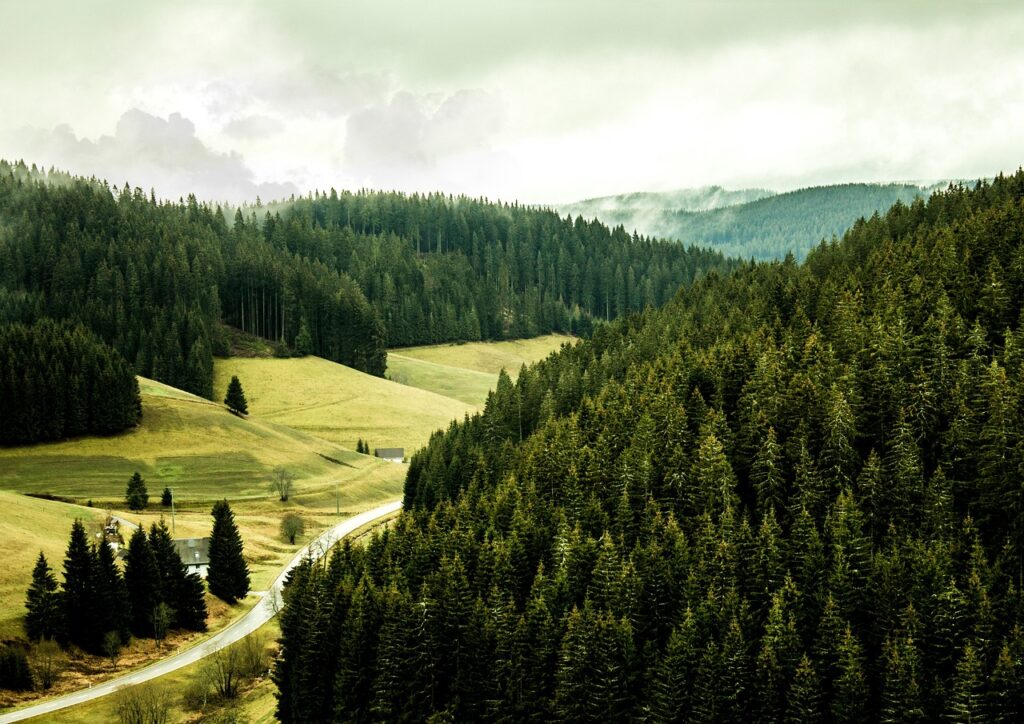
A country that contains more contradictions than its reputation suggests and has turned the tension between them into a national art form. Berlin operates on organized chaos — a capital that was divided by a wall, reunified by a generation, and has spent the thirty years since becoming the most creatively restless city in Europe, its abandoned buildings converted into galleries and clubs and start-ups before the city got around to deciding what to do with them. Munich exists in a parallel Germany entirely — baroque churches, beer gardens where strangers share long tables as a matter of civic philosophy, and an Alpine backdrop that arrives suddenly at the city’s southern edge. The Rhine Valley moves at the pace of a river cruise, its castle-studded banks feeling like a history textbook that someone forgot to close. The Black Forest is darker and older and quieter than its name implies in English — a landscape of deep conifers, farmhouses with roofs that reach the ground, and cuckoo clocks that stopped being kitsch when you understood the craftsmanship. Germany rebuilt itself from rubble — twice in a century — and each time produced something worth studying. It is a country that takes quality seriously as a moral position, not just a manufacturing standard.
Evoke – Why You Visit Germany
You come to Germany because you need to be somewhere that takes things seriously without taking itself too seriously. You’ve been in places that perform depth and places that perform lightness and you’re tired of performance altogether. You need a country where the bread alone — dense, seeded, requiring actual chewing — tells you something honest about the culture’s relationship with sustenance versus pleasure. You had a conversation once about what it means to rebuild — not just buildings but identity, meaning, collective memory — and you never finished it. Germany is where that conversation lives in the architecture, in the memorial stones set into the pavement outside houses where families were taken, in the way Berlin simultaneously acknowledges its worst chapters and builds its most vital present on top of them. You came here because you suspected that seriousness and joy aren’t opposites. Germany will prove it on a Saturday afternoon in a beer garden, with strangers, in the sun.
Explore – How You Experience Germany
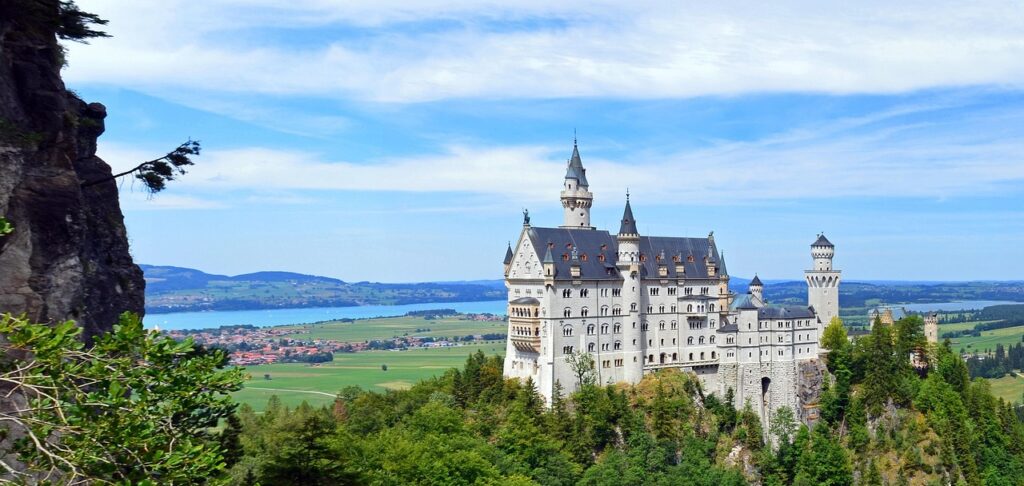
Stand at the Berlin Wall Memorial on Bernauer Strasse where a preserved section still stands with the death strip intact and understand that this isn’t history — it ended in 1989, which means people your age watched it happen on television. Walk Unter den Linden from the Brandenburg Gate to Museum Island where five museums occupy a single island in the Spree River and a single day is genuinely insufficient. Find a techno club in a former power station on a Sunday morning and understand that Berlin’s club culture is not hedonism — it is a serious philosophical commitment to collective experience that has its own rules, its own architecture, and its own silence when the music finally stops. Take the train south to Rothenburg ob der Tauber where the medieval walls are complete and intact and the town inside them has been having the same market since 1274. Drive the Romantic Road through Augsburg and Füssen to Neuschwanstein — Ludwig II’s castle built not as a fortress but as a stage set for his own fantasy, which Disney later borrowed without acknowledgment. Sit in a Munich beer garden on a weekday afternoon and order a Maß — a full liter — and observe that the table you’re sharing with strangers is not awkward but natural because gemütlichkeit, the German art of communal ease, is something the culture actively practices. Eat a pretzel the size of your head, warm from the oven, with butter. Some experiences don’t require improvement.
Evolve – Who You Become in Germany
You leave Germany with a new relationship with craft. Not as luxury — as ethics. The German word Qualität carries a moral weight that the English word “quality” has lost through overuse in marketing copy. In Germany, making something poorly when you could make it well is a kind of dishonesty, and you felt that in the bread, in the car door’s close, in the way a Berlin waiter will tell you directly if you’ve ordered wrong for your stated preference. You bring that home. You stop accepting things that were made without care. You also carry something from Berlin specifically — the city’s refusal to be finished, its insistence on remaining a work in progress, its comfort with the unresolved. Most cities want to present their best face. Berlin shows you its whole face, scar tissue and all, and trusts you to find it beautiful. You start applying that to yourself. You find you can.
Your practical guide to Germany starts bellow 👇
🕰️ Germany Historical Backdrop
Germany’s history is a complex and powerful narrative of tribes and empires, religious reformation, intellectual enlightenment, and profound 20th-century turmoil followed by a remarkable reunification. From the Germanic tribes of the Roman era and the Holy Roman Empire to the Hanseatic League’s mercantile power and the birth of Protestantism, Germany has been a crucible of European thought. Its story is told in the soaring spires of Gothic cathedrals, the opulent palaces of Prussian kings, and the sobering memorials of its recent past. Through centuries of division, artistic and philosophical genius (from Bach to Kant), and industrial innovation, what endures is an unparalleled dedication to precision, order (Ordnung), cultural preservation, and a deep-seated love for nature.
🌟 Germany Local Experiences
Beyond the famous landmarks, discover Germany’s soul in the convivial atmosphere of a traditional Biergarten (beer garden), the festive spirit of a Christmas market with the scent of mulled wine (Glühwein) in the air, or the quiet contemplation of a hike through the Black Forest. Experience the vibrant energy of Berlin’s street art scene, the precision of a high-speed ICE train journey, or the joyful camaraderie of a local football match. These are the textures, shared moments, and profound connections that reveal Germany’s unique spirit, inviting you to connect with its enduring blend of tradition, intellectual depth, and modern efficiency.
🌄 Germany Natural Wonders
- The Bavarian Alps: A stunning mountain range in southern Germany, offering world-class hiking, skiing, and picturesque alpine villages.
- The Black Forest (Schwarzwald): A vast, forested mountain range known for its dense evergreen forests, charming villages, and cuckoo clocks.
- The Rhine Valley: A scenic stretch of the Rhine River, famous for its terraced vineyards, medieval castles, and charming towns.
- Saxon Switzerland National Park: A dramatic landscape of sandstone rock formations and canyons near the border with the Czech Republic.
- The Wadden Sea: A UNESCO World Heritage site, a vast system of intertidal sand and mud flats rich in biodiversity.
🏙️ Germany Must-See Cities
- Berlin: (Capital) A dynamic, creative capital defined by its history, vibrant arts scene, and legendary nightlife. (Historic, Artistic, Dynamic)
- Munich (München): The capital of Bavaria, famous for its beer halls (especially during Oktoberfest), beautiful parks, and proximity to the Alps. (Traditional, Lively, Elegant)
- Hamburg: A major port city with a rich maritime history, stunning modern architecture like the Elbphilharmonie, and a vibrant warehouse district. (Maritime, Modern, Cultural)
- Frankfurt am Main: Germany’s financial hub, known for its futuristic skyline and traditional apple wine taverns. (Financial, Cultural, Modern)
- Cologne (Köln): A historic city on the Rhine, dominated by its magnificent Gothic cathedral and known for its Roman history and lively Carnival. (Historic, Cathedral, Festive)
🏞️ Germany National Parks & Nature Reserves
- Bavarian Forest National Park: The first national park in Germany, known for its wild, untouched forests.
- Berchtesgaden National Park: Germany’s only alpine national park, featuring the pristine Königssee lake.
- Saxon Switzerland National Park: Famous for the Bastei Bridge and dramatic sandstone towers.
- Jasmund National Park: Known for the dramatic white chalk cliffs on the island of Rügen.
🏛️ UNESCO World Heritage Sites
- Cologne Cathedral — An exceptional work of Gothic architecture and a symbol of the city.
- Museum Island, Berlin — A unique ensemble of five world-renowned museums.
- Palaces and Parks of Potsdam and Berlin — A vast landscape of palaces and gardens, including Sanssouci.
- Upper Middle Rhine Valley — A stunning cultural landscape with over 40 castles and fortresses.
- Zollverein Coal Mine Industrial Complex — A monument to industrial heritage in Essen.
- For a complete list, visit the official UNESCO World Heritage Convention – Germany.
🖼️ Germany Museums & Galleries
- Pergamon Museum (Berlin): Famous for its monumental reconstructions of archaeological structures.
- Deutsches Museum (Munich): One of the world’s oldest and largest science and technology museums.
- Pinakotheken (Munich): A trio of museums covering European art from the Middle Ages to the present day.
- Städel Museum (Frankfurt): One of Germany’s most important art museums.
🎉 Germany Festivals & Celebrations
- Oktoberfest (Munich): (September/October) The world’s largest beer festival and funfair.
- Christmas Markets (Weihnachtsmärkte): (Late November–December) A beloved tradition held in cities and towns across Germany.
- Berlinale (Berlin International Film Festival): (February) One of the world’s leading film festivals.
- Karneval (Cologne): (February) A massive carnival celebration known as the “Fifth Season.”
🧽 How to Arrive
- ✈️ By Air
- Main International Airports: Frankfurt Airport (FRA), Munich Airport (MUC), Berlin Brandenburg Airport (BER).
- Airlines: Lufthansa (National Carrier), Emirates, Qatar Airways (QA), United, British Airways.
- Flight search: Skyscanner, Google Flights.
- 🚆 By Rail
- Key Domestic Lines: Deutsche Bahn (DB) operates an extensive network of high-speed (ICE) and regional trains connecting Germany to all neighboring countries.
- 🚗 By Road
- Border Crossings: As part of the Schengen Area, there are generally no border controls with neighboring EU countries.
- Toll Info: Most of the Autobahn is free for cars, but some cities have low-emission zones requiring a sticker.
- Driving: Driving is on the right.
📶 Stay Connected
- SIM Cards & Telecom
- Top Providers: Telekom (T-Mobile), Vodafone, O2.
- Where to buy: Official operator stores, electronics stores (MediaMarkt/Saturn), or convenience stores. Registration requires a passport.
- eSIM: Supported by all major providers.
🏨 Where to Stay
Germany offers a wide range of accommodations, from sleek modern hotels and international luxury chains to charming family-run guesthouses (Gasthäuser).
- Notable Hotel Chains: Accor (Pullman, Sofitel), Marriott, Hilton.
- Tips: Urban Design vs. Country Charm:
- Major Cities: Choose from modern design hotels or stylish boutique properties.
- Rural Areas: Opt for a traditional Gasthof or Pension for an authentic experience, often including a hearty breakfast.
- Unique Stays:
- Castle Hotels (Schlosshotels): Stay in a historic castle, particularly along the Rhine or on the Castle Road.
- Farm Stays (Urlaub auf dem Bauernhof): Experience rural life on a working farm, popular in Bavaria.
⛳ Unique Finds
- Drive the Autobahn: Experience sections of the motorway network with no mandated speed limit (where indicated).
- Visit a Thermal Spa (Therme): Relax in the thermal baths of a spa town like Baden-Baden.
- Wine Tasting (Rhine/Mosel): Sample world-class Riesling wines at vineyards along the scenic river valleys.
- Industrial Heritage: Explore converted industrial sites like the Zollverein Coal Mine.
🤝 Germany Cultural Guidance
- Punctuality: Being on time is highly valued in both social and business settings.
- Directness: Germans tend to be direct in communication. This is a sign of honesty, not rudeness.
- Rules & Order (Ordnung): Respect for rules is a key part of the culture.
- Tipping Norms: Round up the bill or add 5-10% for good service in restaurants.
- Basic Phrases (German):
- Hello: “Guten Tag” (formal) / “Hallo” (informal)
- Thank you: “Danke schön”
- Please: “Bitte schön”
- Excuse me/Sorry: “Entschuldigung”
- Do you speak English?: “Sprechen Sie Englisch?”
🛂 Germany Entry & Visa Requirements
Germany is a member of the Schengen Area.
- Visa-Free: Citizens of many countries, including the US, UK, Canada, and UAE (nationals), can enter for up to 90 days without a visa.
- Official Source: For the most current visa information, consult the German Federal Foreign Office.
💰 Practical Essentials
- Currency: Euro (€, EUR).
- Electricity: Type F (Schuko) sockets. Voltage is 230V at 50Hz.
- Taxes: VAT (Mehrwertsteuer) is included in most prices. Non-EU visitors can often claim a refund.
- Safety: Germany is very safe. Be mindful of petty crime in major cities. For specific advisories, check US Department of State Travel Advisories for Germany.
✨ Bonus Tip
To truly embrace Germany, appreciate the concept of Gemütlichkeit. It doesn’t have a direct English translation but encompasses a feeling of warmth, coziness, and peace of mind. You can find it in a candlelit beer hall, a cozy café on a winter’s day, or during a long chat with friends. Seek out these moments of simple comfort. It’s in this pursuit of Gemütlichkeit that the true heart of German culture and your own evolving sense of well-being truly reveal themselves.
🔗 Featured Links
- Official Resources:
- National Tourism Board: Germany Travel
- Safety & Travel Advisories: Your Country’s Government Travel Advisory for Germany.
- Digital Nomad Info: Germany offers a Freelance Visa (Freiberufler). Consult official government sites for details.

Beyondia
Trusted Travel CompanionReal digital nomad. I travel. I learn. I grow.
What about you? Where are you going?