GoBeyondia Atlas 🗺️ Middle-East Silk-Road 🗾
Oman: Where raw landscapes meet timeless tradition.
Oman in 30 seconds
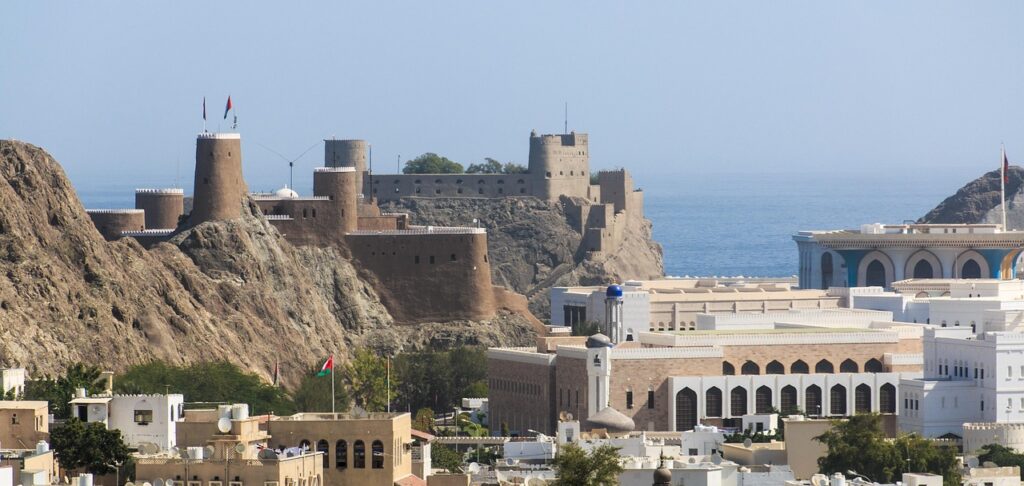
A country that somehow exists between the ancient world and the modern one without choosing sides. Muscat sits at the edge of the Arabian Sea, its white-washed low-rise buildings reflecting a government decree that nothing shall disrupt the skyline’s relationship with the surrounding mountains — a city that decided restraint was an aesthetic. Drive into the interior and the landscape shifts dramatically: Jebel Akhdar rises from the desert floor into cool mountain air where roses grow in terraced gardens and pomegranates hang over thousand-year-old falaj irrigation channels still carrying water from the mountains to the villages below. The Wahiba Sands deliver dunes that shift color from gold to copper to deep red depending on the hour, and Bedouin families still move through them with a fluency that makes GPS feel embarrassing. Wadi Shab cuts through limestone so dramatically it looks like the earth changed its mind mid-formation. The Omanis themselves carry a dignity and warmth that coexist without contradiction — a culture that has traded with India, Africa, and Persia for centuries and absorbed the best of all of them without losing itself. This is the Gulf as it was before the glass towers, and as it intends to remain.
Evoke – Why You Visit Oman
You come to Oman because you’ve spent too long in places that measure themselves in superlatives. The tallest, the newest, the most expensive — a competition you stopped finding interesting but kept attending out of habit. You need a country that decided long ago what it wanted to be and has been quietly, confidently being that thing ever since. You’ve been moving fast through a world that rewards speed and you’ve started to confuse motion with progress. Oman moves at the pace of water through ancient stone — purposeful, unhurried, arriving exactly where it intends. You need a desert that isn’t empty — that is full of silence, which is completely different. You came here because somewhere between your last three destinations you lost the ability to be surprised, and you need it back.
Explore – How You Experience Oman
Walk through Mutrah Souq in the early morning before the heat arrives, past frankincense smoke and silver khanjar daggers and bolts of fabric in colors that don’t have Western names, and understand that this market has been having this conversation with traders for five hundred years before you arrived. Drive the mountain road to Nizwa and stand in its ancient fort where the circular tower was designed so that invaders who breached it could be dropped with boiling date syrup from the floors above — warfare solved with the materials available, as Omanis have always done. Descend into Wadi Shab through a gorge that forces you into the water and rewards you with a hidden cave pool emerald-lit from above, accessible only by swimming through a gap in the rock that makes you question your decision until the moment you’re through it. Camp in the Wahiba Sands and watch the stars appear in a sequence — first the brightest, then more, then more, until the sky is so dense with them the darkness between becomes the minority. Visit Bahla, its UNESCO mud-brick fort still standing after a thousand years, its pottery market still producing the same forms that left this valley on dhows bound for Zanzibar. Eat shuwa — lamb slow-cooked underground in a sealed pit for two days — at a family table where the meal is the event and the conversation around it is the meaning.
Evolve – Who You Become in Oman
You leave Oman with a recalibrated relationship with ambition. Not less ambitious — differently ambitious. The Omanis have a concept embedded in their culture: tawadu, a kind of grounded humility that isn’t weakness but its opposite — the confidence of someone who doesn’t need to announce themselves because their presence is already clear. You absorb some of that. You stop performing busyness as a status signal. You develop a preference for things made to last over things made to impress. The frankincense you bought in Mutrah, burning it months later in an apartment far from the Arabian Sea, will bring the whole country back in a single breath — the souq, the mountains, the silence of the desert at 4am — and you’ll understand why Oman has been exporting this resin for three thousand years. Some things carry a place inside them. You came home carrying Oman. That’s not nothing.
Your practical guide to Oman starts bellow 👇
🕰️ Oman Historical Backdrop
Oman’s history is a lyrical saga of maritime mastery and a deep-rooted independence that distinguishes it within the Arabian Peninsula. Unlike its neighbors, Oman’s legacy is defined by its 17th-century empire that once stretched to Zanzibar, making it a powerful seafaring nation. Its story is told in the hundreds of sentinel-like forts and watchtowers that guard its mountain passes, the ancient falaj irrigation systems that still breathe life into desert oases, and the aromatic heritage of the Frankincense Trail. Through the visionary leadership of the late Sultan Qaboos and a careful, deliberate approach to modernization, what endures is an unparalleled dedication to preserving its traditional architecture, its hospitable Bedouin roots, and a landscape that remains refreshingly authentic. This is a land where every carved wooden door, every scent of burning luban (frankincense), and every turquoise wadi whispers tales of a civilization that has mastered the art of quiet, dignified progression.
🌟 Oman Local Experiences
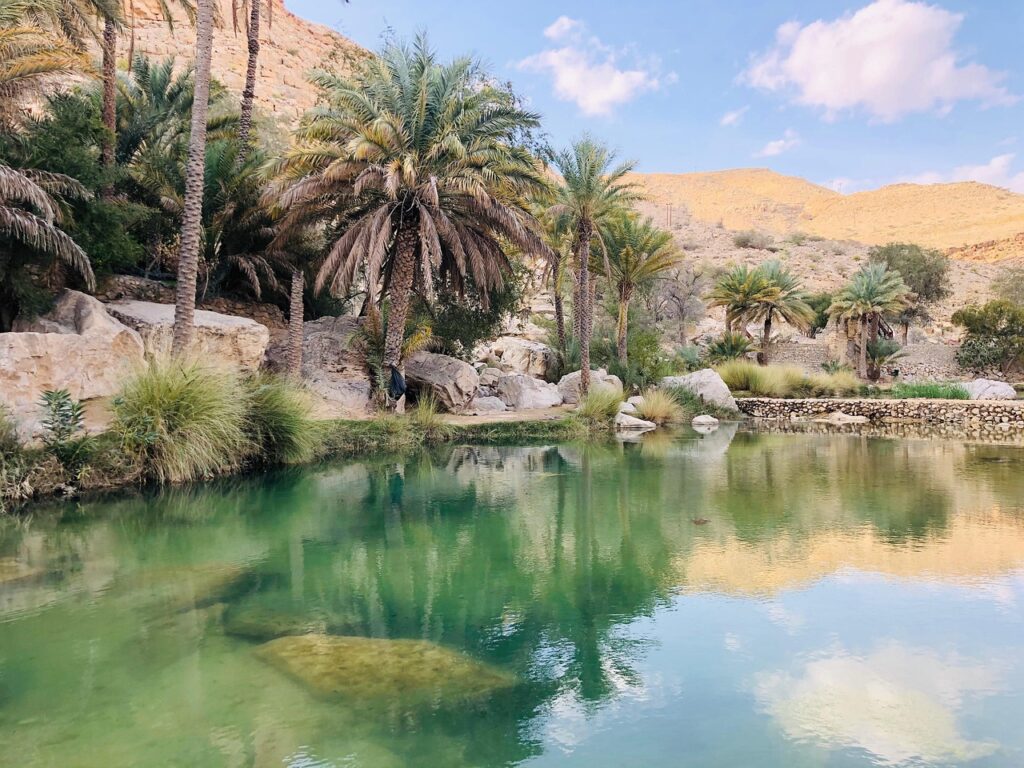
Beyond the grand mosques and modern highways, discover Oman’s soul in the aromatic bustle of the Mutrah Souq as the sun dips below the horizon, the tranquil silence of an overnight stay under the stars in the Wahiba Sands, or the refreshing embrace of a turquoise pool hidden deep within Wadi Bani Khalid. Experience the profound hospitality of a local “kahwa” (Omani coffee) and dates ceremony, witness the ancient craft of silver dagger (khanjar) making, or join a sunrise walk through the rose gardens of the Green Mountain. These are the textures, shared moments, and profound connections that reveal Oman’s unique spirit, inviting you to connect with its enduring serenity and vibrant, understated elegance.
🌄 Oman Natural Wonders
- Wadi Shab: A breathtaking river canyon with emerald pools and a hidden waterfall inside a cave, accessible only by a short boat trip and a hike.
- Jebel Shams: The “Mountain of the Sun,” Oman’s highest peak, offering the spectacular “Grand Canyon of Arabia” (Wadi Ghul).
- Wahiba Sands (Sharqiya Sands): A vast sea of undulating golden longitudinal dunes, home to Bedouin communities and traditional desert camps.
- Musandam Fjords: Often called the “Norway of Arabia,” featuring dramatic limestone cliffs plunging into turquoise waters, best explored by dhow.
- The Bimmah Sinkhole: A stunning natural limestone crater filled with clear turquoise water, perfect for a refreshing swim.
- Jebel Akhdar (The Green Mountain): Famous for its terraced fruit orchards, rose water production, and cool Mediterranean climate high above the desert.
🏙️ Oman Must-See Cities
- Muscat: (Capital) A low-rise, elegant capital that hugs the coastline, home to the magnificent Sultan Qaboos Grand Mosque and the Royal Opera House. (Regal, Coastal, Traditional)
- Nizwa: The ancient capital and cultural heart of Oman, famous for its massive circular fort and its lively Friday goat market. (Historic, Fortress, Cultural)
- Salalah: The lush, tropical capital of the Dhofar region, transformed by the Khareef (monsoon) into a green paradise of waterfalls and frankincense trees. (Tropical, Seasonal, Unique)
- Sur: A historic seafaring town known for its traditional dhow-building yards and proximity to turtle nesting beaches. (Maritime, Historic, Coastal)
- Khasab: The gateway to the Musandam Peninsula, offering spectacular dhow cruises through mountain-rimmed fjords. (Remote, Scenic, Adventure)
🏞️ Oman National Parks & Nature Reserves
- Ras Al Jinz Turtle Reserve: A world-renowned nesting site for the endangered Green Sea Turtle.
- Daymaniyat Islands: A protected archipelago of nine islands, offering some of the best diving and snorkeling in the region.
- Al Saleel Wildlife Park: A sanctuary for the Arabian gazelle and the endangered Arabian leopard.
🏛️ UNESCO World Heritage Sites
- Bahla Fort — A massive mud-brick fortress dating back to the 12th century.
- Archaeological Sites of Bat, Al-Khutm and Al-Ayn — Well-preserved Bronze Age beehive tombs.
- Land of Frankincense — Includes the frankincense trees of Wadi Dawkah and the remains of the caravan oasis of Shisr.
- Aflaj Irrigation Systems of Oman — Five ancient irrigation systems representing an ancient water management tradition.
- Ancient City of Qalhat — A major stop on the Indian Ocean trade routes.
🖼️ Oman Museums & Galleries
- The National Museum of Oman (Muscat): A stunning contemporary museum showcasing Oman’s cultural heritage from prehistory to the modern day.
- Bait Al Zubair (Muscat): A private museum in a restored traditional house featuring Omani weapons, jewelry, and costumes.
- Oman Across Ages Museum (Manah): A futuristic architectural masterpiece celebrating the nation’s history and renaissance.
- Frankincense Land Museum (Salalah): Located in the Al Baleed Archaeological Park, exploring Oman’s maritime and frankincense history.
🎉 Oman Festivals & Celebrations
- Muscat Festival: (January/February) A month-long celebration of Omani culture, arts, food, and heritage.
- Salalah Khareef Festival: (July/August) Celebrates the monsoon season with traditional dances, music, and seasonal markets.
- Oman National Day: (November 18) A day of patriotic pride, parades, and fireworks celebrating the nation’s independence and renaissance.
- Renaissance Day: (July 23) Commemorating the beginning of modern Oman’s development.
🧽 How to Arrive
- ✈️ By Air
- Main International Airports: Muscat International Airport (MCT), Salalah International Airport (SLL).
- Airlines: Oman Air (National Carrier), SalamAir (Low-cost), Qatar Airways, Emirates, Etihad, British Airways.
- Flight search: Skyscanner, Google Flights.
- 🚆 By Rail
- Currently, there are no passenger rail services in Oman, though the GCC Railway project is in development.
- 🚗 By Road
- Border Crossings: Oman shares land borders with the UAE (Hatta, Al Ain) and Saudi Arabia (Rub Al Khali). Crossing from Dubai or Abu Dhabi is common for road trips.
- Driving: Excellent road infrastructure. 4WD is essential for mountains and desert. Driving is on the right.
📶 Stay Connected
- SIM Cards & Telecom
- Top Providers: Omantel, Ooredoo Oman, Vodafone Oman.
- Where to buy: Kiosks are available in the arrival halls of Muscat and Salalah airports. Registration requires a passport.
- eSIM: Supported by all major providers.
🏨 Where to Stay
Oman offers a range from ultra-luxury mountain retreats to authentic desert camps and city hotels.
- Notable Hotel Chains: Al Bustan Palace (Ritz-Carlton), Shangri-La Al Husn, Anantara Al Jabal Al Akhdar, Alila Jabal Akhdar.
- Tips: Mountain Heights vs. Desert Depths:
- The Mountains: Stay on Jebel Akhdar or Jebel Shams for cooler air and dramatic canyon views.
- The Desert: Choose a Bedouin-style camp in Wahiba Sands for an immersive dunes experience.
- Unique Stays:
- Desert Camps: Luxury tents with modern amenities in the heart of the golden dunes.
- Dhow Overnights: Some cruises in Musandam offer the chance to sleep on the deck of a traditional boat under the stars.
⛳ Unique Finds
- The Friday Goat Market (Nizwa): A raw, authentic experience where Bedouins and locals trade livestock in a tradition unchanged for centuries.
- Frankincense Souq (Salalah): Visit the source of the world’s highest-quality frankincense and learn about its medicinal and spiritual uses.
- Wild Turtle Nesting: Watch giant green turtles lay their eggs in the sand at Ras Al Jinz under the cover of night.
- Mountain Off-Roading: Conquer the steep, winding roads of Jebel Akhdar (permit and 4WD required).
🤝 Oman Cultural Guidance
- Dress Modestly: While Oman is welcoming, it is more traditional than Dubai. Cover shoulders and knees in public. Swimwear is for beaches/pools only.
- Hospitality (Karam): Accepting coffee and dates is a sign of respect. Never use your left hand to eat or shake hands.
- Photography: Always ask for permission before photographing people. Avoid photographing government buildings.
- Tipping Norms: Not mandatory, but 10% is appreciated for good service in restaurants. Rounding up for taxis is common.
- Basic Phrases (Arabic):
- Hello: “As-salam Alaikum” (Peace be with you)
- Thank you: “Shukran”
- Please: “Min Fadlak”
- No problem: “Maafi Mushkil”
- Welcome: “Ahlan wa Sahlan”
🛂 Oman Entry & Visa Requirements
- Visa-Free: Citizens of over 100 countries (including UK, US, Canada, EU, and GCC nationals) can enter for up to 14 days visa-free.
- e-Visa: For longer stays, apply via the Royal Oman Police e-Visa Portal.
- Official Source: Always check the latest at Royal Oman Police.
💰 Practical Essentials
- Currency: Omani Rial (OMR). It is one of the strongest currencies in the world.
- Electricity: Type G (three rectangular pins, same as UK/UAE). Voltage is 240V at 50Hz.
- Safety: Oman is exceptionally safe with extremely low crime rates. It is often cited as one of the most peaceful countries in the world.
- Climate: Best visited October to April. Salalah is best during the Khareef (July/August).
✨ Bonus Tip
To truly embrace Oman, seek out the “Wadi Life.” Don’t just look at the mountains—drive into the riverbeds. Pack a picnic, wear sturdy water shoes, and find a pool that isn’t on the main tourist map. It’s in the cool, clear waters of a hidden wadi, surrounded by ancient stone walls, that the true, tranquil heart of Oman and your own evolving sense of wonder truly reveal themselves.
🔗 Featured Links
- Official Resources:
- National Tourism Board: Experience Oman
- Safety & Travel Advisories: Your Country’s Government Travel Advisory for Oman.
- Digital Nomad Info: Oman has various long-term residency options. Consult Invest Easy for business-related visa details.

Beyondia
Trusted Travel CompanionReal digital nomad. I travel. I learn. I grow.
What about you? Where are you going?