Navigate the world’s largest hotel loyalty program—8,900 properties, 30+ brands, and a system that rewards those who learn its language.
There’s a moment every frequent traveler remembers: walking into a hotel lobby after a punishing red-eye, exhausted and slightly disheveled, only to hear “Welcome back, Mr./Ms. [Name]. Your usual room is ready, and we’ve arranged late checkout for tomorrow.” That recognition—earned through accumulated nights and understood preferences—transforms anonymous accommodation into something approaching hospitality in its original meaning.
Marriott Bonvoy represents the largest stage for earning that recognition, a sprawling empire of nearly 9,000 properties where strategic engagement can unlock experiences ranging from reliable business hotel efficiency to butler service at St. Regis palaces and private yacht voyages through Mediterranean waters.
But scale creates complexity. Unlike programs with straightforward mathematics, Bonvoy demands understanding—of dynamic pricing fluctuations, credit card stacking strategies, and the subtle differences between “Classic” reliability and “Distinctive” personality. For travelers willing to learn its language, the rewards justify the education.
The Personal Reality of Hotel Loyalty
I’ll be honest about something the glossy loyalty program marketing never mentions: building meaningful hotel status requires either substantial travel frequency or strategic financial commitment. The casual vacation traveler accumulating ten nights annually will remain perpetually at Silver, watching elite members glide past check-in queues toward upgraded rooms.
This reality doesn’t diminish the program’s value—it simply demands clarity about who benefits most. Business travelers, digital nomads, and those who’ve structured lives around movement find genuine utility in Bonvoy’s ecosystem. Occasional travelers might extract more value from programs with lower thresholds or from abandoning loyalty entirely in favor of rate shopping.
Understanding where you fall on this spectrum prevents the frustration of chasing status that your travel patterns cannot realistically achieve.
The Status Architecture
Marriott’s five-tier structure builds through Elite Night Credits accumulated between January and December, with each threshold unlocking progressively meaningful benefits.
Silver Elite arrives at ten nights, delivering a modest ten percent point bonus and priority late checkout when available. These benefits acknowledge membership without dramatically altering the stay experience—a handshake rather than an embrace.
Gold Elite at twenty-five nights begins differentiating the frequent traveler meaningfully. The twenty-five percent point bonus accelerates redemption timelines, while guaranteed 2 p.m. late checkout and enhanced room upgrades transform good stays into notably better ones. For many travelers, Gold represents the practical sweet spot—achievable with moderate business travel while delivering benefits that genuinely improve experiences.
Platinum Elite requires fifty nights, a threshold that filters for serious road warriors. The fifty percent point bonus compounds significantly over time, while lounge access and complimentary breakfast eliminate expenses that otherwise accumulate across frequent stays. The 4 p.m. late checkout provides flexibility that transforms departure days from rushed evacuations into relaxed transitions.
Titanium Elite at seventy-five nights adds suite upgrade eligibility and, intriguingly, automatic United Airlines Silver status—a cross-program benefit reflecting the interconnected nature of modern travel loyalty.
Ambassador Elite stands apart, requiring both one hundred nights and $23,000 in qualifying spend—a dual threshold adjusted upward for 2026 to reflect global rate increases. The personal Ambassador service and “Your24” flexible check-in/checkout timing create genuinely bespoke experiences, but the admission price limits this tier to those whose professional or personal circumstances involve extraordinary hotel usage.
The Forever Promise: Lifetime Status
Marriott offers something increasingly rare in loyalty programs: permanence. Lifetime status tiers reward accumulated history rather than annual requalification, providing security that transcends career changes, family obligations, or shifting travel patterns.
Lifetime Silver requires 250 cumulative nights plus five years maintained at Silver or higher. Lifetime Gold demands 400 nights plus seven years at Gold level. Lifetime Platinum—the practical ceiling for most achievers—requires 600 nights plus a decade at Platinum status.
These thresholds appear daunting until viewed across a career. A consultant averaging fifty nights annually reaches Lifetime Platinum qualification in twelve years. The benefit compounds not during peak earning years but afterward, when travel frequency may decline but the comfort of recognized status remains valuable.
I find something philosophically satisfying about programs that reward sustained relationship rather than perpetual requalification. The traveler who gave Marriott their loyalty across decades of career travel deserves recognition even when retirement shifts their patterns toward occasional leisure trips.
The Brand Universe
Marriott organizes its portfolio into “Classic” brands emphasizing traditional service excellence and “Distinctive” brands prioritizing personality and lifestyle positioning.
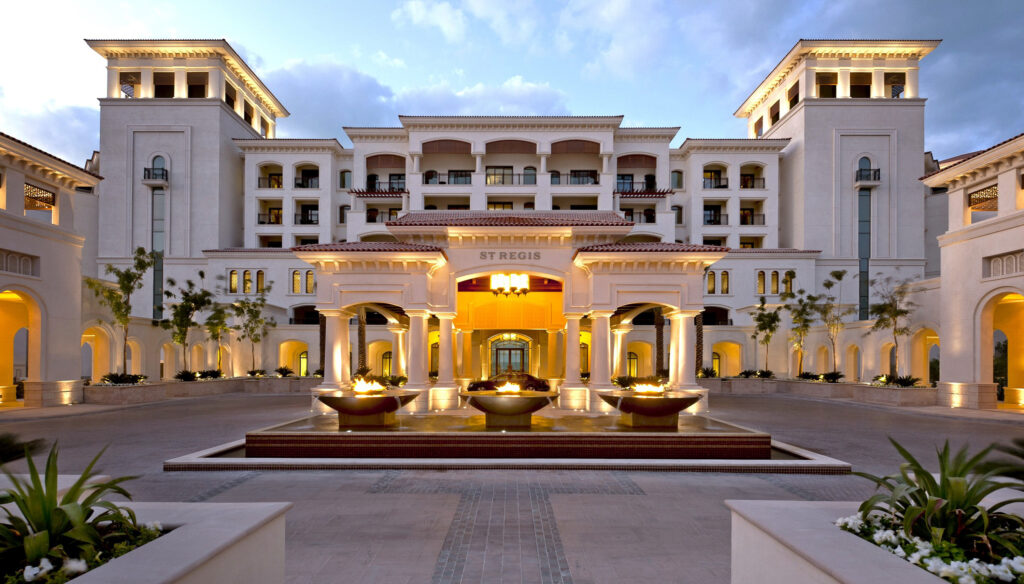
The luxury tier showcases this division clearly. Classic luxury includes The Ritz-Carlton’s standard-setting service, St. Regis with its legendary butler traditions, and JW Marriott’s wellness-focused hospitality. Distinctive luxury offers W Hotels’ vibrant social energy, EDITION’s design-forward aesthetic, The Luxury Collection’s historic and unique properties, and Ritz-Carlton Reserve’s ultra-exclusive retreats—though Reserve properties sometimes limit standard elite benefits.
Premium brands follow similar logic. Classic options include the flagship Marriott Hotels, a heavily modernizing Sheraton portfolio, and Delta Hotels. Distinctive premium encompasses Westin’s wellness positioning built around the famous Heavenly Bed, Le Méridien’s European artistic flair, Renaissance Hotels’ local discovery philosophy, plus the collection brands: Autograph Collection, Tribute Portfolio, and the curated Design Hotels partnership.
Select-service brands serve focused needs efficiently. Classic select includes the business-traveler staple Courtyard, reliable Fairfield properties, Four Points, and SpringHill Suites. Distinctive select offers AC Hotels’ minimalist European aesthetic, Aloft’s urban tech-forward positioning, and Moxy’s playful budget-lifestyle energy.
Extended-stay options round out the portfolio through Residence Inn, TownePlace Suites, and Element, with 2026 introducing StudioRes for midscale long-stays and Apartments by Marriott Bonvoy for premium independent living.
The Ritz-Carlton Yacht Collection extends Bonvoy into ultra-luxury cruising—a fascinating expansion mirroring Accor’s Orient Express sailing ventures, suggesting both giants recognize that loyalty must encompass experiences beyond traditional accommodation.
The Points Economy: Embracing Dynamic Complexity
Here’s where Marriott diverges fundamentally from fixed-value programs: point redemption costs fluctuate with cash pricing. The same room might require 25,000 points during a quiet Tuesday and 60,000 points during a major convention weekend.
This dynamic pricing creates both frustration and opportunity. Frustration because planning becomes unpredictable—point requirements can shift between search and booking. Opportunity because off-peak redemptions sometimes deliver exceptional value that fixed-rate programs cannot match.
Earning rates provide consistency: most brands generate ten points per dollar spent, though extended-stay properties like Element, Residence Inn, and TownePlace Suites earn five points per dollar. Elite bonuses multiply these base rates significantly at higher tiers.
The Fifth Night Free benefit on award stays delivers reliable value regardless of dynamic pricing. Book five consecutive nights using points, and the lowest-point night in the sequence disappears from the total—effectively a twenty percent discount on extended award stays.
Credit card strategy meaningfully accelerates status achievement. Premium co-branded cards offer annual Elite Night Credits—up to twenty-five from a single card, stackable between personal and business products for forty “head start” nights toward status qualification. This mechanism allows strategic travelers to reach Platinum or Titanium through moderate actual travel combined with credit card benefits.
Choice Benefits: The Personalization Layer
Upon reaching fifty nights, Platinum members select an Annual Choice Benefit from options including Nightly Upgrade Awards (formerly Suite Night Awards), gifted Silver status for a companion, or bonus point awards. A second choice unlocks at seventy-five nights.
This personalization acknowledges that elite travelers value different benefits. The frequent business traveler might prioritize suite upgrades for client meetings. The family vacation planner might prefer gifting status to a spouse who travels independently. The point optimizer might choose bonus awards that accelerate future redemptions.
The choice architecture respects that identical status tiers can serve dramatically different travel patterns and priorities.
The 2026 Strategic Shift: Emotional ROI
Marriott’s internal strategy documents reveal a pivot worth understanding: movement from “heads in beds” metrics toward “emotional ROI”—recognition that loyalty increasingly connects to experiences rather than accommodation transactions.
Marriott Bonvoy Moments now positions points as currency for Formula 1 paddock access, concert VIP packages, and culinary masterclasses with renowned chefs. This expansion directly competes with Accor’s lifestyle-heavy Ennismore portfolio, acknowledging that modern travelers—particularly younger demographics—seek experiential rewards over traditional redemption.
Key 2026 property debuts signal continued luxury investment: The St. Regis London in Mayfair, W Riyadh anchoring the Kingdom’s KAFD development, and The Lake Como EDITION bringing the design-forward brand to one of the world’s most storied destinations.
The Honest Assessment
Marriott’s scale creates genuine advantages. The probability of finding a Bonvoy property in any significant global destination exceeds that of any competitor. This coverage provides consistency for travelers who value predictable experiences over constant adaptation to unfamiliar brands.
The lifetime status option rewards long-term loyalty in ways few programs match—a meaningful consideration for travelers building careers that involve sustained hotel usage.
Credit card acceleration mechanisms allow strategic achievement of elite status beyond what pure travel frequency might justify, democratizing benefits that would otherwise require extensive business travel.
Yet scale creates inconsistencies. A Courtyard in suburban America delivers fundamentally different experiences than a Ritz-Carlton in a global capital, though both fall under the Bonvoy umbrella. Elite benefit delivery varies by property, management, and local market conditions in ways that smaller, more controlled portfolios avoid.
Dynamic pricing demands vigilance. The optimization required to extract strong value from Bonvoy exceeds that of fixed-value programs, rewarding those who enjoy the game while frustrating those who prefer straightforward mathematics.
The Ambassador threshold—both nights and substantial spend—places top-tier status genuinely beyond reach for travelers whose patterns don’t involve luxury property concentration. Unlike programs where sufficient nights alone achieve maximum status, Bonvoy’s peak requires financial commitment that filters for specific traveler profiles.
Joining the Empire
Marriott Bonvoy suits travelers who value global coverage over regional depth, who appreciate the security of lifetime status possibilities, who don’t mind—or actively enjoy—optimizing dynamic redemption opportunities, and whose travel patterns or credit card strategies can realistically achieve meaningful elite status.
The program rewards engagement with its complexity. Understanding the difference between Classic and Distinctive brands, knowing when dynamic pricing favors redemption versus cash payment, stacking credit card benefits strategically—these efforts compound into experiences that casual participants cannot access.
For curious travelers building long-term exploration systems, Bonvoy offers the largest canvas. The brushstrokes require learning, but the resulting picture can encompass everything from efficient business stays to yacht voyages and Formula 1 paddocks—a breadth that increasingly defines what hotel loyalty programs aspire to become.
Ready to explore the world’s largest hotel loyalty ecosystem? Learn more about the program: