When Volcanoes Dream in Seven Colours
The taxi pulls away from Sir Seewoosagur Ramgoolam International Airport as Indian Ocean humidity wraps around you like a second skin, and sugarcane fields stretch toward volcanic peaks that have been sculpting this island’s soul for eight million years. Ahead lies a thousand square miles of impossible contradictions—an island where Hindu temples rise beside colonial sugar estates, where escaped slaves once found freedom on mountain peaks that now guard UNESCO heritage, where the earth itself fractures into seven colours that refuse to mix no matter how many cyclones demand otherwise. In your window, the silhouette of Le Morne Brabant pierces the southwestern sky like a fist raised in defiance, while ahead, roads lined with flamboyant trees promise encounters with civilizations that crossed oceans to build something the world had never seen: a nation forged from every continent’s sorrow and every culture’s genius. This isn’t vacation. This is pilgrimage through the Indian Ocean’s most improbable experiment in human coexistence.
Port Louis: The Capital That Speaks Five Languages Before Breakfast
Port Louis announces itself not through skyline or monument but through scent and sound—turmeric and star anise from street vendors selling dholl puri at dawn, the call to prayer from Jummah Mosque competing harmoniously with Tamil bells from the Kaylasson Temple, French Creole banter ricocheting off colonial arcades where merchants have haggled for three centuries. Founded by the French governor Mahé de Labourdonnais in the 1730s, this compact capital compresses the entire story of Mauritius into walkable streets where every building represents a different chapter of colonial ambition and human resilience.
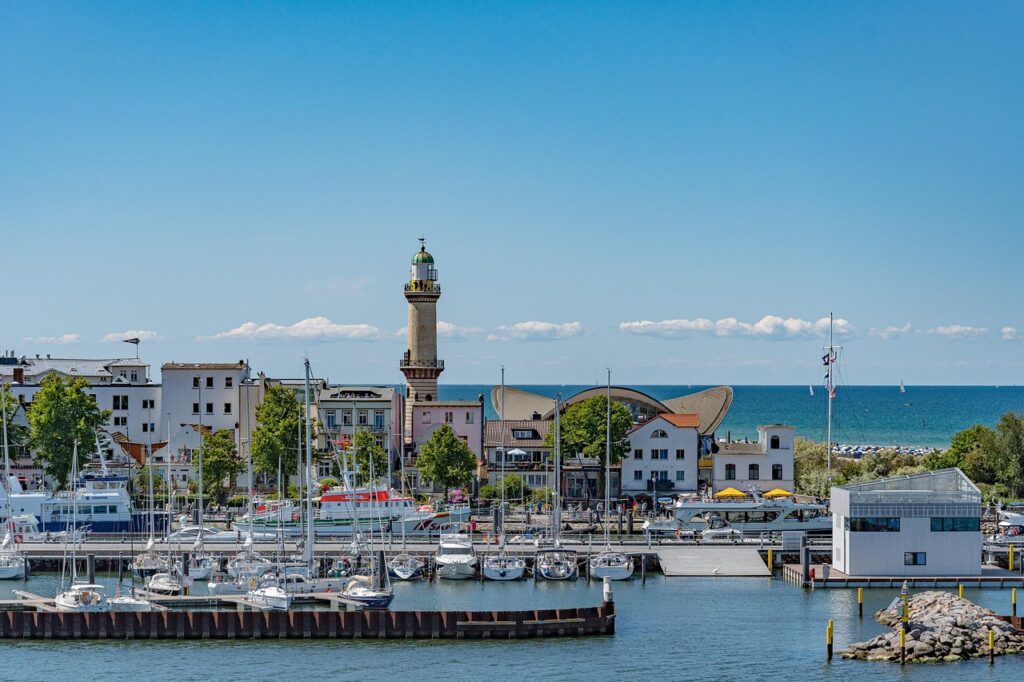
The Aapravasi Ghat, a UNESCO World Heritage Site since 2006, stands along the waterfront where most visitors drive past without stopping. This is a mistake that costs nothing in money but everything in understanding. Between 1834 and 1920, half a million indentured labourers from India arrived through this immigration depot—the first site in the world where the British colonial system processed workers who replaced enslaved people after abolition. The red brick buildings and cast-iron columns preserve the architecture of hope and uncertainty: cramped quarters where families waited to learn which sugar plantation would define their future, medical examination rooms where bodies were assessed for labour capacity, corridors where languages from Bihar, Tamil Nadu, and Gujarat blended into what would become Mauritian Creole.
The Central Market, operating since the 19th century, demonstrates how those cultural streams converged into culinary genius. Here, vendors sell gateaux piments—spiced split-pea fritters that share DNA with Middle Eastern falafel yet taste distinctly Mauritian—alongside bol renversé, an upside-down rice bowl that fuses Chinese technique with Creole seasoning. Buy a dholl puri wrapped in paper from a street cart: the flatbread stuffed with ground yellow split peas, served with butter bean curry and rougaille, traces its origins to indentured workers who used dal cooking water to make dough when rations were scarce. Poverty invented a national dish that feeds the entire island today regardless of ethnicity, religion, or income.
Fort Adelaide—the Citadel—crowns the city from 240 feet above sea level. Built by the British beginning in 1832 out of fear that remaining French settlers might revolt, it was completed in 1840 and never fired a shot in anger. From its ramparts, the entire narrative of Port Louis unfolds below: the harbour where Dutch, French, and British ships competed for centuries, the Chinatown district where Cantonese and Hakka migrants built communities starting in the 19th century, the Champ de Mars racecourse where Mauritians of every background gather for horse racing that has continued since 1812—the oldest racing tradition in the Southern Hemisphere.
Le Morne Brabant: Where Freedom Carved Itself Into Stone
The drive from Port Louis to Le Morne—ninety minutes through landscapes where sugarcane gives way to wild coastal scrub—carries you toward Mauritius’s most sacred geography and its most heartbreaking story. Le Morne Brabant, the 556-metre basalt monolith rising from the island’s southwestern tip, became a UNESCO World Heritage Site in 2008 not for geological spectacle but for what its caves and ledges represent: the last refuge of escaped slaves who built hidden communities on its nearly inaccessible upper slopes during the 18th and early 19th centuries.
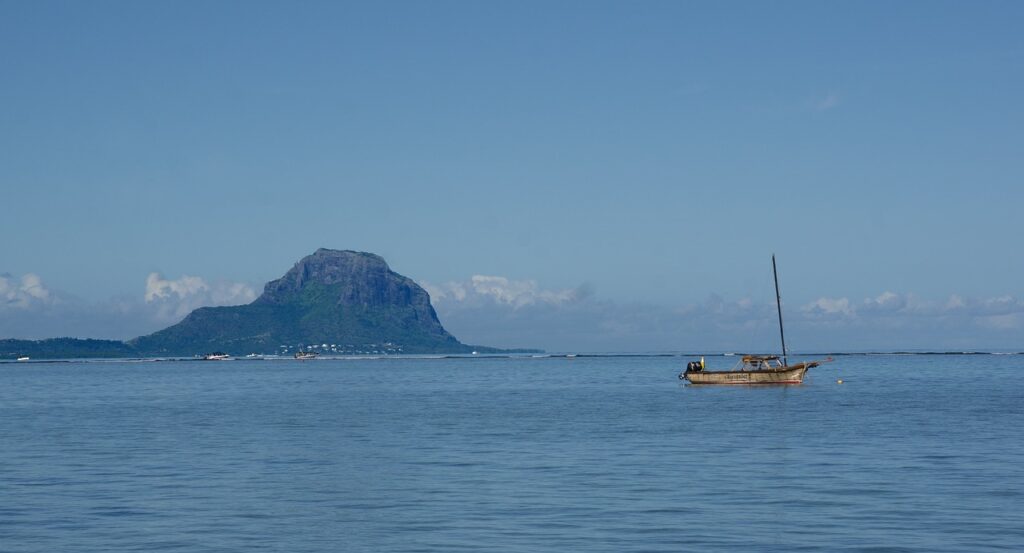
These maroons—from the French word for fugitive—established small settlements in caves and on precipices that colonial authorities could not easily reach. They developed systems of survival that required understanding every contour of the mountain, every seasonal weather pattern, every approach route that might signal danger. The mountain became a symbol of resistance so powerful that it transcended the slavery era to represent Mauritian identity itself.
The tragedy that defines Le Morne occurred on February 1, 1835. When soldiers climbed the mountain to announce that slavery had been abolished, the maroons—seeing uniformed men approaching—believed they were being hunted. Rather than face recapture, many threw themselves from the cliffs. Freedom had already arrived, but the message came wearing the wrong uniform. Today, that moment is commemorated every February 1st, a national holiday that honors both the courage of resistance and the cruel irony of liberation’s timing.
The seven-kilometre hike to Le Morne’s peak takes three to four hours and demands reasonable fitness, but the reward transcends physical achievement. From the summit, the famous “underwater waterfall” illusion reveals itself—sand and silt deposits carried by ocean currents create the visual effect of water cascading into an abyss off the continental shelf. The optical phenomenon, best appreciated from helicopter perspective but visible from the peak, reminds you that Mauritius specializes in making the impossible appear real.
Le Morne Beach, stretching below the mountain, provides some of the island’s most dramatic swimming. The lagoon here achieves turquoise perfection that photographs cannot capture because the human eye processes the relationship between volcanic black rock, white sand, and oceanic blue in ways that sensors flatten into postcard cliché. Swimming here at sunset, watching Le Morne’s shadow lengthen across water that sheltered escaped slaves’ fishing boats, you understand why certain landscapes accumulate spiritual weight that no resort architecture can replicate.
Chamarel: Where the Earth Reveals Its Autobiography
The road from Le Morne to Chamarel—winding through the southwestern hills at 260 metres elevation past villages where pineapple and coffee plantations line volcanic slopes—carries you into terrain that rewrites assumptions about what solid ground can do. The village, named after the Frenchman Charles Antoine de Chazal de Chamarel who owned the entire area around 1800, guards natural phenomena that have baffled geologists since a member of the Royal Society of Arts and Sciences first documented them in 1879.
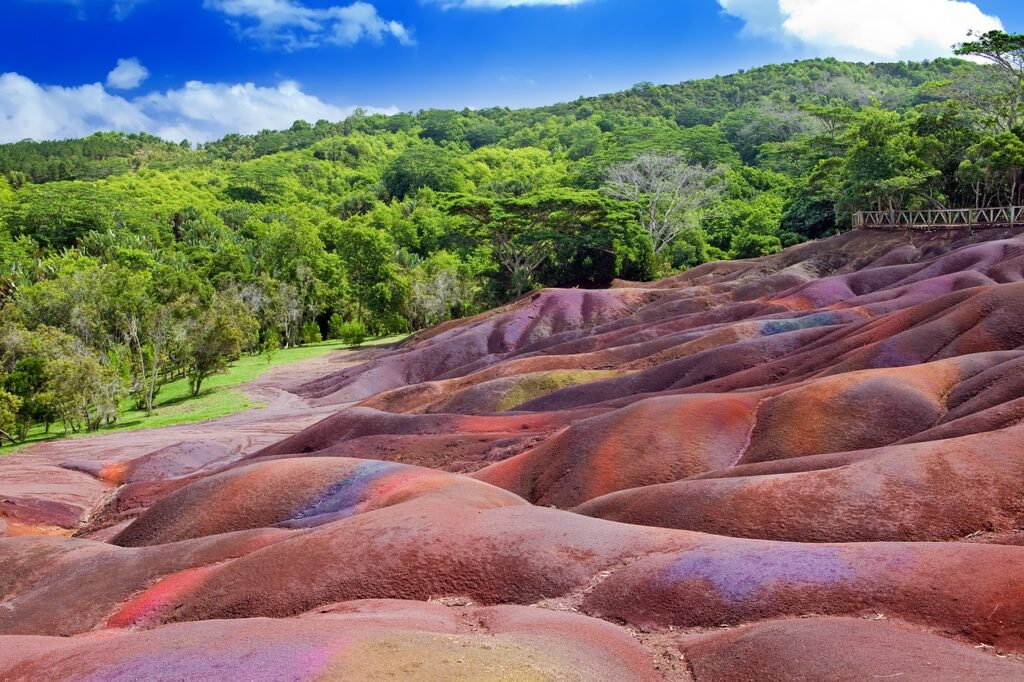
The Seven Coloured Earths—Terres des Sept Couleurs—occupies a relatively small area of exposed dunes within an 8.5-hectare geopark, but the visual impact defies its modest footprint. Sand dunes comprising seven distinct colours—red, brown, violet, green, blue, purple, and yellow—settle spontaneously into separate layers that rains carve into patterns resembling earthen meringue. The science reveals something more extraordinary than the aesthetics: volcanic basalt, decomposed over millions of years into ferralitic soil through total hydrolysis, separated into iron oxides (producing red to brown hues) and aluminium oxides (creating blue to violet). These elements naturally repel each other, meaning that if you mix handfuls of differently coloured sand together, they will eventually re-segregate into layered spectrums.
The metaphor writes itself—on an island where every culture was mixed together by colonial force, each found its distinct identity while creating something collectively beautiful—but the science behind it predates human presence by millions of years. The dunes formed from processes that began when Mauritius itself was born from volcanic eruption, three to seven million years ago. You are standing on the earth’s autobiography, watching geological time display its palette.
The Chamarel Waterfall, fed by three streams converging into the Saint Denis River, plunges approximately 100 metres down a sheer cliff surrounded by dense vegetation—the tallest single-drop waterfall in Mauritius. The spray rises to half the waterfall’s height, creating rainbows that appear and dissolve with cloud movement. Nearby, Aldabra giant tortoises—some over a century old—move through the geopark with the deliberate patience of creatures that have witnessed more history than any museum can contain.
Before leaving Chamarel, the Rhumerie de Chamarel demands attention. One of the rare distilleries that still cultivates its own sugarcane, it produces rum through processes displayed in an on-site museum where visitors can trace the journey from cane to spirit. The locally grown Arabica coffee—Café de Chamarel, cultivated since 1967 on volcanic soil that gives the beans their distinctive character—is the only coffee grown and processed entirely in Mauritius.
Pamplemousses: Where Botany Became Revolution
The drive north to the Sir Seewoosagur Ramgoolam Botanical Garden—named after the independence leader who became Mauritius’s first prime minister in 1968—carries you to the oldest botanical garden in the Southern Hemisphere and a living monument to colonial ambition that accidentally created one of the world’s great scientific resources. Founded in 1736 when French Governor Mahé de Labourdonnais established his estate near the present main gate, the garden was transformed in 1767 when Pierre Poivre, the French Intendant and gifted horticulturist, began introducing vegetables, fruits, flowers, and spices from across the globe.
The 37.5-hectare garden houses roughly 100 species of palm, giant Victoria amazonica water lilies whose leaves span two metres, ebony trees that the Dutch nearly harvested to extinction during their colonisation, and the legendary Talipot palm—a species that flowers only once in approximately sixty years before dying, producing the largest flowering structure of any plant on earth. The Sealing Wax Palm, the Fish Poison Tree, the Sausage Tree—each specimen carries a name that tells a story about human relationships with the natural world across centuries and continents.
Adjacent to the garden, L’Aventure du Sucre welcomes over 100,000 visitors annually to a former 19th-century sugar mill transformed into a cultural museum. Here, monumental machinery, giant screens, and interactive exhibits trace how sugarcane shaped Mauritian identity—from the Dutch introduction of cane in the 17th century through the slave labour that fueled production, the indentured worker system that replaced it, to modern rum production that transforms agricultural heritage into artisanal spirit. The visit concludes with tastings of unrefined whole cane sugars with unique aromas and a selection of Mauritian rums that carry the island’s volcanic terroir in every sip.
Black River Gorges: Where the Island Remembers Its Wilderness
The Black River Gorges National Park—Mauritius’s largest protected forest spanning approximately 6,800 hectares of hills, valleys, and waterfalls—preserves what the island looked like before Dutch colonizers began felling ebony forests in the 17th century. Accessible via four entry points with 50 kilometres of walking tracks, the park contains nine bird species found nowhere else on earth, including the endangered Mauritius kestrel and the pink pigeon—a species pulled back from the edge of extinction through conservation efforts that became a model for global wildlife preservation.
The Alexandra Falls viewpoint, 700 metres above sea level, provides perspective that no beach resort can offer: dense native forest stretching toward the coast, the verdant canopy broken only by waterfall mist and the occasional flight of endemic parakeets. The view extends to the ocean, where the Indian Ocean’s blue meets the island’s green in a boundary that reminds you how small Mauritius is—and how much life it contains within its volcanic borders.
300 species of flowering plants grow within the park, many endemic to Mauritius and under constant conservation protection. Walking these trails, you encounter the ghost of the dodo—not the bird itself, extinct since the late 17th century after Dutch settlers and their introduced animals destroyed its habitat, but the ecological void it left. The dodo, which appears on Mauritius’s coat of arms and remains the national symbol, evolved flightlessness because the island had no predators. It trusted the world because the world had given it no reason not to. That trust became its undoing when humans arrived, and the lesson it teaches—about vulnerability, ecological interconnection, and the irreversibility of extinction—resonates through every conservation effort the park represents.
Grand Bassin: Where the Ganges Meets the Volcano
The detour to Grand Bassin—a crater lake nestled in the mountainous interior—carries you into Mauritius’s spiritual heart. Believed by Hindu devotees to be connected to the sacred Ganges River in India, the lake serves as the most significant Hindu pilgrimage site outside the Indian subcontinent. A towering statue of Shiva—among the tallest in the world—marks the approach, while a series of shrines and smaller temples encircle the water where devotees leave offerings of fruit and light incense.
During Maha Shivaratri, the great night of Shiva celebrated annually, hundreds of thousands of Mauritian Hindus walk barefoot from their homes across the island to this lake—a pilgrimage that transforms highways into rivers of devotion and demonstrates how spiritual traditions brought by 19th-century indentured labourers became the living soul of a nation born from displacement.
The lake itself sits within volcanic geography that adds geological awe to spiritual significance. The crater that holds the water was formed by the same volcanic processes that created the Seven Coloured Earths, connecting the island’s sacred geography to its geological autobiography in ways that make Mauritius feel like a place where earth and spirit refuse to acknowledge any boundary between them.
The Return: What Mauritius Teaches
The drive back to the airport—or the transfer to your resort for final beach hours—carries you away from an island that rewrote your understanding of what happens when every human civilization meets on volcanic soil in the middle of an ocean that connects Africa, Asia, and Europe. Through your taxi window, Mauritius reveals its final lesson: sugarcane fields bending in trade winds beside Hindu temples, Chinese groceries neighbouring French colonial homes, mosques sharing streets with Catholic churches—not in segregated tolerance but in the daily intimacy of neighbours who share recipes, festivals, and the particular Mauritian genius for making coexistence feel like the most natural state of being.
This island pilgrimage teaches lessons unavailable in textbooks or documentaries: that cuisine becomes transcendent when poverty forces different culinary traditions to share ingredients, that freedom can be commemorated on cliff faces where desperation chose death over captivity, that the earth itself can demonstrate how different elements separate into distinct identities while creating collective beauty.
Port Louis teaches cultural alchemy—how five languages, seven religions, and four continents can produce a single national identity without erasing any component. Le Morne teaches sacred resistance—how geography can absorb human suffering and transform it into heritage that dignifies rather than diminishes. Chamarel teaches geological patience—how millions of years of volcanic process can produce beauty that human civilization can only witness, never replicate. Pamplemousses teaches botanical ambition—how colonial garden-making can accidentally preserve plant species that represent the planet’s diversity. Black River Gorges teaches ecological humility—how the dodo’s extinction created a conservation consciousness that now protects what remains. Grand Bassin teaches spiritual adaptation—how sacred traditions transplanted across oceans can deepen rather than dilute when they find new volcanic ground.
But Mauritius gave me something more: evidence that the most beautiful human experiments happen not when cultures choose to meet, but when history forces them together and they choose, against every historical precedent, to create something greater than the sum of their sufferings.
Practical Pilgrimage: Planning Your Own Mauritian Odyssey
Getting There:
- Fly into Sir Seewoosagur Ramgoolam International Airport (MRU): Direct flights from major hubs including Dubai, Paris, London, Johannesburg, and Mumbai.
- Car rental or driver: Essential for comprehensive island exploration (local drivers speak English and French and provide invaluable cultural context).
- Best season: May to December for drier, cooler weather ideal for sightseeing and hiking; November to April for warmer beach conditions with occasional cyclone risk.
- Total duration: 7-10 days for complete island immersion.
The Sacred Route:
- Port Louis & North (2-3 nights): Aapravasi Ghat, Central Market, Fort Adelaide, Pamplemousses Botanical Garden, L’Aventure du Sucre.
- Southwest Coast (2 nights): Le Morne Brabant hike, Chamarel Seven Coloured Earths, Chamarel Waterfall, Rhumerie de Chamarel.
- Interior Highlands (day trips): Black River Gorges National Park, Grand Bassin, Alexandra Falls.
- East Coast (2-3 nights): Ile aux Cerfs lagoon, Belle Mare beaches, coral reef snorkelling.
Where to Stay:
- North: The Oberoi Beach Resort (beachfront luxury near Pamplemousses) or Trou aux Biches Beachcomber (family-friendly elegance).
- Southwest: Dinarobin Beachcomber Golf Resort & Spa (Le Morne proximity) or The St. Regis Le Morne Resort (contemporary luxury beneath the mountain).
- East: Four Seasons Resort at Anahita (Ile aux Cerfs access) or Constance Belle Mare Plage (classic Mauritian resort).
- Port Louis: Labourdonnais Waterfront Hotel (city base for cultural exploration).
Essential Experiences:
- Aapravasi Ghat guided tour (UNESCO site, free entry, allow 1-2 hours).
- Le Morne Brabant sunrise hike (3-4 hours, moderate fitness required, guided recommended).
- Seven Coloured Earths Geopark at morning light when colours are most vivid.
- Chamarel rum distillery tour with tasting.
- Black River Gorges Alexandra Falls viewpoint (accessible, panoramic, bring picnic).
- Grand Bassin temple complex (free entry, modest dress required).
- Pamplemousses Botanical Garden (approximately 200 rupees tourist entry, allow 1.5-2 hours).
- Ile aux Cerfs catamaran excursion (lagoon swimming, beach day).
Getting Around:
- Hire a driver-guide: Best option for cultural immersion (approximately $50-80 per full day).
- Car rental: Available and affordable, but drive on the left (British legacy).
- Road conditions: Generally good; mountain roads to Chamarel require careful navigation.
- Navigation: Download offline maps; mobile coverage inconsistent in mountain areas.
- Distances: Small island—nowhere is more than 90 minutes from anywhere else.
Cultural Immersion:
- Learn basic Creole phrases (“Ki manyer?” for “How are you?” opens every door).
- Respect temple etiquette: remove shoes, cover shoulders, ask before photographing.
- Embrace the pace: Mauritians value warmth and conversation over efficiency.
- Attend a séga performance: the rhythmic music born from enslaved Africans using ravanne, triangle, and maravanne instruments is the island’s living heartbeat.
- Visit during a festival if timing aligns: Diwali, Maha Shivaratri, Chinese New Year, and Eid are all celebrated nationally.
Culinary Pilgrimage:
- Port Louis Central Market: Dholl puri from street vendors, gateaux piments, alouda (basil-seed milkshake).
- Mine frite: Cantonese-French fusion noodles available at street stalls island-wide.
- Rougaille: The tomato-onion sauce descended from French ragout, served with everything.
- Vindaye: Turmeric-laced specialty with vinegar and mustard seeds, Mauritian vindaloo evolution.
- Chamarel: Locally roasted Arabica coffee grown on volcanic soil.
- Resort dining: Fresh-caught octopus curry, lobster with island spices, venison from Java deer descendants introduced by the Dutch in 1639.
- Rum tastings: Chamarel and New Grove distilleries for artisanal volcanic-terroir spirits.
Budget Expectations:
- Luxury resort experience: $3,500-6,000 per person (7 nights).
- Boutique hotels: $150-400 per night.
- Driver-guide: $50-80 per full day.
- Fine dining: $60-120 per person at resort restaurants.
- Street food: $2-5 for a complete dholl puri meal.
- Museum and park entries: $5-15 per major attraction.
The Mauritian Truth: This journey doesn’t just show you an Indian Ocean island—it initiates you into how forced migration, colonial exploitation, and volcanic geography can produce a civilization that transforms inherited trauma into daily beauty. You return not just with photographs, but with the taste of spices that crossed oceans in the pockets of indentured workers, with séga rhythms that echo African resistance, with the memory of earth that separates into seven colours yet creates one landscape.
In Mauritius, they say the island gets into your blood. After ten days among volcanic peaks and multicultural streets, I understand this isn’t metaphor—it’s recognition that certain places teach you what humanity looks like when it decides to build rather than destroy.
Ready to discover your own passage through the Indian Ocean’s deepest secret? 🌊

Beyondia
Trusted Travel CompanionReal digital nomad. I travel. I learn. I grow.
What about you? Where are you going?