
GoBeyondia Atlas 🗺️ Central-Eastern Europe 🗾
Hungary: Where Ottoman baths survive beneath art nouveau facades and the Danube divides a city that was always two cities pretending to be one.
Hungary in 30 Seconds
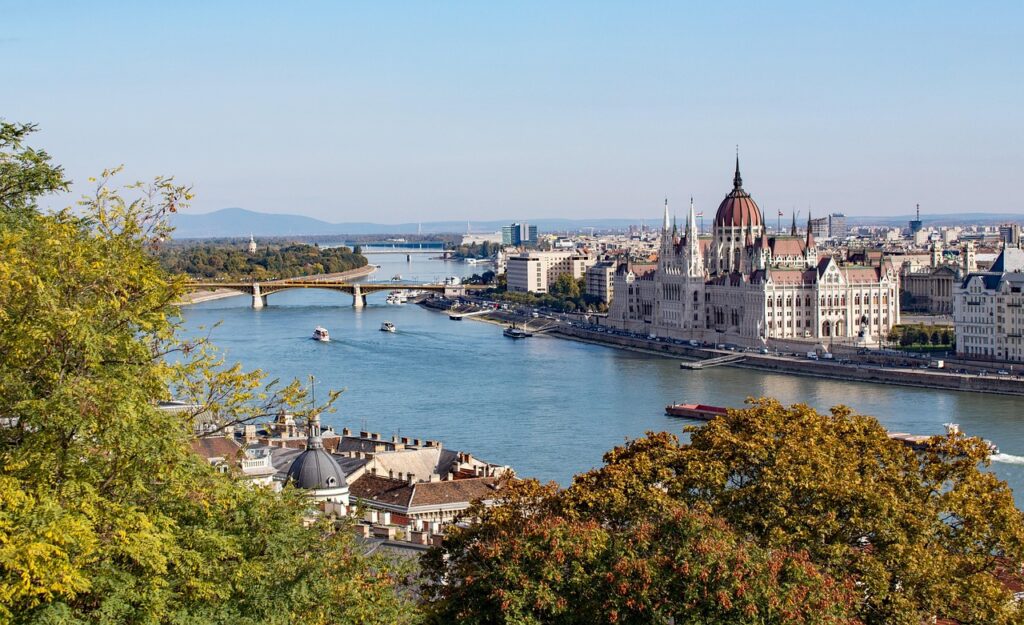
A landlocked country in the heart of Europe that has been at the intersection of every significant historical force for a thousand years — Roman, Ottoman, Habsburg, Soviet — and absorbed each one without losing the thread of a culture so distinct that its language remains incomprehensible to every neighboring nation, belonging to no Indo-European family, arriving from the Eurasian steppe with the Magyar tribes in 895 and staying exactly as itself ever since. Budapest is two cities separated by the Danube and unified by a chain of bridges — Buda on the hilly western bank with its castle district and medieval lanes and panoramic terraces, Pest on the flat eastern bank with its grand boulevards, art nouveau market halls, and the ruin bars that colonized the crumbling Jewish quarter in the early 2000s and accidentally created a nightlife culture that drew comparison to Berlin. The thermal bath tradition is not a wellness trend but a geological fact — the city sits above 123 natural hot springs, and the Ottomans who occupied Budapest for 150 years built the domed bath houses that Budapestians still use on Tuesday mornings the way other cities use coffee shops. The Great Hungarian Plain stretches east toward Romania in a flatness so complete it has its own austere beauty — csikós horsemen, Puszta sunsets, and a silence that the wind moves through rather than disturbs. Tokaj in the northeast produced the wine that Louis XIV called the king of wines and the wine of kings four centuries ago, from vineyards so significant that their classification system predates Bordeaux’s by a century. Hungary doesn’t announce itself. It waits for you to notice what it’s been doing all along.
Evoke — Why You Visit Hungary
You come to Hungary because Europe stopped surprising you and you stopped expecting it to. You’ve done the canonical circuit — Paris, Rome, Barcelona, Amsterdam — and they delivered exactly what they promised, which was extraordinary and somehow insufficient. You need a capital city that operates outside the tourist imagination’s default settings, where the architecture is as grand as Vienna but the streets belong to the people who live there, where you can sit in a thermal bath on a Wednesday morning surrounded by elderly Hungarian men playing chess on floating boards and understand that this is not a performance for visitors — this is Tuesday. You’ve been seeking the version of European culture that didn’t get smoothed into a product and Hungary preserved it — partly by geography, partly by language that kept it sovereign in ways that borders couldn’t, partly by a stubborn cultural confidence that decided its own traditions were worth maintaining regardless of what was fashionable elsewhere. You came here because you needed to be surprised by a continent you thought you knew. Hungary has been waiting for exactly this conversation.
Explore — How You Experience Hungary
Arrive at the Széchenyi thermal baths on a weekday morning before the tour groups discover that weekday mornings exist — lower yourself into the 38-degree outdoor pool in the neo-baroque courtyard, steam rising into cold air, and find a chess board floating at the pool’s edge where a man in his seventies will accept your challenge without looking up from the position he’s already considering, which he has been considering since before you arrived and will continue considering after you leave. Walk Castle Hill in Buda at the hour before sunset when the day-trippers descend and the light arrives at the angle that turns the limestone facades the color of old honey — the Matthias Church’s diamond-patterned roof tiles catching the last direct sun, the Fisherman’s Bastion’s neo-Romanesque towers giving you the Pest panorama that explains why two cities decided to become one. Descend into a ruin bar in the seventh district — Szimpla Kert, the original, a derelict apartment block colonized by mismatched furniture, bicycle wheels hung from ceilings, plants growing through broken walls — and understand that this is not a designed aesthetic but an actual ruin that artists moved into and made habitable and beautiful in the way that Budapestians make things beautiful, which is without asking permission. Take the train to Eger and drink red wine directly from the barrel in the Valley of the Beautiful Women — a cluster of wine cellars carved into volcanic rock where the local Egri Bikavér, Bull’s Blood, is poured by the glass at tables outside under plane trees and the afternoon has nowhere to be. Stand in the Great Market Hall’s upper gallery and look down at the ground floor’s paprika vendors, butchers, and lace merchants operating under an iron and glass roof built in 1896 for a millennial exhibition celebrating a thousand years of Hungarian statehood, and still functioning as exactly what it was designed to be. Eat gulyás — not the stew served in tourist restaurants but the soup it actually is, paprika-red, with tender beef and csipetke pasta — at a table where the cook learned the recipe from her mother who learned it from hers and the chain goes back far enough that improvement stopped being necessary.
Evolve — Who You Become in Hungary
You leave Hungary with a new appreciation for cultural sovereignty — the particular dignity of a small nation that maintained its identity across a thousand years of occupation by insisting on a language nobody else could speak and traditions nobody else had and music nobody else made. The Hungarian word buli means party but carries a weight the English word doesn’t — a collective joy that has been practiced as survival, the understanding that celebrating while things are difficult is not denial but defiance, and that defiance sustained as a cultural habit becomes character. You carry the thermal baths most specifically — not the experience of being warm in water, which is pleasant but forgettable, but the social architecture of it, the democratic ease of strangers sharing the same heat without performing for each other, the chess game conducted in companionable silence between people who don’t share a language and don’t need one. You come home and start protecting your own traditions — the small rituals, the specific pleasures, the habits that make you recognizably yourself rather than a version adjusted for social convenience. Hungary reminded you that distinctiveness is not stubbornness. It’s the thing worth keeping. You start keeping it.
Your practical guide to Hungary starts below 👇
🕰️ Hungary Historical Backdrop
Hungary’s history is a captivating epic of the Magyars—a nomadic people from the Urals who established a powerful kingdom in the heart of Europe over a thousand years ago. From the golden era of the Austro-Hungarian Empire to the sobering echoes of the 20th century and its vibrant democratic rebirth, Hungary has always been a cultural bridge between East and West. Its story is told in the monumental architecture of Budapest, the “Stone Apostles” of its Romanesque cathedrals, the minarets of the Ottoman era, and the resilient spirit of a nation that has preserved its unique language and identity against all odds. Today, it stands as a land of sophisticated art, intellectual depth, and a cherished lifestyle centered around community, healing waters, and a legendary culinary tradition.
🌟 Hungary Local Experiences
Beyond the famous landmarks, discover Hungary’s soul in the steam-filled grandeur of a century-old thermal bath, the lively chaos of a “Ruin Bar” in a reclaimed courtyard, or the quiet elegance of a traditional coffee house where writers have gathered for generations. Experience the sensory delight of tasting a complex Tokaji wine at a family cellar, the thrill of a folk dance performance in a rural village, or the meditative calm of a boat ride through the Danube Bend. These moments reveal a nation that finds beauty in the intersection of grit and grace, tradition and subculture.
🌄 Hungary Natural Wonders
- Lake Balaton: Central Europe’s largest freshwater lake, known for its turquoise waters, volcanic vineyards on the north shore, and vibrant summer resorts.
- Danube Bend: A dramatic curve in the river where the mountains meet the water, offering spectacular views from the heights of Visegrád.
- Hortobágy Puszta: A UNESCO-listed vast prairie landscape, home to the Hungarian “cowboys” (csikós) and unique gray cattle.
- Caves of Aggtelek Karst: An extensive subterranean world of stalactites and stalagmites shared with Slovakia.
- Thermal Lake of Hévíz: The world’s largest biologically active natural thermal lake, where you can swim among water lilies even in winter.
🏙️ Hungary Must-See Cities
- Budapest: (Capital) The “Queen of the Danube,” blending the hilly, historic Buda with the vibrant, urban Pest. (Imperial, Cinematic, Healing)
- Eger: A baroque jewel famous for its castle, Ottoman minaret, and the legendary “Bull’s Blood” red wine. (Historic, Viticultural, Charming)
- Pécs: A Mediterranean-flavored city in the south, known for its Early Christian Necropolis and Zsolnay ceramics. (Cultural, Artistic, Ancient)
- Szentendre: A colorful riverside town near Budapest, famous for its galleries, museums, and Mediterranean atmosphere. (Artsy, Picturesque, Relaxed)
- Debrecen: The “Calvinist Rome,” serving as the gateway to the Great Plains and known for its historic university and Great Church. (Historic, Academic, Gateway)
🏞️ Hungary National Parks & Nature Reserves
Managed by the Hungarian State Nature Conservation.
- Hortobágy National Park: Protecting the unique flora, fauna, and traditional pastoral life of the Great Plain.
- Bükk National Park: A mountainous region of limestone peaks, deep caves, and dense forests.
- Balaton Uplands National Park: Featuring extinct volcanoes, lavender fields, and the stunning Tihany Peninsula.
🏛️ UNESCO World Heritage Sites
- Budapest, including the Banks of the Danube, the Buda Castle Quarter and Andrássy Avenue — One of the world’s most outstanding urban cityscapes.
- Old Village of Hollókő and its Surroundings — A living museum of 17th-century rural life.
- Millenary Benedictine Abbey of Pannonhalma — A continuous spiritual center for over 1,000 years.
- Tokaj Wine Region Historic Cultural Landscape — The world’s first official wine region.
- For a full list, visit the UNESCO Hungary Portal.
🖼️ Hungary Museums & Galleries
- Hungarian National Museum (Budapest): Essential for understanding the history of the Hungarian people.
- Museum of Fine Arts (Budapest): Housing an incredible collection of European masters from El Greco to Monet.
- House of Terror Museum: A moving memorial to the victims of the 20th-century regimes.
🎉 Hungary Festivals & Celebrations
- Sziget Festival (Budapest): (August) One of Europe’s largest music and cultural festivals held on an island in the Danube.
- Busójárás (Mohács): (February) A wild, UNESCO-recognized winter-ending carnival featuring scary wooden masks and parades.
- St. Stephen’s Day: (August 20) The national day of Hungary, celebrated with spectacular fireworks over the Danube.
🧽 How to Arrive
- ✈️ By Air
- Budapest Ferenc Liszt (BUD) is the main international hub.
- Airlines: Wizz Air (Home carrier) and major international airlines connect Budapest to the world.
- 🚆 By Rail
- MAV-Start operates a dense network. Budapest is a major hub for EuroCity and Railjet trains from Vienna, Prague, and Munich.
- 🚗 By Road
- Hungary is part of the Schengen Area. An electronic vignette (e-matrica) is required for motorways and can be bought online. Driving is on the right.
📶 Stay Connected
- SIM Cards: Major providers are Telekom, Yettel, and Vodafone.
- Where to buy: Kiosks at the airport and official stores in malls. Passport registration is required.
- eSIM: Supported by all major providers; available via apps like Airalo.
🏨 Where to Stay
Hungary offers everything from Belle Époque palaces to contemporary boutique hotels.
- Four Seasons Gresham Palace: An Art Nouveau masterpiece on the Danube.
- Kozmo Hotel Suites & Spa: A member of Leading Hotels of the World in a historic Pest building.
- Castle Stays: Explore regional manor houses and castles turned luxury hotels, such as Schossberger Castle.
⛳ Unique Finds
- The Memento Park: An open-air museum housing the colossal statues of the communist era.
- Herend Porcelain: Visit the Manufactory to see how the world’s most delicate hand-painted porcelain is made.
- The Children’s Railway: A narrow-gauge railway in the Buda Hills run almost entirely by children (under adult supervision).
🤝 Hungary Cultural Guidance
- Greetings: A polite “Jó napot” (Good day) is standard. Handshakes are common.
- The “No Clinking” Myth: While changing, many Hungarians still do not clink beer glasses due to a historic 1848 legend—it is polite to watch others first.
- Tipping: 10-15% is standard in restaurants. Do not leave money on the table; tell the waiter the total amount you want to pay.
- Basic Phrases:
- Hello: “Szia” (See-ya)
- Thank you: “Köszönöm” (Kuh-suh-nuhm)
- Please: “Kérem” (Kay-rem)
🛂 Hungary Entry & Visa Requirements
- Schengen Area: Citizens of the UK, US, Canada, Australia, and EU member states generally do not require a visa for stays up to 90 days.
- Official Source: Consult the Consular Services of Hungary.
💰 Practical Essentials
- Currency: Hungarian Forint (HUF). While cards are widely accepted, carry some cash for smaller markets and rural areas.
- Electricity: Type C and F (Two round pins). Voltage is 230V.
- Safety: Hungary is considered one of the safest countries in Central Europe.
- Climate: Best visited in late spring (May/June) or early autumn (September/October).
✨ Bonus Tip
To truly embrace Hungary, find your way to a “Táncház” (Dance House). These are not tourist shows, but casual evenings where locals of all ages gather to learn and dance traditional folk steps to live violin music. It is in this collective, rhythmic movement that you will feel the deep, pulsing energy of the Magyar spirit—a connection to the earth and the past that is both intoxicating and transformative.
🔗 Featured Links
- Official Tourism: Visit Hungary.
- Public Transport: BKK Budapest.

Beyondia
Trusted Travel CompanionReal digital nomad. I travel. I learn. I grow.
What about you? Where are you going?