GoBeyondia Atlas 🗺️ Africa Region 🗾
Kenya: Where sixty thousand wildebeest cross a crocodile river on instinct alone and the Maasai have been reading this landscape for a thousand years.
Kenya in 30 Seconds
A country that sits on the equator and somehow contains everything — savannah, rainforest, alpine desert, coral reef, and the Great Rift Valley, which is the earth’s attempt to split Africa in two and has been failing at it for thirty million years in the most dramatically beautiful way imaginable. Nairobi is the only city on earth with a national park on its border — lions visible from the approach road, the Nairobi skyline rising behind them in a juxtaposition so improbable it stopped being a metaphor and became simply Tuesday. The Maasai Mara in the southwest is the world’s most celebrated wildlife arena — 1,500 square kilometers of open grassland where the predator-prey relationship that shaped all animal life on earth, including ours, still plays out daily without editorial intervention. Between July and October the Great Migration arrives from Tanzania’s Serengeti — two million wildebeest, zebra, and gazelle following grass and rain in a circular pattern they have been following since before human civilization developed agriculture, crossing the Mara River through crocodile-dense water in crossings so chaotic and violent and alive they make every wildlife documentary feel like an understatement. The coast is a different Kenya entirely — Mombasa’s old town, Lamu’s UNESCO coral-stone architecture, dhow sailing traditions that connected East Africa to Arabia and India for two thousand years before the container ship made it unnecessary. Mount Kenya rises to 5,199 meters through distinct ecological zones — savannah to rainforest to bamboo to alpine meadow to glaciated peak — the second highest mountain in Africa and the spiritual center of the Kikuyu people who have lived in its shadow since before the altitude had a recorded measurement.
Evoke — Why You Visit Kenya
You come to Kenya because you have been living at a remove from the natural world for so long that you’ve stopped noticing the distance. The food arrives in packaging, the seasons are managed by thermostats, the wildest thing in your daily landscape is weather, occasionally. You need to sit in a Land Cruiser at dawn on the Maasai Mara as a cheetah begins her hunt — watching her read the grass, calculate the distance, commit to a direction with her entire body — and understand that this level of presence, this absolute inhabitation of the current moment, is what attention actually looks like when survival depends on it. You’ve been reading about what it means to be fully present in books written by people who found it in meditation retreats, and all of it is true and useful and none of it is the Mara at dawn. Kenya will give you the original. You also came because somewhere in your understanding of the world, Africa exists as a concept rather than a place — vast, undifferentiated, known through other people’s descriptions. Kenya will replace the concept with specificity: the particular red of Maasai ochre, the specific sound of the Mara River in July, the exact quality of equatorial light at six in the morning that makes everything it touches appear to be the most important thing on earth.
Explore — How You Experience Kenya
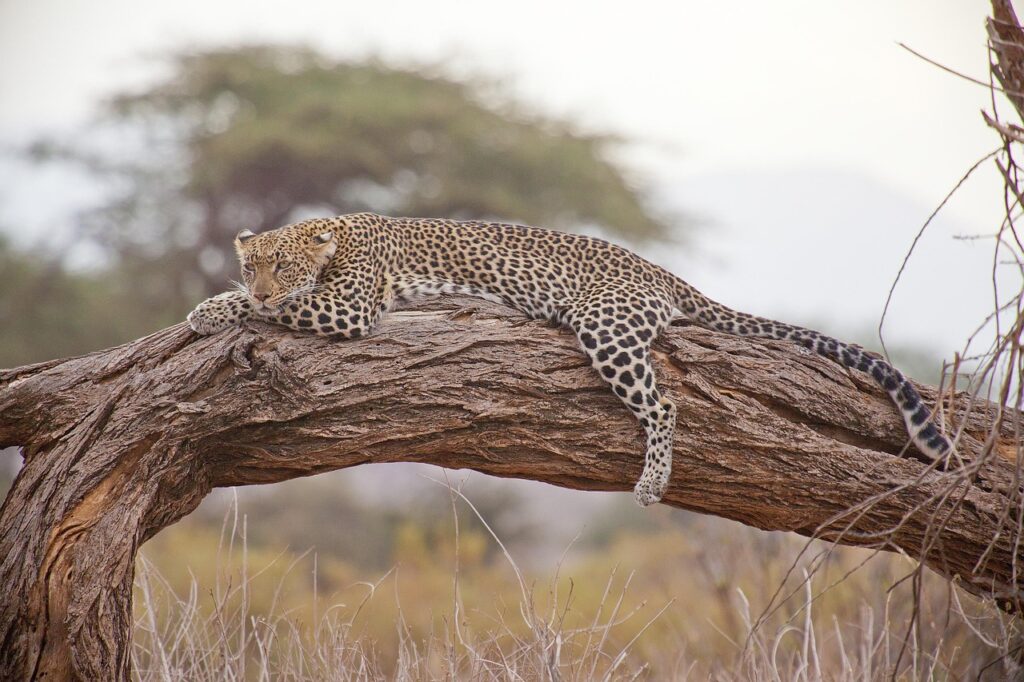
Wake at 5:30am in a Mara camp when the canvas walls are still dark and dress in layers because the equatorial morning is colder than the equator has any business being and climb into a Land Cruiser that moves into the grassland before full light, finding the leopard your guide tracked to a fig tree yesterday — she is still there, draped along a branch with the geometric ease of a creature whose skeleton has a different relationship with gravity than yours does, and she looks at you once with amber eyes and returns to something more interesting. Position yourself at the Mara River in August when the wildebeest have been gathering on the opposite bank for three days in the particular collective paralysis that precedes a crossing — thousands of animals reading the same fear, the same necessity, the same calculation that none of them can complete individually — until one goes and then they all go, the river becoming animal and sound and crocodile and chaos for eleven minutes that compress more biology and drama and ancient pattern into a single spectacle than anything the natural world produces in more temperate latitudes. Walk a Maasai village with a warrior who explains the meaning of each ochre pattern on his cloak, the significance of the cattle enclosure’s construction, the way the settlement’s circular architecture encodes a cosmology that preceded the wheel and has outlasted several civilizations that had one. Fly to Lamu and arrive by boat since the island has no cars — only donkeys, dhows, and the narrow coral-stone lanes of a Swahili trading city that has been having the same conversation with the Indian Ocean since the fourteenth century. Snorkel the Watamu Marine National Park where the coral formations survived the 1998 bleaching event and the 2016 event and have been rebuilding with the stubborn persistence of reef systems that have been operating since before vertebrates existed. Eat nyama choma — charcoal-grilled goat, the national social ceremony, eaten with kachumbari salsa and ugali at a roadside joint outside Nairobi where the meat arrives on a board and the eating is done with hands and the conversation lasts longer than the meal because that was always the point.
Evolve — Who You Become in Kenya
You leave Kenya with your sense of scale permanently recalibrated and your relationship with time quietly rearranged. The Great Migration is two million animals moving in a pattern older than agriculture, responding to rainfall patterns the wildebeest read through grass chemistry, executing a journey no individual animal completes more than a handful of times in its life but the collective has been completing without interruption for a million years. Standing inside that pattern — even briefly, even as a spectator — does something to your understanding of what individual urgency actually amounts to in the longer frame. The Maasai offered a different recalibration: a culture that measures wealth in cattle and children and community obligations, that has maintained its identity across colonial administration, national independence, and the pressures of a tourism economy that wanted to turn it into a product, and has so far declined. You carry the Mara specifically — not the dramatic crossings but the ordinary hours between them, the grassland doing nothing in particular, the sky performing its equatorial blue above a landscape that has been exactly this for longer than your civilization has had a name for beauty. You come home and stop rushing toward the next thing before the current thing has finished. Kenya showed you what paying attention actually costs and what it returns. The exchange rate is favorable. You just have to be willing to sit still long enough to make the trade.
Your practical guide to Kenya starts below 👇
🕰️ Kenya Historical Backdrop
Kenya’s history is a profound narrative of being the “Cradle of Mankind,” where some of the world’s oldest human remains were discovered in the Turkana Basin. From the ancient Swahili city-states that flourished through Indian Ocean trade to the inland migrations of diverse ethnic groups and the eventual struggle for independence, Kenya has always been a vibrant crossroads. Its story is told in the narrow stone alleys of Lamu, the imposing battlements of Fort Jesus in Mombasa, the resilience of the Maasai warriors, and the stirring legacy of the “Harambee” spirit—the national motto meaning “all pull together.” Today, Kenya stands as a dynamic East African leader, a nation that has successfully pioneered global conservation models while fostering a high-tech, forward-thinking society in the heart of the savanna.
🌟 Kenya Local Experiences
Beyond the iconic safaris, discover Kenya’s soul in the communal joy of a traditional “Nyama Choma” feast, the rhythmic chants and high jumps of an authentic Maasai cultural ceremony, or the serene pace of life in a Swahili village on the coast. Experience the bustling energy of Nairobi’s “Silicon Savannah,” witness the intricate beadwork of Samburu artisans, or enjoy a sunset “sundowner” overlooking the vast expanse of the Great Rift Valley. Whether it’s sharing a cup of chai with a local farmer or listening to the haunting call of a fish eagle over Lake Naivasha, these moments reveal a nation that honors its deep roots while reaching for a bright, innovative future.
🌄 Kenya Natural Wonders
- The Maasai Mara: One of the world’s premier wildlife destinations, famous for the annual Great Migration of wildebeest and zebra.
- Mount Kenya: Africa’s second-highest peak, offering dramatic glacial landscapes and unique high-altitude flora.
- The Great Rift Valley: A massive geological trench featuring spectacular lakes, dormant volcanoes, and towering escarpments.
- Amboseli National Park: Renowned for its large elephant herds and breathtaking views of Mount Kilimanjaro across the border.
- The Hell’s Gate National Park: A unique park where visitors can hike or cycle among wildlife amidst dramatic rock towers and geothermal steam.
- The Mara River: The dramatic stage for the migration crossings, teeming with crocodiles and hippos.
🏙️ Kenya Must-See Cities & Towns
- Nairobi: (Capital) A high-energy metropolis where a national park sits on the city’s doorstep, known for its vibrant arts scene and historic museums. (Cosmopolitan, Green, Energetic)
- Mombasa: A historic coastal city on an island, blending African, Arab, and Indian influences in its atmospheric Old Town. (Swahili, Maritime, Historic)
- Lamu: A car-free island and the oldest, best-preserved Swahili settlement in East Africa, where donkeys are the primary mode of transport. (Ancient, Serene, Cultural)
- Kisumu: A relaxed port city on the shores of Lake Victoria, offering spectacular sunsets and a glimpse into Luo culture. (Lakeside, Tropical, Calm)
- Naivasha: A gateway to the Rift Valley’s freshwater lakes, famous for birdwatching and flower farms. (Scenic, Adventurous, Natural)
🏞️ Kenya National Parks & Nature Reserves
Managed with global leadership in wildlife protection by the Kenya Wildlife Service (KWS).
- Maasai Mara National Reserve: The crown jewel of African wildlife viewing.
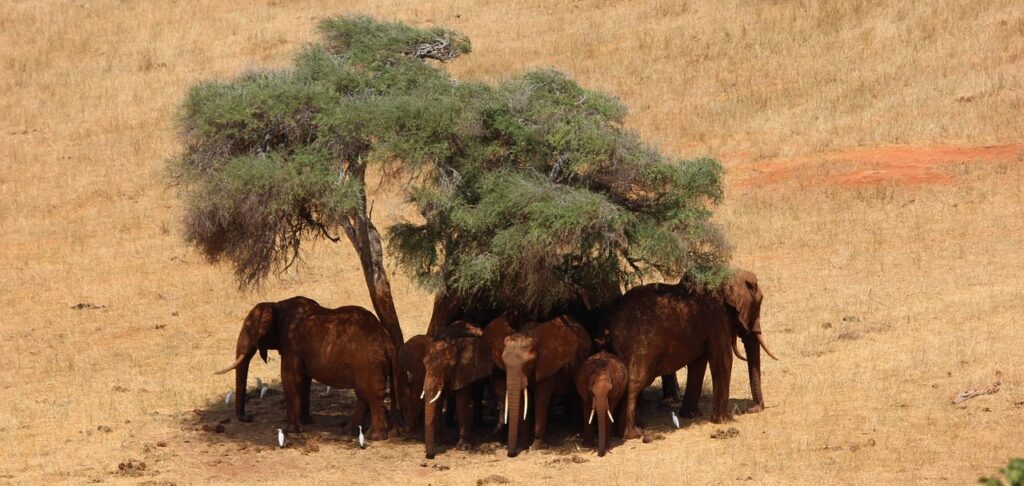
- Tsavo East & West National Parks: Together forming one of the largest protected areas in the world, famous for its “red elephants.”
- Samburu National Reserve: A rugged northern park home to rare species like the Grevy’s zebra and reticulated giraffe.
🏛️ UNESCO World Heritage Sites
- Lamu Old Town — The oldest and best-preserved Swahili settlement in East Africa.
- Fort Jesus, Mombasa — A 16th-century Portuguese fort illustrating the history of coastal trade.
- Mount Kenya National Park/Natural Forest — An exceptional example of ecological processes and alpine beauty.
- Kenya Lake System in the Great Rift Valley — Includes Lakes Elementaita, Nakuru, and Bogoria, home to massive bird populations.
- For a full list, visit the UNESCO Kenya Portal.
🖼️ Kenya Museums & Galleries
- Nairobi National Museum: Showcases Kenya’s rich heritage including the celebrated hall of human evolution.
- Karen Blixen Museum (Nairobi): The former home of the Out of Africa author, offering a glimpse into colonial-era life.
- Nairobi Gallery: Housed in the historic Old PC’s office, featuring world-class African art collections.
🎉 Kenya Festivals & Celebrations
- The Great Migration: (July–October) While a natural event, it is the focus of peak cultural and safari activity across the nation.
- Lamu Cultural Festival: (November) A celebration of Swahili heritage featuring donkey races, dhow races, and traditional music.
- Madaraka Day: (June 1) Commemorating the day Kenya attained internal self-rule.
- Jamhuri Day (Independence Day): (December 12) Kenya’s most important national holiday celebrating full independence.
🧽 How to Arrive
- ✈️ By Air
- Hubs: Jomo Kenyatta International (NBO) in Nairobi and Moi International (MBA) in Mombasa.
- Airlines: Kenya Airways (Flag carrier) and major international airlines (Emirates, Qatar Airways, British Airways) connect Kenya to the world.
- 🚆 By Rail
- The Madaraka Express (SGR) offers a modern, high-speed rail service connecting Nairobi and Mombasa through the heart of Tsavo National Park.
- 🚗 By Road
- Kenya shares land borders with Tanzania, Uganda, Ethiopia, South Sudan, and Somalia. Driving is on the left.
📶 Stay Connected
- SIM Cards: Major providers are Safaricom (best coverage), Airtel, and Telkom.
- M-Pesa: Kenya is the world leader in mobile money. Visitors can set up M-Pesa on a local SIM to pay for almost anything, from markets to national park fees.
- eSIM: Supported by Safaricom and Airtel; available for instant activation via international platforms.
🏨 Where to Stay
From legendary colonial-era hotels to world-class luxury safari lodges and sustainable tented camps.
- Giraffe Manor (Nairobi): Famous for its resident giraffes that visit guests during breakfast.
- Segera Retreat (Laikipia): A luxury sanctuary focused on the “4Cs” (Conservation, Community, Culture, and Commerce).
- The Ark (Aberdare): A unique lodge shaped like Noah’s Ark, overlooking a floodlit waterhole and salt lick.
⛳ Unique Finds
- Sheldrick Wildlife Trust: Visit the elephant orphanage in Nairobi to witness the feeding and care of rescued calves.
- Kazuri Beads: A workshop in Karen where single mothers create beautiful, hand-painted ceramic beads.
- Matatu Culture: Experience the loudly decorated, music-filled mini-buses that are a unique part of Nairobi’s urban identity.
🤝 Kenya Cultural Guidance
- Greetings: A handshake is essential. It is polite to use “Jambo” for tourists, but “Habari” (How are you?) is more common among locals.
- Photography: Always ask for permission before taking photos of people, especially in rural or traditional communities (Maasai/Samburu).
- Respect: Kenya is a diverse nation; dress modestly when visiting the coast (predominantly Muslim) and when entering religious sites.
- Basic Phrases:
- Hello: “Jambo” / “Habari”
- Thank you: “Asante sana” (Ah-san-te sah-nah)
- Please: “Tafadhali” (Tah-fah-thah-lee)
- Welcome: “Karibu” (Kah-ree-boo)
🛂 Kenya Entry & Visa Requirements
- eTA: Kenya has transitioned to a “Visa-Free” regime but requires a mandatory Electronic Travel Authorisation (eTA) for all foreign visitors.
- Official Source: Apply online via the official Kenya eTA Portal.
💰 Practical Essentials
- Currency: Kenyan Shilling (KES). While credit cards are used in hotels, M-Pesa or cash is necessary for local markets.
- Electricity: Type G (Three rectangular pins). Voltage is 240V.
- Safety: Kenya is generally safe for travelers, though standard urban vigilance is advised in Nairobi and Mombasa. Always follow your safari guide’s instructions.
- Climate: Two rainy seasons (March–May and November–December). Best visited during the dry seasons (June–October and January–February).
✨ Bonus Tip
To truly embrace Kenya, look for the “Harambee” spirit in everyday life. It is more than a slogan; it is the heartbeat of the community. Whether it’s a group of people coming together to help a stuck vehicle or a collective effort to support a local school, this unity is what defines the nation. Engage in conversation, visit a local market, and allow the warmth of the Kenyan people to guide you. It is in these human connections that the true, transformative power of the savanna reveals itself.
🔗 Featured Links
- Official Tourism: Magical Kenya.
- National Parks: Kenya Wildlife Service.

Beyondia
Trusted Travel CompanionReal digital nomad. I travel. I learn. I grow.
What about you? Where are you going?