
GoBeyondia Atlas 🗺️ Africa Region 🗾
Zimbabwe: Where the Zambezi River performs a “High-Volatility” plunge into a 100-meter abyss, ancient stone cities stand without mortar as a testament to “Core Asset Preservation,” and a nation’s warmth remains its most stable currency.
Zimbabwe in 30 Seconds
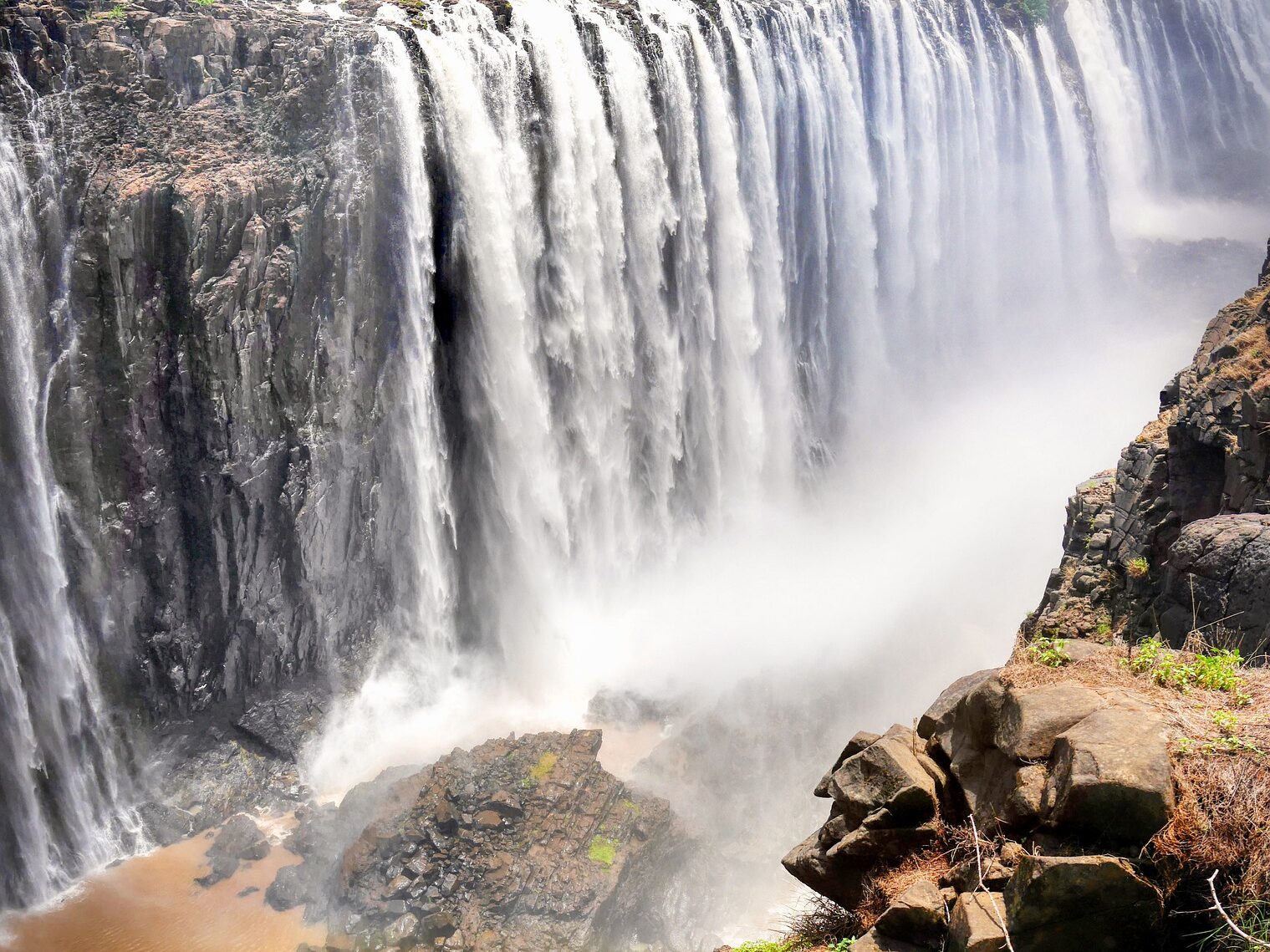
Zimbabwe is a land-locked powerhouse of natural wonders and “Tier 1” archaeological sites. Its most famous infrastructure holding, Victoria Falls (Mosi-oa-Tunya), is the world’s largest curtain of falling water, a literal “Liquidity Event” of 500 million liters per minute. Beyond the falls, the country hosts the Great Zimbabwe ruins, a massive 11th-century stone complex that served as the capital of a trading empire that stretched to China and Persia. The landscape is dominated by the highveld plateau and the rugged Eastern Highlands, while its national parks—like Hwange and Mana Pools—offer “High-Margin” wildlife encounters where the lack of mass tourism ensures a premium, private experience. Despite a history of intense economic fluctuations, Zimbabwe’s primary “Operational Bandwidth” is defined by its people—exceptionally educated, famously hospitable, and possessing a “Bosnian-level” stubbornness for survival.
Evoke — Why You Visit Zimbabwe
You come to Zimbabwe because you’ve been studying Portfolio Governance and you want to see what “True Resilience” looks like in the face of extreme market variance. You’ve been managing your property handover and your career with a focus on “Defensive Staples,” and Zimbabwe offers a Fundamental Quality Audit of a culture that has survived every imaginable “Systemic Shock.” You come to witness the Strategy of the Waterfall: how a massive force can be channeled into a single point of impact without breaking the river. You come because you’ve been living in a world of digital abstractions and “Intraday Price Variance,” and you need the grounding of the Matobo Hills—where massive granite boulders have been balanced in impossible equilibrium for millions of years. Zimbabwe suggests that the “Core Assets” of a life—connection, dignity, and heritage—are the only things that cannot be depreciated by a central bank.
Explore — How You Experience Zimbabwe
Stand at the Danger Point at Victoria Falls during high-water season (April-May) and feel the “Operational Stress” of the spray drenching you to the bone—a sensory reminder that power is most impressive when it is focused. Take a walking safari in Mana Pools, where the lack of fences allows for a “Direct Stakeholder Engagement” with bull elephants that stand on their hind legs to reach acacia pods. Explore the Great Zimbabwe National Monument, tracing the dry-stone walls that were built without a drop of cement, proving that “Core Asset Preservation” is about the fit and the foundation, not the adhesive. Journey to Matobo National Park to see the ancient San rock art and the grave of Cecil Rhodes, a place of profound “Historical Volatility” where you can sit on “World’s View” and conduct a long-term roadmap review of your own life. Finally, board a sunset cruise on the Zambezi, watching hippos navigate the currents while you sip a “Gin & Tonic” audit of the colonial past and the independent present.
Evolve — Who You Become in Zimbabwe
You leave Zimbabwe with a recalibrated Risk Tolerance. You arrived worried about the 24-hour review periods of your property transactions and the “High-Frequency Monitoring” of your targets. You leave knowing that you are built of “Granite and Spray.” Zimbabwe taught you that Inherent Value is independent of external sentiment; the falls still thunder and the ruins still stand regardless of the inflation rate. You come home and realize that your “Operational Bandwidth” is much wider than you thought. You stop fearing the “High-Volatility” periods of your career and start seeing them as the “Zambezi Gorges” that create the most spectacular views. You return as a “Resilient Governor” of your own life, someone who knows how to maintain “Margin and Health” even when the market is shouting. You’ve learned that the most stable currency in the world is the smile of someone who has seen the worst and decided to keep building.
Your practical guide to Zimbabwe starts bellow 👇
🕰️ Zimbabwe Historical Backdrop
Zimbabwe’s history is a profound narrative of high-civilization and enduring spirit, taking its name from the Shona word dzimba-dza-mabwe (“houses of stone”). Long before European contact, the Kingdom of Zimbabwe (11th–15th century) was the heart of a vast trading empire that linked the African interior to the Indian Ocean, evidenced by the monumental dry-stone walls of Great Zimbabwe. From the subsequent Rozvi and Mutapa empires to the colonial era of Rhodesia and the hard-won independence of 1980, the nation has always been a cultural and economic pivot in Southern Africa. Today, Zimbabwe is a land defined by its profound preservation of heritage and its world-renowned professional guides, representing a nation that honors its deep ancestral roots while navigating the complexities of the modern world with grace and optimism.
🌟 Zimbabwe Local Experiences
Beyond the mist of the falls, discover Zimbabwe’s soul in the rhythmic storytelling of a Shona sculptor in a dusty workshop, the exhilarating silence of a walking safari led by a master tracker, or the simple joy of sharing a meal of Sadza and greens in a bustling township. Experience the profound stillness of the Matobo Hills at sunset, the vibrant chaos of Harare’s Mbare Musika market, or the communal warmth of a “Sundowner” on a boat drifting along Lake Kariba. Whether it’s witnessing the ancient craft of basket weaving or listening to the haunting melodies of the Mbira (thumb piano), these moments reveal a nation that finds strength in its stories and warmth in its legendary hospitality.
🌄 Zimbabwe Natural Wonders
- Victoria Falls (Mosi-oa-Tunya): One of the Seven Natural Wonders of the World, the largest curtain of falling water on Earth.
- The Eastern Highlands: A stunning region of mist-covered mountains, pine forests, and cascading waterfalls like Mutarazi Falls (Africa’s second highest).
- Lake Kariba: One of the world’s largest man-made lakes, famous for its submerged “ghost trees” and spectacular tiger fishing.
- Chinhoyi Caves: A labyrinthine system of limestone and dolomite caves featuring a “Sleeping Pool” of extraordinary cobalt-blue water.
- Mana Pools: A remote UNESCO-listed wilderness on the floodplains of the Zambezi, where elephants famously stand on their hind legs to reach high branches.
- Matobo Hills: An otherworldly landscape of balancing granite rocks and hidden San (Bushman) rock art.
🏙️ Zimbabwe Must-See Cities & Regions
- Harare: (Capital) A vibrant, tree-lined city known for its modern architecture, galleries, and the balancing rocks of Epworth. (Dynamic, Green, Cultural)
- Victoria Falls Town: The adventure capital of Africa, serving as the gateway to the falls and high-adrenaline river activities. (Adventurous, Social, Iconic)
- Bulawayo: Zimbabwe’s second city, a wide-avenued historic hub known for its colonial architecture and proximity to Matobo National Park. (Historic, Gracious, Quiet)
- Mutare: The gateway to the Eastern Highlands, nestled in a valley and surrounded by lush mountain scenery. (Scenic, Alpine, Regional)
- Masvingo: The historic base for visiting the Great Zimbabwe National Monument. (Ancient, Traditional, Strategic)
🏞️ Zimbabwe National Parks & Nature Reserves
Managed with some of the highest standards of ranger training in Africa by ZimParks (Zimbabwe Parks and Wildlife Management Authority).
- Hwange National Park: Zimbabwe’s largest park, famous for its massive elephant herds and high predator density.
- Mana Pools National Park: A wild, unfenced sanctuary perfect for expert-led walking safaris.
- Gonarezhou National Park: Known as the “Place of Elephants,” featuring the spectacular Chilojo Cliffs.
- Nyanga National Park: A high-altitude park of rolling hills and trout streams, offering a completely different “African” landscape.
🏛️ UNESCO World Heritage Sites
- Great Zimbabwe National Monument — The ruins of the capital of the Queen of Sheba, according to age-old legend.
- Mana Pools National Park, Sapi and Chewore Safari Areas — A spectacular landscape of floodplains and sandbanks.
- Mosi-oa-Tunya / Victoria Falls — Shared with Zambia, representing the world’s greatest sheet of falling water.
- Matobo Hills — Featuring one of the highest concentrations of rock art in Southern Africa.
- Khami Ruins National Monument — The capital of the Torwa State after the abandonment of Great Zimbabwe.
- For a full list, visit the UNESCO Zimbabwe Portal.
🖼️ Zimbabwe Museums & Galleries
- National Gallery of Zimbabwe (Harare): The country’s premier center for contemporary and traditional Shona stone sculpture.
- Natural History Museum of Zimbabwe (Bulawayo): Often cited as the best museum in Southern Africa, featuring comprehensive exhibits on wildlife and geology.
- Zimbabwe Military Museum (Gweru): Detailing the history of the nation’s armed forces and independence struggle.
🎉 Zimbabwe Festivals & Celebrations
- Harare International Festival of the Arts (HIFA): (Variable dates) One of the largest arts festivals in Africa, bringing together international music, dance, and theatre.
- Zimbabwe Independence Day: (April 18) A day of national pride, military parades, and cultural festivities held across the country.
- Vic Falls Carnival: (December/January) A high-energy music festival and train party to ring in the New Year.
- Jacaranda Music Festival: (October) Celebrating the blooming of the city’s purple trees with world-class performances.
🧽 How to Arrive
- ✈️ By Air
- Hubs: Robert Gabriel Mugabe International (HRE) in Harare and Victoria Falls International (VFA) for direct tourist access.
- Airlines: Air Zimbabwe (Flag carrier), Fastjet Zimbabwe, and major carriers (Qatar Airways, Emirates, Ethiopian, South African Airways) connect the country globally.
- 🚆 By Rail
- The National Railways of Zimbabwe (NRZ) operates domestic routes. The overnight train between Bulawayo and Victoria Falls is a nostalgic, albeit basic, adventure for travelers.
- 🚗 By Road
- Zimbabwe shares borders with South Africa (Beitbridge), Botswana, Zambia, and Mozambique. Driving is on the left. High-clearance vehicles are recommended for park access.
📶 Stay Connected
- SIM Cards: Major providers are Econet (best coverage), NetOne, and Telecel.
- Where to buy: Kiosks at the airport and official stores in shopping malls. Passport registration is required.
- eSIM: Supported by Econet; available for instant data activation in major urban hubs.
🏨 Where to Stay
Zimbabwe offers everything from legendary “Grand” hotels to some of the world’s most exclusive eco-luxury safari camps.
- The Victoria Falls Hotel: An Edwardian icon built in 1904, offering views of the railway bridge and the spray of the falls.
- Singita Pamushana Lodge: The pinnacle of remote luxury in the Malilangwe Wildlife Reserve.
- Meikles Hotel (Harare): The capital’s historic five-star landmark.
- ZimParks Lodges: For a self-catering connection to nature, stay in the affordable lodges managed by the National Parks.
⛳ Unique Finds
- Devil’s Pool: During the dry season, swim at the very lip of Victoria Falls (requires a guided trip from the Zambia side, but easily accessible from Vic Falls town).
- Rhino Tracking on Foot: Experience the profound adrenaline of tracking endangered white and black rhinos in Matobo National Park with expert rangers.
- Houseboating on Kariba: Rent a fully catered boat to drift among the half-submerged forests and watch wildlife come to the water’s edge.
- Mutarazi Skywalk: Walk across Africa’s highest suspension bridge overlooking the Honde Valley.
🤝 Zimbabwe Cultural Guidance
- Hospitality: Zimbabweans are known for being some of the friendliest people on the continent. A polite greeting (Mwauya – Welcome) is the foundation of all interactions.
- Greetings: A soft handshake is standard. It is polite to use both hands when giving or receiving a gift.
- Respect: Respect for elders and people in positions of authority is a cornerstone of Shona and Ndebele culture.
- Basic Phrases (Shona / Ndebele):
- Hello: “Mhoro” (Shona) / “Sawubona” (Ndebele)
- Thank you: “Maita basa” (Shona) / “Siyabonga” (Ndebele)
- How are you?: “Unotyirei?” (Shona) / “Unjani?” (Ndebele)
- Welcome: “Mauya” (Shona) / “Wamkelekile” (Ndebele)
🛂 Zimbabwe Entry & Visa Requirements
- Visa on Arrival: Citizens of most Western nations (US, UK, EU, Canada) can obtain a 30-day tourist visa on arrival at major airports and borders for a fee (approx. $30-50).
- KAZA Univisa: Allows multiple entries between Zimbabwe and Zambia for 30 days—highly recommended for Falls-based travelers.
- Official Source: Consult the Zimbabwe Department of Immigration.
💰 Practical Essentials
- Currency: Multi-currency system. The US Dollar (USD) is the primary currency used by travelers and for all bookings. Carry small denominations (new bills) as change can be difficult to find.
- Electricity: Type G (Three rectangular pins, UK style) and Type D. Voltage is 240V.
- Safety: Zimbabwe is generally very safe for tourists. Urban vigilance is recommended in Harare. Always listen to your professional safari guides—they are among the best-trained in the world.
- Climate: Tropical. Best visited May–October (Dry Season) for wildlife viewing. The Falls are at their fullest February–May.
✨ Bonus Tip
To truly embrace Zimbabwe, learn to “Listen to the Stone.” Don’t just visit Great Zimbabwe as a tourist; sit in silence within the Great Enclosure. Look at the dry-stone walls built without mortar hundreds of years ago. In this silence, away from the thunder of the falls, you will feel the deep, intellectual, and spiritual weight of the continent. Zimbabwe isn’t just about the spectacle of nature; it’s about the resilience of the stones and the people who have stood their ground through the cycles of history. It is in this stillness that the most profound transformation occurs.
🔗 Featured Links
- Official Tourism: Zimbabwe Tourism Authority (ZTA).
- Conservation & Parks: ZimParks.

Beyondia
Trusted Travel CompanionReal digital nomad. I travel. I learn. I grow.
What about you? Where are you going?