GoBeyondia Atlas 🗺️ South-East Asia 🗾
Bhutan: Where a seventeen-year-old king declared that gross national happiness is more important than gross domestic product, a monastery clings to a cliff because an eighth-century saint arrived on the back of a flying tigress, the constitution mandates that sixty percent of the land remain forested for all time, and the same royal family that held absolute power voluntarily dissolved the monarchy because the king believed his people deserved to govern themselves even though they begged him not to.
Bhutan in 30 Seconds
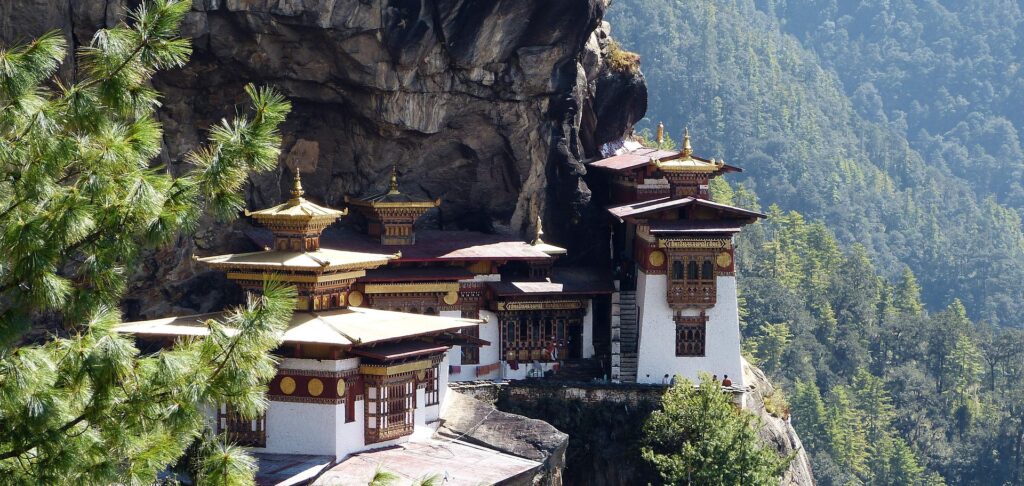
A Himalayan kingdom the size of Switzerland with one-tenth the population, never colonized, no television until 1999, no traffic lights in the capital to this day — and the only country on earth that measures success by the happiness of its citizens rather than the size of its economy. The fourth Dragon King wrote that principle into a constitution built on four pillars: sustainable development, environmental protection, cultural preservation, and good governance. Forests cover over seventy percent of the land and absorb three times more carbon than the entire economy emits, making Bhutan the world’s only carbon-negative nation. In the Paro Valley, Tiger’s Nest monastery hangs from a cliff at 3,120 meters, built in 1692 around the cave where Guru Rinpoche meditated after flying from Tibet on the back of his consort transformed into a tigress. When the founding stones kept sliding off the sheer cliff, the builder cut hair from his own head, mixed it into the mortar, and the stones held. And in 2008, King Jigme Singye Wangchuck did what no monarch in history had done unprompted — dissolved his own absolute power and transformed Bhutan into a democracy, despite nationwide protests from citizens who did not want him to stop being king.
Evoke — Why You Visit Bhutan
You come to Bhutan because you have spent your life optimizing for the wrong metric, and you need a country that proves there is another way to keep score. This is where a teenage king looked at the framework the modern world uses to measure progress and said: that question is wrong. Not how much does the nation produce but how well do its people live — and then spent thirty-four years building an economy around the answer, codifying it into nine domains and thirty-three indicators that assess not income alone but psychological wellbeing, time balance, community vitality, and ecological resilience. Where a monastery was built on a cliff not because it was practical but because a saint chose the most impossible place to prove the dharma could take root anywhere, and when the mortar would not hold, a man put himself into the foundation. Where a constitution does not merely protect rights but mandates that the forest must remain, that culture must be preserved, that governance must be measured by the happiness it creates — as if someone had written a business plan for civilization and remembered to include the only metric that matters. You come because your company measures revenue, your government measures GDP, your social media measures followers, and none of these numbers have made you feel like you are winning. You come because a king who could have ruled for life looked at his own power and applied the same question to himself — is this measuring what matters? — and when the answer was no, he gave the power away while his people wept in the streets and begged him to keep it. That is not abdication. That is the purest form of leadership, the kind that builds an institution stronger than the individual and then steps aside so the institution can breathe. Bhutan will not give you a new answer. It will give you a new question.
Explore — How You Experience Bhutan
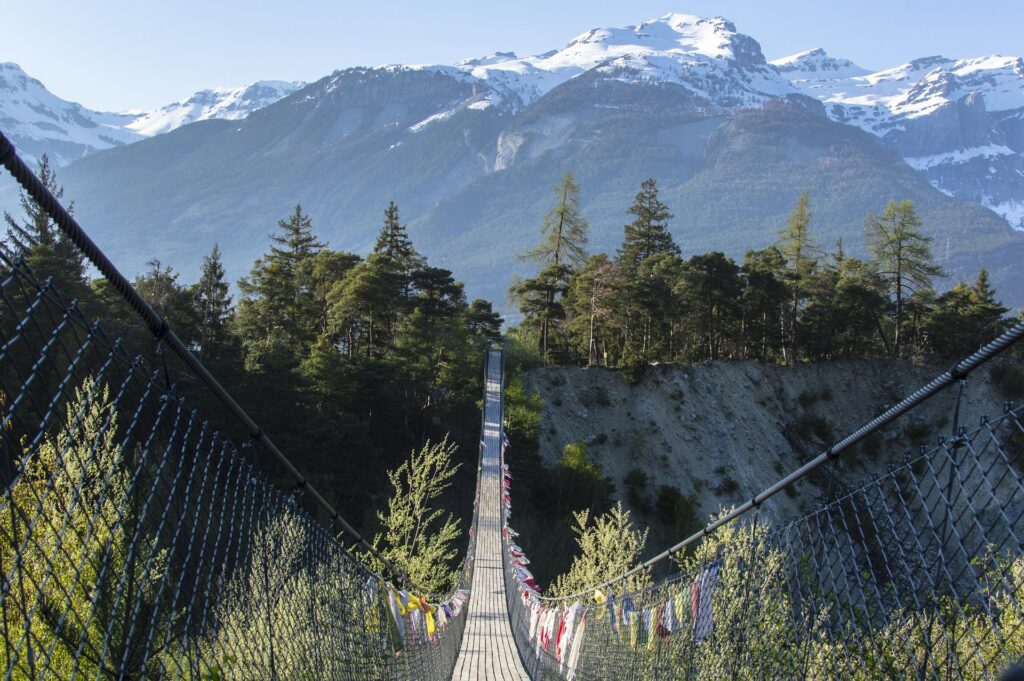
Arrive in Paro on one of the most dramatic airport approaches on earth — the runway sits in a deep valley between peaks and only a handful of pilots in the world are certified to land there — then drive through a country where prayer flags mark every bridge and mountain pass, where farmhouses are painted with elaborate Buddhist iconography not for tourists but because beauty is considered a civic obligation, and where stray dogs sleep undisturbed in the middle of the road because harming any sentient being contradicts the national philosophy. Hike through blue pine forest hung with moss and prayer flags to Tiger’s Nest, climbing nine hundred meters over two to three hours until the monastery appears across a gorge — white walls and golden rooftops impossibly fused to vertical rock, a waterfall plunging beside it, a bridge of prayer flags spanning the gap between you and the eighth century. Remove your shoes, leave your camera with the guard, and enter the cave where Guru Rinpoche sat while the tigress waited outside, where the incense is older than most European nations and the monks who live here carry forward the same teachings the saint deposited thirteen centuries ago. Visit Thimphu, the only capital in Asia without a single traffic light — the city tried installing them once and the citizens found them impersonal and had them removed, preferring a police officer in white gloves at a painted booth, because efficiency is not the same as humanity. Walk through the weekend farmers’ market where organic produce arrives from valleys that have never seen a pesticide, not because of regulation but because the soil has never needed one. Visit the great dzong fortresses — part monastery, part administrative center, part fortress — where monks and bureaucrats still share the same walls because in Bhutan the spiritual and the governmental were never separated, and where the architecture has remained unchanged for centuries not out of nostalgia but because the original design already solved the problem of how a building should make its occupants feel. Then drive to the Phobjikha Valley where endangered black-necked cranes migrate from Tibet each winter and where villagers buried the power lines underground, at far greater expense, because the cables might have harmed the birds — in Bhutan the question is never what is cheapest but what is kindest.
Evolve — Who You Become in Bhutan
You leave Bhutan understanding that the most revolutionary act in the modern world is not disruption — it is refusal. The fourth Dragon King refused to measure his country by someone else’s scoreboard. The builders of Tiger’s Nest refused to accept that a cliff was the wrong place for a temple. The citizens of Thimphu refused traffic lights because a person in white gloves felt more human. The constitution refuses to let the forest fall below sixty percent even if the economy demands timber. The Phobjikha Valley refused to let convenience endanger a crane. You come home and look at every metric you have been chasing — the revenue targets, the follower counts, the quarterly projections — and you ask the question Bhutan asked in 1972: is this actually measuring what matters? A seventeen-year-old had the courage to say no. The builders mixed their own hair into mortar that would not hold. The valley buried its power lines so cranes could fly. What would you measure if you were brave enough to change the question?
Your practical guide to Bhutan starts bellow 👇
🕰️ Bhutan Historical Backdrop
Bhutan’s history is a sacred narrative of spiritual isolation and cultural preservation. For centuries, the kingdom remained a hidden sanctuary, protected by the world’s highest peaks and a deliberate policy of “splendid isolation.” Its story is defined by the arrival of Guru Rinpoche in the 8th century, who brought Buddhism to the valleys, and the 17th-century unification under Zhabdrung Ngawang Namgyal, who established the unique Dzong (fortress) system of governance. In 1972, the Fourth King famously declared that “Gross National Happiness is more important than Gross Domestic Product,” setting Bhutan on a visionary path of sustainable development and environmental stewardship. Today, Bhutan is a constitutional monarchy that transitioned peacefully to democracy while remaining the world’s first carbon-negative country—a land where the ancient and the modern exist in a delicate, intentional harmony.
🌟 Bhutan Local Experiences
Beyond the cliffside monasteries, discover Bhutan’s soul in the rhythmic “thwack” of an arrow hitting a target during a national archery tournament, the aromatic steam of a spicy Ema Datshi (chili and cheese) stew, or the profound silence of a butter-lamp offering in a village temple. Experience the exhilarating exhaustion of a mountain trek, the sensory delight of a traditional hot stone bath infused with medicinal herbs, or the simple joy of sharing suja (butter tea) with a monk in a remote Goemba. Whether it’s hanging your own prayer flags on a high mountain pass or witnessing the elaborate masked dances of a Tshechu, these moments reveal a nation that finds strength in its faith and peace in its unhurried rhythm.
🌄 Bhutan Natural Wonders
- The High Himalayas: Home to Gangkhar Puensum, the world’s highest unclimbed peak, reflecting Bhutan’s respect for the sanctity of the mountains.
- Phobjikha Valley: A stunning U-shaped glacial valley and the winter home of the rare and sacred black-necked cranes.
- Dochula Pass: Offering a 360-degree panoramic view of the snow-capped Himalayan ranges, marked by 108 memorial chortens.
- The Royal Manas National Park: A “conservation crown jewel” where the mountains meet the tropical plains, home to tigers and rhinos.
- The Burning Lake (Mebar Tsho): A sacred site in the Tang Valley where religious treasures were famously discovered underwater.
- Jomolhari Mountain: A magnificent peak that serves as the backdrop for one of Bhutan’s most iconic trekking routes.
🏙️ Bhutan Must-See Cities & Regions
- Thimphu: (Capital) The only national capital in the world without traffic lights, where traditional architecture meets a burgeoning modern cafe and arts scene. (Cultural, Urban, Unique)
- Paro: Home to the international airport and the iconic Tiger’s Nest, set in a wide, fertile valley of historic dzongs and ancient temples. (Iconic, Gateway, Scenic)
- Punakha: The ancient winter capital, famous for the Punakha Dzong—widely considered the most beautiful fortress in the country. (Historic, Subtropical, Majestic)
- Bumthang: The spiritual heartland of Bhutan, a collection of four high valleys filled with the kingdom’s oldest and most sacred sites. (Spiritual, Rural, Timeless)
- Phuentsholing: The bustling gateway on the Indian border, reflecting a vibrant mix of Bhutanese and Indian cultures. (Commercial, Lowland, Gateway)
🏞️ Bhutan National Parks & Nature Reserves
Managed with the world’s strictest environmental mandate by the Department of Forests and Park Services.
- Jigme Dorji National Park: A vast wilderness where the snow leopard and the Bengal tiger share the same habitat.
- Wangchuck Centennial Park: The largest national park in Bhutan, protecting critical Himalayan ecosystems.
- Motithang Takin Preserve: A sanctuary in the capital for the Takin, Bhutan’s unique and mythological national animal.
🏛️ UNESCO World Heritage Sites
Bhutan currently has several sites on the Tentative List, reflecting its commitment to meticulous preservation:
- Sacred Sites associated with Phajo Drugom Zhigpo and his descendants
- Dzongs: the Centre of Temporal and Religious Authorities — Including the magnificent fortresses of Punakha, Wangdue Phodrang, Paro, Trongsa, and Dagana.
- Ancient Step-wells of Upper Bhutan
- For more information, visit the UNESCO Bhutan Portal.
🖼️ Bhutan Museums & Galleries
- National Museum of Bhutan (Paro): Housed in a 17th-century watchtower, displaying a rich collection of thangkas, festival masks, and heritage items.
- Folk Heritage Museum (Thimphu): Set in a restored 19th-century traditional house, offering a glimpse into rural Bhutanese life.
- Royal Textile Academy: Dedicated to the preservation of Bhutan’s intricate and world-renowned weaving traditions.
- Bhutan Postal Museum: Famous for its collection of rare stamps and the ability to print your own legal-tender personalized postage.
🎉 Bhutan Festivals & Celebrations
- Paro Tshechu: (Spring) One of the biggest religious festivals, featuring sacred mask dances and the unfurling of a giant silk Thangka.
- Thimphu Tshechu: (Autumn) A massive celebration in the capital where locals dress in their finest Gho and Kira.
- Black-Necked Crane Festival: (November) Held in Phobjikha to celebrate the return of the cranes and promote conservation.
- The Royal Highland Festival (Laya): (October) A unique celebration of high-altitude nomadic culture at 3,800 meters.
🧽 How to Arrive
- ✈️ By Air
- Paro International (PBH) is the only international airport, known for being one of the world’s most challenging and scenic landings.
- Airlines: Drukair (Royal Bhutan Airlines) and Bhutan Airlines connect Paro to hubs like Bangkok, Delhi, Singapore, Kathmandu, and Kolkata.
- 🚗 By Road
- Entry is possible via land borders with India at Phuentsholing, Gelephu, and Samdrup Jongkhar.
- 🚆 By Rail
- There is no rail network in Bhutan. The nearest railheads are in West Bengal and Assam, India.
📶 Stay Connected
- SIM Cards: The two providers are B-Mobile and TashiCell.
- Where to buy: Easily available at Paro Airport or in any town center. A passport and photo are required for registration.
- eSIM: Supported by TashiCell; available for digital activation.
- Connectivity: 4G/5G is widespread in towns, but expect limited signal on high-altitude treks.
🏨 Where to Stay
Bhutan offers a range from world-class luxury “lodges” to authentic farm stays.
- Aman Kora: A collection of five ultra-luxury lodges spread across the kingdom’s key valleys.
- COMO Uma Paro/Punakha: Offering a blend of luxury and wellness in spectacular settings.
- Six Senses Bhutan: A “circuit” of five lodges designed around the pillars of happiness.
- Farmstays: For a transformative experience, stay with a local family to learn about traditional agriculture and home cooking.
⛳ Unique Finds
- Phallic Murals (Chimi Lhakhang): Learn about the “Divine Madman” and why houses in the Punakha valley are decorated with phallic symbols for protection.
- Personalized Stamps: Visit the Thimphu post office to have your own photo turned into a valid Bhutanese stamp.
- The Trans-Bhutan Trail: Hike portions of the 403km historic trail that was used for centuries by pilgrims and messengers.
- Traditional Paper Making: Visit a workshop in Thimphu to see how Deh-sho paper is made from the bark of the Daphne tree.
🤝 Bhutan Cultural Guidance
- The Dress Code: When entering Dzongs, temples, or government offices, locals wear traditional dress. Tourists are expected to dress modestly (long sleeves, long pants/skirts, no hats).
- Respect: Always walk clockwise around stupas and mani walls. Never point with a single finger (use an open palm).
- Sustainability Fee: Understand the Sustainable Development Fee (SDF), which funds the nation’s free healthcare and education.
- Basic Phrases (Dzongkha):
- Hello: “Kuzuzangpo la” (Koo-zoo-zang-poh-lah)
- Thank you: “Kadrinchhey la” (Kah-drin-chay-lah)
- How are you?: “Chhoe gadebe yoe?”
- Beautiful: “Legsho”
🛂 Bhutan Entry & Visa Requirements
- Visa Policy: All tourists (except Indians, Bangladeshis, and Maldivians) require a visa applied for through a licensed tour operator or directly online.
- SDF Fee: A mandatory Sustainable Development Fee per night is charged to support the kingdom’s conservation and social projects.
- Official Source: Apply via the Department of Tourism – Bhutan.
💰 Practical Essentials
- Currency: Bhutanese Ngultrum (BTN), pegged to the Indian Rupee (INR). Both are used interchangeably. Cards are accepted in major city hotels/shops, but cash is king.
- Electricity: Type C, D, and G. Voltage is 230V.
- Safety: Bhutan is consistently ranked as one of the safest countries in the world for travelers.
- Climate: Best visited March-May (wildflowers) and September-November (clear skies and festivals).
✨ Bonus Tip
To truly embrace Bhutan, you must surrender to the “Vertical Stillness.” Bhutan is not a place to be “checked off” a list. It is a place that demands you slow down to the speed of a walking monk. Spend an extra hour sitting in the courtyard of a Dzong. Listen to the wind through the cypress trees and the distant sound of a bell. It is in this deliberate pausing—away from the noise of the global economy—that the true, transformative “Happiness” of Bhutan and your own sense of internal clarity will finally reveal themselves.
🔗 Featured Links
- Official Tourism: Bhutan.travel.
- Visa Portal: Bhutan e-Visa Service.

Beyondia
Trusted Travel CompanionReal digital nomad. I travel. I learn. I grow.
What about you? Where are you going?