
GoBeyondia Atlas 🗺️ Nordic-Western Europe 🗾
Latvia: Where a mathematician built a wooden cabinet with seventy drawers to hold two hundred and eighteen thousand four-line folk songs transcribed on slips of paper the size of a cigarette, each one sent by a farmer or a teacher or a grandmother from every corner of a country that had never been allowed to write its own history — and a century later those four-line songs brought down the Soviet Union without a single weapon fired, because Latvia is the place that proved the smallest unit of expression, accumulated long enough, becomes unstoppable.
Latvia in 30 Seconds
A Baltic country of fewer than two million people, pressed between Lithuania, Estonia, Russia, and the sea — occupied by the Teutonic Knights, then Sweden, then the Russian Empire, then Nazi Germany, then the Soviet Union, independent only from 1918 to 1940 and again from 1991 to the present. In that narrow window of self-determination, Latvia built its identity not on territory or military power but on dainas — four-line folk songs, each one a self-contained world of birth, work, marriage, grief, or harvest, predating Christianity and preserved for centuries by oral transmission among people who were not allowed to publish in their own language. In the 1870s, a Latvian folklorist named Krišjānis Barons — trained as a mathematician and astronomer — began collecting them. Thousands of ordinary people from across the country mailed him songs transcribed on tiny slips of paper, some written on cigarette papers or notebook margins. Barons designed a custom wooden cabinet with seventy drawers, each divided into twenty sections, and organized nearly two hundred and eighteen thousand songs by the stages of human life — birth to death, season by season. He published them in six volumes between 1894 and 1915. The Cabinet of Folksongs was inscribed in UNESCO’s Memory of the World Register in 2001. It now sits on the fifth floor of the National Library of Latvia in Riga, and Barons’ face is the only human face to have ever appeared on a Latvian banknote.
Evoke — Why You Visit Latvia
You come to Latvia because you have been told your work is too small — the posts too short, the audience too niche, the output too modest to matter — and you need a country that built a civilization on four-line poems. A daina is not an epic. It does not tell a hero’s journey or chronicle a dynasty. It describes a skylark at dawn, the weight of linen on a loom, the moment a bride crosses a threshold, the sound of wind through rye. Each one takes less than ten seconds to speak. And there are over a million of them. Barons understood that the power was not in any single daina but in the accumulation — the way two hundred thousand fragments, each one small enough to memorize while milking a cow, assembled into a complete portrait of a people’s interior life across centuries. He was not a poet. He was a systems architect. He designed a filing cabinet the way you would design a database — organized by lifecycle, cross-referenced by region, preserved with the discipline of a scientist and the devotion of a priest. The KGB understood this too. During the Soviet occupation, agents visited folk groups, confiscated recordings, and attempted to destroy every material trace of Latvian musical culture. They failed. You cannot confiscate what two million people carry in their throats. In 1988, at the height of the Singing Revolution, hundreds of thousands gathered in Riga singing the dainas that had been banned for decades — and on August 23, 1989, nearly two million Balts joined hands in a six-hundred-kilometer human chain stretching from Tallinn through Riga to Vilnius, singing. Within two years, all three nations were independent. No shots fired. No barricades stormed. Four lines at a time.
Explore — How You Experience Latvia
Visit the National Library of Latvia — the Castle of Light — and stand before the Dainu Skapis on the fifth floor, the original wooden cabinet built in 1880, its seventy drawers holding the paper slips on which the songs were transcribed in dozens of handwritings, some in pencil so faded they are barely legible, each one a voice that would have disappeared if Barons had not built a system to catch it. Walk through Riga’s Art Nouveau district, where over eight hundred buildings display the most concentrated collection of Jugendstil architecture in Europe — a city that reinvented its facade while keeping its songs intact underneath. Travel to the Mežaparks Great Stage, where every five years the Song and Dance Festival assembles sixteen thousand singers and seventeen thousand dancers in a single performance, the closing concert running past one in the morning and continuing through the night as audience and choir merge and sing together until dawn — nearly half a million attendees in a country of fewer than two million people, meaning roughly one in four Latvians is either performing or watching. Stand on any bridge over the Daugava at sunset and understand why the most beloved daina in the Latvian language — the one that closes every Song Festival and reduces audiences to tears — is about wind. Not war. Not heroes. Wind.
Evolve — Who You Become in Latvia
You leave Latvia understanding that scale is not size — it is repetition. A four-line poem is nothing. Two hundred thousand four-line poems are a civilization. A single voice is silence against an empire. Sixteen thousand voices singing the same melody are a revolution. Barons did not write the dainas. He filed them. He built a cabinet and asked a nation to fill it, and they did — farmers and teachers and grandmothers mailing in fragments of identity on slips of paper the size of a finger, each one too small to matter, all of them together too large to destroy. You come home and look at the small things you have been making — the posts, the entries, the pieces that seem too brief to count — and you stop apologizing for their size. The daina is four lines. The cabinet has seventy drawers. The revolution took no weapons. Latvia did not need a longer poem. It needed more people singing the short one. The smallest unit of expression, repeated by enough voices, does not describe a culture. It becomes one.
Your practical guide to Guatemala starts bellow 👇
🕰️ Latvia Historical Backdrop
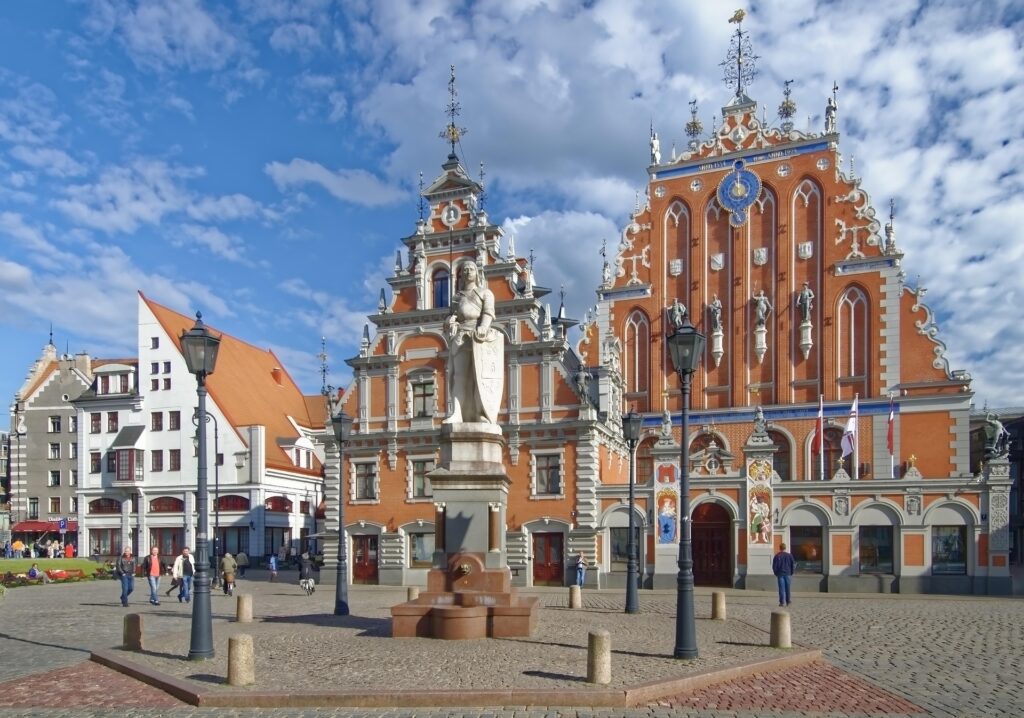
Latvia’s history is a 1,000-year “Audit of Cultural Resilience.” Strategically positioned as a Hanseatic trade hub, Latvia has navigated centuries of shifts between German, Swedish, Polish, and Russian influence. Its story is told in the medieval spires of Riga, the elegant coastal manors, and the powerful “Singing Revolution” of 1989, where a human chain of two million people proved that cultural unity is the ultimate “Defensive Staple.” Since regaining independence in 1991, Latvia has functioned as a “Digital Pioneer”; it is a nation that has successfully reallocated its post-Soviet infrastructure into a high-speed, tech-driven economy while fiercely preserving its Baltic language and pagan-rooted traditions.
🌟 Latvia Local Experiences
Beyond the capital’s bustle, discover Latvia’s soul in the ritual of the “Sauna Audit”—the Pirts—where the use of birch and oak “whisks” and cold-water plunges provides a total sensory reset. Experience the profound “Chromatic Stillness” of hunting for “Baltic Gold” (amber) on the shores of Liepāja after a storm, the intoxicating scent of wild linden blossoms in July, or the simple joy of sharing a meal of grey peas and speck in a medieval cellar. Whether it’s participating in the mass-harmony of the Song and Dance Festival—a proven example of collective human energy—or exploring the trendy “Creative Quarters” of Miera Iela, these moments reveal a nation that finds its greatest margin in the intersection of ancient nature and modern creativity.
🌄 Latvia Natural Wonders
- The Amber Coast: A vast, sandy coastline along the Baltic Sea where 40-million-year-old resin is still washed up by the tides.
- Gauja River Valley: The “Latvian Switzerland,” a dramatic landscape of sandstone cliffs, ancient caves, and winding river bends.
- Cape Kolka: The meeting point of the Great Sea (Baltic) and the Little Sea (Gulf of Riga), where clashing currents create a spectacular natural “Conflict Zone.”
- Venta Rapid (Kuldīga): Europe’s widest waterfall—a low-profile but high-margin natural wonder where fish can be seen jumping upstream in the spring.
- Kemeri Bog: A mystical wetland landscape featuring a “Great Bog Boardwalk” and sulfur springs, offering a glimpse into the prehistoric Baltic ecosystem.
🏙️ Latvia Must-See Cities & Regions
- Riga: (Capital) A UNESCO-listed masterpiece where over 800 Art Nouveau buildings create one of Europe’s most beautiful streetscapes. (Sophisticated, Historic, Vibrant)
- Jūrmala: The “Baltic Riviera,” famous for its 33km of white-sand beaches, pine-scented air, and iconic wooden architecture. (Relaxed, Coastal, Health-focused)
- Sigulda: The gateway to Gauja National Park, offering bobsleigh tracks, medieval castles, and high-adrenaline outdoor activities. (Adventurous, Panoramic, Historic)
- Liepāja: The “City where the Wind is Born,” known for its musical heritage, blue-flag beaches, and the eerie “Karosta” military prison. (Creative, Edgy, Coastal)
- Kuldīga: A romantic, perfectly preserved town often called the “Venice of the North” for its integration with the flowing water. (Picturesque, Quiet, Timeless)
🏞️ Latvia National Parks & Nature Reserves
Managed with a focus on preserving the “Fundamental Quality” of the Baltic forest.
- Gauja National Park: The oldest and largest park, protecting the historic heartland of the nation.
- Ķemeri National Park: A sanctuary for birdwatching and mineral water enthusiasts.
- Slītere National Park: A remote wilderness on the northern coast, guarding the “Blue Hills” and ancient shoreline.
🏛️ UNESCO World Heritage Sites
- Historic Centre of Riga — Recognized for its unprecedented quality of Art Nouveau/Jugendstil architecture and its medieval core.
- Struve Geodetic Arc — A chain of survey triangulations stretching across 10 countries, with key points in Latvia.
- Grobiņa Archaeological Complex (Tentative) — Chronicling the early Viking presence in the Baltic.
- For more information, visit the UNESCO Latvia Portal.
🖼️ Latvia Museums & Cultural Sites
- Latvian National Museum of Art (Riga): A beautifully restored landmark housing the nation’s visual “Capital.”
- The Ethnographic Open-Air Museum of Latvia: One of Europe’s oldest open-air museums, showcasing 118 traditional buildings from across the country.
- Latvian National Library (Castle of Light): A modern architectural “Tier 1 Asset” symbolizing the nation’s commitment to knowledge.
- Rundāle Palace: The “Versailles of the Baltic,” a baroque masterpiece designed by Rastrelli.
🎉 Latvia Festivals & Celebrations
- Jāņi (Midsummer): (June 23-24) The most important national “Fiscal Year End” for the soul—celebrated with bonfires, cheese, beer, and ferns.
- Latvian Song and Dance Festival: (Every 5 years) A monumental display of over 40,000 performers that is a “Proven Example” of cultural scale.
- Riga Opera Festival: (June) Highlighting the world-class standard of the Latvian National Opera.
- Staro Rīga: (November) A light festival that transforms the capital’s architecture into a digital canvas.
🧽 How to Arrive
- ✈️ By Air
- Riga International Airport (RIX) is the primary Baltic hub.
- Airlines: airBaltic (Flag carrier) offers a high-frequency network connecting Riga to Europe, the Middle East (including Dubai/Abu Dhabi), and Central Asia.
- 🚢 By Sea
- Ferry connections link Riga with Stockholm, Sweden and Liepāja with Travemünde, Germany.
- 🚆 By Rail
- Current domestic network by Latvian Railway (Pasažieru Vilciens). The “Rail Baltica” high-speed project is a future strategic acquisition for the region.
📶 Stay Connected
- SIM Cards: Major providers are LMT, Tele2, and Bite.
- Connectivity: Latvia has one of the world’s fastest internet infrastructures. Public Wi-Fi is a “Standard Provision” in almost every park, café, and library.
- eSIM: Supported by LMT and Tele2; available via global platforms like Airalo.
🏨 Where to Stay
Latvia offers a “Diversified Portfolio” ranging from five-star Art Nouveau grand hotels to secluded “Mirror House” glamping.
- Grand Hotel Kempinski Riga: The pinnacle of luxury in the historic heart of the capital.
- Hotel Bergs: A boutique, five-star “Core Asset” located in the trendy Bergs Bazaar.
- Rumene Manor: A country estate offering the ultimate “Tactical Acquisition” for privacy and nature.
- Design Apartments: High-margin stays in restored Art Nouveau buildings in the “Quiet Centre” of Riga.
⛳ Unique Finds
- Black Balsam: Taste the 24-herb herbal liqueur that has been a “Defensive Health Staple” since 1752.
- The “Quiet Centre”: Walk Alberta Iela for the highest concentration of design detail in Northern Europe.
- Rye Bread: Latvia’s “Primary Commodity”—dark, dense, and essential to every meal.
- The “Līgo” Wreath: Learn to weave a wreath of oak leaves (for men) or wildflowers (for women) during Midsummer.
🤝 Latvia Cultural Guidance
- Personal Space: Latvians value privacy and distance. A handshake is standard, but excessive small talk with strangers is not typical.
- Punctuality: Absolute punctuality is expected in both business and social settings—a “Key Performance Indicator” of respect.
- The “Green” Ethos: Do not pick wildflowers in protected areas; nature is viewed as a shared national “Infrastructure.”
- Basic Phrases:
- Hello: “Sveiki”
- Thank you: “Paldies”
- Please: “Lūdzu”
- Cheers: “Priekā!”
🛂 Latvia Entry & Visa Requirements
- Schengen Area: Latvia is a full member of the Schengen Area. Citizens of the UK, US, Canada, EU, and many GCC nations do not require a visa for tourism stays up to 90 days.
- Official Source: Consult the Latvian Ministry of Foreign Affairs.
💰 Practical Essentials
- Currency: Euro (€). Latvia is highly digital; card payments and contactless mobile payments are the “Preferred Transaction Method.”
- Electricity: Type C and F (European round pins). Voltage is 230V.
- Safety: Consistently ranked as one of the safest countries for travelers in the world.
- Climate: Continental/Marine. Best visited in Late Spring (May-June) for blooming linden trees or December for the “World’s First Christmas Tree” markets.
✨ Bonus Tip: The Dendrological Audit
To truly embrace Latvia, you must perform a “Dendrological Audit.” Over 50% of the country is forest. Don’t just stay in Riga. Rent a car and drive toward the Kurzeme coast. Stop at a random forest trail and walk until you can no longer hear the sound of an engine. It is in this “Primary Silence”—the same silence the ancient Balts used to calibrate their survival—that your own evolving sense of clarity and long-term roadmap will finally reveal themselves.
🔗 Featured Links
- Official Tourism: Latvia.travel.
- Riga Tourism: Live Riga.
Beyondia
Trusted Travel CompanionReal digital nomad. I travel. I learn. I grow.
What about you? Where are you going?