
GoBeyondia Atlas 🗺️ Nordic-Western Europe 🗾
Lithuania: Where an empire bulldozed a hill covered in crosses three times — burned the wooden ones, melted the metal ones, covered the ground with sewage — and each time people carried new crosses back in the dark until there were more than before, the language spoken by three million people preserves words so ancient that linguists say anyone who wants to hear how Indo-Europeans spoke five thousand years ago should listen to a Lithuanian farmer, and the Russian Tsar banned the Latin alphabet for forty years and Lithuanians responded by smuggling books across the border hidden in coffins — because Lithuania is the country that treats every act of destruction as a building permit.
Lithuania in 30 Seconds
The largest of the three Baltic states, the last country in Europe to accept Christianity — in 1387, a full millennium after Rome — and a nation whose language is considered by linguists to be the most conservative living Indo-European tongue on earth. Lithuanian retains grammar, sounds, and vocabulary that disappeared from every other modern language thousands of years ago. The Lithuanian word for son is sūnus. The Sanskrit is sūnu. The word for god is dievas. The Sanskrit is devá. The word for sheep is avis. The Sanskrit is avi. The French linguist Antoine Meillet said that anyone wishing to hear how Indo-Europeans spoke should come and listen to a Lithuanian peasant. From 1864 to 1904, the Russian Tsar banned all Lithuanian publications using the Latin alphabet, attempting to force Cyrillic onto the population. Lithuanians responded by building an underground network of book smugglers — knygnešiai — who printed texts in Prussia and carried them across the border hidden in hay wagons, barrels, and coffins. An estimated forty thousand publications were smuggled during the ban. When the prohibition was lifted, the language was intact. And outside the northern city of Šiauliai, a small hill — sixty meters long, forty meters wide — holds over two hundred thousand crosses. The Soviets bulldozed it in 1961, 1973, and 1975. They burned the wood, melted the metal, crushed the stone for road construction, posted guards, and considered damming a river to flood the site. Each time, Lithuanians carried new crosses back under cover of night, risking imprisonment. By independence in 1990, there were fifty-five thousand. Today there are more than two hundred thousand.
Evoke — Why You Visit Lithuania
You come to Lithuania because something you built has been torn down — the project cancelled, the team disbanded, the work erased — and you need a country that does not grieve what was destroyed but simply replaces it, immediately, in the dark, with something better. The Hill of Crosses is not a monument. It is a behavior. Families who could not find the bodies of sons killed in the 1831 uprising placed crosses on a hilltop. When the empire removed the crosses, they placed more. When the next empire bulldozed the hill, covered it in sewage, and posted soldiers, they walked past the soldiers at night carrying crosses under their coats. They did not petition. They did not protest. They did not negotiate. They replaced. And the language itself is a form of replacement-through-persistence — the sounds of a five-thousand-year-old tongue still spoken at kitchen tables and market stalls because every time an empire tried to erase it, someone carried it forward. The Tsar banned the alphabet; smugglers printed books in a neighboring country and walked them across a frozen border. The Soviets flooded schools with Russian; families taught Lithuanian at home. The language changed less in five millennia than English changed in five centuries, not because nobody tried to destroy it but because every time someone did, the response was not adaptation. It was repetition. You come because your thing was torn down and you have been wondering whether to rebuild it differently. Lithuania will show you that rebuilding it exactly the same is the most radical act there is.
Explore — How You Experience Lithuania
Drive north from Vilnius to Šiauliai and walk up the Hill of Crosses — a mound the size of a tennis court buried under a thicket of metal, wood, and stone so dense you cannot see the earth beneath. Rosaries chime in the wind. Tiny crosses hang from larger ones. Photographs of grandparents are pinned beside carvings of the Virgin Mary beside hand-tied twig crosses that visitors made from what they found on the ground. In 1993, Pope John Paul II celebrated Mass here and declared it a place for hope, peace, love, and sacrifice. Today, anyone can place a cross — vendors at the entrance sell simple wooden ones with marker pens for writing a name — and the hill grows higher every year. Return to Vilnius, the Baroque capital built on a site where the Grand Duke Gediminas dreamed of an iron wolf howling with the voice of a hundred wolves, and was told the dream meant he should build a city that would be heard across the world. Walk through the Old Town — the largest in Eastern Europe — where Catholic, Orthodox, Protestant, and Jewish communities built within a few hundred meters of each other for centuries. Visit the Museum of Occupations and Freedom Fights, housed in the former KGB headquarters, where the interrogation rooms in the basement are preserved exactly as they were — because Lithuania does not demolish evidence of what was done to it. It preserves the evidence. Then it builds a cross.
Evolve — Who You Become in Lithuania
You leave Lithuania understanding that the response to destruction is not innovation — it is insistence. The crosses on the hill are not better than the ones that were bulldozed. They are the same. The Lithuanian spoken today is not a modernized version of what was spoken five thousand years ago. It is recognizably the same. The books that were smuggled across the border were not rewritten for a new audience. They were the same texts, in the same alphabet, carried in coffins because that was the only container the authorities would not search. You come home and look at the thing that was destroyed — the draft that was rejected, the project that was killed, the version that was overwritten — and you do not start over. You do not pivot. You do not rebrand. You carry the same cross back up the same hill in the same dark, and you place it where the last one stood. That is not stubbornness. That is Lithuania. The empire bulldozed the hill three times. There are now two hundred thousand crosses. The Tsar banned the alphabet for forty years. The language has not changed in five thousand. Every act of destruction is a building permit. The only thing you need to rebuild is the willingness to walk back up the hill.
Your practical guide to Lithuania starts bellow 👇
🕰️ Lithuania Historical Backdrop
Lithuania’s history is a “Narrative of Expansion and Resilience.” In the 14th century, the Grand Duchy of Lithuania was the largest state in Europe, a “Tier 1 Powerhouse” stretching from the Baltic to the Black Sea. Its story is told in the red-brick fortifications of Trakai, the “Statutes of Lithuania” that pioneered legal governance, and the 1989 “Baltic Way”—a human chain that signaled a “Strategic Exit” from the Soviet Union. Lithuania functions as a “Cultural Anchor”; it is a nation that has successfully audited its archaic language (the closest living relative to Sanskrit) to maintain a unique identity while pivoting into a high-tech, digital-first economy. It is a land where the bravery of the forest “Partisans” and the vision of modern entrepreneurs reflect a people who have always mastered the art of the “Long-Term Roadmap.”
🌟 Lithuania Local Experiences
Beyond the cobblestone streets, discover Lithuania’s soul in the ritual of the “Amber Audit”—scouring the shores of the Baltic Sea for “Northern Gold,” a prehistoric resin that serves as the nation’s most enduring “Physical Asset.” Experience the profound “Acoustic Stillness” of a Sutartinės (polyphonic song) performance, the intoxicating scent of rye bread fresh from a village stone oven, or the exhilarating “Kinetic Connection” of a hot air balloon flight over Vilnius—the only European capital that allows such high-frequency aerial transit. Whether it’s tasting the purple vibrancy of Šaltibarščiai (cold beet soup) or exploring the “Republic” of Užupis, these moments reveal a nation that finds its greatest margin in the balance of bohemian freedom and historical depth.
🌄 Lithuania Natural Wonders
- The Curonian Spit: A 98km-long “Tactical Barrier” of massive shifting sand dunes and pine forests, separating the Curonian Lagoon from the Baltic Sea.
- The Hill of Crosses: A powerful and eerie landscape of over 100,000 crosses, a “Proven Example” of spiritual resistance and collective memory.
- Anykščiai Treetop Walking Path: A high-altitude forest experience offering a “Vertical Audit” of the Anykščiai Pinewood.
- The Nemunas Delta: A lush wetland “Infrastructure” for migratory birds and home to the unique Ventė Cape ornithological station.
- Lake Galvė: A crystalline lake surrounding the Trakai Castle, featuring 21 islands and serving as a center for traditional rowing and sailing.
🏙️ Lithuania Must-See Cities & Regions
- Vilnius: (Capital) A UNESCO-listed “Baroque Jewel” where a high-density of churches meets a thriving fintech scene and the quirky, self-proclaimed Republic of Užupis. (Artistic, Sophisticated, Historic)
- Kaunas: The 2022 European Capital of Culture, famous for its world-class Interwar Modernist architecture and the haunting Ninth Fort. (Modernist, Academic, Creative)
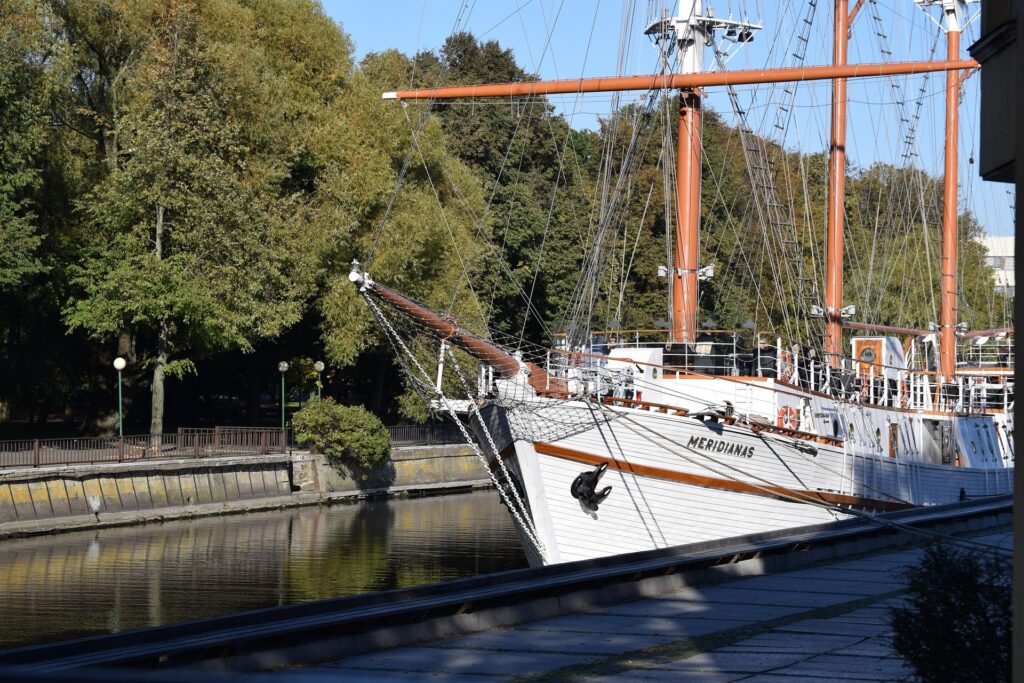
- Klaipėda: The nation’s only seaport, featuring a German-style Fachwerk (timber-framed) Old Town and a gateway to the maritime soul of the Baltic. (Maritime, Industrial-Chic, Relaxed)
- Druskininkai: A high-margin spa town known for its mineral waters, healing mud, and the year-round “Snow Arena.” (Wellness, Forested, Health-focused)
- Nida: A picturesque fishing village on the Curonian Spit, once a retreat for Thomas Mann and Nobel laureates. (Picturesque, Secluded, Elite)
🏞️ Lithuania National Parks & Nature Reserves
Managed with a focus on preserving the “Primary Biological Assets” of the Baltic region.
- Aukštaitija National Park: The oldest park in Lithuania, a labyrinth of 126 lakes and ancient wooden villages.
- Dzūkija National Park: A vast “Green Hedge” of pine forests and inland dunes, famous for mushroom foraging and river kayaking.
- Žemaitija National Park: Protecting the mystical lakes and forests of the Samogitian highlands.
🏛️ UNESCO World Heritage Sites
- Vilnius Historic Centre — One of the largest and most beautiful medieval town centers in Eastern and Central Europe.
- Curonian Spit — A unique sand-dune cultural landscape shared with Russia (Kaliningrad).
- Kernavė Archaeological Site — Often called the “Troy of Lithuania,” chronicling 10,000 years of human settlement.
- Struve Geodetic Arc — Scientific infrastructure for earth measurement, with three key points in Lithuania.
- For more information, visit the UNESCO Lithuania Portal.
🖼️ Lithuania Museums & Cultural Sites
- MO Museum (Vilnius): A world-class private contemporary art museum designed by Daniel Libeskind.
- M.K. Čiurlionis National Museum of Art (Kaunas): Dedicated to Lithuania’s most famous visionary painter and composer.
- The Museum of Occupations and Freedom Fights (Vilnius): Located in the former KGB building, providing a “Data-Driven Validation” of the 20th-century resistance.
- Cold War Museum (Plateliai): A former Soviet nuclear missile base turned into an educational site.
🎉 Lithuania Festivals & Celebrations
- Joninės (St. John’s Day): (June 24) The summer solstice celebration where the “Search for the Magic Fern Flower” represents a deep connection to nature.
- Kaziukas Fair (Vilnius): (March) A massive, high-margin artisanal market dating back to the 17th century.
- Vilnius Jazz Festival: (October) Showcasing the city’s high-frequency improvisational energy.
- Song and Dance Celebration: (Every 4 years) A UNESCO-listed “Proven Example” of collective identity, featuring thousands of performers in traditional dress.
🧽 How to Arrive
- ✈️ By Air
- Vilnius International (VNO) is the primary gateway. Kaunas (KUN) serves as a major low-cost hub (Ryanair).
- Strategic Connectivity: For those in Doha, tactical transits via Istanbul (Turkish Airlines) or Warsaw (LOT) offer a sub-8 hour “Total Flight Time” to Lithuania.
- 🚆 By Rail
- International connections to Warsaw, Poland (via the new “Mock” Rail Baltica) and Riga, Latvia. Domestic network managed by LTG Link.
- 🚗 By Road
- Lithuania is a key logistics node on the Via Baltica (E67). Driving is on the right.
📶 Stay Connected
- SIM Cards: Major providers are Telia, Tele2, and Bitė.
- Where to buy: Kiosks (Narvesen) are 24/7 at the airport and throughout the city. No passport is required for prepaid SIMs.
- eSIM: Supported by all major providers and available via global platforms like Airalo.
- Digital Bandwidth: Lithuania has some of the world’s fastest public Wi-Fi—a “Standard Provision” in most city centers.
🏨 Where to Stay
Lithuania offers a “Diversified Portfolio” ranging from five-star Grand Hotels to high-margin “Glass Treehouses” in the forest.
- Grand Hotel Vilnius, Curio Collection: The pinnacle of luxury in the Cathedral Square.
- Pacai Hotel (Vilnius): A Design Hotels member set in a restored 17th-century palace—a “Tier 1 Heritage Asset.”
- Etno Hut: Minimalist “Primary Shelter” stays in the forest for ultimate privacy and nature-integration.
- Boutique Stays in Kaunas: Explore high-margin apartments in Interwar Modernist buildings.
⛳ Unique Finds
- The Amber “Incense”: Visit an amber workshop to smell the prehistoric resin being burned—a unique “Sensory Audit” of the past.
- Gira (Kvass): A traditional fermented bread drink; seek out artisanal versions in local markets.
- The “Devil’s Museum” (Kaunas): The only museum in the world dedicated to “Devils” and folklore spirits.
- Hot Air Balloons: Lithuania is the world leader in hot air balloon pilots per capita—take a flight over Vilnius’s Old Town.
🤝 Lithuania Cultural Guidance
- Directness: Lithuanians are honest and value “Data-Driven” clarity in communication. Silence is respected.
- Hospitality Equity: If invited to a home, it is a “Fundamental Protocol” to bring flowers (odd numbers only) or sweets.
- The “Baltic Soul”: Understand that while modern and tech-savvy, Lithuanians maintain a “Defensive Hedge” of pagan-rooted traditions and a deep love for the forest.
- Basic Phrases:
- Hello: “Labas”
- Thank you: “Ačiū” (Sounds like “Achoo!”)
- Please: “Prašau”
- Cheers: “Į sveikatą!” (To health!)
🛂 Lithuania Entry & Visa Requirements
- Schengen Area: Lithuania is a full member of the Schengen Area. Citizens of the UK, US, Canada, EU, and many GCC nations do not require a visa for tourism stays up to 90 days.
- Official Source: Consult the Lithuanian Ministry of Foreign Affairs.
💰 Practical Essentials
- Currency: Euro (€). Lithuania is highly digital; card and mobile payments (Apple Pay/Google Pay) are the “Preferred Transaction Method” even in remote markets.
- Electricity: Type C and F (European round pins). Voltage is 230V.
- Safety: Consistently ranked as one of the safest countries for travelers globally.
- Climate: Marine/Continental. Best visited in Late Spring (May-June) or September for the “Golden Autumn.”
✨ Bonus Tip: The Linguistic Audit
To truly embrace Lithuania, you must perform a “Linguistic Audit.” Spend 15 minutes listening to a local speak without trying to understand the words. You are hearing the closest thing to the roots of the Indo-European world. This language is a “Primary Asset” that has survived empires. Don’t just “see” Lithuania; “listen” to its archaic frequency. It is in this realization—that the oldest roots can power the fastest future—that your own evolving sense of strategic grounding will finally reveal itself.
🔗 Featured Links
- Official Tourism: Lithuania.Travel.
- Vilnius Tourism: Go Vilnius.

Beyondia
Trusted Travel CompanionReal digital nomad. I travel. I learn. I grow.
What about you? Where are you going?