
Route: Rome → Florence → Venice Distance: 530 km Driving time: 6–7 hours (without stops) Recommended duration: 3–5 days Best months: April–June, September–October Road: A1/E35 Autostrada del Sole, then A1/A13 via Bologna
The Shape of This Drive
This is not a road trip in the American sense — no empty highway stretching to a vanishing point. This is Italy, where civilisation never took a break between cities. You leave Rome heading north on the A1 and within two hours the landscape has already shifted from urban sprawl to soft Umbrian hills. By the time you reach Florence, the light has changed. By the time you reach Venice, the road itself has disappeared into water.
The entire route follows the A1 Autostrada del Sole — literally, the Highway of the Sun — which has connected Rome to Milan since 1964. You won’t need it all the way to Milan. You’ll turn east at Bologna and drop south toward the Adriatic plain, crossing flat farmland until the Ponte della Libertà delivers you to a city where roads become canals and the car becomes irrelevant.
Three cities. Three completely different relationships with time. Rome ignores it, Florence preserved it, Venice is losing to it. That’s your drive.
Stage One — Rome to Florence
Distance: 280 km Driving time: 3–3.5 hours Toll cost: approximately €19 Road: A1/E35 northbound
Leave Rome from the northern side of the city if you can. The Grande Raccordo Anulare — Rome’s orbital ring road — is not where you want to spend your morning. Merge onto the A1 heading north and the city lets go of you gradually, the way Rome lets go of everything: reluctantly, and only after making sure you noticed.
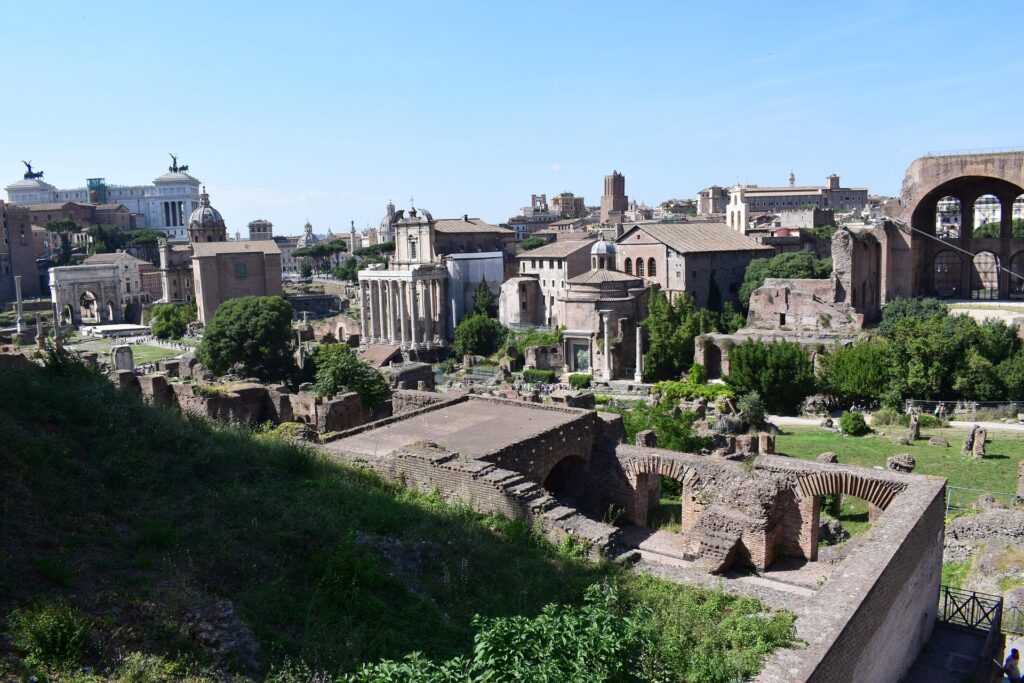
The A1 through Lazio and into Umbria is genuinely beautiful driving. The road climbs gently through green hills, crosses valleys on long viaducts, and passes towns perched on ridgelines that have been there since the Etruscans decided they liked the view. You won’t see most of these towns from the highway. You’ll see signs for them — Orvieto, Montepulciano, Cortona — and each sign is a small temptation.
If you stop once, make it Orvieto. The exit is clearly marked, the town sits on a volcanic plateau visible from kilometres away, and the cathedral alone is worth the hour it will add to your drive. But know yourself: if you stop at Orvieto, you will also want to stop at Montepulciano for the wine, and Cortona for the views, and suddenly your three-hour drive has become an eight-hour meander. Both approaches are valid. Neither is wrong. Just decide before you leave Rome.
As you cross from Umbria into Tuscany, the landscape shifts. The hills become rounder, the light warmer, the cypresses more deliberate — as if someone planted them specifically to line the roads. They did. This part of Italy has been curated for centuries, not in a theme park sense, but in the way a family maintains a garden they intend to keep.
Arriving in Florence: Do not drive into the historic centre. Florence operates a ZTL — a Zona a Traffico Limitato — which means cameras will photograph your licence plate and you will receive a fine of €100 or more, delivered to your home address weeks later with the quiet efficiency of Italian bureaucracy. Park outside the restricted zone. The Villa Costanza park-and-ride on the western edge of the city connects to the centre by tram in fifteen minutes and costs a fraction of the fine. Alternatively, find a garage near Santa Maria Novella station. The city is small enough to walk once you’re inside it.
Florence — The Interruption
Florence is not a stop on the way to Venice. Florence is the reason you take the road instead of the train.
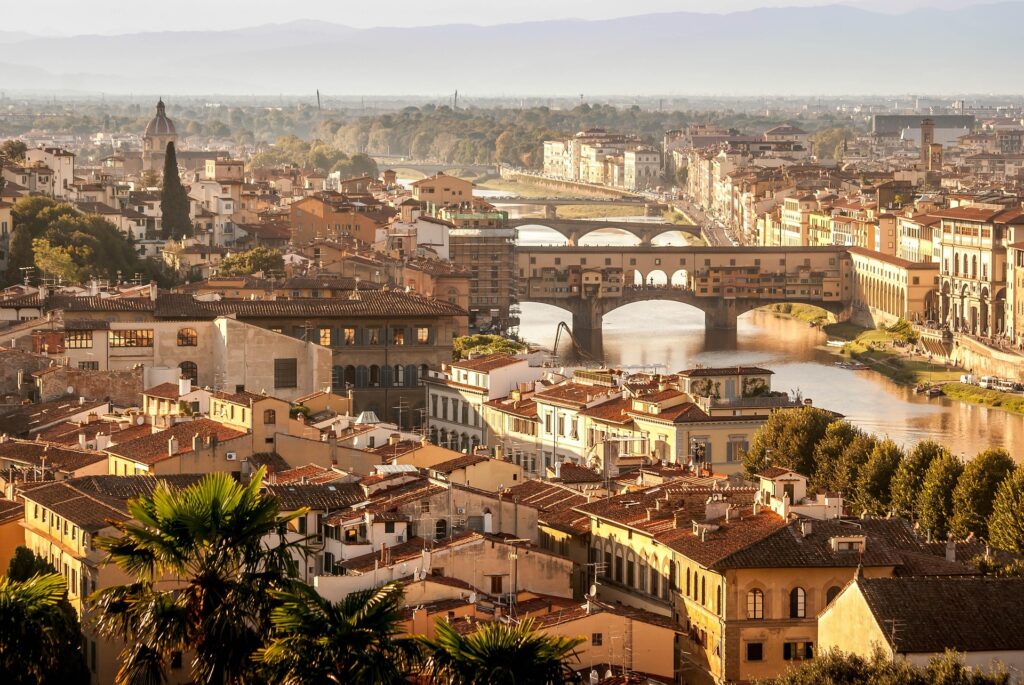
Give it half a day at minimum. A full day if you can. The city is compact enough that you can walk from the Duomo to the Uffizi to the Ponte Vecchio to the Oltrarno in an afternoon, but that’s seeing Florence the way you’d read a novel by scanning the chapter titles.
What you need to know practically: the Uffizi and the Accademia (where Michelangelo’s David lives) require advance tickets during any season that isn’t deep winter. Buy them online before you leave Rome. The queue for walk-in visitors is long enough to reconsider life choices.
Eat in the Oltrarno — the neighbourhood south of the Arno — or in the streets around Sant’Ambrogio market. Tourist menus near the Duomo are priced for people who won’t come back. The Oltrarno is priced for people who live there.
When you leave Florence heading north, the A1 enters the Apennines. This is the most physically dramatic section of the entire drive — the road punches through mountains via tunnels and viaducts, climbing to nearly 400 metres before descending into the Po Valley. The older stretch of the A1, marked as “Panoramica” on some signs, uses fewer tunnels and offers views from elevated viaducts that are worth the slightly slower pace. The newer “Variante di Valico” route is faster but you’ll see mostly tunnel walls.
Stage Two — Florence to Venice
Distance: 260 km Driving time: 3–3.5 hours Toll cost: approximately €20 Road: A1 to Bologna, then A13/A57 eastbound
Once you clear the Apennines and drop into Emilia-Romagna, the landscape flattens completely. The Po Valley is Italy’s breadbasket — prosperous, agricultural, and not trying to impress you. Bologna appears on the horizon as a cluster of towers and terracotta, and the ring road feeds you around the city without forcing you through it.
If you have the time, Bologna deserves a stop. It is arguably the best-eating city in Italy — which is a serious claim in a country where every city believes the same about itself. The porticoes alone are worth an hour of walking. But if Venice is pulling you forward, the A13 heading northeast toward Padova is well-signed and the traffic thins out once you clear the Bologna interchange.
The A13 merges into the A57 as you approach the Venetian lagoon. Follow signs for Venezia. The road becomes a causeway — the Ponte della Libertà — a four-kilometre bridge connecting the mainland to the island. There is something specific about this moment that no amount of description prepares you for: the road simply ends. Not at a junction or an off-ramp. It ends because the city ahead was built on water and the idea of driving into it was never part of the plan.
Arriving in Venice — Where to Leave the Car
This matters more than almost anything else in this guide. Venice has no roads inside the historic centre. Your car becomes a piece of luggage the moment you cross the bridge. You need to park it and walk away from it, possibly for days.
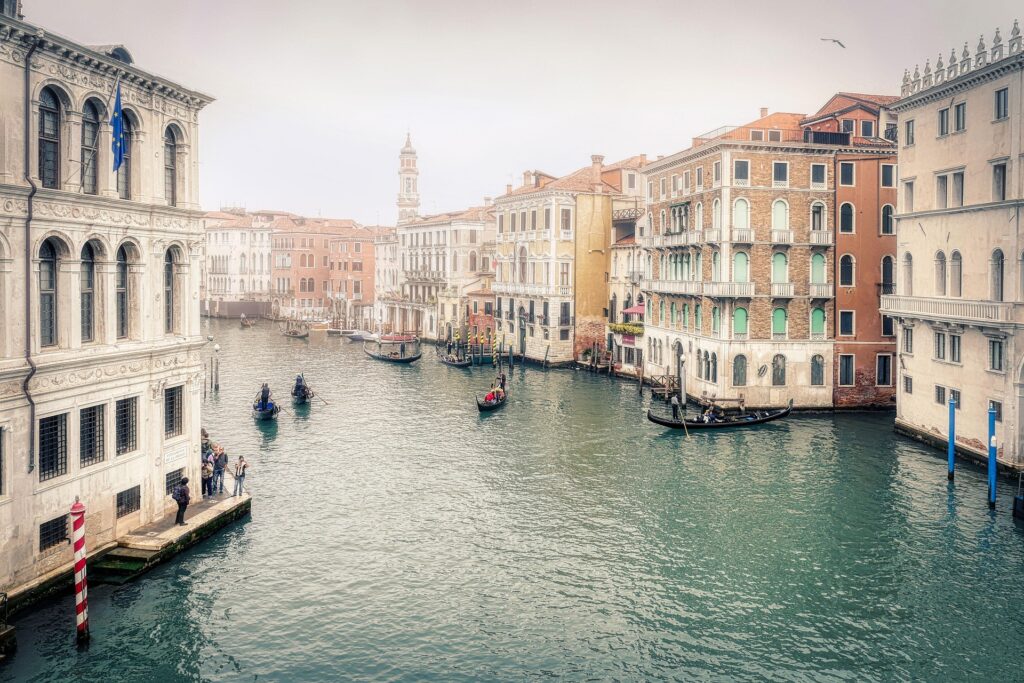
Piazzale Roma is the closest point to the historic centre you can reach by car. Garages here charge approximately €35–40 per day. It’s expensive but you step out of the car and you’re in Venice — water buses, walkways, and the Grand Canal are right there. During high season (April–October), book a space in advance or risk circling the garage ramps while your patience dissolves.
Tronchetto is an artificial island built specifically for parking, just before Piazzale Roma. Rates are slightly lower — approximately €25–30 per day. From here, a small automated shuttle called the People Mover connects to Piazzale Roma in two minutes for €1.50. Alternatively, the number 2 vaporetto runs from Tronchetto directly into the Grand Canal and down to San Marco.
Mestre, on the mainland, is the budget option. Garages near Mestre train station run €5–15 per day. From Mestre, trains reach Venice Santa Lucia station in 11 minutes and depart every 5–10 minutes. If your hotel is near the station or in Cannaregio, this makes genuine financial sense — the savings on parking over three or four days easily covers your train tickets and a good dinner.
Practical Notes
Tolls: The A1 is a toll road. You’ll pay at automated booths — cash and cards are both accepted. Budget approximately €40 for the full Rome-to-Venice route. Keep the ticket you receive when entering the motorway; you’ll need it when you exit.
Fuel: Service stations on the A1 are branded as Autogrill and they are an Italian institution of their own. The coffee is adequate, the sandwiches are better than they need to be, and the one near Cantagallo between Florence and Bologna literally spans the highway — a building you drive underneath. Fill your tank before leaving Rome. The A1 has no shortage of fuel stations but prices are higher on the motorway than in town.
Speed: The posted limit on the A1 is 130 km/h. Italy uses an automated speed monitoring system called Tutor that calculates your average speed between two points. Driving at 150 between cameras and braking at each one does not work. The maths will catch you.
ZTL zones: Florence, Bologna, and Venice all have restricted traffic zones. Florence’s will fine you automatically. Bologna’s is large and clearly marked. Venice’s is irrelevant because you can’t drive there at all. The general rule in Italy is: if you can see a medieval tower from where you’re driving, you are probably approaching a ZTL. Park outside and walk.
Timing: The drive from Rome to Venice without stopping is six to seven hours. With Florence as a proper stop, you’re looking at three to five days done well. Leaving Rome on a Tuesday or Wednesday morning means lighter traffic both exiting Rome and entering the A1. Avoid Friday afternoon departures — half of Rome is heading north and they all merge onto the same road you need.
Season: Spring and early autumn offer the best combination of weather, light, and manageable crowds. Summer is hot, crowded, and expensive. July in Florence feels like standing inside a kiln. August in Venice smells like a canal that has been thinking about itself for too long. Winter is quieter and cheaper but shorter days mean less driving light and some Apennine passes can get weather.
What This Road Is Really About
The A1 was built to move people efficiently between Italian cities. It does that well. But the road also passes through two thousand years of continuous civilisation without ever quite letting you forget it. You’re driving through the same landscape the Romans farmed, the Medicis financed, and Napoleon marched through on his way to somewhere he thought mattered more. Feel the Mediterranean culture.
The stops along the way — Orvieto on its cliff, Florence in its valley, Bologna under its porticoes — aren’t destinations you add for content. They’re the reason this road exists. The highway was built to connect places people already loved.
Venice is at the end of it. A city where the road stops and the water begins. Leave the car. Step onto a vaporetto. Watch the Grand Canal and the Adriatic open up in front of you.
You won’t need the car again for a while.
🔍 Related GoBeyondia Journeys
→ Evoke: The Bird at the Window — the moment that started this journey
→ Explore: Italy Travel Guide — Where Art Meets Adriatic Magic
→ Evolve: The Distance Between Knowing and Being There — what this road felt like from the inside

Beyondia
Trusted Travel CompanionReal digital nomad. I travel. I learn. I grow.
What about you? Where are you going?