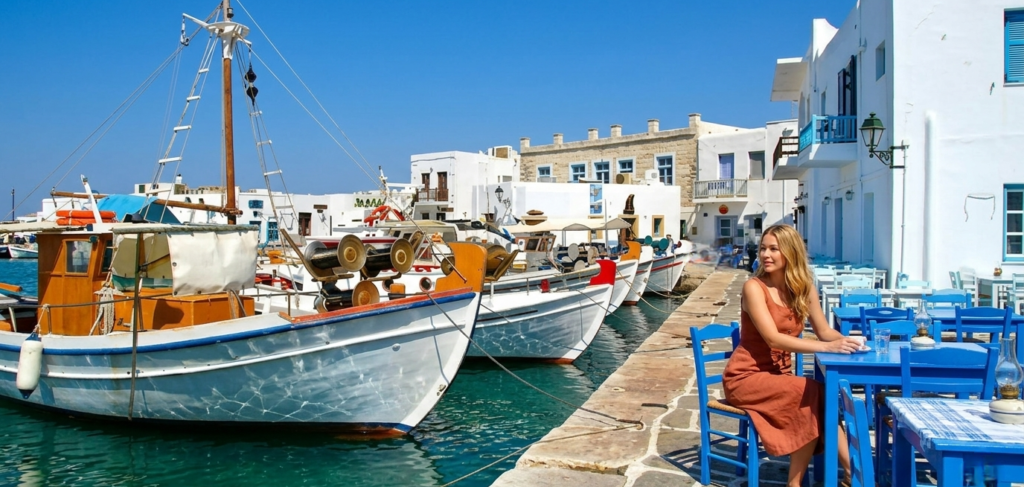
Around the World with Beyondia 🧵 Mediterranean Region 🪡 Journal 5
Naxos. Paros. Ios. Three islands that don’t need the ones everyone talks about.
Naxos
The ferry from Mykonos to Naxos takes forty minutes. The difference takes about three seconds to feel.
I walked off the boat and the Portara was right there — the massive marble doorway of an unfinished Temple of Apollo, standing alone on a hilltop connected to the port by a narrow causeway. It was started in 530 BC by the tyrant Lygdamis, who wanted to build the largest temple in Greece. He never finished. What remains is a doorframe to nothing — six tonnes of marble framing the sky. I stood under it at sunset and understood why nobody tore it down. Some things are more powerful incomplete.
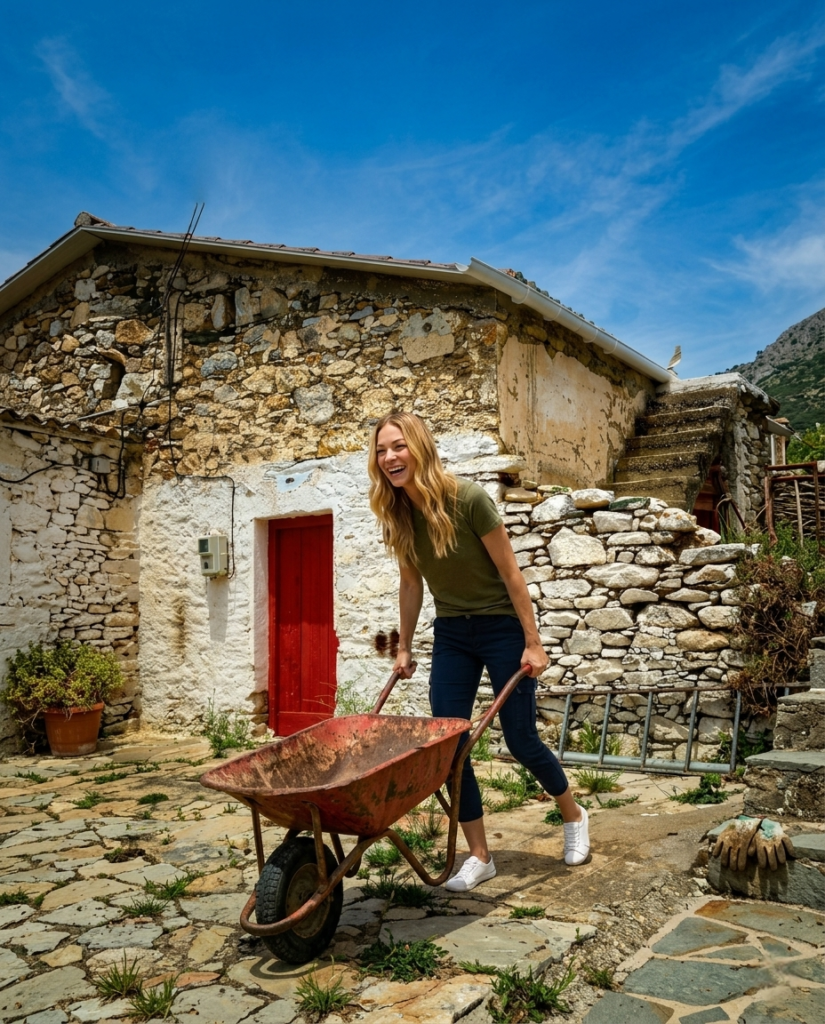
Naxos is the largest of the Cyclades, and it acts like it. The interior isn’t decorative coastline — it’s real farmland. Valleys full of olive groves, potato fields, citrus orchards. I drove into the highlands and found villages where tourism hadn’t arrived and nobody seemed bothered. In Halki, I walked into a shop selling kitron — a liqueur made from citrus leaves that grows almost nowhere else — and the owner let me taste three different grades without saying a word about price. Naxos doesn’t sell. It offers.
I ate graviera cheese made that morning, still warm. Bread from a wood oven in a back street. Lamb cooked in paper with tomatoes and herbs from someone’s garden. On Mykonos, dinner is a scene. On Naxos, dinner is the point. The island has been feeding the Cyclades for centuries — when other islands ran out of grain, they came to Naxos. That history is still on the plate.
Paros
Paros was next, and the light changed before I noticed anything else.
There’s a reason artists have been coming here for decades. The island is made of white marble — the same Parian marble that Praxiteles used to carve the Hermes, the same stone that built parts of Napoleon’s tomb. The light bounces off everything. Walls, streets, cliff faces. Paros doesn’t have golden hour. It has an all-day argument between white stone and the Aegean blue, and neither side ever wins.
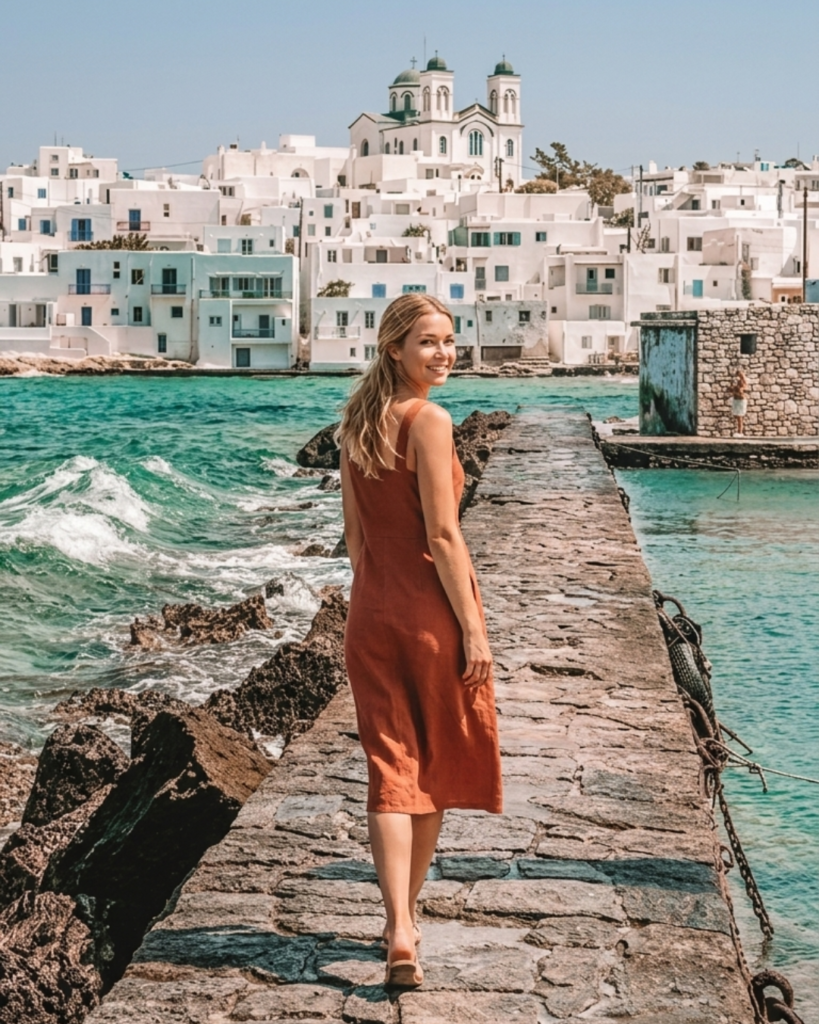
Naoussa on the northern coast stopped me cold. A fishing harbour so small you could swim across it, surrounded by whitewashed buildings and half-submerged Venetian fortifications. Fishing boats painted in primaries bobbed next to restaurants where the catch was still being unloaded. I sat at the water’s edge eating grilled octopus that had been on a hook twenty minutes earlier, and the simplicity of the whole thing felt almost aggressive. No concept. No curation. Just a harbour doing exactly what it’s done for five hundred years.
I walked through Lefkes — the medieval capital hidden in the island’s interior — on paths paved with marble because on Paros, marble is what you have. Byzantine churches smaller than my apartment sat between houses draped in jasmine. Every corner smelled different. Every street led downhill toward a view that didn’t ask to be photographed but probably should have been.
Ios
Ios I almost skipped. The reputation precedes it — party island, backpacker chaos, sunrise crowds still holding drinks. I went anyway.
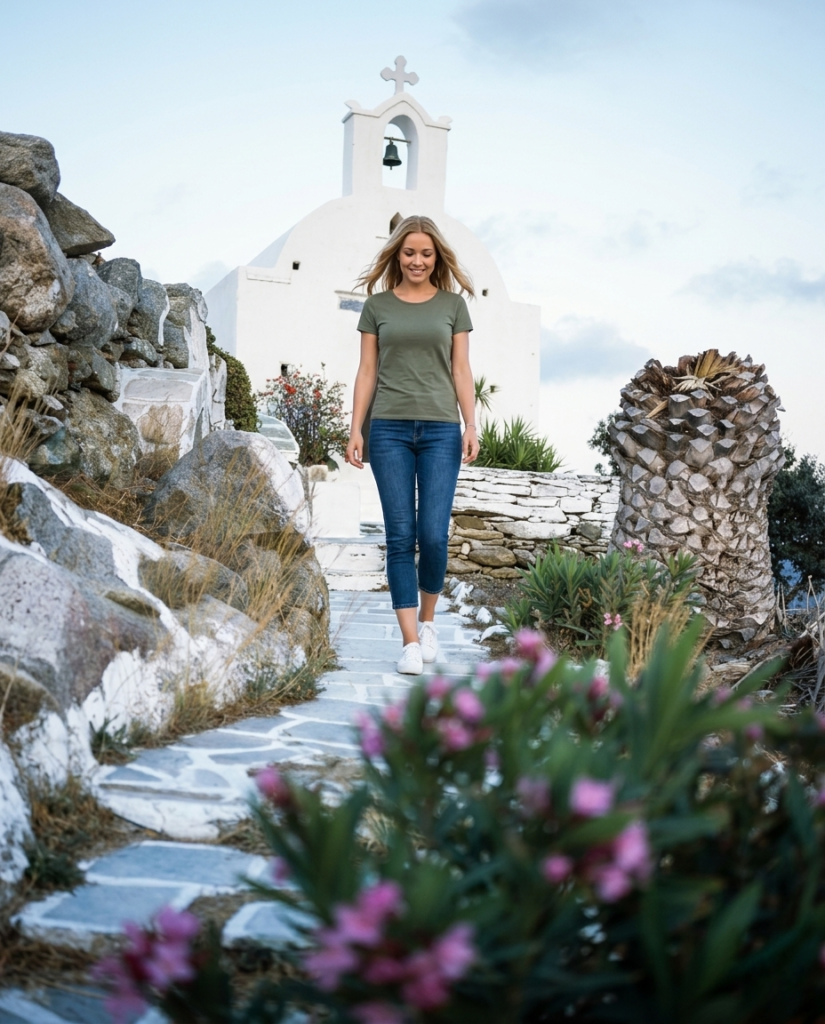
The ferry dropped me at the port and I took the bus up to the Chora. The village sits on top of a hill wrapped in white, twelve windmills along the ridge, churches scattered between houses at a ratio that makes no architectural sense — over 360 churches on an island of 100 square kilometres. I arrived in the afternoon and the village was almost empty. Quiet. Cats occupying chairs outside closed bars. Ios before sunset is a completely different country from Ios after midnight.
I hiked to the northern tip to find Homer’s tomb — or what tradition says is Homer’s tomb. Whether the poet of the Iliad and the Odyssey actually died here is debated. The fact that Ios has claimed him for over two thousand years is not. The site is unmarked except for a small stone ruin on a hillside overlooking the sea. I sat there with the wind and the absurd thought that the man who wrote the first great travel story might have ended up on this small island because the story brought him here. Nobody else was around. Just the stone, the sea, and the weight of a claim that an entire island decided was worth keeping.
That evening I watched the sunset from the Chora and the sky did things I don’t have adjectives for. Below me, the first bars were opening. Music started drifting up the hill. Ios does what it does — it lets the young be young and the old be curious and doesn’t judge either for showing up.
Three islands. One fed me honestly. One showed me what light does when it has nowhere to hide. One surprised me by being far more than the loudest thing about it.
The Cyclades don’t compete with each other. They just each decide what to be, and commit.
Next week — Crete. The island that was a civilisation before Greece was a word.

Beyondia
Trusted Travel CompanionReal digital nomad. I travel. I learn. I grow.
What about you? Where are you going?