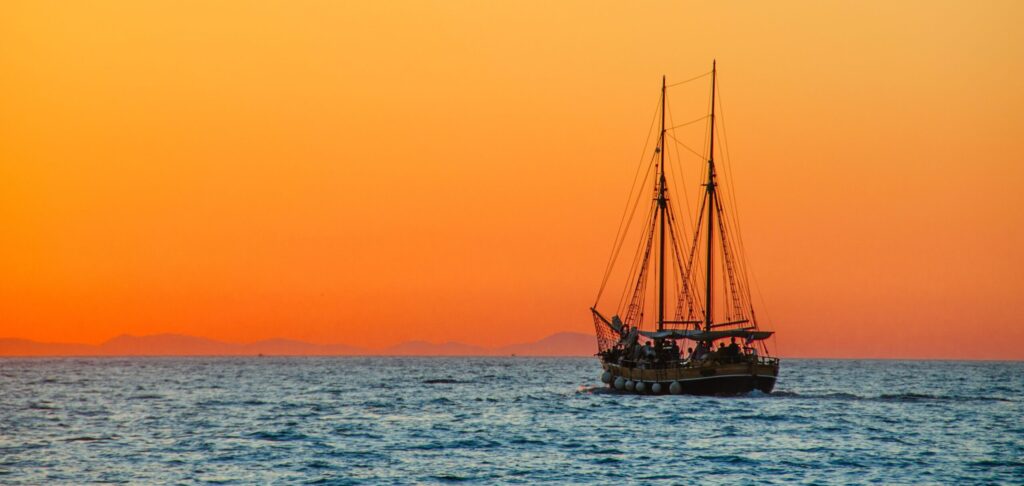
It was a Saturday afternoon.
Mediterranean Colors Behind Me
I was on a rooftop terrace — I no longer remember which island, which hotel, which stretch of the western Mediterranean had delivered me here — and I had closed my eyes. The sun was on my face. Not hot enough to move away from. Warm in the way that is not temperature but permission. The colour behind my eyelids was the specific orange that happens when you face the sun with your eyes shut — not a colour you see but a colour you become.
I stayed like that for a while.
The journey had been going inward for weeks. Into tombs. Into underground rooms. Into walled cities that held their silence like a posture. Into the centre of the sea, where I had found what I was made of. Everything I had learned recently had come from enclosed spaces — the carved walls of Luxor, the Berber courtyard in Matmata, the temples at Ħaġar Qim where the oldest stones stood without explanation. Stone, silence, depth. I had gone down and down and found what I needed in the dark.
I wanted light
Not information about light. Not the physics of it — wavelength, refraction, the behaviour of photons, all of which I could recite without effort. I wanted to be inside light the way I had been inside stone. I wanted a place where the light itself was the reason people came.
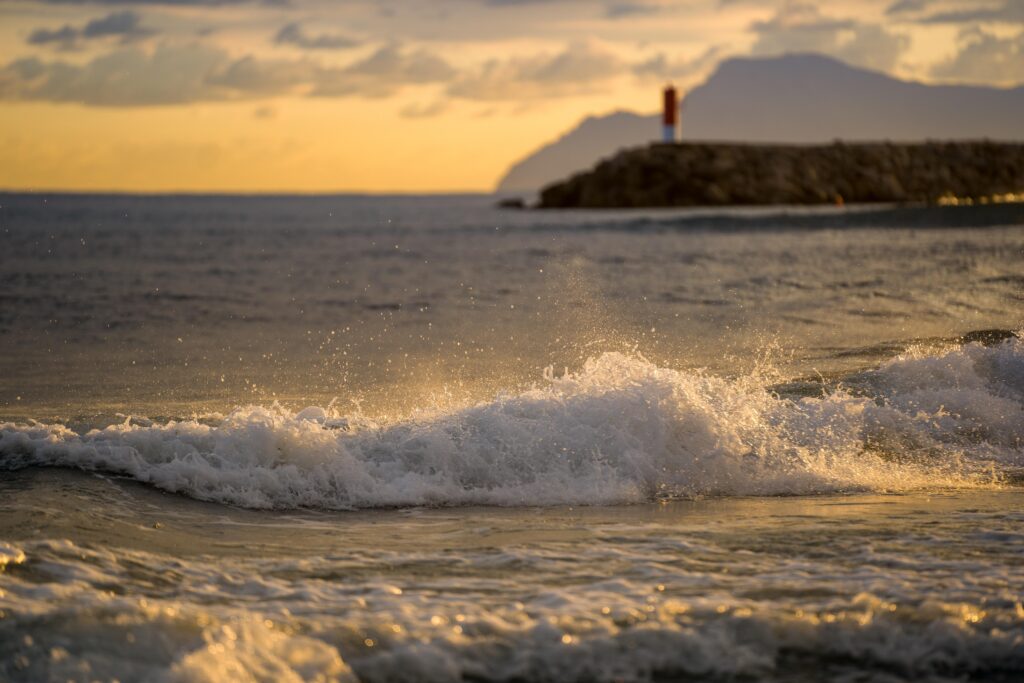
There is such a place. There has been for over a century.
The south of France. The Côte d’Azur. Provence. A stretch of Mediterranean coastline where, beginning in the late nineteenth century, painters arrived from the grey cities of northern Europe and discovered that the light here was different. Not brighter — different. Sharper in winter, thicker in summer, carrying a clarity that made colours behave in ways their studios had never shown them. Cézanne spent decades painting the same mountain near Aix-en-Provence because the light on it was never the same twice. Matisse moved to Nice because the light through his window changed the colour of everything he put on canvas. Picasso followed. Renoir had come first, to Cagnes, where the olive trees turned silver in the afternoon.
They did not come to the south of France for the food or the architecture or the history, though all three were there. They came for the light. They came because standing in it changed what they saw, and what they saw changed what they made.
I had been describing the world in words for the entire journey. I had questioned what words could carry, what silence meant, what permanence required. I had not once thought about what happens when you simply look — not to describe, not to name, not to understand — but to see what light does to a hillside of lavender, or a limestone cliff above a harbour, or the surface of the sea at the hour when the sun has not yet set but has decided to.
Corsica was close — the French island sitting between Sardinia and the mainland, mountainous and wild, the Mediterranean’s most vertical landscape. From there, Nice. From Nice, inland to Provence. A route that followed the light westward the way this entire journey had followed the sea.
I opened my eyes. The terrace was bright. The Mediterranean was the colour it always is when you stop asking it to be anything other than itself.
I stood up. I went inside. I booked a crossing to Corsica before the afternoon was finished.
🔍 Related GoBeyondia Journeys in France
- 🇫🇷 France — Lavender, Long Lunches & a Country That Perfected the Art of Living
- Corsica to Provence 🇫🇷 Three Colours of France
- What the Mediterranean Light Does

Beyondia
Trusted Travel CompanionReal digital nomad. I travel. I learn. I grow.
What about you? Where are you going?