🌐 Around the World with Beyondia 🧵 Nordic & Western Europe Region 🪡 Episode 65: Edinburgh
Edinburgh is the capital of Scotland and one of the most substantial UNESCO-inscribed historic capitals in Europe. The commune population is approximately 510,000, with the metropolitan area approximately 900,000 — substantial specific among Scottish cities, though substantially smaller than Glasgow (approximately 640,000 in the commune, approximately 1.7 million in the metropolitan area, making Glasgow substantially the largest urban region in Scotland). Edinburgh sits on the specific southern shore of the Firth of Forth, approximately 55 kilometres east of Glasgow and approximately 630 kilometres north of London. The specific city has been continuously inhabited since substantially the pre-Roman Iron Age, with substantial specific evidence of the specific Din Eidyn hillfort on Castle Rock from approximately the 7th century BC. The specific historical continuity extends through the substantial Anglo-Saxon period (specific evidence of Anglian occupation from the 7th century AD when the region was substantially part of the Kingdom of Northumbria), the specific medieval Scottish kingdom (from approximately the 12th century onwards when Edinburgh substantially became one of the substantial specific royal seats), the specific Reformation period (with substantial specific events including the specific 1560 Scottish Reformation led by John Knox), the specific 18th-century Enlightenment period (the substantial specific intellectual concentration that produced the substantial Scottish Enlightenment), and the specific modern period as Scotland’s specific political and cultural capital. Edinburgh is currently the seat of the Scottish Parliament at Holyrood (established 1999 following the specific 1997 devolution referendum), one of the specific substantial financial services centres in Europe, and one of the substantial specific tourism destinations in the United Kingdom.
Edinburgh — Two Distinct Historical Urban Districts
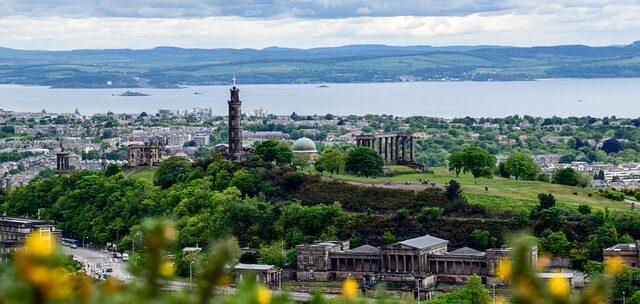
The specific fundamental geographical character of Edinburgh — the article’s opening organising fact — is the specific split between two distinct historical urban districts, arranged in specific physical continuity across approximately 400 metres of central urban space. The Old Town — the medieval Edinburgh — climbs the specific volcanic bedrock spine from Holyrood Palace at the eastern base (approximately 25 metres above sea level) to Edinburgh Castle at the western summit (approximately 130 metres above sea level) across approximately 1.6 kilometres of specific stepped topography along the specific Royal Mile. The New Town — the 18th-century planned Edinburgh — extends substantially across the specific ridge to the north of the Old Town, laid out on the specific systematic grid plan drawn by James Craig in 1766 and executed substantially between 1767 and 1830. The two districts are separated by the specific Princes Street Gardens (formerly the Nor Loch, a specific artificial defensive lake substantially drained between 1759 and 1817 as part of the New Town development), and connected by the specific North Bridge (1772, substantially rebuilt 1897) and specific Waverley Bridge (1873). Both districts together are inscribed as UNESCO World Heritage since 1995 as “The Old and New Towns of Edinburgh” — the substantial specific inscription recognises the two districts as an integrated whole demonstrating the specific coexistence of medieval and Enlightenment urban traditions within a single specific European capital.
The specific volcanic geological foundation is worth naming carefully because it substantially shaped the specific fundamental urban character. Castle Rock — the specific 130-metre volcanic plug on which Edinburgh Castle sits — is the substantial remnant of an extinct volcano that erupted approximately 340 million years ago during the specific Carboniferous period. The specific volcanic activity produced a substantial specific dolerite plug (a substantial specific column of hardened volcanic rock formed within a volcanic conduit) that remained substantially intact when the surrounding softer sedimentary rock was substantially eroded away over subsequent geological time. During the specific Ice Ages of the past 2.5 million years, substantial specific glacial action further shaped the specific topography — the substantial specific glaciers moving eastward across the Edinburgh region substantially eroded around the specific Castle Rock and Arthur’s Seat volcanic remnants, producing the specific characteristic “crag and tail” geological formation where the specific volcanic plugs remained standing while the specific sedimentary rock behind them (eastward) was substantially protected from glacial erosion, forming the specific tapering ridge that extends eastward from Castle Rock. This substantial specific geological formation — the specific crag and tail of Castle Rock and the specific Royal Mile ridge — is the substantial foundation of the specific Old Town urban geography. The medieval city was substantially built on this specific defensive ridge because the substantial geological topography provided substantial specific natural defensive advantages.
The specific medieval Old Town developed substantially between the specific 12th century (when Edinburgh substantially became one of the substantial royal seats of the Scottish kingdom under King David I) and the specific 17th century. The specific Royal Mile — the substantial approximately 1.6-kilometre primary urban spine that extends from Edinburgh Castle at the summit to Holyrood Palace at the base — comprises the specific sequential streets of Castlehill, Lawnmarket, High Street, Canongate, and Abbey Strand (the specific street name changes at specific historical boundary points reflecting the specific different medieval jurisdictions that governed different sections). The specific medieval buildings that line the Royal Mile substantially date to the 15th-17th centuries — some of the substantial specific buildings being genuinely medieval, others being substantial specific 17th-century reconstructions after specific fires, and others being specific 19th-century restorations. The substantial specific tall tenement buildings — locally called “lands” — that rose substantially 8-10 storeys high are one of the more remarkable specific medieval urban architectural inheritances. Some substantial specific examples of the medieval “lands” reached substantially 11-12 storeys, making them substantially among the tallest residential buildings in medieval Europe. The specific density constraint that produced these substantial tall buildings was the specific defensive requirement to maintain the medieval urban population substantially within the specific defensive walls on the specific narrow ridge topography — with limited horizontal space available, the medieval city substantially expanded vertically.
The specific closes and wynds — the substantial narrow lanes that extend perpendicularly from the Royal Mile on both sides — are one of the most distinctive specific features of Edinburgh’s Old Town. Specific substantial closes include Advocate’s Close, Anchor Close, Old Fishmarket Close, Fleshmarket Close, Warriston’s Close, and dozens of specific others. The specific closes typically extend substantially between the substantial specific tenement buildings, providing specific pedestrian access to the specific residential and commercial spaces distributed across the substantial vertical urban environment. The specific Mary King’s Close — a substantial specific 17th-century close that was substantially sealed off in 1753 when the specific Royal Exchange (now the specific City Chambers) was built substantially over it, and rediscovered and opened as a substantial specific historic tourism attraction in 2003 — provides substantial specific engagement with the specific 17th-century Edinburgh urban environment substantially preserved in its specific original condition. The specific tour of Mary King’s Close is one of the most substantial specific pieces of preserved medieval urban archaeology accessible to the specific public in Europe.
Edinburgh Castle
Edinburgh Castle — sitting on the substantial specific volcanic plug at the western summit of the Royal Mile — is one of the most substantially fortified specific medieval castle sites in Europe, with substantial specific continuous military occupation from approximately the 11th century onwards. The substantial specific structures date substantially to different historical periods: the specific St Margaret’s Chapel (early 12th century, the oldest substantially preserved building in Edinburgh), the specific Great Hall (constructed substantially 1503-1512 under King James IV), the specific Half Moon Battery (constructed 1573-1588), the specific Royal Palace (with substantial rebuilding in various periods, currently housing the substantial specific Honours of Scotland — the substantial specific Scottish Crown Jewels, one of the oldest sets of crown jewels in Europe), the specific National War Memorial (1927), and specific additional substantial structures. The specific One O’Clock Gun — a substantial specific ceremonial time signal fired daily from Edinburgh Castle at 1:00 PM (except Sundays, Good Friday, and Christmas Day) — has been continuously fired since 1861, originally to provide specific time signal to ships in Leith harbour, and continues today as one of the substantial specific Edinburgh ceremonial traditions.
Holyrood Palace — the specific royal residence at the eastern base of the Royal Mile — is the substantial official residence of the British monarch in Scotland, and the substantial specific site of substantial specific historical events. The specific palace developed from the specific Holyrood Abbey (founded 1128 by King David I as an Augustinian monastery), with the specific royal residence substantially expanded across the specific 15th-17th centuries. The substantial specific palace was the specific residence of Mary, Queen of Scots (1561-1568), and the substantial specific site of specific dramatic historical events including the specific 1566 murder of David Rizzio (Mary’s secretary, substantially killed in the queen’s presence by the specific Lord Darnley faction in a substantial specific political conspiracy). The current substantial specific building substantially reflects the specific 17th-century reconstruction commissioned by King Charles II. Holyrood Palace continues today as the substantial specific residence of King Charles III during his substantial specific annual visits to Scotland, and the substantial specific state rooms are substantially open to public tours during periods when the monarch is not in residence.
The substantial specific Scottish Parliament building at Holyrood — sitting immediately opposite Holyrood Palace, opened in 2004 following the specific 1997 devolution referendum that substantially re-established the Scottish Parliament after approximately 300 years — is one of the more specific substantial pieces of contemporary Edinburgh architecture. The specific building was designed by the specific Catalan architect Enric Miralles (1955-2000, who substantially died before the building was completed), with substantial specific completion by his firm EMBT and the specific Scottish firm RMJM. The specific building has been substantially controversial for its specific unconventional architecture, substantial specific budget overruns (final cost approximately £414 million versus initial estimate of £40 million), and specific substantial delays. The specific building won the substantial specific 2005 Stirling Prize (the substantial specific UK architectural award). The substantial specific location — immediately opposite the ancient royal palace and at the specific foot of the medieval Royal Mile — substantially symbolises the specific relationship between contemporary Scottish democracy and the specific historical Scottish kingdom.
New Town — Edinburgh
The specific New Town — the article’s second substantive subject — was substantially planned and executed across approximately 60 years between 1767 and 1830. The specific development substantially began with the specific 1766 architectural competition to design a new residential district north of the medieval city, substantially motivated by the specific overcrowding of the medieval Old Town and the specific need for substantial expanded residential and commercial space. The specific competition was won by James Craig (1739-1795), a specific 22-year-old architect who substantially proposed a specific systematic grid plan featuring three parallel main streets (Princes Street, George Street, Queen Street) running east-west, connected by perpendicular streets, with substantial specific residential squares (St Andrew Square at the eastern end, Charlotte Square at the western end) providing substantial specific architectural focal points. The specific Craig plan was substantially unusual for its systematic classical approach and substantial specific execution.
The specific execution of the Craig plan involved substantial specific subsequent architectural work, particularly by Robert Adam (1728-1792, one of the substantial specific 18th-century British architects, whose specific classical work substantially defined the specific late-18th-century British architectural language). Adam substantially designed several of the substantial specific New Town buildings, particularly the substantial specific Charlotte Square (designed 1791, substantial specific completion after Adam’s death, one of the substantial specific coherent Georgian residential squares in Europe). The specific Charlotte Square No. 6 is currently the substantial specific official residence of the First Minister of Scotland (Bute House). The specific New Town development substantially expanded northward across subsequent decades — the specific Second New Town (1802-1830, extending north of Queen Street to include specific substantial developments including specific residential squares and streets), the specific Third New Town (Moray Estate, developed 1822-1836 with substantial specific James Gillespie Graham design featuring specific curved streets and specific residential crescents), and the specific Western New Town (developed 1820s onwards). The substantial specific integrated architectural character of the New Town — the substantial specific classical facades, the substantial specific integrated street planning, the substantial specific residential squares and gardens, the substantial specific consistent use of specific Craigleith sandstone (a substantial specific local stone quarried from the specific Craigleith quarry approximately 2 kilometres northwest of the New Town) — is genuinely one of the most substantial European Georgian planned urban districts.
The substantial specific Scottish Enlightenment — the article’s central substantive intellectual claim — was substantially concentrated in Edinburgh during the specific period between approximately 1740 and 1790. The substantial specific intellectual community that operated in Edinburgh during this specific period is genuinely one of the more remarkable single European intellectual concentrations in modern history. The specific figures include:
David Hume (1711-1776) — one of the most substantial philosophers in the specific empiricist tradition, whose substantial specific works A Treatise of Human Nature (1739-1740) and An Enquiry Concerning Human Understanding (1748) substantially shaped modern epistemology, philosophy of mind, and philosophy of religion. Hume’s substantial specific arguments about causation (the substantial claim that causation cannot be directly perceived but must be inferred from observation of regular succession), about induction (the substantial specific “problem of induction” that questions the specific logical foundation of scientific reasoning), and about miracles (the substantial specific argument in the Enquiry section on miracles that substantially challenges the epistemic foundation of religious claims about supernatural events) substantially shaped subsequent European philosophy. Hume lived substantially in Edinburgh throughout his adult life (with specific periods in France and London), served substantially as Keeper of the Advocates’ Library (a substantial specific Edinburgh scholarly library) between 1752 and 1757, and died substantially at his Edinburgh home in 1776.
Adam Smith (1723-1790) — the substantial specific founder of modern political economy, whose substantial specific works The Theory of Moral Sentiments (1759) and An Inquiry into the Nature and Causes of the Wealth of Nations (1776) substantially established the substantial specific foundations of modern moral philosophy and modern economics. Smith’s substantial specific arguments about specific “invisible hand” market coordination (the substantial specific claim that individual pursuit of self-interest can substantially produce beneficial collective outcomes through specific market mechanisms), about specific division of labour (the substantial specific analysis of specific pin-manufacturing production efficiency that opens The Wealth of Nations), about specific labour theory of value, and about specific limits of state economic intervention substantially shaped subsequent European economic thought. Smith lived substantially in Edinburgh during specific periods, particularly 1778-1790 when he served substantially as Commissioner of Customs (a substantial specific Edinburgh appointment), and died substantially at his Edinburgh home in 1790. Smith and Hume were substantially close friends for approximately 26 years — their specific correspondence documents a substantial specific philosophical friendship, and Smith’s substantial specific letter following Hume’s death (published as an appendix to Hume’s autobiography, causing substantial specific controversy for its specific admiration of a substantial religious sceptic) is one of the substantial specific documents of the Scottish Enlightenment.
Adam Ferguson (1723-1816) — the substantial specific founder of modern sociology, whose substantial specific work An Essay on the History of Civil Society (1767) substantially established substantial specific arguments about the specific historical development of human societies. Ferguson served substantially as Professor of Moral Philosophy at the University of Edinburgh between 1764 and 1785.
William Robertson (1721-1793) — the substantial specific historian whose substantial specific works History of Scotland (1759), The History of Charles V (1769), and History of America (1777) substantially established the substantial specific foundations of modern historical writing methodology. Robertson served substantially as Principal of the University of Edinburgh between 1762 and 1793.
James Hutton (1726-1797) — the substantial specific founder of modern geology, whose substantial specific work Theory of the Earth (1788, substantially expanded 1795) substantially established the substantial specific arguments about the specific enormous age of the Earth, the specific processes of geological change through slow substantial specific mechanisms operating over specific enormous time scales (uniformitarianism), and the specific concept of a substantial specific “deep time” of Earth history that substantially predated subsequent 19th-century geological development. Hutton’s substantial specific field observations at specific Siccar Point on the specific Berwickshire coast (where specific ancient sedimentary layers meet specific younger sedimentary layers in the substantial specific “Hutton’s Unconformity” that provided substantial specific evidence for the specific enormous age of the Earth) are substantially considered the substantial specific field location where modern geology was substantially born.
Joseph Black (1728-1799) — the substantial specific chemist whose substantial specific discoveries substantially established substantial specific foundations of modern chemistry. Black discovered carbon dioxide (which he substantially named “fixed air”) in 1754, formulated the substantial specific concept of latent heat in 1761-1762, and identified specific specific heat concepts that substantially shaped subsequent thermodynamics. Black served substantially as Professor of Chemistry at the University of Edinburgh between 1766 and 1799.
Beyond these specific major figures, the substantial specific Scottish Enlightenment intellectual community included substantial specific additional figures — John Playfair (1748-1819, mathematician and specific popular expositor of Hutton’s geology), Dugald Stewart (1753-1828, philosopher and specific substantial teacher who substantially popularised the Scottish Enlightenment tradition), John Millar (1735-1801, jurist and specific substantial sociological writer), Henry Home Lord Kames (1696-1782, jurist and specific substantial polymath), James Watt (1736-1819, though substantially resident in Glasgow, substantially engaged with the specific Edinburgh intellectual community — the substantial specific inventor of the substantial specific separate condenser that substantially revolutionised the specific steam engine), and dozens of specific others.
The substantial specific intellectual community substantially met regularly in specific Edinburgh dining clubs and specific taverns. The specific Poker Club (established 1762) was a substantial specific dining club that substantially met at specific Edinburgh taverns for substantial specific intellectual discussion. The specific Select Society (established 1754, active until approximately 1764) was a substantial specific debating society that substantially met at specific Edinburgh venues for specific intellectual debate on specific philosophical and political questions. The specific Oyster Club (established 1778) was a substantial specific weekly dining club that substantially included Smith, Black, Hutton, and specific other substantial figures. The substantial specific patterns — regular specific personal contact, specific intellectual collaboration through specific dining clubs and specific correspondence, specific mutual reading of each other’s work in manuscript, specific philosophical influence across specific personal friendships — represent one of the substantial specific patterns of European Enlightenment intellectual community.
The substantial specific consequence of the substantial Scottish Enlightenment for subsequent European intellectual development is genuinely substantial. Modern philosophy substantially inherits substantial specific Humean epistemology and substantial Humean philosophy of mind. Modern economics substantially inherits substantial specific Smithian analysis of market mechanisms and specific division of labour. Modern sociology substantially inherits substantial specific Fergusonian analysis of historical social development. Modern geology substantially inherits substantial specific Huttonian uniformitarianism and specific “deep time” framework. Modern chemistry substantially inherits substantial specific Blackian understanding of gases and thermodynamics. The substantial specific claim that the substantial Scottish Enlightenment substantially shaped subsequent European intellectual development is one of the substantial scholarly historical consensus positions. And this substantial intellectual concentration happened substantially in a single small European city, during a specific approximately 50-year period, in a substantial specific new urban district being constructed simultaneously across the specific ridge from the medieval Old Town.
The specific festival culture of Edinburgh is one of the substantial specific contemporary cultural anchors. The Edinburgh Festival Fringe — established 1947 as a substantial specific alternative to the specific Edinburgh International Festival — is the substantial specific largest arts festival in the world, running annually throughout August with approximately 3,000 specific shows across specific venues throughout Edinburgh (approximately 300 specific venues at the substantial specific peak). The specific Fringe is substantially open — any specific performer or specific production company can substantially participate by booking a specific venue and paying the specific registration fee — producing a substantial specific eclectic mix of substantial specific professional comedy, theatre, music, and specific experimental performance. The specific Edinburgh International Festival (also established 1947) provides substantial specific high-culture programming with substantial specific classical music, opera, theatre, and dance performances. The substantial specific Edinburgh International Book Festival (established 1983), the substantial specific Edinburgh Art Festival (established 2004), the substantial specific Edinburgh Jazz and Blues Festival, the substantial specific Edinburgh Military Tattoo (a substantial specific military music and display event held at Edinburgh Castle esplanade during August), and specific other substantial festivals collectively make August in Edinburgh one of the substantial specific European cultural periods. Approximately 2.5 million tickets are sold across the specific August festivals collectively, and the substantial specific festival period substantially transforms Edinburgh into one of the specific most-attended European cultural destinations.
The specific Scottish whisky tradition — while not substantially concentrated at Edinburgh (the substantial specific whisky-producing regions are substantially the Highlands, Islay, Speyside, Lowlands, and Campbeltown, all of them substantially outside Edinburgh) — is substantially engaged with in specific Edinburgh through substantial specific tasting establishments, specific Scotch Whisky Experience (at the top of the Royal Mile near Edinburgh Castle), specific whisky bars, and specific substantial retail. Scottish whisky is genuinely one of the substantial specific Scottish cultural exports, with substantial specific production traditions across substantially different regional styles.
The specific literary heritage of Edinburgh is substantial. Sir Walter Scott (1771-1832) is genuinely one of the substantial specific historical novelists whose substantial specific works substantially defined the specific 19th-century Scottish romantic tradition. Scott’s substantial specific novels Waverley (1814), Ivanhoe (1819), Rob Roy (1817), and dozens of substantial specific others substantially established the specific historical novel as a specific major literary genre and substantially shaped specific 19th-century European romantic conceptions of Scottish identity. The substantial specific Scott Monument (completed 1846, a substantial specific 60-metre Gothic Revival tower on Princes Street) is the substantial specific tallest monument to a specific writer anywhere in the world. Robert Louis Stevenson (1850-1894) produced substantial specific literary work including Treasure Island (1883), Strange Case of Dr Jekyll and Mr Hyde (1886), Kidnapped (1886), and specific others — the substantial specific Jekyll and Hyde was substantially inspired by the specific Edinburgh figure of Deacon Brodie (1741-1788), a substantial specific respectable cabinet-maker and city councillor who was substantially a specific burglar by night, substantially executed for burglary in 1788. Arthur Conan Doyle (1859-1930) was born in Edinburgh and substantially trained in medicine at the University of Edinburgh, where the substantial specific Sherlock Holmes character was substantially modelled on Dr Joseph Bell (1837-1911), the substantial specific Edinburgh medical instructor whose substantial specific diagnostic methods substantially inspired Holmes’s deductive style. Muriel Spark (1918-2006) produced substantial specific literary work including The Prime of Miss Jean Brodie (1961, substantially set in a specific 1930s Edinburgh girls’ school). Ian Rankin (born 1960) is a substantial specific contemporary crime novelist whose substantial specific Inspector Rebus series (with approximately 24 substantial specific novels from 1987 onwards) is substantially set in Edinburgh and provides substantial specific engagement with the specific contemporary Edinburgh cultural environment. Alexander McCall Smith (born 1948) is a substantial specific contemporary novelist with substantial specific series including the substantial 44 Scotland Street series set in Edinburgh’s New Town. J.K. Rowling (born 1965) substantially wrote substantial portions of the specific Harry Potter series in specific Edinburgh cafés during the 1990s — the substantial specific Elephant House café on George IV Bridge has become a substantial specific literary tourism destination, though the substantial specific direct connection to specific Harry Potter locations in the books is substantially debated.
The specific contemporary Edinburgh combines substantial specific elements. The specific financial services sector is substantially the second-largest in the United Kingdom after London, with substantial specific fund management (Aberdeen Group, Baillie Gifford), specific insurance (Standard Life, Aegon UK), specific banking (Royal Bank of Scotland/NatWest, Bank of Scotland), and specific investment management (specific substantial employers). The substantial specific technology sector has developed substantially, with specific specific data science, financial technology, and specific artificial intelligence companies. The specific University of Edinburgh (established 1583) is one of the substantial specific research universities in the United Kingdom, with approximately 47,000 students and substantial specific research output particularly in artificial intelligence, informatics, and specific medical research. Heriot-Watt University, Edinburgh Napier University, and Queen Margaret University provide substantial specific additional higher education. The specific tourism sector — receiving approximately 4.7 million overnight visitors per year plus substantial specific day-tripper traffic — is genuinely one of the substantial specific European tourism destinations, with substantial specific concentration during the specific August festival period. The substantial specific ongoing negotiations of contemporary Edinburgh life include substantial specific tensions common to substantial specific historic European tourism cities: substantial housing pressure driven by specific tourism-oriented rental conversion; substantial specific tensions between preservation of historic character and specific accommodation of modern services; substantial specific transportation infrastructure; specific substantial ongoing debates about specific commercial development and specific accommodation supply.
This is the deeper character of Edinburgh, and the article proposes to close on it. The city is the capital of Scotland, one of the substantial specific UNESCO-inscribed historic European capitals, and one of the more substantial specific European cities defined by the substantial specific geographical and historical split between two distinct urban traditions. The medieval Old Town — climbing the substantial specific volcanic bedrock spine from Holyrood Palace to Edinburgh Castle along the substantial specific Royal Mile — preserves substantial specific medieval urban fabric from the 15th-17th centuries, including substantial specific tall tenement “lands” that were substantially among the tallest residential buildings in medieval Europe. The 18th-century planned New Town — laid out by James Craig in 1766, executed substantially between 1767 and 1830, with substantial specific architectural work by Robert Adam and specific others — is one of the most substantial European Georgian planned urban districts, and was substantially the site of the substantial Scottish Enlightenment. David Hume, Adam Smith, Adam Ferguson, William Robertson, James Hutton, Joseph Black, and specific others substantially lived, worked, and taught in Edinburgh during the specific 1740s-1790s period, producing substantial specific philosophical, economic, historical, geological, and chemical work that substantially shaped subsequent European intellectual development. The substantial specific intellectual community substantially met in specific dining clubs (Poker Club, Select Society, Oyster Club) and substantially collaborated across specific personal friendships and correspondences. The contemporary Edinburgh combines the substantial specific historical inheritance with substantial specific contemporary character — the specific Scottish Parliament at Holyrood (established 1999), the substantial specific financial services sector (second-largest in the UK), the substantial specific University of Edinburgh (established 1583), and the substantial specific festival culture (the Edinburgh Festival Fringe as substantially the largest arts festival in the world). The specific Scottish national identity — distinct from English identity within the specific UK constitutional framework, with substantial specific separate legal, religious, educational, and cultural traditions — is substantially expressed in Edinburgh through the substantial specific historical and contemporary institutions.
Some capital cities exist substantially in a single historical layer. This one exists substantially in two distinct urban traditions in specific physical continuity — medieval Old Town on volcanic bedrock climbing to a castle, and Enlightenment New Town on a systematic classical grid, separated by specific gardens that were once a defensive lake. Both districts are UNESCO World Heritage. Both are visible from the specific same viewpoints. Both were substantially inhabited simultaneously during the specific 18th century when the New Town was being built while David Hume and Adam Smith were substantially arguing philosophy in specific Old Town taverns and specific New Town dining clubs. The substantial specific intellectual concentration that substantially named modern economics, substantially formulated modern epistemology, and substantially discovered deep geological time happened substantially within specific approximately one square kilometre of the emerging New Town. Every specific street corner in central Edinburgh carries some fragment of this substantial layered inheritance — the specific medieval castle where Scottish monarchs were crowned, the specific New Town squares where Enlightenment philosophers substantially wrote, the specific festival venues where contemporary culture substantially engages with the specific historical inheritance. Edinburgh is a substantially medieval Scottish city where modern Western thought was substantially thought into being. Very few small European capitals carry this specific accumulated substantive inheritance.
Nine regions. One hundred and twenty destinations. Two hundred and ninety-six weeks remaining.
The journey continues north and west. The next stop is Scotland’s substantial specific rural highland region — a mountain landscape shaped by substantial specific glacial action, one of the substantial specific European wilderness landscapes, home to substantial specific Gaelic cultural heritage, substantial specific whisky-producing distilleries, and the substantial specific traditional Scottish rural culture that has substantially defined external conceptions of Scottish national identity for approximately 250 years.
Where are you going?

Beyondia
Trusted Travel CompanionReal digital nomad. I travel. I learn. I grow.
What about you? Where are you going?