GoBeyondia Atlas 🗺️ Mediterranean Region 🗾
Albania: Where concrete bunkers dot hillsides like mushrooms from a paranoid dream, Ottoman cities stack windows toward heaven, and a code of honor older than most European nations still determines whether a stranger gets invited in for raki.
Albania in 30 Seconds
A country the size of Maryland that spent forty years as Europe’s North Korea — borders sealed, religion banned, hundreds of thousands of concrete bunkers built across every hillside and beach and schoolyard because the dictator Enver Hoxha was convinced the entire world was coming to invade — and has emerged from that isolation with an Adriatic coastline that rivals Croatia’s at a third of the price, two UNESCO cities so architecturally intact people still hang laundry from Ottoman-era windows, and a cultural code called besa that makes the word of an Albanian host more binding than most countries’ legal contracts. Tirana is the only European capital where a prime minister who was first an artist painted the communist apartment blocks in stripes of orange and purple and pink because he understood that color is a form of civic liberation. Berat in the south is the City of a Thousand Windows — white Ottoman houses climbing a hillside above the Osum River with their dark-framed windows all facing outward like a congregation watching the valley, a thirteenth-century castle on top where families still live alongside Byzantine churches. The Albanian Riviera along the Ionian coast is what the Croatian coast looked like twenty years before the cruise ships arrived — turquoise water against white limestone, villages accessible only by mountain road. In the north, the Accursed Mountains hold Theth and Valbona — alpine villages connected by a hiking pass across terrain so dramatic the Albanians named the range after a curse and then built guesthouses there anyway because besa requires you to shelter anyone who arrives at your door. The Blue Eye spring — Syri i Kaltër — is a karst water source where divers have reached fifty meters and found no bottom, the water emerging in a color so precisely blue it looks engineered but isn’t. Albania is not trying to become the next anything. It is becoming the first version of itself that the world has been allowed to see.
Evoke — Why You Visit Albania
You come to Albania because you’ve noticed the pattern. The places everyone recommends have already been optimized for the people who take recommendations — the restaurants have English menus and surge pricing, the authenticity has been preserved in the way taxidermy preserves an animal, which is to say technically but not in any way that matters. Albania is the version before that transaction occurs. But the deeper pull is something you didn’t expect. The Albanians operate on a code — besa, a word that translates as pledge of honor but functions more like a gravitational force — that makes hospitality not a commercial service but a moral obligation dating to the fifteenth century. During the Second World War, Albania was the only country in Europe whose Jewish population actually grew, because Albanian families gave their besa to protect refugees and considered breaking that promise more dangerous to their identity than anything the occupiers could do. That is not a tourism selling point. That is a civilization revealing its operating system. You come because you want to be in a place where the word someone gives you is not a figure of speech. You’ve been in too many places where words are decorative. Albania will remind you they can be structural.
Explore — How You Experience Albania
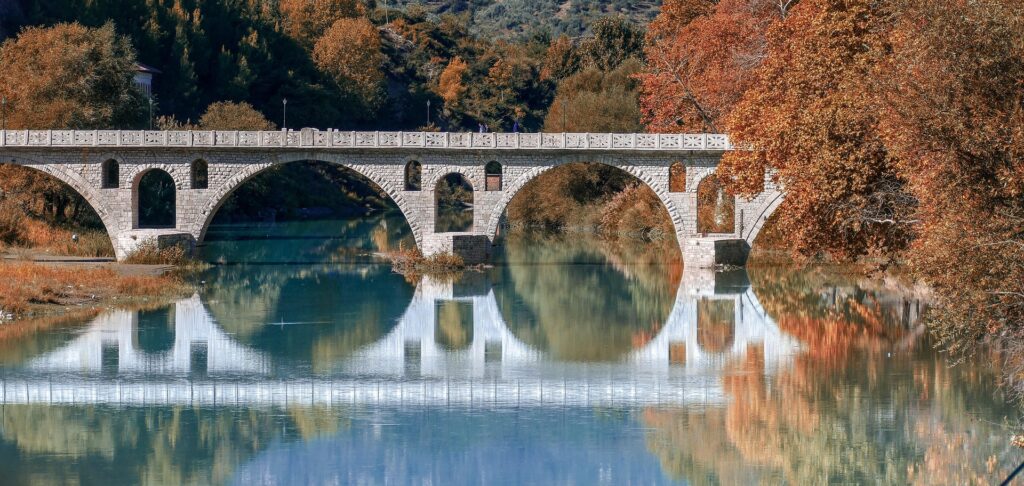
Walk through Tirana’s Blloku district — sealed off during communism for party elites, now the city’s liveliest quarter — and understand that the Albanians processed their dictatorship not by building monuments to suffering but by painting over it in colors so aggressive they constitute an argument about aesthetics and freedom. Visit Bunk’Art — Hoxha’s personal atomic bunker tunneled into a mountain — now a museum where the paranoia of a regime that built hundreds of thousands of bunkers across eleven thousand square miles gets examined with the clarity of a nation that decided to understand its past rather than pretend it didn’t happen. Drive to Berat in late afternoon when the thousand windows of the Mangalem quarter catch the sun across the Osum River and the entire hillside appears to be watching you. Cross the Gorica Bridge and eat fërgesë — peppers, tomatoes, and local cheese baked together into something that has no right to be as good as it is — in a family restaurant where the owner’s grandmother is almost certainly still in the kitchen. Find the Blue Eye south of Gjirokastër — follow a forest path to a karst spring where water of impossible blue emerges from a depth no one has measured and the silence has the quality of a place that knows exactly what it is. Take the ferry across Lake Koman through canyon walls so steep they turn the lake into a fjord to reach the Albanian Alps. Stay in a guesthouse in Theth where the host pours homemade raki under walnut trees and tells mountain stories in a mix of Albanian and gesture that communicates everything language would take too long to say. Hike the Valbona Pass — six to eight hours across forest, scree, and alpine meadow — and understand that Albania hid its most spectacular landscape in the one place the dictator’s bunkers couldn’t reach.
Evolve — Who You Become in Albania
You leave Albania with your relationship to promises permanently recalibrated. The Albanians have a word for the thing most cultures treat as optional — keeping your word when it costs you something — and they maintained it through five centuries of Ottoman rule, forty years of Europe’s most paranoid dictatorship, and the chaotic transition to capitalism that followed. You watched people keep their word in conditions where breaking it would have been easier and cheaper and nobody would have noticed, and it changed what you think a promise is. You also carry the bunkers — not as curiosity but as warning. A nation spent decades pouring resources into concrete shelters against an invasion that never came, and the opportunity cost was everything. You recognize the pattern in your own life — the defensive structures built against threats that exist primarily in your own projections, the energy spent fortifying positions nobody is attacking. The Albanians dug out of their bunkers — some literally, turning shelters into museums and cafés, some figuratively, opening a country that had been sealed shut and discovering the world was more interested in visiting than invading. You come home and dismantle something you’ve been defending that doesn’t need defending. Albania suggested that the best use of a bunker is as a reminder that you don’t need one. You’re beginning to think it was right.
Your practical guide to Albania starts below 👇
🕰️ Albania Historical Backdrop
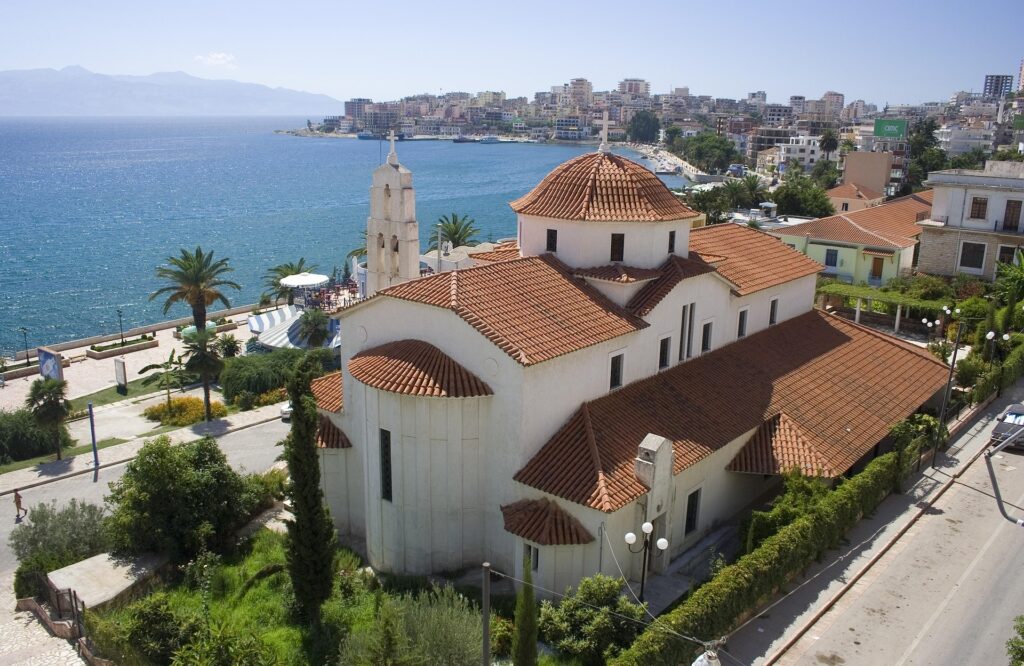
Albania’s history is a profound narrative of resilience at the crossroads of empires. From its Illyrian roots and Roman influences to five centuries of Ottoman rule, the nation has always protected a unique linguistic and cultural identity. Its most recent chapter is perhaps the most compelling: four decades of extreme isolation under a rigid communist regime that left the landscape dotted with over 170,000 concrete bunkers. Today, Albania is Europe’s “Best Kept Secret,” a nation that has emerged with an infectious energy, transforming its colorful capital and preserving its UNESCO stone cities. It is a land where the spirit of Besa—a sacred promise to protect guests at any cost—remains the bedrock of its social fabric, making it one of the most welcoming destinations on the continent.
🌟 Albania Local Experiences
Beyond the hidden beaches, discover Albania’s soul in the ritual of Xhiro—the evening walk where entire communities take to the streets to socialize as the sun sets. Experience the profound stillness of a morning coffee in a 13th-century hillside house in Berat, the exhilarating chaos of Tirana’s vibrant “Blloku” district, or the simple joy of sharing a Byrek pastry with a shepherd in the high Alps. Whether it’s exploring the subterranean world of a secret nuclear bunker turned art gallery or listening to the haunting beauty of ISO-Polyphonic folk singing, these moments reveal a nation that finds strength in its stories and warmth in its welcome.
🌄 Albania Natural Wonders
- The Albanian Alps (Prokletije): Also known as the “Accursed Mountains,” offering some of Europe’s most rugged and untouched hiking trails.
- The Blue Eye (Syri i Kaltër): A mesmerizing natural spring of deep blue water that bubbles up from a depth of more than 50 meters.
- The Albanian Riviera: A spectacular stretch of coastline featuring pebble beaches and crystal-clear water, notably around Ksamil and Dhërmi.
- Lake Ohrid: One of Europe’s oldest and deepest lakes, shared with North Macedonia and famous for its unique endemic species.
- Vjosa River: Known as the “Last Wild River in Europe,” offering a rare glimpse into a natural, unobstructed river ecosystem.
- Osum Canyon: A dramatic 26-kilometer gorge near Berat, perfect for rafting and exploring hidden waterfalls.
🏙️ Albania Must-See Cities & Regions
- Tirana: (Capital) A kaleidoscope of color and energy, where Ottoman, Fascist, and Soviet architecture coexist with trendy cafes and vibrant street art. (Dynamic, Colorful, Cultural)
- Berat: The “City of a Thousand Windows,” a UNESCO-listed gem famous for its white Ottoman houses climbing the hillside to an ancient citadel. (Timeless, Historic, Picturesque)
- Gjirokastër: The “City of Stone,” birthplace of Ismail Kadare and Enver Hoxha, known for its steep cobblestone streets and fortified tower houses. (Mystical, Authentic, Literary)
- Sarandë & Ksamil: The gateway to the south, offering a vibrant coastal atmosphere and proximity to the ancient ruins of Butrint. (Coastal, Sun-drenched, Gateway)
- Shkodër: One of Europe’s oldest cities, the gateway to the mountains and a hub of cycling and traditional Albanian culture. (Historic, Alpine, Traditional)
🏞️ Albania National Parks & Nature Reserves
Managed with a focus on emerging eco-tourism by the National Agency of Protected Areas (AKZM).
- Theth National Park: The heart of the Albanian Alps, home to the iconic stone church and the “Lock-in Tower.”
- Valbona Valley National Park: Famous for its dramatic peaks and the legendary hiking trail connecting to Theth.
- Butrint National Park: A UNESCO site where ancient Greek, Roman, and Venetian ruins sit within a lush wetland.
- Llogara National Park: A mountain pass offering spectacular paragliding and hiking with sea views.
🏛️ UNESCO World Heritage Sites
- Butrint — An archaeological site inhabited since prehistoric times, featuring a massive Roman theater.
- Historic Centres of Berat and Gjirokastra — Exceptional examples of Ottoman-era urban architecture.
- Ancient and Primeval Beech Forests of the Carpathians and Other Regions of Europe — Including protected areas in the Lumi i Gashit and Rrajca.
- Natural and Cultural Heritage of the Ohrid Region — Shared with North Macedonia, reflecting a unique lacustrine ecosystem.
- For a full list, visit the UNESCO Albania Portal.
🖼️ Albania Museums & Galleries
- BUNK’ART 1 & 2 (Tirana): Massive former nuclear and interior ministry bunkers converted into historical and contemporary art spaces.
- House of Leaves (Tirana): The Museum of Secret Surveillance, located in the former Gestapo and Sigurimi headquarters.
- Marubi National Museum of Photography (Shkodër): A world-class collection documenting Albanian life through three generations of photographers.
- National Museum of Medieval Art (Korçë): Housing one of the finest collections of Byzantine icons in the Balkans.
🎉 Albania Festivals & Celebrations
- Kala Festival (Dhërmi): (June) An international beach festival that has helped place the Albanian Riviera on the global music map.
- National Folklore Festival (Gjirokastër): (Every 5 years) A monumental gathering of traditional musicians and dancers held in the city’s massive castle.
- Dita e Verës (Summer Day): (March 14) A nationwide celebration of the end of winter, particularly vibrant in Elbasan and Tirana.
- UNUM Festival (Shengjin): (June) A prominent electronic music festival set between the forest and the sea.
🧽 How to Arrive
- ✈️ By Air
- Tirana International Airport (TIA) is the primary gateway.
- Airlines: Air Albania (Flag carrier) and major European low-cost carriers (Ryanair, Wizz Air) have made Albania exceptionally accessible.
- 🚢 By Sea
- Frequent ferries connect Durrës and Vlorë to Italy (Bari, Brindisi, Ancona).
- A daily hydrofoil connects Sarandë to Corfu, Greece (approx. 30 minutes).
- 🚗 By Road
- Albania shares land borders with Montenegro, Kosovo, North Macedonia, and Greece. Driving is on the right. Be prepared for winding mountain roads and scenic coastal drives.
📶 Stay Connected
- SIM Cards: Major providers are Vodafone Albania and One Albania.
- Where to buy: Kiosks are available at Tirana Airport and in every city center. Registration with a passport is required.
- eSIM: Supported by major providers and global platforms like Airalo for instant data upon arrival.
🏨 Where to Stay
Albania offers everything from eco-resorts in the Alps to chic coastal boutique hotels and historic tower houses.
- Maritim Hotel Marina Bay (Vlorë): Luxury coastal living with a private beach.
- Tradita Geg & Tosk (Shkodër): A boutique hotel in a restored traditional house, offering an authentic Shkodran experience.
- Guesthouses (Theth/Valbona): Stay with local families in traditional stone houses (Kulla) for the ultimate mountain experience.
⛳ Unique Finds
- Bunker Hunting: Discover how Albanians are repurposing thousands of bunkers into cafes, storage rooms, and even hostels.
- The Pyramid of Tirana: Climb (or walk the stairs of) this former mausoleum, now a high-tech learning center and public space.
- Përmet Thermal Baths: Soak in natural outdoor sulfur pools next to a medieval Ottoman bridge.
- ISO-Polyphony: Listen to this UNESCO-recognized traditional singing style, which uses multiple voices to create a haunting drone.
🤝 Albania Cultural Guidance
- Besa: Understand the concept of “Besa”—it is the highest honor to be a guest in an Albanian home.
- Gestures: In some rural areas, a nod can mean “no” and a shake of the head can mean “yes.” When in doubt, listen for “Po” (Yes) and “Jo” (No).
- Hospitality: If offered coffee or a shot of Raki, it is polite to accept. Toasts are a significant part of the dining experience.
- Basic Phrases:
- Hello: “Përshëndetje” (Per-shen-det-ye)
- Thank you: “Faleminderit” (Fa-le-min-de-rit)
- Please: “Ju lutem” (Yu lu-tem)
- Cheers: “Gëzuar” (Ge-zu-ar)
🛂 Albania Entry & Visa Requirements
- Visa-Free: Citizens of the UK, US, Canada, Australia, and EU member states do not require a visa for tourism stays up to 90 days.
- Official Source: Consult the Albanian Ministry for Europe and Foreign Affairs for current regulations.
💰 Practical Essentials
- Currency: Albanian Lek (ALL). Cash is widely used, especially in local markets and smaller towns. Exchange offices are prevalent.
- Electricity: Type C and F (Two round pins). Voltage is 230V.
- Safety: Albania is remarkably safe for travelers and has a very low rate of violent crime. Use standard precautions in crowded city centers.
- Climate: Mediterranean on the coast (hot, dry summers) and Continental in the mountains (cool summers, snowy winters).
✨ Bonus Tip
To truly embrace Albania, leave the itinerary behind for a day. Albania is a land of spontaneous invitations. If a local invites you for coffee or a glass of homemade Raki, say yes. It is in these unscripted moments—under a grape arbor or in a mountain clearing—that the true, transformative magic of the country reveals itself. You will realize that Albania isn’t just a place to see, but a way of feeling human again.
🔗 Featured Links
- Official Tourism: Visit Albania.
- Hiking the Alps: Peaks of the Balkans.
Beyondia
Trusted Travel CompanionReal digital nomad. I travel. I learn. I grow.
What about you? Where are you going?