GoBeyondia Atlas 🗺️ Middle-East Silk-Road 🗾
Armenia: Where the first nation on earth to adopt Christianity looks out every morning at the mountain where Noah’s ark reportedly landed and sees it in another country’s borders, a monk invented an alphabet in 405 AD because a people without their own script cannot survive, and one and a half million were killed in a genocide the perpetrators still deny — yet the language survived, the faith survived, the country survived, and the diaspora carried the memory to every continent.
Armenia in 30 Seconds
A country of three million people in the South Caucasus, landlocked between Georgia, Iran, Turkey, and Azerbaijan, occupying a fraction of the territory that was once historic Armenia. In 301 AD — a decade before Rome — King Tiridates III adopted Christianity as the state religion after Gregory the Illuminator, who had survived fourteen years imprisoned in a pit, healed the king and converted the kingdom. In 405 AD, a monk named Mesrop Mashtots created the Armenian alphabet — thirty-six letters designed for a language that had never been written — because he understood that a people who cannot write their own prayers in their own script will eventually pray in someone else’s language and become someone else. In 1915, the Ottoman Empire systematically murdered one and a half million Armenians in what became the twentieth century’s first genocide — the word “genocide” itself was later coined partly in response to what happened to the Armenians. The survivors scattered into a diaspora that now outnumbers the population of Armenia itself. And every morning, from the capital Yerevan — founded in 782 BC, older than Rome — residents can see Mount Ararat, the national symbol that appears on the coat of arms, the currency, and the cognac, rising seventeen thousand feet on the Turkish side of a border that Armenia has never accepted and Turkey has never opened.
Evoke — Why You Visit Armenia
You come to Armenia because you have been told that survival requires scale — large markets, large armies, large populations, large territory — and you need a country that has survived three thousand years with almost none of these things. This is where a nation lost ninety percent of its historic homeland and kept its identity. Where a genocide erased one and a half million people and the survivors rebuilt communities in Beirut, Buenos Aires, Los Angeles, Paris, and Marseille that are so culturally intact that a child born in Glendale, California can read a manuscript written in Yerevan in the fifth century because the alphabet has not changed in sixteen hundred years. Where a monk looked at a people surrounded by empires — Persian, Roman, Byzantine, Arab — each with its own script and its own god, and understood that the only defense against assimilation is a written language so beautiful and so precise that it becomes inseparable from the identity it encodes. You come because you have been losing pieces of what makes you original — the accent, the tradition, the practice, the perspective — and Armenia will show you a people who lost their mountain, lost their land, lost a third of their population in a single decade, and still read the same letters that Mashtots carved sixteen centuries ago.
Explore — How You Experience Armenia
Drive from Yerevan to Khor Virap, the monastery that sits at the foot of Mount Ararat — so close you can see the snow on the peak, so far you cannot cross the border to touch it — and descend into the pit where Gregory the Illuminator was imprisoned for fourteen years before emerging to convert a king and a nation. Stand in the chapel built over that pit and understand that the founding story of Armenian Christianity is not triumph but endurance: a man survived darkness for over a decade and came out with enough faith to change a civilization. Visit the Matenadaran in Yerevan, the institute of ancient manuscripts that holds over seventeen thousand texts — one of the largest collections of medieval manuscripts in the world — including illuminated gospels, scientific treatises, and philosophical works that survived because Armenian monks carried them through wars, invasions, and genocide, choosing manuscripts over possessions when they fled. Walk to the Tsitsernakaberd Genocide Memorial on a hilltop above Yerevan, where an eternal flame burns inside a circle of twelve basalt slabs leaning inward like a nation refusing to collapse, and where every April 24th hundreds of thousands of Armenians walk in silence to lay flowers — not in anger but in insistence that what happened must be named. Visit Geghard Monastery, carved directly into the cliff face of a gorge, where medieval monks cut their churches from living rock because the mountain itself was the building material, and where the acoustics inside the stone chambers make a single human voice sound like a choir — architecture designed not to impress the eye but to multiply the prayer. Then drive through the countryside where apricot orchards line every valley — Armenia claims the apricot as its own, and the Latin name prunus armeniaca confirms the association — and where each village has a church older than most European nations.
Evolve — Who You Become in Armenia
You leave Armenia understanding that identity is not a product of territory — it is a product of what you refuse to let go. The Armenians did not survive because they held their land. They lost most of it. They did not survive because they had military power. They were outnumbered by every empire that surrounded them. They survived because a monk carved thirty-six letters and those letters became the container for everything the nation was — its prayers, its history, its poetry, its grief. The alphabet was the ark. It carried the civilization through the flood. You come home and look at whatever defines you — the skill, the voice, the practice, the origin story — and you ask whether you have written it down in a form that cannot be erased. The Armenians can see their sacred mountain every morning and cannot touch it. They carry the memory of one and a half million dead and the world still argues about the word. And they are still here. The letters have not changed. The prayers have not stopped. The apricots still grow. What is the alphabet you need to invent so that the thing you are can survive what is coming?
Your practical guide to Armenia starts bellow 👇
🕰️ Armenia Historical Backdrop
Armenia’s history is a 3,000-year masterclass in Core Asset Preservation. As the first nation to adopt Christianity in 301 AD, it established a “cultural hedge” that allowed its identity to remain solvent despite being landlocked between shifting empires. Its story is told in the ancient cuneiform of the Urartian Kingdom, the medieval illuminated manuscripts of the Matenadaran, and the resilient “Phoenix” narrative of its post-Soviet rebirth. Armenia functions as a “Historical Audit” of Western civilization; to walk its soil is to cross-reference the roots of early Christianity and Silk Road trade with the high-tech, chess-playing society of today. It is a nation that has survived by turning its rugged geography into a sanctuary of stone and spirit.
🌟 Armenia Local Experiences
Beyond the monasteries, discover Armenia’s soul in the ritual of the Lavash—the traditional thin bread baked in underground clay ovens (tonirs), a process so communal it is recognized by UNESCO. Experience the profound “Acoustic Audit” of a choral performance in the rock-cut chambers of Geghard, the intoxicating scent of drying apricots in a village market, or the simple joy of a game of backgammon in a Yerevan courtyard. Whether it’s tasting world-class brandy at the Ararat factory or riding the “Wings of Tatev” over the Vorotan Gorge, these moments reveal a nation that finds its greatest wealth in the depth of its traditions and the warmth of its human connections.
🌄 Armenia Natural Wonders
- Lake Sevan: The “Blue Eye of Armenia,” one of the world’s largest high-altitude freshwater lakes, surrounded by mountain peaks.
- Garni Gorge: Famous for the “Symphony of Stones,” a spectacular natural monument of vertical basalt columns that resemble a massive pipe organ.
- Dilijan National Park: Often called the “Armenian Switzerland,” a lush, forested region of hidden monasteries and emerald lakes.
- The Vorotan Gorge: A dramatic 500-meter deep canyon that serves as the backdrop for the world’s longest reversible cable car.
- Mount Aragats: The highest peak in modern Armenia, offering four summits for hikers and the mysterious “Gravity Hill” where cars appear to roll uphill.
🏙️ Armenia Must-See Cities & Regions
- Yerevan: (Capital) The “Pink City,” constructed from volcanic tuff stone, blending Soviet-era grandiosity with a thriving café culture and the stunning Cascade complex. (Cosmopolitan, Historic, Vibrant)
- Gyumri: The cultural capital, known for its black tuff architecture, artisan workshops, and resilient spirit following the 1988 earthquake. (Artistic, Authentic, Resilient)
- Dilijan: A forested retreat for artists and intellectuals, home to UWC Dilijan and the “Old Dilijan” complex. (Serene, Intellectual, Green)
- Etchmiadzin (Vagharshapat): The spiritual center of Armenia and the seat of the Catholicos, home to the world’s oldest cathedral. (Sacred, Ancient, Historic)
- Goris: A unique town in the south known for its “stone forest” of pyramidal rock formations and cave dwellings. (Mystical, Geographic, Southern)
🏞️ Armenia National Parks & Nature Reserves
Managed with a focus on high-altitude biodiversity by the Ministry of Environment.
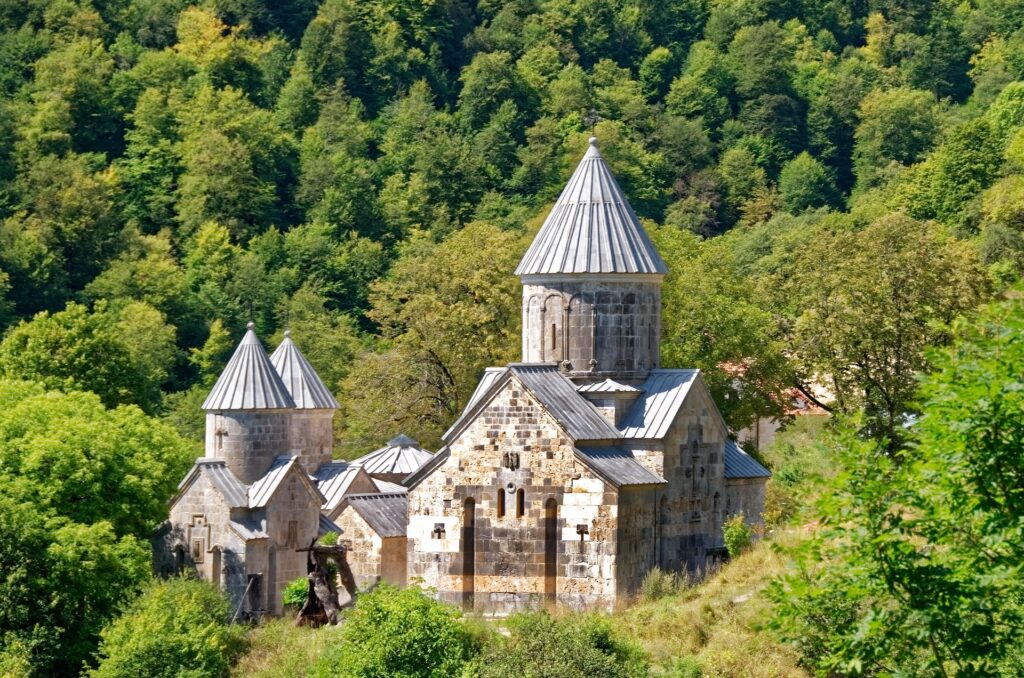
- Dilijan National Park: A temperate forest sanctuary home to deer, brown bears, and the Haghartsin monastery.
- Khosrov Forest State Reserve: One of the oldest protected areas in the world, established in the 4th century by King Khosrov III.
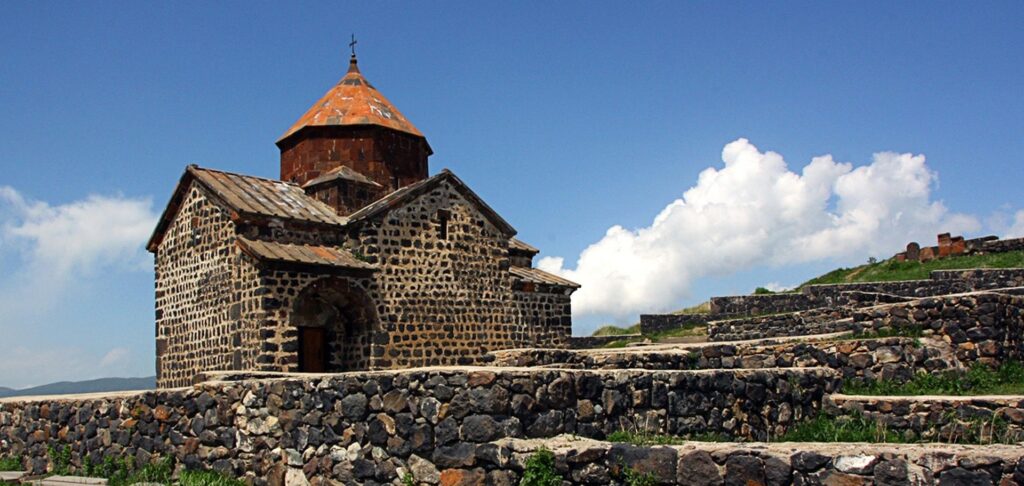
- Lake Sevan National Park: Protecting the lake’s unique ecosystem and the Sevanavank monastery peninsula.
🏛️ UNESCO World Heritage Sites
- Monasteries of Haghpat and Sanahin — Masterpieces of medieval Armenian religious architecture.
- Cathedral and Churches of Echmiatsin and the Archaeological Site of Zvartnots — The evolution of the Armenian cross-hall type church.
- Monastery of Geghard and the Upper Azat Valley — A monastery partially hollowed out of the adjacent mountain, surrounded by cliffs.
- For more information, visit the UNESCO Armenia Portal.
🖼️ Armenia Museums & Galleries
- Matenadaran (Yerevan): One of the world’s richest depositories of medieval manuscripts and books.
- History Museum of Armenia (Yerevan): Housing the 5,500-year-old “Areni-1” leather shoe, the world’s oldest.
- Sergei Parajanov Museum: A tribute to the avant-garde filmmaker, showcasing his eclectic collages and art.
- Tsitsernakaberd (Armenian Genocide Memorial): A moving and essential site for understanding the national identity.
🎉 Armenia Festivals & Celebrations
- Vardavar: (July) A pre-Christian festival turned Christian tradition where everyone on the street douses each other with water—a national “reset” through joy.
- Yerevan Wine Days: (June) A massive street festival in the capital celebrating the 6,000-year history of Armenian viticulture.
- Golden Apricot International Film Festival: (July) One of the region’s most prestigious cinema events.
- Gata Festival: (September) Celebrating the traditional sweet bread in the village of Khachik.
🧽 How to Arrive
- ✈️ By Air
- Zvartnots International (EVN) in Yerevan is the primary hub, known for its modern terminal and views of Ararat.
- Shirak Airport (LWN) in Gyumri serves low-cost regional routes.
- Airlines: FlyOne Armenia, Air Arabia, and major carriers (Qatar Airways, Emirates, Lufthansa) connect Yerevan to the world.
- 🚆 By Rail
- Seasonal international trains connect Yerevan to Tbilisi, Georgia. Domestic trains run between Yerevan and Gyumri.
- 🚗 By Road
- Land borders are currently open with Georgia and Iran. Borders with Turkey and Azerbaijan remain closed. Driving is on the right.
📶 Stay Connected
- SIM Cards: Major providers are Ucom, Viva-MTS, and Team Telecom.
- Where to buy: Kiosks are available at Zvartnots Airport (24/7) and in all city centers. Passport registration is mandatory.
- eSIM: Supported by all major providers and available via international platforms like Airalo.
- Digital Infrastructure: Yerevan has exceptional Wi-Fi coverage in public parks and cafes.
🏨 Where to Stay
Armenia offers a “Portfolio” of stays ranging from Soviet-chic to ultra-modern luxury and mountain retreats.
- The Alexander (Yerevan): The pinnacle of modern luxury and a Tier 1 asset for the capital.
- Tufenkian Heritage Hotels: A collection of boutique hotels (Dilijan, Avan Marak) focusing on traditional stonework and carpets.
- Grand Hotel Yerevan: A neoclassical landmark in the heart of the city.
- B&Bs: Explore village stays in the Syunik region for authentic hospitality and home-cooked meals.
⛳ Unique Finds
- Wings of Tatev: Ride the world’s longest reversible aerial tramway to reach the remote 9th-century Tatev Monastery.
- Areni-1 Cave: Visit the site of the world’s oldest known winery (6,100 years old).
- Chess Culture: Chess is a mandatory subject in Armenian schools; visit a park to see grandmasters playing against locals.
- Duduk Music: Listen to the haunting, reed-based sound of the national instrument, often described as “the sound of the soul.”
🤝 Armenia Cultural Guidance
- Hospitality Equity: If an Armenian invites you for dinner, they will likely provide a “high-margin” feast. It is considered a blessing to have a guest.
- Toasting: Like its neighbors, Armenia has a rich toasting tradition. The first toast is usually to the guest.
- Dress Code: Yerevan is fashionable and liberal; however, modest dress is required when entering monasteries (shoulders and knees covered).
- Basic Phrases:
- Hello: “Barev” (Informal) / “Barev Dzez” (Formal)
- Thank you: “Mersi” (Common) / “Shnorhakalutyun” (Traditional)
- Yes / No: “Ayo” / “Voach”
- Cheers: “Kenatst!”
🛂 Armenia Entry & Visa Requirements
- Visa-Free: Citizens of the UK, US, EU, and many GCC nations (including Qatar) can enter visa-free for up to 180 days.
- e-Visa: For other nationalities, the digital process is efficient.
- Official Source: Consult the Ministry of Foreign Affairs of Armenia.
💰 Practical Essentials
- Currency: Armenian Dram (AMD). Cards are widely accepted in Yerevan, but cash is essential for rural areas and markets.
- Electricity: Type C and F (Two round pins). Voltage is 230V.
- Safety: One of the safest countries in the world for travelers.
- Climate: Continental. Best visited in Late Spring (May-June) or Early Autumn (September-October) for the harvest.
✨ Bonus Tip: The Tuff Philosophy
To truly embrace Armenia, look at its buildings. Most of Yerevan is built from Tuff—a volcanic rock that is soft enough to carve but hardens with age. This is the perfect analogy for the Armenian spirit: flexible and creative in the short term, but increasingly unbreakable over the long term. Don’t just visit the churches; touch the stone. It is in this tactile connection to the volcanic earth that your own evolving sense of resilience and “Core Asset” value will reveal itself.
🔗 Featured Links
- Official Tourism: Armenia.Travel.
- Railway Schedule: South Caucasus Railway.

Beyondia
Trusted Travel CompanionReal digital nomad. I travel. I learn. I grow.
What about you? Where are you going?