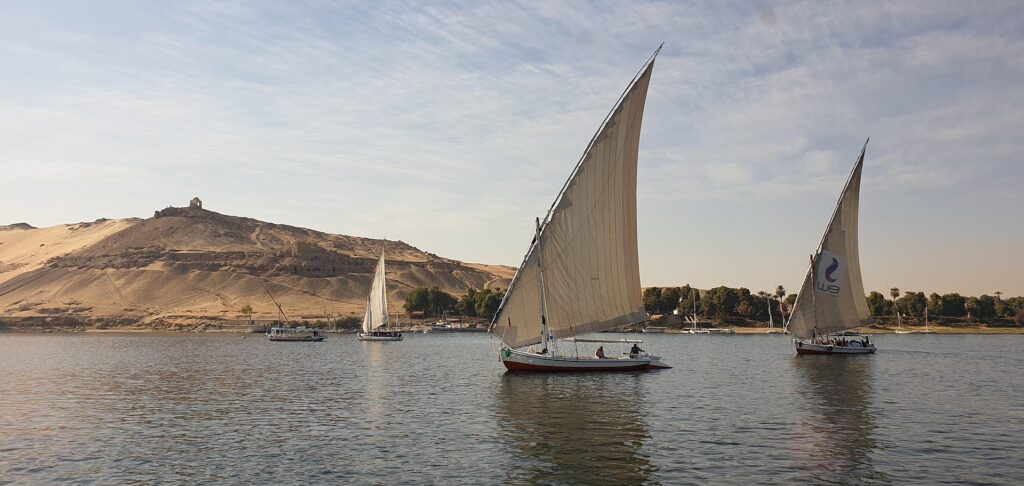
Route: Cairo (Pyramids, Souq, Nile) → Luxor (Valley of the Kings, Karnak, Luxor Temple) Distance: 510 km (by air or rail — not a driving route) Transport: Domestic flight (1 hour) or overnight Talgo sleeper train (9–10 hours) Recommended duration: 5–7 days (2–3 Cairo, 2–3 Luxor) Best months: October–April Currency: Egyptian Pound (EGP). Approximately 50–52 EGP = 1 USD (volatile — verify close to travel)
The Shape of This Route
This is not a road trip. Egypt’s main tourist corridor runs along the Nile from Cairo to Luxor, and you travel it by air or rail — not by car. Self-driving the 640 km of highway between the two cities is strongly discouraged for tourists. Egypt has one of the world’s highest road fatality rates, with vehicles running without headlights at night, unpredictable driving norms, and mandatory security checkpoints.
Instead, you fly in an hour or you take the overnight train and wake up in a different civilisation. Both are valid. Both deliver you from a city of twenty million people to a town built between the living and the dead, split by the same river, separated by three thousand years.
Cairo is chaos, noise, and the Pyramids standing at the edge of it as if none of the chaos matters. Luxor is quieter, hotter, and contains more concentrated history per square kilometre than anywhere you have been so far. Between them, the Nile flows south to north — the only major river in the world that does — carrying the same water that made this civilisation possible in the first place.
Arriving in Cairo
Cairo International Airport is approximately 19 km northeast of downtown. Uber and Careem are the most reliable transport into the city — both operate with app-based transparent pricing at approximately 120–200 EGP ($2.50–4). You will need a working data connection; purchase a local SIM card at airport kiosks for roughly $10–20.
Standard taxis cost 100–250 EGP depending on negotiation — agree on the fare before getting in. The Cairo Metro Line 3 now extends to Adly Mansour station, a transport hub near the airport connected by shuttle bus. It’s a viable budget option but cumbersome with luggage — the metro itself costs 8–20 EGP per ride and serves downtown well, with Sadat station sitting beneath Tahrir Square.
Traffic in Cairo is a fact of life, not an inconvenience. Budget 30 minutes at quiet hours, over an hour during the 7–9 AM and 4–7 PM rush periods, and a philosophical acceptance that honking is how Cairo breathes.
Where to stay: Zamalek — the leafy island neighbourhood — is the best all-round base. Safer streets, excellent cafés, an expat-friendly atmosphere, and mid-range rooms from $50–100 per night. Downtown Cairo is cheaper and closer to the Egyptian Museum. Giza puts you within walking distance of the Pyramids, with budget guesthouses offering rooftop views for $15–40 per night.
The Giza Pyramids
The plateau lies approximately 15 km southwest of Tahrir Square — a 30–45 minute drive. Entry is through the main gate on the Cairo–Fayoum Road. A taxi or Uber costs 120–250 EGP each way.
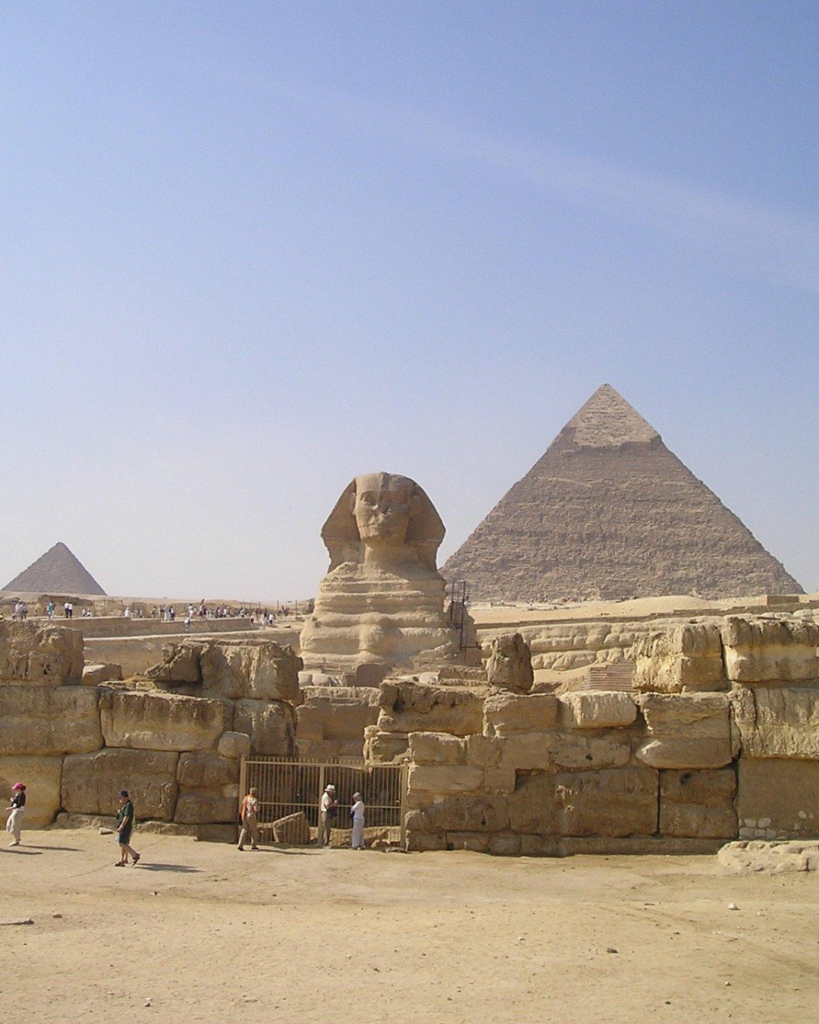
General admission to the Giza Plateau including the Sphinx is 700 EGP (approximately $14). Entering the Great Pyramid of Khufu is an additional 1,500 EGP (approximately $31). Khafre’s pyramid is 280 EGP, Menkaure’s 200 EGP. Combo tickets bundling plateau entry with pyramid interiors are being phased in — check at the ticket office for current options. Student discounts of 50% apply with a valid ISIC card.
Critical: ticket offices at Giza and nearly all major Egyptian archaeological sites now accept card payment only. Cash is no longer accepted for entry tickets. Carry an internationally-enabled debit or credit card. Prices are charged in Egyptian Pounds — the USD equivalent fluctuates with the exchange rate, so listed dollar amounts are approximations.
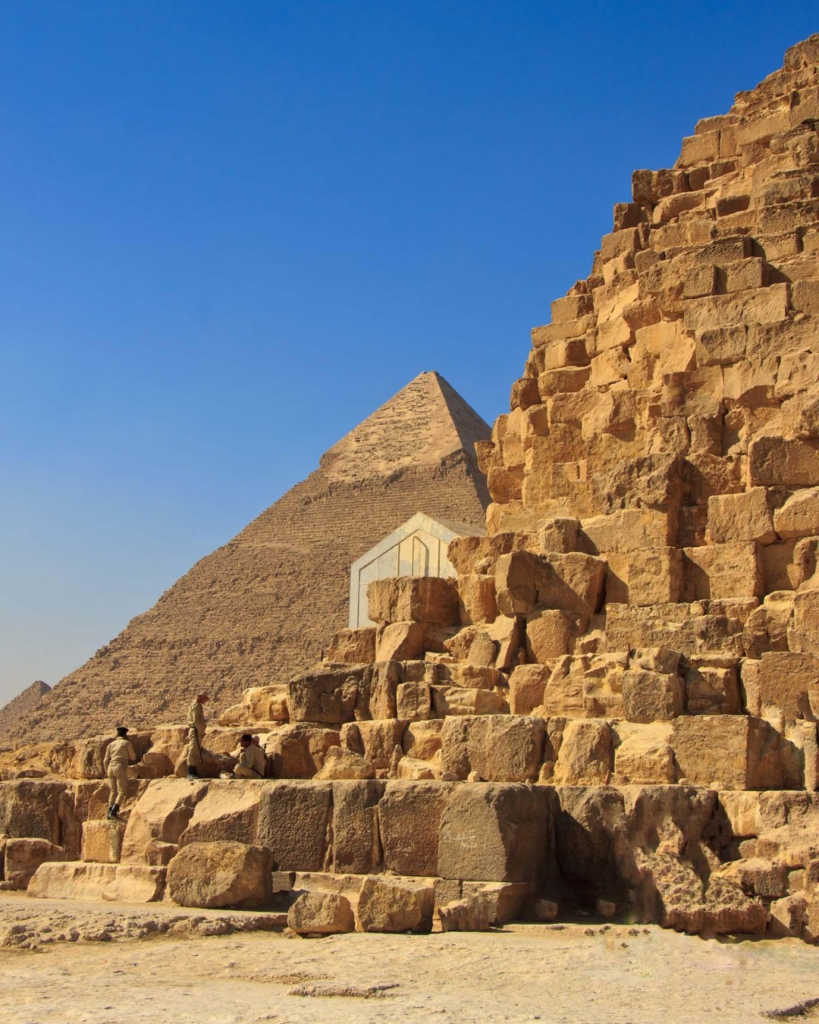
The complex opens at 7:00 AM with last entry at 4:00 PM in winter and 5:00 PM in summer. Arrive at opening for the coolest temperatures and smallest crowds. Tuesday and Wednesday mornings are quietest. Budget 3–4 hours minimum.
The Grand Egyptian Museum sits minutes from the pyramids and has been the most anticipated museum opening of the decade. A note of honesty: as of early 2026, the GEM remains in trial operations. The Grand Staircase, commercial areas, and some exhibitions are accessible, but the full Tutankhamun galleries and main exhibition halls have faced rolling “soft opening” dates. Tickets for limited tours currently range from 1,000–1,200 EGP ($20–25) for foreign visitors. Check the museum’s official channels close to your visit for the latest status — this has been a moving target for over a year.
Khan el-Khalili and the Nile
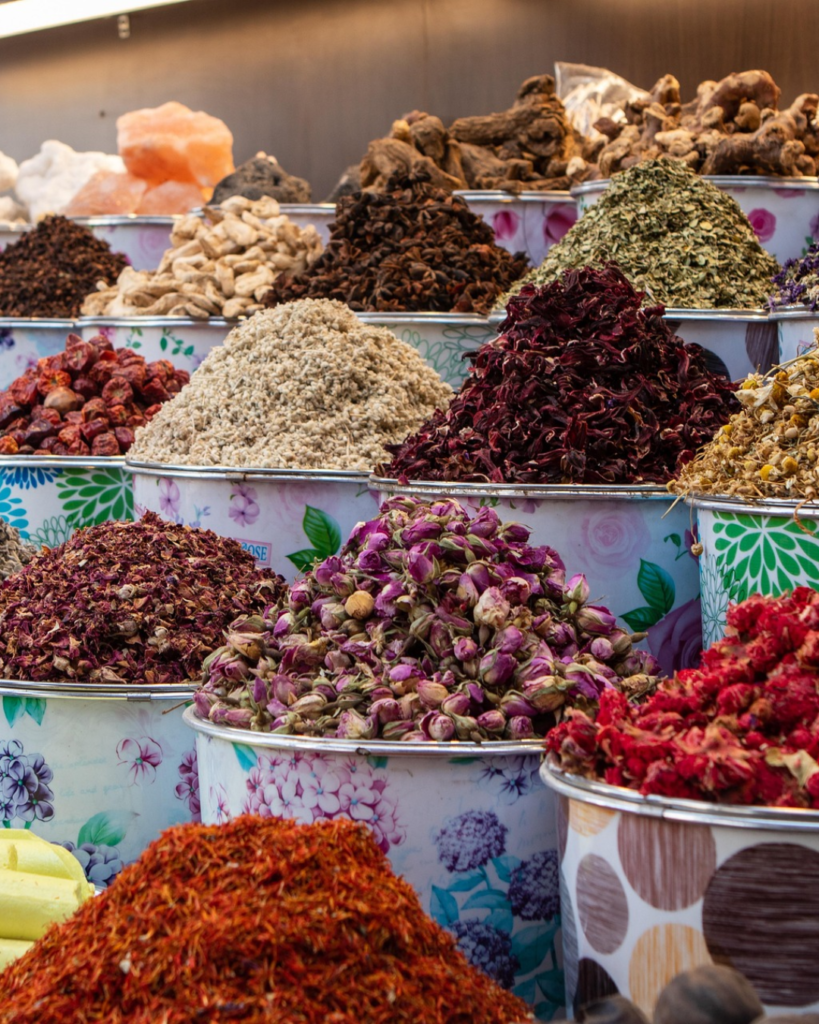
Khan el-Khalili is Cairo’s medieval souq, sitting in the heart of Islamic Cairo about 4 km east of Tahrir Square, adjacent to the Al-Hussein Mosque. Most shops operate from 9:00 AM to 11:00 PM, though many close on Friday mornings. Visit in the morning for cooler browsing or in the evening for atmosphere. Bargaining is expected — aim for 50–66% of the first asking price. The Muizz Street corridor of medieval architecture nearby is worth the walk on its own.
For a felucca ride on the Nile, head to the Corniche promenade near the Zamalek waterfront or downtown near the Grand Hyatt. Hiring a felucca directly at the dock costs roughly 200–400 EGP ($4–8) per hour for the entire boat — always negotiate before boarding. Sunset is the prime time. Motorised dinner cruises depart nightly around 7:00 PM from downtown piers, running 2–3 hours with buffet and entertainment from approximately $12–55 per person at mid-range operators.
A felucca has no engine. The triangular sail catches the wind and carries you south in silence while twenty million people continue living on both banks. It is the quietest thing in Cairo and one of the best.
Cairo to Luxor
You have two real options.
Flying is fastest and often cheapest. EgyptAir, Nile Air, Air Cairo, and Nesma Airlines operate roughly 10–19 daily nonstop flights between Cairo International and Luxor International. Flight time is 1 hour to 1 hour 10 minutes. One-way economy fares range from $57–150. Book at least a month ahead for the best prices. Delays are common — about a third of flights experience average delays around 89 minutes.
The overnight train is the atmospheric alternative. The Talgo trains — Spanish-built, running on Egyptian National Railways — are the current luxury standard on this route. They feature highly comfortable reclining seats rather than traditional bunk-bed sleeper cabins, and are significantly smoother than the older rolling stock. The older Abela sleeper service with actual beds also still runs — cabin prices start around $80–105 per person sharing, with dinner and breakfast included. Trains depart from Cairo’s Ramses Station (or the less chaotic Bashteel Station in Giza) between 7:45 and 9:00 PM, arriving in Luxor around 6:00–7:30 AM after a 9–10 hour journey. Book via abelatrains.com or Bookaway.
A note on Nile cruises: there is no standard Cairo-to-Luxor cruise. The vast majority operate the Luxor–Aswan segment (230 km) over 3–5 nights, starting from approximately $400–3,000+ per person depending on vessel quality. The recommended approach is to fly to Luxor or Aswan, cruise between the two with temple stops at Edfu, Kom Ombo, and Esna, and fly back from the other end.
Luxor — The East Bank
Luxor divides along the Nile. The East Bank holds the living city, the hotels, the restaurants, and two of Egypt’s greatest temples. The West Bank — traditionally the land of the dead — holds the Valley of the Kings and the mortuary temples.
Karnak Temple is 3 km north of the city centre and the largest ancient religious complex in the world. General admission is 600 EGP (approximately $12). The site opens at 6:00 AM — arrive at dawn when golden light fills the Great Hypostyle Hall’s 134 columns and you will largely have the place to yourself before tour buses arrive around 9:00. Allow at least 90 minutes. The Sound and Light Show runs nightly — approximately $20 per adult for a 75-minute spectacle at the Sacred Lake.
Luxor Temple sits in the heart of the city along the Corniche. Entry is 500 EGP (approximately $10), and it stays open until 7:00 PM. Visit in the evening. Floodlights illuminate the colonnades and colossal statues of Ramesses II against the night sky. It is one of the few ancient sites that is genuinely more powerful after dark.
Luxor — The West Bank
Cross the Nile by public ferry for 5–25 EGP from near Luxor Museum. Once on the West Bank, hire a taxi for the full day — approximately 400–600 EGP ($8–12). The distances and the heat make this the only practical approach.
The Valley of the Kings opens at 6:00 AM. Go early. By mid-morning the temperature and the crowds make the experience significantly worse. General admission is 750 EGP (approximately $15) and covers entry to three tombs from a rotating selection. Tutankhamun’s tomb (KV62) requires a separate ticket of 700 EGP (approximately $14). The tomb of Seti I (KV17), with Egypt’s finest tomb paintings, costs 2,000 EGP (approximately $40) with no student discount. The tomb of Ramesses V and VI (KV9) is an additional 220 EGP and widely considered the most beautiful accessible tomb. Photography is now generally permitted inside tombs.
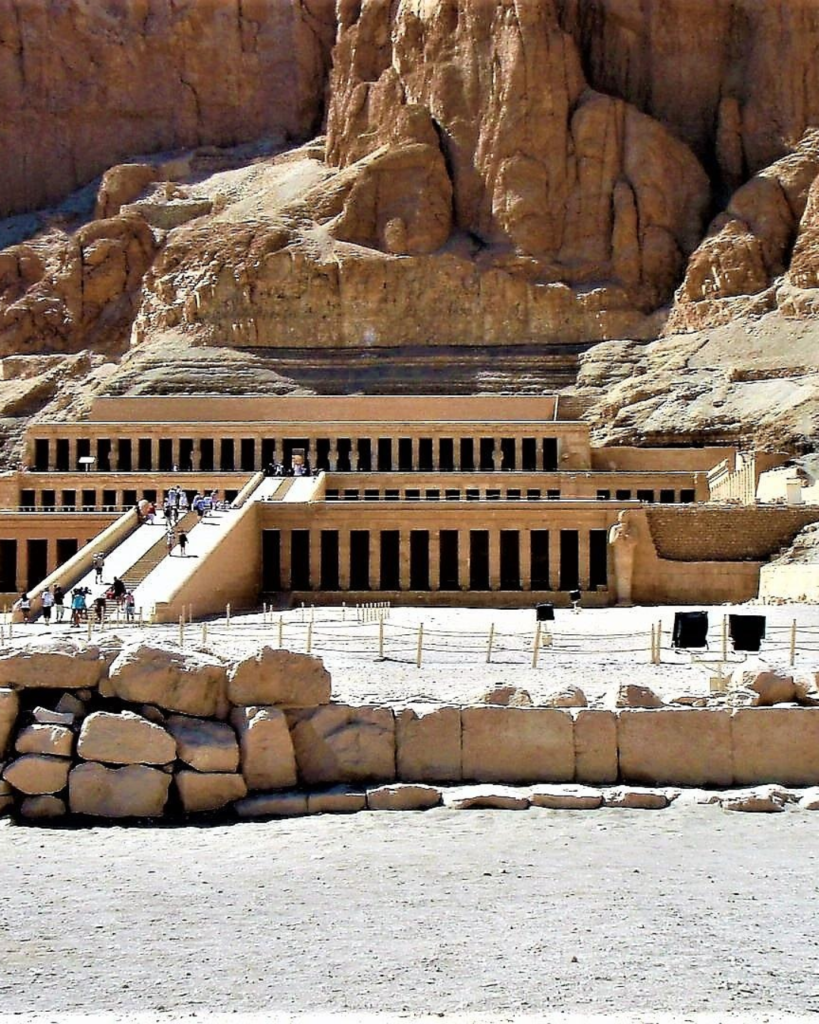
Other essential West Bank sites include the terraced Temple of Hatshepsut at Deir el-Bahari (440 EGP), the vividly decorated Medinet Habu (220 EGP), and the Colossi of Memnon — two 18-metre seated statues visible from the road at no charge. For multi-day visits, the Luxor Pass offers the strongest value: the Standard Pass ($130) covers nearly all major sites for five days, while the Premium Pass ($250) adds Seti I’s tomb and Nefertari’s tomb in the Valley of the Queens. Prices are fixed in USD.
Hot air balloons operate year-round, best October to March. Hotel pickups begin around 3:30–4:30 AM. You cross the Nile by motorboat, launch around 5:30–6:00 AM, and drift for 45–60 minutes over the Valley of the Kings and the Nile’s green ribbon at sunrise. Prices range from $40–70 for budget operators to $80–150 for premium smaller-basket experiences. Book for your first morning in Luxor so you have a backup day if wind cancels the flight.
Practical Notes
Visa: Citizens of approximately 46 countries — including the US, UK, EU states, Canada, and Australia — can obtain a visa on arrival at Egyptian airports for $25–30 in cash, or apply in advance via the official e-visa portal at visa2egypt.gov.eg for $25–32 (single entry). Your passport must be valid for at least six months beyond entry.
Money: Egypt operates a dual economy for tourists. Archaeological sites are card-only. Hotels and upscale restaurants accept cards. Everything else — taxis, souq purchases, street food, tips — runs on cash. ATMs dispensing Egyptian Pounds are widely available in tourist areas. Carry both.
Baksheesh: Tipping is not optional in Egypt. It is a deeply embedded social practice that supplements low wages. Budget $5–10 per person per day. Standard amounts: 10–15% at restaurants, 20–50 EGP per bag for porters, 50–100 EGP for a felucca captain, 5–10 EGP for bathroom attendants. Tip in Egyptian Pounds, discreetly, via a folded note in a handshake.
Dress: Egypt is a conservative society. Cover shoulders and knees as a baseline in cities and at archaeological sites. Mosques require women to wear a headscarf and both sexes to cover arms and legs; shoes are removed before entering.
Heat: Luxor regularly exceeds 45°C from June to August. The best season for Upper Egypt is October to April, with daytime temperatures of 18–28°C. Peak tourist season runs December to February. Shoulder months — October, November, March, April — offer the best balance. Ramadan 2026 falls approximately February 18 to March 20 — tourist sites remain open but some local restaurants close during daylight hours.
Safety: Egypt holds a US State Department Level 2 advisory (“Exercise Increased Caution”) — the same category as France and Germany. Major tourist areas including Cairo and Luxor are generally safe with tourist police stationed at key sites. Common tourist scams include inflated camel ride prices at Giza and “the site is closed” misdirection — using ride-hailing apps and agreeing prices in advance neutralises most of these.
What This Route Is Really About
Every route in this series has followed a coastline, a road, or a ferry. This one follows a river. The Nile is not a transport route in the way the Mediterranean was — it is the reason anything here exists at all. Without the annual flood that deposited fertile soil along its banks, there would be no pyramids, no temples, no tombs, no civilisation to visit. Everything you see in Egypt was built within walking distance of this water.
Cairo shows you what the impulse to outlast looks like when it takes the form of mass — two million stone blocks arranged into a shape that has not moved in forty-five centuries. Luxor shows you what it looks like when it takes the form of language — every surface of every tomb inscribed with words meant to guide a soul through the afterlife.
Between them, the river flows. It has never been carved. It has never been inscribed. It simply continues.
You sit beside it in the evening and watch it carry the city’s lights south.
🔍 Related GoBeyondia Journeys in Egypt
- 🇪🇬 Egypt — Pyramids, Temples, Red Sea & Timeless Desert Landscapes
- What Silence Weighs — Egypt Reflections
- Egypt, Where Time Bends to Eternity
- What a Stone Remembers

Beyondia
Trusted Travel CompanionReal digital nomad. I travel. I learn. I grow.
What about you? Where are you going?