GoBeyondia Atlas 🗺️ North-America Caribbean 🗾
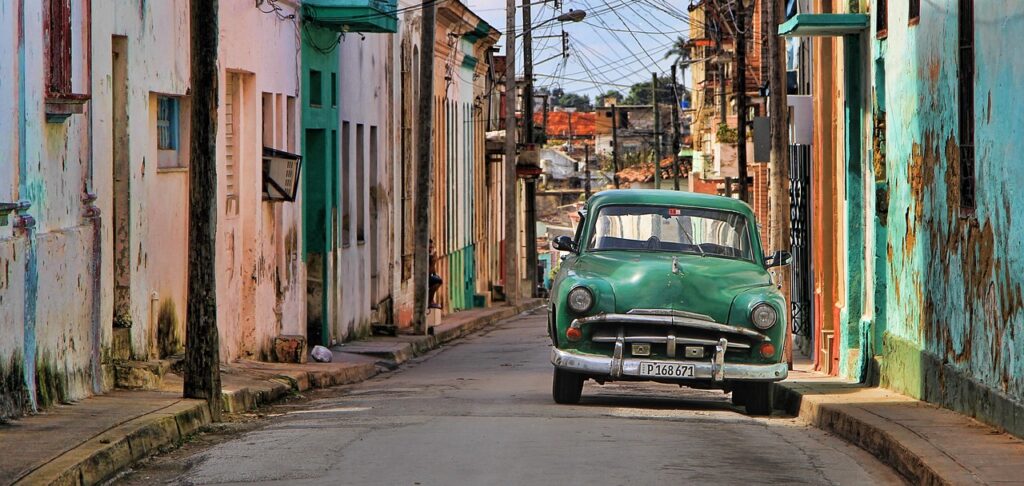
Cuba: Where 1950s Chevrolets share streets with revolutionary murals and a culture so alive it converted its isolation into an art form.
Cuba in 30 Seconds
An island ninety miles from Florida that has been living in its own time zone — not geographically but historically — since 1959, when a revolution sealed the borders and the Chevrolets stopped being replaced and the colonial architecture stopped being renovated and the musicians kept playing because nobody told them to stop. Havana is the most contradictory city in the Western Hemisphere — crumbling baroque mansions that would cost forty million dollars in Miami standing beside revolutionary billboards, a Malecón seawall where the entire city comes at dusk to watch the sun leave and stay to watch each other, a jazz club in a basement where the piano player has been playing the same set since before you were born and has made it new every night. Trinidad in the center of the island is a UNESCO colonial town so intact it functions as a living museum where people actually live — cobblestone streets, pastel facades, salsa music escaping through open doors at hours that don’t make sense. Viñales in the west sits in a valley of limestone mogotes — ancient rounded hills that rise from tobacco fields like geological punctuation — where farmers cure tobacco leaves in wooden barns using methods that predate the revolution by four centuries. The northeast coast between Baracoa and Santiago is the Cuba that existed before Columbus arrived and still carries that older, deeper character in its food, its music, and its relationship with the African traditions that arrived with the slave trade and never left. Cuba is not a country that is trying to be somewhere else. That refusal, that insistence on remaining entirely itself, is the most radical thing about it.
Evoke — Why You Visit Cuba
You come to Cuba because you sense the window. Not in a cynical way — not to see it before it changes as though change is automatically loss — but because you understand that the specific combination of elements that makes Cuba what it is exists in a particular tension that time will eventually resolve in one direction or another. You’ve been in places that used to be interesting and are now optimized and you know what that transition looks like mid-process and you want the version before it completes. But underneath that strategic awareness is something simpler and more honest: you need to be somewhere that music is not background. In Cuba, music is infrastructure — it holds the society together the way roads and electricity do elsewhere, emerging from windows and courtyards and the back rooms of restaurants at all hours not as entertainment but as the culture breathing. You stopped hearing music a few years ago — started treating it as something that happens while you do other things. Cuba will fix that. You’ll be sitting at a table in Havana when a trio starts playing in the corner and you’ll put your phone down and not pick it up for forty minutes and that will be the beginning of something.
Explore — How You Experience Cuba
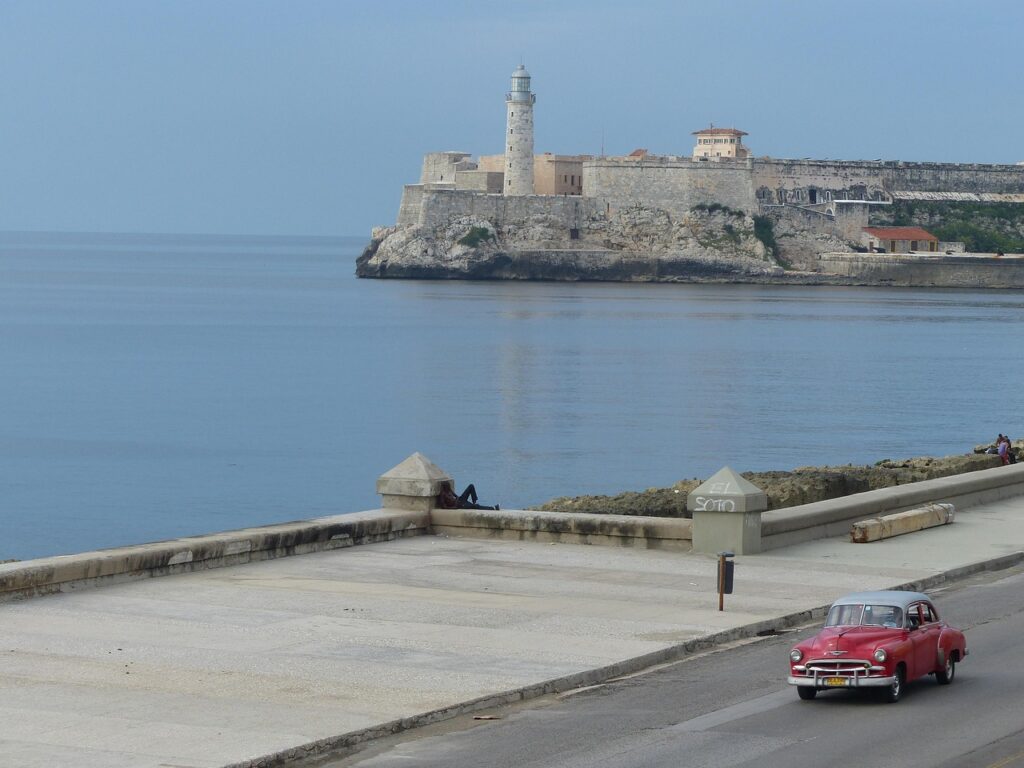
Walk the Malecón at the precise hour the sun touches the horizon and watch Havana arrive at itself — couples, families, fishermen, teenagers, old men with cigars, all occupying the same seawall that has been the city’s living room since 1901, the spray from the Atlantic arriving in warm bursts that leave salt on your lips and the crumbling facades behind you glowing in colors that only exist in this light at this hour on this specific island. Hire a 1955 Chevrolet Bel Air convertible — baby blue, chrome intact, engine rebuilt seventeen times — and drive from Havana to Viñales with the road entirely yours in the early morning, the mogotes emerging from morning mist in the valley below as you descend from the Sierra del Rosario. Sit in on a rumba ceremony in Havana’s Callejón de Hamel where Afro-Cuban Santería traditions surface in music and movement every Sunday in an alley painted floor to ceiling in murals that compress the entire African diaspora into one city block. Walk Trinidad’s Plaza Mayor at 10pm when the colonial facades are lit from below and the salsa school on the corner has its doors open and the lesson spills into the street and the distinction between student and audience and participant dissolves entirely. Visit a cigar factory in Viñales and watch a torcedor roll a Cohiba from a tobacco leaf grown in the red earth of the valley below, the entire process taking four minutes and requiring a skill that takes four years to learn. Drink a mojito at La Bodeguita del Medio in Havana where Hemingway drank his and left his signature on the wall in 1954 and understood that some bars are not bars but arguments about how afternoons should be spent, and the argument is correct.
Evolve — Who You Become in Cuba
You leave Cuba with your relationship to scarcity permanently rearranged. The Cubans have lived under economic embargo and material shortage for sixty years and built one of the Caribbean’s richest cultural lives inside those constraints — a medical system that trained doctors who now work across forty countries, a music tradition that influenced global popular music more profoundly than its population size should have allowed, a visual art scene that produces painters who sell in New York and London while living in Havana apartments without reliable internet. The lesson is not that scarcity is good — it isn’t, and the Cubans know it better than anyone. The lesson is that creativity is not a function of abundance. You had been waiting for better conditions before making the things you wanted to make. Cuba ends that waiting. You also carry the music — not as memory but as recalibration. You stopped treating silence as something to fill and started treating it as the space where the next note arrives. That’s a Havana lesson. It works everywhere else too. You come home and make something with what you already have. Cuba suggested you had enough all along. You’re beginning to think it was right.
Your practical guide to Cuba starts bellow 👇
🕰️ Cuba Historical Backdrop
Cuba’s history is a dramatic and layered epic, once the “Key to the New World” during the Spanish colonial era. From the wealth of the sugar trade and the grandeur of 19th-century Havana to the explosive events of the 1959 Revolution, the island has remained a symbol of defiance and cultural pride. Its story is told in the peeling pastel facades of Old Havana, the fortresses guarding its harbors, and the perfectly preserved 1950s American cars that still roam its streets. Today, Cuba stands as a unique cultural archipelago—a place where time seems to have slowed down, allowing for a deep preservation of community values, artistic expression, and a legendary musical heritage that has influenced the entire world.
🌟 Cuba Local Experiences
Beyond the iconic images of Che Guevara and cigars, discover Cuba’s soul in the spontaneous “Rueda de Casino” salsa circles in a neighborhood plaza, the shared laughter over a glass of aged rum in a local paladar (private restaurant), or the quiet smoke rising from a tobacco farmer’s handmade cigar in Viñales. Experience the profound energy of a Santería drumming ceremony, the lively debates about baseball in the “Hot Corner” of Central Park, or the simple joy of a sunset stroll along the beach in Varadero. These moments reveal a nation that finds richness in connection, music, and a fierce zest for life despite material scarcity.
🌄 Cuba Natural Wonders
- Viñales Valley: A UNESCO World Heritage landscape characterized by dramatic “mogotes” (limestone hills) and traditional tobacco fields.
- Topes de Collantes: A nature reserve park in the Escambray Mountains, home to spectacular waterfalls like El Nicho.
- Zapata Peninsula: One of the largest wetlands in the Caribbean, a haven for birdwatchers and home to the Cuban crocodile.
- Baracoa: Cuba’s oldest city, surrounded by lush rainforests, cocoa plantations, and the flat-topped mountain, El Yunque.
- Cayo Coco & Cayo Guillermo: Pristine offshore islands known for their white-sand beaches and turquoise waters.
🏙️ Cuba Must-See Cities & Towns
- Havana (La Habana): (Capital) A sensory explosion of baroque architecture, vintage cars, and world-class jazz clubs. (Iconic, Historic, Energetic)
- Trinidad: A perfectly preserved Spanish colonial town with cobblestone streets and vibrant nightlife at the “Casa de la Música.” (Museum-city, Colorful, Charming)
- Santiago de Cuba: The “Hero City,” known as the cradle of Cuban music and the heart of Afro-Cuban culture. (Musical, Revolutionary, Spiritual)
- Cienfuegos: Known as the “Pearl of the South,” featuring unique French-influenced neoclassical architecture. (Elegant, Maritime, Calm)
- Camagüey: Famous for its labyrinthine streets designed to confuse pirates and its large clay water jars (tinajones). (Artistic, Eccentric, Historic)
🏞️ Cuba National Parks & Nature Reserves
Managed with a focus on endemic biodiversity by the National Center for Protected Areas (CNAP).
- Alejandro de Humboldt National Park: The most important site in the Caribbean for the conservation of endemic flora.
- Desembarco del Granma National Park: Featuring spectacular sea cliffs and uplifted marine terraces.
- Guanahacabibes Peninsula: A remote biosphere reserve famous for sea turtle nesting and diving.
🏛️ UNESCO World Heritage Sites
- Old Havana and its Fortification System — The largest colonial center in Latin America.
- Trinidad and the Valley of the de los Ingenios — A monument to the 19th-century sugar industry.
- San Pedro de la Roca Castle, Santiago de Cuba — The most complete example of Spanish-American military architecture.
- Archaeological Landscape of the First Coffee Plantations in the South-East of Cuba — Unique evidence of 19th-century mountain agriculture.
- For a full list, visit the UNESCO Cuba Portal.
🖼️ Cuba Museums & Galleries
- Museo Nacional de Bellas Artes (Havana): Houses an extensive collection of Cuban art from colonial times to the present.
- Museum of the Revolution (Havana): Housed in the former Presidential Palace, detailing the 1959 struggle.
- Finca Vigía (Ernest Hemingway Museum): The author’s long-time residence where he wrote The Old Man and the Sea.
🎉 Cuba Festivals & Celebrations
- Havana Jazz Festival: (January) An international gathering of jazz legends and rising stars.
- Habanos Festival: (February) The world’s most prestigious event for premium cigar enthusiasts.
- Carnival of Santiago de Cuba: (July) The most traditional and exuberant carnival on the island.
- Parrandas de Remedios: (December) One of the oldest and most spectacular fireworks festivals in Cuba.
🧽 How to Arrive
- ✈️ By Air
- Hubs: José Martí International (HAV) in Havana is the primary gateway.
- Airlines: Major European and Latin American carriers (Iberia, Air France, Copa) connect Cuba globally.
- Note for US Travelers: Travel must fall under one of 12 authorized categories (e.g., “Support for the Cuban People”). Direct flights are available from Miami and other major US hubs.
- 🚢 By Sea
- While large cruise ships have limited access currently, private yachts and occasional ferry services from neighboring islands operate under specific regulations.
📶 Stay Connected
- Internet: Accessed via ETECSA Wi-Fi hotspots in public parks and hotels using “Nauta” cards.
- SIM Cards: “Cubacel Tur” SIM cards can be pre-purchased online for pickup at the airport.
- eSIM: Very limited local support; travelers usually rely on physical cards or roaming packages.
🏨 Where to Stay
Cuba offers a unique choice between state-run luxury and local hospitality.
- Gran Hotel Manzana Kempinski (Havana): The pinnacle of modern luxury in a historic setting.
- Iberostar Grand Packard: A fusion of colonial base and striking modern architecture.
- Casas Particulares: The best way to experience Cuba. These are private guesthouses run by Cuban families, offering an intimate and authentic stay.
⛳ Unique Finds
- The Pharmacy Museums: Visit Farmacia Taquechel in Old Havana to see 19th-century porcelain jars and herbal remedies.
- Cayo Largo del Sur: A remote key where you can swim in crystal-clear water with giant starfish.
- Fusterlandia: A neighborhood in Jaimanitas transformed into a mosaic masterpiece by artist José Fuster.
🤝 Cuba Cultural Guidance
- The “Inventar” Spirit: Cubans are masters of “inventing” solutions to everyday problems. Patience and flexibility are essential.
- Respect: While political discussions can be open, it is best to listen more than talk.
- Tipping: A small tip (10%) is highly appreciated as it often forms a significant part of a local’s income.
- Basic Phrases:
- ¿Qué bolá?: (Keh boh-lah) – The quintessential Cuban “What’s up?”
- Asere: (Ah-seh-reh) – Friend/Buddy.
- Dale: (Dah-leh) – Go for it / Okay.
🛂 Cuba Entry & Visa Requirements
- Tourist Card (Visa): Most travelers require a “Tarjeta del Turista,” which can be purchased from airlines or travel agencies.
- D’Viajeros: All travelers must fill out the digital D’Viajeros form before arrival.
- Official Source: Consult the Cuban Ministry of Foreign Affairs for specific regional requirements.
💰 Practical Essentials
- Currency: Cuban Peso (CUP). Crucial: US credit/debit cards do not work in Cuba. Bring cash (Euros or USD) to exchange or use. Many private businesses prefer payment in Euros or USD.
- Electricity: Primarily Type A and B (Flat pins), but some hotels use Type C. Voltage is 110V/220V.
- Safety: Cuba is widely considered one of the safest destinations in the Caribbean for travelers.
- Climate: Tropical. Best visited from November to April to avoid the hurricane season and intense humidity.
✨ Bonus Tip
To truly embrace Cuba, step away from the all-inclusive resorts and stay in a Casa Particular. It is through the morning conversations over strong Cuban coffee with your hosts that you will understand the true meaning of “Solidarity” and the island’s unique social fabric. Cuba is not about what you can buy, but about the stories you exchange. Let the music guide your steps, and the history open your mind—the transformation happens when you stop looking for the “new” and start appreciating the “eternal.”
🔗 Featured Links
- Official Tourism: Cuba Travel.
- Booking Guesthouses: CasasParticulares.net.

Beyondia
Trusted Travel CompanionReal digital nomad. I travel. I learn. I grow.
What about you? Where are you going?