GoBeyondia Atlas 🗺️ Mediterranean Region 🗾
Cyprus: Where the goddess of love was born from sea foam on a coastline that a green pencil line later split between two civilizations, Byzantine churches hide masterpieces inside barn roofs, and a ghost town sits on the Mediterranean’s best beach because nobody can agree whose it is.
Cyprus in 30 Seconds
An island at the intersection of three continents that has been claimed by every Mediterranean empire for three thousand years and is currently claimed by two — the Republic of Cyprus in the south, an EU member with Greek coffee and euro coins, and the Turkish Republic of Northern Cyprus in the north, recognized only by Turkey, with Turkish lira and call-to-prayer minarets — separated by a UN buffer zone drawn in green pencil by a British general on a December night in 1963 and never erased. Nicosia is Europe’s last divided capital, a city where you walk down a shopping street, show your passport, and emerge in a different country with different currency and different alphabet and the same sun overhead. Paphos on the southwest coast is the mythological birthplace of Aphrodite — sea stacks rising from turquoise water where the goddess allegedly emerged from foam — and also an archaeological park where Roman mosaics depicting Dionysus and Orpheus survive in detail that makes you wonder what we’ve been doing with our floors for the last two thousand years. The Troodos Mountains in the interior hold ten UNESCO-listed Byzantine churches disguised as village barns — steep-tiled roofs hiding eleventh-century frescoes of such extraordinary refinement that the contrast between exterior simplicity and interior genius becomes its own lesson about where civilizations choose to put their beauty. Commandaria, produced in fourteen designated villages on the Troodos slopes, is the world’s oldest named wine still in production — described by Hesiod in 800 BC, served at Richard the Lionheart’s wedding in 1191, named after the Knights Templar headquarters that exported it to every royal court in Europe. Varosha near Famagusta in the north is a beachfront resort district abandoned in hours during the 1974 Turkish invasion — hotels where Elizabeth Taylor once stayed now standing empty behind fences, a ghost town on one of the Mediterranean’s finest beaches because geopolitics froze a moment and hasn’t unfrozen it in fifty years. Cyprus is an island where love and partition share the same address and neither has plans to move.
Evoke — Why You Visit Cyprus
You come to Cyprus because you’ve been thinking about borders — not the physical kind but the ones you’ve drawn inside your own life, the divisions between the person you are in one context and the person you are in another, the Green Lines you maintain between parts of yourself that you’ve decided can’t coexist. Cyprus holds both halves of an impossible contradiction — Greek and Turkish, ancient and modern, EU member and occupied territory, Aphrodite’s birthplace and a military buffer zone — not in resolution but in proximity, and the proximity is the point. You’ve been trying to resolve your contradictions. Cyprus will suggest that some contradictions are not problems to be solved but tensions to be inhabited. The island that gave the world its oldest love story also gave it one of its most intractable political divisions, and both continue to function simultaneously without waiting for the other to finish. You also come because the Mediterranean has been selling you a version of itself that involves beach clubs and Instagram geometry, and Cyprus has that too if you want it, but it also has a mountain range full of painted churches that look like barns from the outside and contain Byzantine frescoes that took master painters years to complete — art hidden inside ordinary structures, beauty that doesn’t announce itself. You’ve been announcing yourself too much. Cyprus will teach you the Troodos strategy: put the masterpiece inside the barn.
Explore — How You Experience Cyprus
Cross the Ledra Street checkpoint in Nicosia on foot — show your passport, walk a hundred meters through a buffer zone where abandoned buildings from 1974 stand untouched, and arrive in a different country without leaving the same city — then sit in a café in north Nicosia and understand that the Green Line is not history but architecture, not a metaphor but a wall with a door in it that people walk through every day to go shopping or visit friends as though the most militarized border in Europe were a minor inconvenience rather than an unresolved catastrophe. Stand at Petra tou Romiou at sunset where the sea stacks rise from foaming water and the light turns the limestone coast the color of honey and consider that the Greeks looked at this specific stretch of coastline and decided that beauty itself must have originated here — not as decoration but as cosmic force. Drive into the Troodos Mountains and enter the Church of Panagia tou Arakou in Lagoudera — a stone building with a wooden barn roof sheltering twelfth-century frescoes attributed to painters from Constantinople, colors nine hundred years old that glow in the dark interior like a culture whispering its most important secrets to anyone willing to drive an hour uphill to listen. Taste Commandaria in one of the fourteen designated villages — amber, thick as honey, sweet with three thousand years of unbroken production behind it — and understand that wine is not a beverage but a memory technology, each glass containing a method that Hesiod described and the Crusaders commercialized and the Ottomans nearly destroyed and the Cypriots quietly maintained anyway. Walk the perimeter fence of Varosha near Famagusta where high-rise hotels from the early 1970s stand behind barbed wire, balconies rusting, lobby floors visible through shattered glass, nature reclaiming a resort that was the Eastern Mediterranean’s most glamorous destination until an August morning in 1974 when forty thousand residents fled and never came back.
Evolve — Who You Become in Cyprus
You leave Cyprus with your relationship to division permanently complicated. You had been treating the divided parts of your life as problems requiring solutions — the professional self and the creative self, the responsible version and the reckless one, the part that wants to stay and the part that wants to leave. Cyprus demonstrated that a place can function — beautifully, stubbornly, for decades — with its contradiction unresolved, with a literal line through its capital and two flags on the same mountain and people crossing between halves daily to buy cheaper groceries or visit a mosque or sit in a café that happens to be in another country. The lesson is not that division is acceptable. The Cypriots on both sides will tell you it isn’t, and the ghost town of Varosha stands as evidence of what unresolved partition actually costs. The lesson is that waiting for resolution before living fully is its own kind of partition — a buffer zone between you and the life you keep postponing until conditions improve. The Cypriots didn’t wait. They planted vineyards on the slopes of mountains, painted masterpieces inside barns, poured the world’s oldest wine, fell in love at the birthplace of love, and crossed the checkpoints to buy bread on the other side. You come home and stop waiting for your contradictions to resolve before using them. Cyprus suggested that the tension between your halves might be the most creative thing about you. You’re beginning to think it was right.
Your practical guide to Cyprus starts below 👇
🕰️ Cyprus Historical Backdrop
Cyprus’s history is a ten-thousand-year epic of strategic significance and cultural synthesis. Known as the “stepping stone” between Europe, Asia, and Africa, the island has been shaped by a dizzying array of civilizations: from its Neolithic settlers and Mycenaean Greeks to Persians, Romans, Byzantines, Crusaders, Venetians, Ottomans, and the British. Its story is told in the spectacular Greco-Roman amphitheaters overlooking the sea, the painted Byzantine churches hidden in mountain valleys, and the resilient character of its divided capital, Nicosia. Today, Cyprus stands as a modern European republic that fiercely protects its traditions of lace-making, pottery, and viticulture while offering some of the most pristine coastlines in the Mediterranean. It is a land where the myth of the Goddess of Love feels living and breathing in every coastal breeze.
🌟 Cyprus Local Experiences
Beyond the coastal resorts, discover Cyprus’s soul in the ritual of the Meze—a sprawling feast of up to thirty small plates that turns a simple meal into a marathon of social connection. Experience the profound stillness of the “Painted Churches” in the Troodos Mountains, the artisanal rhythm of lace-making in the cobblestone village of Lefkara, or the exhilarating clarity of a dive into the crystal waters of the Blue Lagoon. Whether it’s sharing a shot of Zivania with a village elder or witnessing the pink flamingos gather on the Larnaca Salt Lake, these moments reveal a nation that finds strength in its community and joy in the slow passage of time.
🌄 Cyprus Natural Wonders
- Akamas Peninsula: A rugged, roadless wilderness area on the western tip, home to the Baths of Aphrodite and vital sea turtle nesting grounds.
- Troodos Mountains: The green heart of the island, offering pine-scented air, waterfalls like Millomeris, and cool relief from the summer heat.
- Cape Greco (Cavo Greco): A spectacular coastal park in the southeast known for its sea caves, limestone cliffs, and turquoise jumping spots.
- Larnaca Salt Lake: A complex network of four salt lakes that hosts thousands of migratory flamingos during the winter months.
- Avakas Gorge: A dramatic limestone canyon with towering walls and rare endemic flora, perfect for a sensory hiking experience.
🏙️ Cyprus Must-See Cities & Regions
- Nicosia (Lefkosia): (Capital) The world’s last divided capital, blending a historic Venetian-walled old city with a sophisticated modern European hub. (Historic, Divided, Cultural)
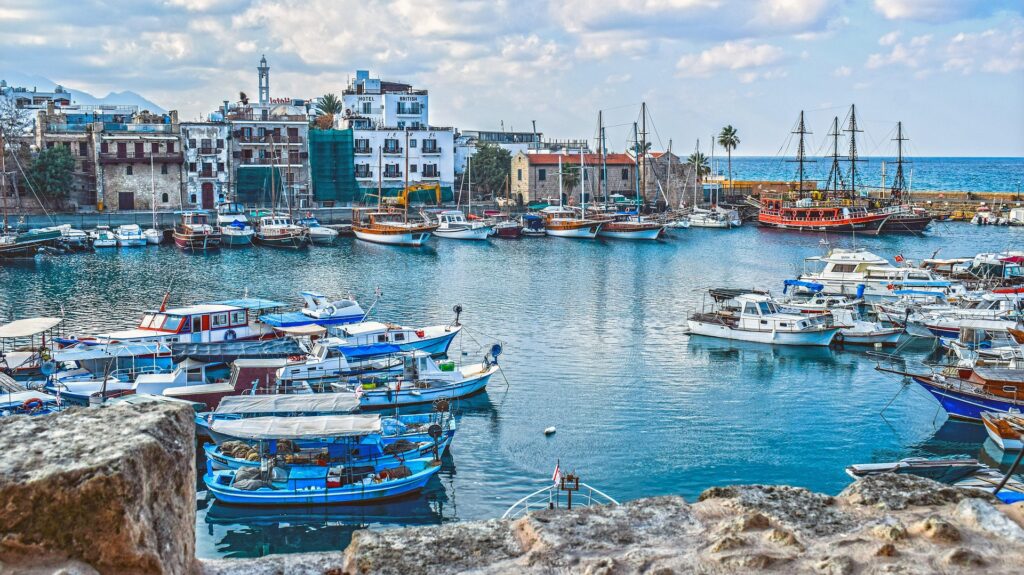
- Paphos: A UNESCO-listed coastal city famous for its world-class Roman mosaics, the Tombs of the Kings, and its charming fishing harbor. (Ancient, Mythical, Coastal)
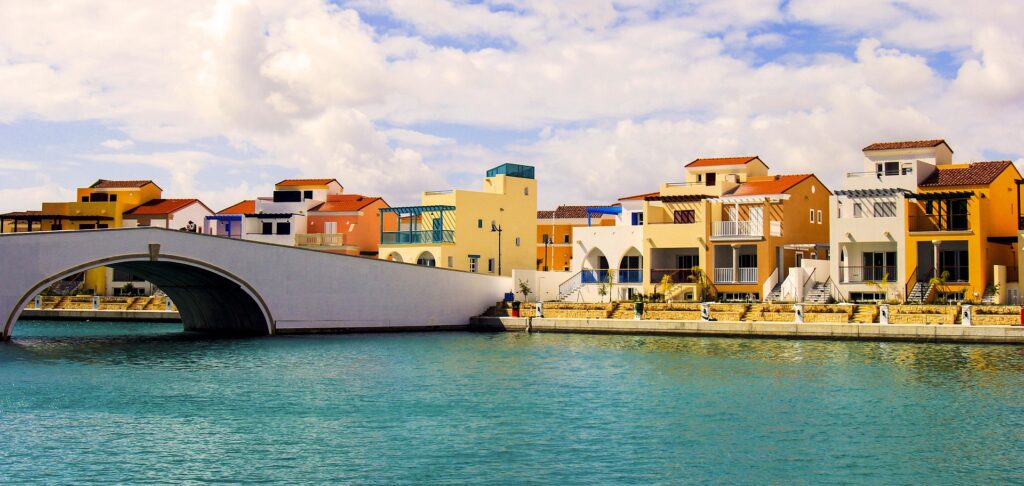
- Limassol (Lemesos): A dynamic maritime city known for its modern marina, medieval castle, and its vibrant annual Wine Festival. (Modern, Cosmopolitan, Festive)
- Larnaca: Home to the historic Church of Saint Lazarus and a palm-lined promenade, offering a relaxed pace of life. (Spiritual, Relaxed, Coastal)
- Ayia Napa & Protaras: Famous for having the island’s best white-sand beaches and a high-energy nightlife scene. (Sun-drenched, Vibrant, Leisure)
🏞️ Cyprus National Parks & Nature Reserves
Managed with a focus on biodiversity and environmental education by the Department of Forests.
- Troodos National Forest Park: A Geopark of international significance featuring unique ophiolite geology.
- Akamas National Park: The island’s last great coastal wilderness.
- Athalassa National Park: A green oasis on the edge of the capital, popular for cycling and birdwatching.
🏛️ UNESCO World Heritage Sites
- Paphos — Includes the Aphrodite sanctuary and the remarkable mosaic floors of Roman villas.
- Painted Churches in the Troodos Region — Ten rural churches richly decorated with Byzantine and post-Byzantine frescoes.
- Choirokoitia — An exceptionally well-preserved Neolithic settlement dating back to the 7th millennium BC.
- For a full list, visit the UNESCO Cyprus Portal.
🖼️ Cyprus Museums & Galleries
- Cyprus Museum (Nicosia): The largest and oldest archaeological museum on the island, housing artifacts from the Neolithic to the Roman periods.
- Leventis Municipal Museum (Nicosia): Traces the history of the capital through immersive exhibits and collections.
- Thalassa Municipal Museum (Ayia Napa): Dedicated to the sea, featuring a life-size replica of a 4th-century BC merchant ship.
- Cyprus Wine Museum (Erimi): Exploring 5,500 years of winemaking history on the island.
🎉 Cyprus Festivals & Celebrations
- Anthestiria (Flower Festival): (May) A celebration of spring and rebirth, dating back to ancient Greek festivals in honor of Dionysus.
- Kataklysmos (Festival of the Flood): (June) Unique to Cyprus, celebrated fifty days after Easter with water games, folk dances, and music along the coast.
- Limassol Wine Festival: (August/September) A joyous tribute to the island’s long history of viticulture, featuring free wine and traditional food.
- Paphos Aphrodite Festival: (September) An annual opera event held in front of the medieval castle of Paphos.
🧽 How to Arrive
- ✈️ By Air
- Larnaca International (LCA) is the primary gateway.
- Paphos International (PFO) is popular for low-cost carriers and charter flights.
- Airlines: Cyprus Airways (National Carrier) and major European airlines (British Airways, Lufthansa, Aegean) connect the island to the world.
- 🚢 By Sea
- Limassol is a major cruise port. Seasonal ferries and private yachts connect Cyprus to Greece (Piraeus) and neighboring Mediterranean ports.
- 🚗 By Road
- There is no rail network on the island. Driving is on the left (British influence). Car rental is highly recommended for exploring the villages.
📶 Stay Connected
- SIM Cards: Major providers are Cyta (best coverage), Epic, and Primetel.
- Where to buy: Kiosks (Periptero) and official stores are abundant. Registration with a passport is usually required.
- eSIM: Supported by major providers and available via global platforms like Airalo.
🏨 Where to Stay
Cyprus offers everything from ultra-luxury beach resorts to authentic agrotourism houses in mountain villages.
- Anassa Hotel (Polis): Widely regarded as one of the most beautiful and secluded luxury resorts in the Mediterranean.
- Parklane Resort (Limassol): A top-tier Luxury Collection property.
- Casale Panayiotis: A pioneering agrotourism stay where guests stay in restored houses integrated into the village of Kalopanayiotis.
⛳ Unique Finds
- Commandaria Wine: Taste the world’s oldest named wine still in production, a sweet dessert wine dating back to the Crusaders.
- Lefkara Lace: Buy authentic “Lefkaritika” lace, a craft so intricate that Leonardo da Vinci is said to have purchased a cloth here for Milan Cathedral.
- The Green Line: Walk the buffer zone in Nicosia to see a city frozen in time—a poignant reminder of the island’s modern history.
- Halloumi Workshops: Visit a local farm in the Xyliatos or Letymbou regions to see how the island’s famous “squeaky cheese” is made by hand.
🤝 Cyprus Cultural Guidance
- Hospitality: “Philoxenia” is the code. If a local offers you fruit or a sweet, it is polite to accept.
- Dress Code: When visiting churches and monasteries, ensure shoulders and knees are covered. Many monasteries provide wraps at the entrance.
- Siga-Siga: Understand the concept of “Siga-Siga” (Slowly-Slowly). Life in Cyprus moves at its own pace; don’t rush the service or the conversation.
- Basic Phrases (Greek):
- Hello: “Yiasas” (Yah-sas)
- Thank you: “Efharisto” (Ef-ha-ris-toh)
- Please/You’re welcome: “Parakalo” (Pa-ra-ka-loh)
- Cheers: “Stin iyia mas” (Stin ee-yah mas)
🛂 Cyprus Entry & Visa Requirements
- EU Member: Cyprus is an EU member. Citizens of the UK, US, Canada, Australia, and EU states do not require a visa for tourism stays up to 90 days.
- Official Source: Consult the Ministry of Foreign Affairs for current regulations.
💰 Practical Essentials
- Currency: Euro (€). Cards are accepted in cities, but cash is king in mountain villages and small tavernas.
- Electricity: Type G (Three rectangular pins—same as the UK/Middle East). Voltage is 230V.
- Safety: Cyprus is one of the safest countries in the world with a very low crime rate.
- Climate: One of the sunniest places in Europe. Best visited in Spring (March–May) for wildflowers or Autumn (September–October) for warm seas and harvest festivals.
✨ Bonus Tip
To truly embrace Cyprus, leave the coast behind for the “Wine Villages” (Krasochoria) of the Limassol district. Park your car in Omodos or Laneia, and just walk. It is in the shaded courtyards, the scent of jasmine, and the spontaneous invitations to taste a local vintage that the true, unpretentious soul of Cyprus reveals itself. You will find that the island’s greatest treasure isn’t its gold, but its ability to make a stranger feel like they’ve finally come home.
🔗 Featured Links
- Official Tourism: Visit Cyprus.
- Mountain Heritage: Troodos Tourism Board.

Beyondia
Trusted Travel CompanionReal digital nomad. I travel. I learn. I grow.
What about you? Where are you going?