
GoBeyondia Atlas 🗺️ Nordic-Western Europe 🗾
Where ancient stone circles meet mist-shrouded moorlands, storied university spires, and the relentless energy of world-defining cities, inviting a transformative journey through royal heritage, literary landscapes, and the timeless art of the countryside ramble.
🏴 England in 30 Seconds
A country of one hundred and thirty thousand square kilometers occupying the southern and central portion of the island of Great Britain — smaller than Florida, about the size of Greece — whose influence on the modern world is so disproportionate to its geography that the disproportion itself has become the defining fact. England is not the United Kingdom. It is not Britain. It is one country within a union of four, the largest and most populous, the one that absorbed the others into its orbit so completely that the world uses “England” and “Britain” interchangeably, which is itself a small act of linguistic imperialism that the Scots, Welsh, and Northern Irish will correct you on.
The name England comes from the Angles — a Germanic tribe from the Angeln peninsula in what is now Schleswig-Holstein, the border region of Germany and Denmark. The Angles, along with the Saxons and the Jutes, crossed the North Sea in the fifth and sixth centuries after the Roman withdrawal and gradually displaced the Celtic-speaking Britons who had inhabited the island for millennia. England is named after immigrants. The fact is worth pausing on. The country whose modern politics has been periodically consumed by anxiety about immigration is named after an act of immigration so total that it replaced the existing population’s language, culture, and place names across most of the territory. The Britons were pushed into Wales, Cornwall, and across the sea to Brittany. The newcomers called themselves Angelcynn — the Angle-kin — and their language, Englisc. The country is a testament to its own displacement.
But the Angles and Saxons were only one layer. Before them came the Romans, who occupied Britain from 43 AD to around 410 AD — nearly four centuries, longer than the entire history of the United States. They built Londinium, the roads that still define English geography, Hadrian’s Wall across the north, the baths at Aquae Sulis that became Bath. They left behind Latin words that entered Old English so completely that they feel native: street from strata, wall from vallum, wine from vinum, cheese from caseus, kitchen from coquina. The infrastructure was Roman. The language absorbed it and forgot.
After the Anglo-Saxons came the Vikings. From the late eighth century, Norse raiders and then settlers occupied the eastern and northern half of England in a territory known as the Danelaw. The linguistic impact was extraordinary. Unlike the Norman French that would come later and deposit itself primarily in the vocabulary of power, law, and cuisine, Old Norse entered the most intimate layers of everyday English. The words sky, skin, egg, leg, window, knife, husband, fellow, take, give, get, want, call, die, and — remarkably — the pronouns they, them, and their are all Norse. English borrowed its third-person plural pronouns from an invading language. There may be no more intimate act of linguistic absorption in the history of any language. You cannot speak a sentence about other people in English without using Viking words.
Then came 1066. William, Duke of Normandy — himself descended from Norse Vikings who had settled in France and adopted French — crossed the Channel, defeated Harold Godwinson at Hastings, and established Norman rule over England. For the next three centuries, French was the language of the court, the law, the Church, and the aristocracy. English was the language of the peasantry. The result was a vocabulary permanently stratified by class. The animal in the field, tended by Anglo-Saxon-speaking farmers, kept its Germanic name: cow, sheep, pig, deer, calf. The meat on the table, eaten by French-speaking lords, took the French name: beef, mutton, pork, venison, veal. This split — living animal in English, cooked meat in French — has survived for nearly a thousand years. Every time an English speaker orders beef, they are unconsciously reproducing a class hierarchy established by the Norman Conquest. The language is an archaeological dig. Every word is a stratum.
The result, when the layers settled, was English — a language classified as Germanic but containing only about twenty-five percent Germanic vocabulary. Roughly twenty-nine percent is French. Roughly twenty-nine percent is Latin. About six percent is Greek. The remainder is borrowed from over three hundred other languages: Arabic gave algebra, alcohol, and sugar; Hindi gave bungalow, jungle, and shampoo; Dutch gave landscape and easel; Japanese gave tsunami and tycoon; Malay gave ketchup; Nahuatl gave chocolate and tomato; Czech gave robot. English is not a language. It is a collection of languages wearing a trench coat and pretending to be one language. And this is precisely why it became the global lingua franca. A language that has been borrowing from every culture it encounters for fifteen hundred years has a word for almost everything, often several, calibrated by register: you can ask, inquire, or interrogate — Germanic, French, Latin, each slightly different in formality, each from a different century of contact.
This is the pattern that defines England: absorption presented as invention. The parliamentary system that England exported to the world had its roots in the Anglo-Saxon witenagemot, was formalized by the Normans, and drew on concepts of Roman law. The common law that governs much of the world is a fusion of Anglo-Saxon custom, Norman procedure, and centuries of precedent accumulated from every corner of the empire. The Church of England was created in 1534 because Henry VIII wanted a divorce — an act of personal convenience that became a national religion that became a global communion. The Industrial Revolution began in the English Midlands not because of some unique English genius but because of a specific confluence of coal deposits, canal networks, property rights, available capital from colonial trade, and the displacement of agricultural workers into factory labor. England did not invent the steam engine — Thomas Newcomen’s atmospheric engine of 1712 improved on earlier designs, and James Watt’s separate condenser of 1769 improved on Newcomen’s. England improved things. England refined things. England took things from elsewhere, made them more efficient, and exported them back as English.
The empire itself — at its height governing a quarter of the world’s land surface and a quarter of its population — was the largest act of export in history, and also the largest act of import. The wealth that built Georgian Bath and Victorian London came from sugar plantations in the Caribbean, cotton fields in India, mines in southern Africa, and the slave trade that connected them. The country absorbed the world’s resources, processed them into institutions and infrastructure, and presented the result as English civilization. Tea is Chinese. Cricket’s earliest forms may have been played by Flemish weavers in the Weald of Kent. The East India Company brought back not just goods but words, ideas, administrative systems, and the experience of governing diverse populations that would shape English governance for centuries. England did not simply conquer. England metabolized.
Evoke — Why You Visit England
You come to England because you have spent your life being told that what you are is not original enough — that your ideas are borrowed, your style is derivative, your identity is assembled from parts that belong to other people — and you need a country that built the most influential civilization of the last five hundred years almost entirely from borrowed parts and has never once apologized for it. England’s genius was never purity. England’s genius was absorption. The Romans built the roads. The Anglo-Saxons built the language. The Vikings built the pronouns. The Normans built the legal system. The empire imported the wealth. And England called the result English, with such confidence that the world believed it. You come because someone has told you that what you have is not really yours — that you took it from somewhere, that you assembled it from influences, that you are not an original. England will remind you that the most powerful language on earth is only twenty-five percent itself. The rest was taken from the Romans, the Vikings, the Normans, the French, the Hindus, the Arabs, the Dutch, the Malay, the Nahuatl, and three hundred other languages that English absorbed without permission and without apology. Originality is not the absence of borrowing. Originality is what happens after the borrowing is complete.
Explore — How You Experience England
Land at Heathrow — whose name is Anglo-Saxon, heath and row, a clearing in scrubland — and take the Tube into London, a city whose name is probably pre-Roman, possibly Celtic, its etymology still debated after two thousand years. Walk the streets and read the city in its layers. The Roman wall is visible at Tower Hill. The Norman Tower of London sits inside it. The medieval street plan of the City — the Square Mile — still follows the Roman footprint. The Georgian terraces of Bloomsbury were built with wealth from colonial trade. The Victorian railway stations — St Pancras, Paddington, King’s Cross — were the cathedrals of the Industrial Revolution, designed in Gothic Revival style because the English response to modernity was to dress it in the architecture of the medieval past. Walk north to the British Museum, where the Rosetta Stone and the Elgin Marbles sit in galleries that embody, uncomfortably, both the Enlightenment ambition to understand all of human civilization and the imperial violence that made the collection possible. Leave London. Take the train to Bath and see the Roman baths beneath the Georgian city, hot spring water that the Celts considered sacred, that the Romans engineered, and that the Georgians turned into a social season. Go to the Cotswolds, where the honey-colored limestone villages look timeless but were built on the medieval wool trade — English sheep, Flemish weavers, Italian bankers, a supply chain that crossed Europe before anyone used the word. Go to the Lake District, where Wordsworth walked the fells and wrote the poetry that helped invent the idea of nature as something worth preserving — an idea that is now so embedded in English culture that it feels innate, though it was, like everything else, constructed. Stand on Hadrian’s Wall and look north. The wall was built by Romans, manned by auxiliary soldiers from Syria, North Africa, and the Danube, and marks the boundary between what Rome could hold and what it could not. England’s oldest border was built by non-English soldiers serving a non-English empire to contain non-English peoples. The country is a palimpsest. Every layer was written by someone else.
Evolve — Who You Become in England
You leave England understanding that absorption is not weakness — it is the most powerful strategy a culture can deploy. England was invaded by the Romans, the Angles, the Saxons, the Jutes, the Vikings, and the Normans. It lost every time. And it won every time, because the invaded culture absorbed the invader’s language, law, technology, and culture, metabolized them into something new, and called the result English. The cow becomes beef. The field becomes the table. The Germanic peasant word and the French aristocratic word coexist in the same sentence, and no one notices the seam anymore. That is the English method: absorb so thoroughly that the origin becomes invisible. You were not conquered. You were enriched. You did not lose your language. You gained a vocabulary. The pronouns are Viking. The legal terms are French. The scientific vocabulary is Greek and Latin. The everyday words are Germanic. And the whole thing functions as one language, spoken by one and a half billion people, because England understood — instinctively, ruthlessly, brilliantly — that the most durable thing in the world is not what resists influence but what incorporates it. You come home and look at the assembled, borrowed, influenced, derivative life you have built and you stop apologizing for it. The apologizing was the only inauthentic part. England never apologized. England never explained. England took the Roman roads, the Viking sky, the Norman court, the Indian tea, the Chinese porcelain, the Caribbean sugar, the African labor, the Arabic numerals, and the Greek philosophy, and called it civilization, and exported it to a quarter of the earth, and the earth — grudgingly, resentfully, admiringly — agreed. The language is twenty-five percent itself. The rest is everyone else. And it is the most widely spoken language on the planet. That is the lesson. Absorption is not dilution. Absorption is concentration. The language proves it. The country proves it. Every word you speak in English is evidence.
Your practical guide to England starts bellow 👇
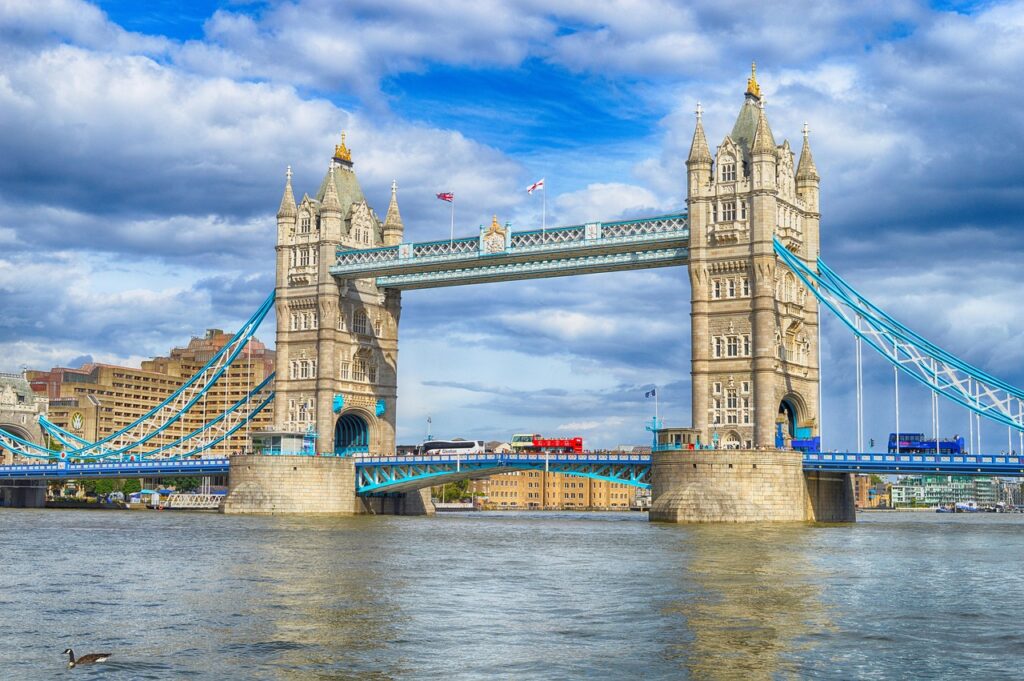
🕰️ England Historical Backdrop
England’s history is a multilayered epic written across its landscapes and architecture. From prehistoric builders who erected Stonehenge to Roman legionnaires who founded Londinium and carved out frontiers along Hadrian’s Wall, the island has long been a crossroads of cultures. The Norman Conquest of 1066 reshaped its language, law, and fortifications, setting the stage for the signing of the Magna Carta in 1215 and the flowering of the Elizabethan Renaissance. In the 18th and 19th centuries, England became the cradle of the Industrial Revolution, giving birth to modern railways, manufacturing, and global maritime networks centered around its capital and northern heartlands. Today, England is a dynamic, multicultural society that balances centuries of royal tradition and institutional heritage with cutting-edge art, global commerce, and deep-seated literary and musical legacies.
🌟 England Local Experiences
Beyond the iconic landmarks, discover England’s soul in the ritual of a traditional Sunday Roast inside a 400-year-old country pub, where roaring hearths, cask ales, and warm conversation create an enduring sense of community. Experience the quiet grace of punting along the River Cam beneath Cambridge’s Gothic chapels, the bracing beauty of a coastal walk along the South West Coast Path, or the sensory richness of traditional afternoon tea in a historic tearoom. Whether it’s browsing through vintage stalls at London’s Portobello Road Market, catching an evening performance at Shakespeare’s Globe, or joining the passionate chorus at a local football match, these moments reveal a country that cherishes conversation, craftsmanship, and the pleasure of everyday rituals.
🌄 England Natural Wonders
⚬ The Lake District: England’s premier mountainous playground, celebrated for its glacial lakes, rugged fells, and literary connections to Beatrix Potter and William Wordsworth.
⚬ The Jurassic Coast: A 95-mile stretch of coastline in Dorset and East Devon spanning 185 million years of geological history, famous for fossils, sea stacks, and natural arches like Durdle Door.
⚬ The White Cliffs of Dover & Seven Sisters: Towering chalk cliffs facing the English Channel, offering panoramic coastal views and dramatic maritime panoramas.
⚬ Cheddar Gorge: A dramatic limestone gorge in the Mendip Hills featuring sheer cliffs, subterranean cave systems, and prehistoric archaeological findings.
⚬ The Peak District (Gritstone Edges & Dales): A landscape of contrasting gritstone moorlands (Dark Peak) and rolling limestone valleys (White Peak).
⚬ Cornish Coastline (Kynance Cove & Land’s End): Rugged Atlantic headlands, turquoise coves, and dramatic granite cliffs shaped by centuries of sea winds.
🏙️ England Must-See Cities & Regions
⚬ London: (Capital) A world-leading metropolis where 2,000 years of history meet cutting-edge culture, Royal Parks, Michelin-starred dining, and legendary West End theatre. (Global, Historic, Vibrant)
⚬ Bath: A UNESCO World Heritage city renowned for its ancient Roman Baths, natural thermal springs, and sweeping honey-colored Georgian crescents. (Classical, Elegant, Architectural)
⚬ Oxford & Cambridge: World-renowned university towns characterized by “dreaming spires,” cobblestone passageways, tranquil rivers, and centuries of academic tradition. (Academic, Picturesque, Timeless)
⚬ York: A walled city rich in Viking and Roman history, home to the magnificent York Minster and the medieval timber-framed street known as The Shambles. (Medieval, Atmospheric, Historic)
⚬ Manchester & Liverpool: The dynamic cultural anchors of the North, world-famous for their industrial heritage, groundbreaking music history, and sporting greatness. (Energetic, Creative, Cultural)
⚬ The Cotswolds: An Area of Outstanding Natural Beauty famous for gentle rolling hills, thatched cottages, and idyllic market towns like Castle Combe and Bourton-on-the-Water. (Rustic, Romantic, Scenic)
🏞️ England National Parks & Nature Reserves
Managed to protect natural beauty, wildlife, and cultural heritage while welcoming outdoor recreation by National Parks UK.
⚬ Lake District National Park: England’s largest national park, home to England’s highest peak (Scafell Pike) and deepest lake (Wastwater).
⚬ Peak District National Park: The UK’s first national park, positioned between major northern cities and renowned for hiking, cycling, and climbing.
⚬ Yorkshire Dales National Park: Characterized by sweeping heather moorlands, limestone pavements, drystone walls, and cascading waterfalls.
⚬ South Downs National Park: Rolling chalk hills stretching to the dramatic coastal cliffs of Beachy Head.
⚬ Dartmoor National Park: A wild, open moorland in Devon punctuated by granite tors and free-roaming Dartmoor ponies.
🏛️ UNESCO World Heritage Sites
⚬ Stonehenge, Avebury and Associated Sites — The world’s most famous prehistoric megalithic monuments.
⚬ City of Bath — An ensemble of Roman archaeological remains and 18th-century Palladian architecture.
⚬ Tower of London and Palace of Westminster and Westminster Abbey — Iconic monuments of British royal and parliamentary history.
⚬ Dorset and East Devon Coast (Jurassic Coast) — Globally significant geological formations documenting the Mesozoic Era.
⚬ The English Lake District — A cultural landscape celebrated for picturesque beauty, traditional farming, and Romantic literature.
⚬ For more information on heritage preservation, visit the UNESCO United Kingdom Portal.
🖼️ Museums & Cultural Sites
⚬ The British Museum (London): Dedicated to human history, art, and culture, housing millions of global treasures.
⚬ Tate Modern & Tate Britain (London): Celebrating international modern art in a converted power station alongside centuries of British masterpieces.
⚬ The Roman Baths (Bath): One of the best-preserved Roman religious and bathing complexes in the ancient world.
⚬ Shakespeare’s Birthplace (Stratford-upon-Avon): A restored 16th-century half-timbered house offering an intimate look at the playwright’s early life.
⚬ Beamish, The Living Museum of the North: An open-air museum preserving everyday life in 19th- and early 20th-century Industrial Britain.
🎉 Festivals & Celebrations
⚬ Glastonbury Festival: (June) The world’s premier contemporary performing arts and music festival, held on a Somerset farm.
⚬ Notting Hill Carnival: (August Bank Holiday) Europe’s biggest street festival, celebrating Caribbean heritage with vibrant parades, steelbands, and sound systems across West London.
⚬ Bonfire Night (Guy Fawkes Night): (November 5) Commemorating the 1605 Gunpowder Plot with community bonfires, effigies, and fireworks displays across towns and villages.
⚬ The Championships, Wimbledon: (July) The oldest and most prestigious tennis tournament in the world, famous for grass courts, strawberries and cream, and tennis tradition.
🧽 How to Arrive
⚬ ✈️ By Air
⚬ London Heathrow (LHR) and London Gatwick (LGW) are the primary international hubs.
⚬ Regional airports such as Manchester (MAN), Birmingham (BHX), and Bristol (BRS) offer extensive transatlantic, European, and Middle Eastern connections.
⚬ Flag carriers and major international airlines provide direct routes from virtually every major global continent.
⚬ 🚆 By Rail
⚬ Eurostar provides high-speed passenger services connecting Paris, Brussels, and Amsterdam directly into London St Pancras International.
⚬ The comprehensive National Rail network seamlessly connects England’s major cities, towns, and scenic rural outposts.
⚬ 🚗 By Sea & Road
⚬ Car and coach shuttle services via LeShuttle (Channel Tunnel) connect Folkestone with Calais in 35 minutes.
⚬ Regular passenger and vehicle ferries operate from France, the Netherlands, Spain, and Ireland into ports like Dover, Harwich, Portsmouth, and Plymouth.
📶 Stay Connected
⚬ SIM Cards: Major mobile network operators include EE, Vodafone UK, O2, and Three.
⚬ Where to buy: SIM cards are available at international airport arrivals halls, convenience stores, and dedicated carrier shops on high streets across all towns.
⚬ eSIM: Widely supported by UK networks and global data providers such as Airalo and Holafly.
⚬ Public Transport & Payment: Public transport across London (TfL) and many regional networks operates completely seamlessly via contactless credit/debit cards or smart devices.
🏨 Where to Stay
England offers an expansive range of accommodations, from grand historic landmarks to cozy village coaching inns.
⚬ The Savoy (London): An iconic Edwardian-meets-Art Deco luxury hotel on the Strand overlooking the River Thames.
⚬ The Pig (Various Locations): A celebrated collection of boutique country house hotels focused on 25-mile sourced kitchen gardens and rustic luxury.
⚬ Lucknam Park Hotel & Spa (Cotswolds): An 18th-century Palladian mansion set in 500 acres of private parkland near Bath.
⚬ Traditional Coaching Inns & B&Bs: Stay in historic pubs-with-rooms across national parks and rural villages for warm fires, local food, and genuine regional hospitality.
⛳ Unique Finds
⚬ The Public Rights of Way Network: England possesses over 140,000 miles of protected public footpaths, allowing walkers to legally traverse farmland, meadows, and private estates.
⚬ Blue Plaques: Keep an eye out for circular blue wall markers on buildings throughout London and regional cities, marking homes and workplaces of notable historical figures.
⚬ Cream Tea Protocol: Experience the friendly regional debate between Devon (clotted cream first, then jam) and Cornwall (jam first, topped with clotted cream) on warm scones.
⚬ Chalk Figures: Seek out ancient hill carvings like the Uffington White Horse, carved into chalk downs thousands of years ago.
🤝 England Cultural Guidance
⚬ The Queue: Respecting queues is an ingrained social convention. Always join the back of a queue in stations, shops, and bus stops without jumping ahead.
⚬ Politeness & Understatement: Everyday communication relies on courtesy words (“please,” “thank you,” “sorry”). Self-deprecation, understatement, and gentle dry humor are common conversational styles.
⚬ Pub Etiquette: In traditional pubs, drinks and food orders are placed and paid for directly at the bar rather than via table service. When drinking with a group, buying “rounds” is standard custom.
⚬ Basic Phrases:
⚬ Cheers: Used versatilely for “thank you,” “goodbye,” or when clinking glasses.
⚬ Mind the gap: The iconic safety warning heard across the London Underground network.
⚬ You alright?: A casual greeting equivalent to “Hello, how are you?” rather than an inquiry about distress.
⚬ Proper: Meaning authentic, correct, or very good (e.g., “a proper cup of tea”).
🛂 Entry & Visa Requirements
⚬ UK Electronic Travel Authorisation (ETA) & Visas: Travelers from visa-exempt countries should check ETA rollout schedules, while others require a Standard Visitor Visa for tourism stays up to 6 months.
⚬ Official Source: Verify requirements directly on the official UK Government Visas and Immigration Portal.
💰 Practical Essentials
⚬ Currency: British Pound Sterling (GBP / £). England is predominantly a cashless economy; contactless cards and mobile payments (Apple Pay, Google Pay) are accepted almost everywhere, including street food stalls and buses.
⚬ Electricity: Type G (Three rectangular pins). Voltage is 230V, 50Hz.
⚬ Safety: England is generally a very safe destination. Standard awareness regarding belongings is recommended in busy tourist centers and on public transit.
⚬ Climate: Temperate maritime climate with variable weather throughout the year. The warmest and driest months are typically May through September, though a light waterproof layer is advisable in all seasons.
✨ Bonus Tip: The Public Footpath Perspective
To truly embrace England, step away from the highway and step onto a Public Footpath. Unlike in many parts of the world where private land is completely closed off, England’s historic rights-of-way network grants you the legal right to walk across fields, through kissing gates, and over gentle ridges that have been tread by shepherds, pilgrims, and poets for centuries. Pick a footpath between two villages, walk through the morning mist across open meadows, and finish with lunch at a village inn. It is in this slow, grounded connection to the living land—where every stile and stone wall has a story—that the true, contemplative heart of England will reveal itself to you.
🔗 Featured Links
⚬ Official Tourism: VisitEngland & VisitBritain.
⚬ Train Travel & Planning: National Rail Enquiries.
🔍 Related GoBeyondia Journeys
- England 🏴 Why Was Nothing Here Built by the English?
- London to Edinburgh 🇬🇧 The Country That Means What It Doesn’t Say
🌐 Around the World with Beyondia Video Episodes
- London 🏴 Why It Controls Time for the Entire World
- Cotswolds 🏴 How poverty saved the most beautiful place in England
- Bath 🏴 How Did They Forget This Entire Roman City?
- York 🏴 Why Yorkshire still speaks a little bit of Norse

Beyondia
Trusted Travel CompanionReal digital nomad. I travel. I learn. I grow.
What about you? Where are you going?