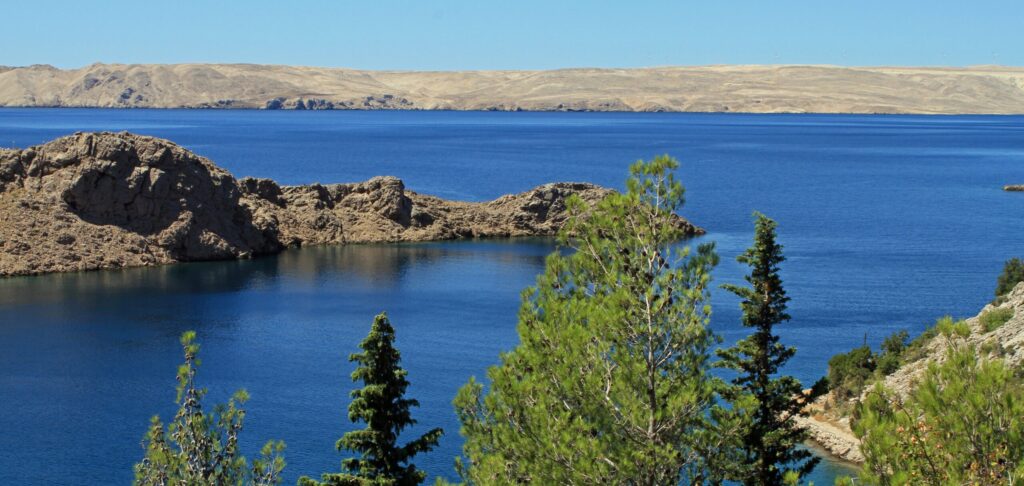
Around the World with Beyondia 🧵 Mediterranean Region 🪡 Episode 6
In Dalmatia, they say a fish should travel three times in its life. From the sea to the net. From the net to the fire. From the fire to your plate. Never further.
There is a word in Dalmatia — pomalo
Pomalo roughly translates to slowly, gently, no rush. It is used as a greeting, as a farewell, as an answer to almost any question that can be asked on this coast. It is also, if you watch closely, a recipe. The fish I ate that evening was caught that afternoon, grilled on embers made from olive branches that had been pruned the week before, dressed with oil pressed from trees that grew within sight of the kitchen, seasoned with salt harvested from pans on the island of Pag, and served with wine from vines rooted in the same limestone slope where the fig tree shading the table had been standing for longer than any of us. Nothing on that plate had travelled more than twenty kilometres. Not the fish. Not the fire. Not the wine. Not the cook.
In 2013, UNESCO inscribed the Mediterranean diet on its list of Intangible Cultural Heritage. Seven countries carry the inscription, and in the Croatian dossier the Dalmatian coast and its islands are named directly as one of the living cradles of the tradition. What was registered was not a list of recipes. What was registered was a way of eating: seasonal, local, shared, unhurried. In other words — pomalo, turned into policy.
The fish was brancin. In standard Croatian, lubin. In English, sea bass. In Latin, Dicentrarchus labrax. It was caught with a speargun along a drop-off near a rocky shore where the water turned from turquoise to the colour of dark glass. Spearfishing in the Adriatic is not a sport invented by tourists. It has been done on this coast since the Illyrians, since Diomedes is said to have thrown his weapons into the sea near the Palagruža islands and gone fishing with his hands instead. The technique has been refined, regulated, licensed — but the gesture is the same one Neolithic fishermen used in the cave of Vela Spila on Korčula, where archaeologists have found fish bones and hooks that are eight thousand years old. The menu of this coast has been open longer than most civilisations.
The fire is made on a gradele. A gradele is a cast-iron grate set over embers, nothing more, and in Dalmatia the embers are made from olive wood and old grapevine — never pine, never oak. Pine burns too fast and too sweet. Oak is too aggressive. Olive burns clean and slow, and grapevine adds the faintest note of something sugary and charred that good cooks on this coast will not describe out loud, because they are convinced the magic breaks if it is named. The fish goes on whole, scaled but not filleted, after it has rested for a few minutes in coarse sea salt. It is turned once. It is dressed with olive oil and chopped parsley and the juice of half a lemon, and that is the entire recipe. Four ingredients. One fire. One fish. The hardest meal in the world to improve.
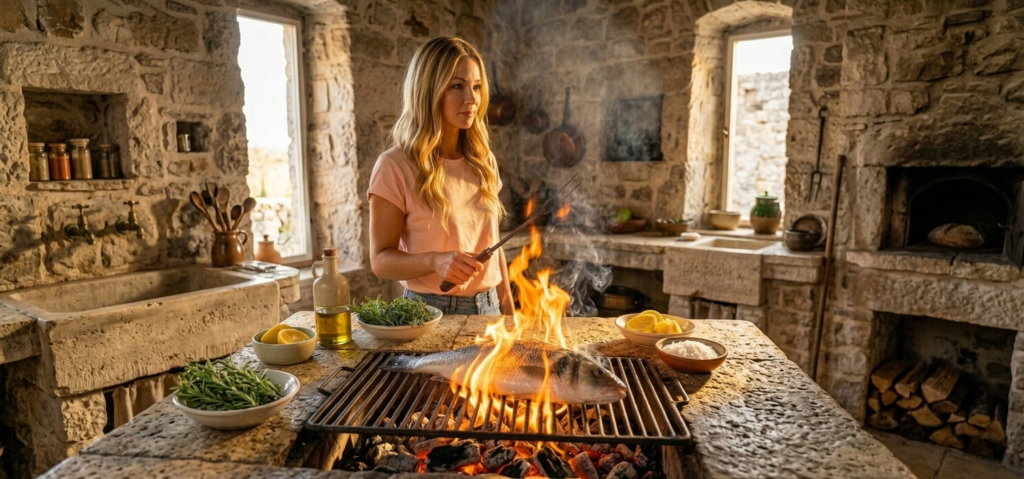
Every culinary tradition has a moment of genius. The French had it with the sauce. The Japanese had it with the cut. The Italians had it with the noodle. The Dalmatians had it with restraint. A fish grilled on gradele is what happens when a people figure out, over the course of three thousand years, that the best thing they can do for good ingredients is get out of the way. Coco Chanel told her clients to stand in front of a mirror and take one thing off before leaving the house. Miles Davis told his musicians to play what was not there. Raymond Carver wrote short stories as if every unnecessary word cost him money. Dalmatian cuisine applies the same rule to food. The discipline is what you refuse to add.
You cannot take this meal with you. You can take home the recipe, the oil, the wine, even the same variety of fish. It will not taste the same. It cannot. The fish was born in water that flowed past the olive tree that made the embers that grilled it. The wine grew inside the view of the kitchen. The salt came from a pan you can walk to. That is the whole point. The meal is not portable because the meal is the place.
In Dalmatia, they say a fish should travel three times in its life. From the sea to the net. From the net to the fire. From the fire to your plate. Never further.
Nine regions. One hundred and twenty destinations. Three hundred and sixty weeks.
Some places you remember by what you saw. Some places you remember by what you tasted.

Beyondia
Trusted Travel CompanionReal digital nomad. I travel. I learn. I grow.
What about you? Where are you going?