GoBeyondia Atlas 🗺️ South-America Antarctica 🗾
Guatemala: Where a Maya city of a hundred thousand people was swallowed by jungle so completely that a Spanish conquistador walked past it without knowing, twenty-two distinct Maya peoples still speak their ancestors’ languages and weave their ancestors’ patterns five centuries after the conquest tried to erase them, and a lake inside a volcanic crater was called “really too much of a good thing” by Aldous Huxley because beauty this concentrated should not be allowed to exist.
Guatemala in 30 Seconds
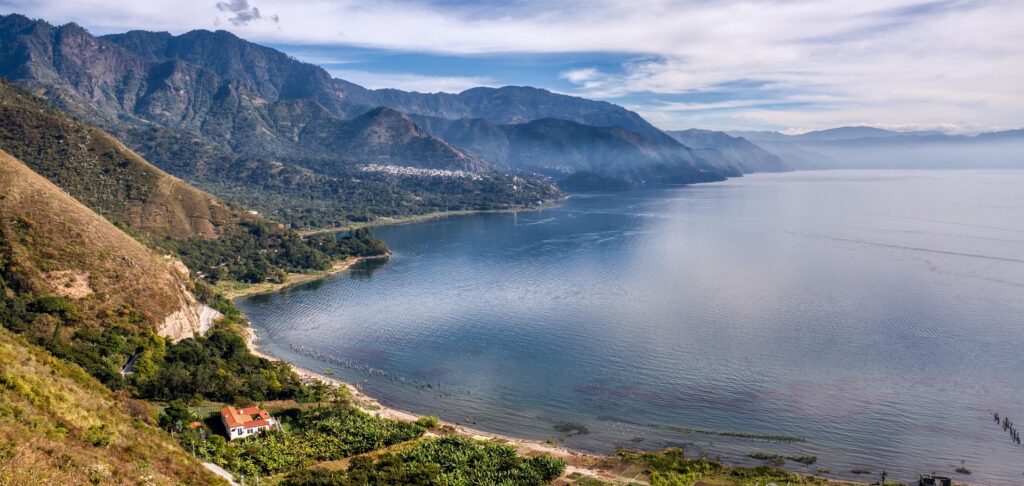
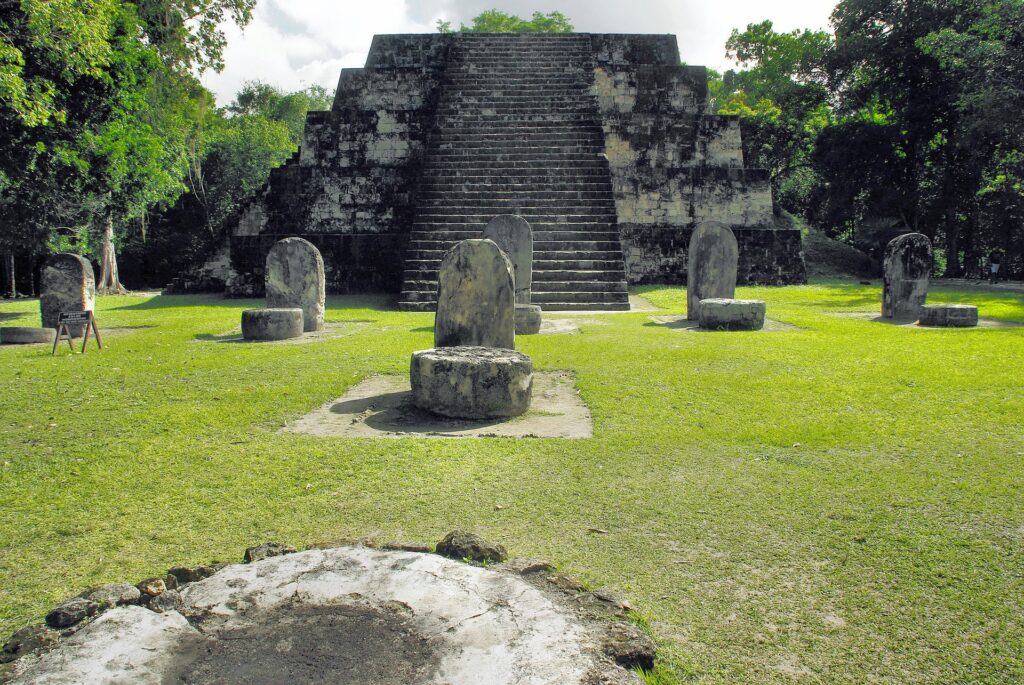
A country the size of Tennessee containing thirty-seven volcanoes, three of them active and visible from a single lake, where roughly half the population is indigenous Maya — not as heritage, not as memory, but as living culture with twenty-two distinct ethnic groups speaking their own languages, wearing textiles whose patterns encode village identity, and practicing traditions that predate the arrival of Europeans by two millennia. In the northern jungle of Petén, the city of Tikal rose from 600 BC to dominate the Maya lowlands with pyramids seventy meters tall, a population approaching a hundred thousand, and a water system sophisticated enough to filter drinking water through sand — then collapsed around 900 AD, was swallowed by rainforest so thoroughly that when Hernán Cortés passed nearby in 1525 he never knew it was there, and was not rediscovered until 1848. Today howler monkeys leap between temples that were filming locations for Star Wars, and most of the three thousand structures remain unexcavated beneath the canopy. At Lake Atitlán — Central America’s deepest lake, formed when a supervolcanic eruption left a caldera 85,000 years ago — thirteen Maya villages ring the shore, each with its own language and textile tradition, and beneath the water a ceremonial site called Samabaj sleeps fifty-five feet below the surface, submerged but not gone.
Evoke — Why You Visit Guatemala
You come to Guatemala because you have watched things you built disappear — projects cancelled, relationships ended, identities shed — and you need a country that proves disappearance is not the same as destruction. This is where the greatest city in the Maya lowlands vanished under a canopy so dense that an empire of conquistadors marched past without seeing it, and the city waited twelve hundred years for someone to look up and notice the geometry breaking through the trees. Where a civilization that invented the concept of zero, developed a calendar more accurate than the one Europe was using, and built pyramids aligned to solstices did not die when the Spanish arrived — it adapted, absorbed, resisted, and continued, so that today a Tz’utujil woman in Santiago Atitlán weaves on a backstrap loom using techniques unchanged for centuries, not as performance but as daily practice, because the pattern is the identity and the identity is the resistance. Where Antigua Guatemala, one of the most beautiful colonial cities in the Americas, has been destroyed by earthquakes three times — in 1717, 1751, and 1773 — and rebuilt each time beneath the same volcanoes that will destroy it again, because the people who live there decided that the beauty is worth the risk. You come because something you built went under, and Guatemala will show you that going under is not the end of the story.
Explore — How You Experience Guatemala
Enter Tikal at dawn when the mist sits low in the canopy and the howler monkeys have not yet started their territorial roar — climb the wooden stairs bolted to the back of Temple IV, seventy meters above the plaza floor, and emerge above the treeline where the roof combs of Temples I, II, and III break through the green like the spines of something alive beneath the forest, and understand that what you are seeing is not a ruin but a city that the jungle is holding rather than destroying. Walk the Great Plaza between Temple I and Temple II, built to face each other across the ceremonial space where a king was buried with jade and carved bone, and know that most of what surrounds you — three thousand structures across fifty square kilometers — remains unexcavated, the jungle keeping its secrets on its own schedule. Travel to Lake Atitlán where three volcanoes stand reflected in water three hundred and forty meters deep, and take a lancha between villages where Kaqchikel and Tz’utujil Maya sell textiles whose colors come from plants and insects and whose patterns have been passed mother to daughter for generations — each village’s huipil distinct enough that a Guatemalan can identify your home by what you are wearing. Visit a weaving cooperative in San Juan La Laguna where women demonstrate the backstrap loom — a technology so elegant it requires no frame, only the weaver’s body as tension — and understand that the textile is not a souvenir but a language, each symbol a word, each pattern a sentence about identity, origin, and belonging. Walk the cobblestone streets of Antigua beneath the Volcán de Agua and through the ruins of cathedrals whose roofless naves now frame the sky, because Antigua does not hide its scars — it builds around them.
Evolve — Who You Become in Guatemala
You leave Guatemala understanding that survival is not about staying visible — it is about staying rooted. Tikal did not survive because someone maintained it. It survived because the jungle held it, the stones resisted, and the architecture was strong enough to wait twelve centuries for rediscovery. The Maya did not survive the conquest by fighting on the conquerors’ terms. They survived by continuing to speak, weave, plant, and pray in the ways their ancestors taught them, absorbing what was imposed and refusing to release what was theirs. Antigua did not survive its earthquakes by moving to safer ground. It survived by deciding that some places are worth rebuilding in the same spot, under the same threat, because the location is the meaning. You come home and look at the thing that went under — the venture that failed, the chapter that closed, the version of yourself that disappeared — and you stop mourning it as lost. Tikal was under the canopy for twelve hundred years. It is still there. The patterns are still being woven. The volcanoes are still smoking. What you buried may be waiting for you to climb above the treeline and see what broke through.
Your practical guide to Guatemala starts bellow 👇
🕰️ Guatemala Historical Backdrop
Guatemala’s history is a profound narrative of high-civilization and cultural endurance. Known as the “Heart of the Maya World,” it was the epicenter of a sophisticated empire that mastered mathematics, astronomy, and architecture long before European contact. Its story is told in the monumental stone stelae of Quiriguá, the astronomical precision of Tikal, and the resilient survival of the K’iche’ and Kaqchikel Maya through the colonial era. Following the Spanish conquest, Antigua Guatemala became one of the most important capitals in the New World, leaving a legacy of baroque splendor. Today, Guatemala stands as a vibrant mosaic—a nation where ancestral rituals at the steps of Christian churches and a booming modern arts scene reflect a people who have navigated the complexities of history with unyielding pride and creativity.
🌟 Guatemala Local Experiences
Beyond the ruins, discover Guatemala’s soul in the vibrant sensory explosion of the Chichicastenango market, where the scent of copal incense mixes with the bright colors of hand-woven huipiles. Experience the profound stillness of a boat ride across Lake Atitlán as the three volcanoes reflect in its deep blue waters, or the exhilarating exhaustion of a sunrise hike to the summit of Volcán Acatenango. Feel the colonial charm of walking the cobblestone streets of Antigua under the iconic Santa Catalina Arch, or the simple joy of learning the ancient art of chocolate making from a master artisanal producer. These moments reveal a nation that finds strength in its diversity and peace in its untamed, vertical landscapes.
🌄 Guatemala Natural Wonders
- Lake Atitlán: Often described as the most beautiful lake in the world, a massive volcanic caldera surrounded by three towering volcanoes and twelve indigenous villages.
- Semuc Champey: A spectacular natural monument featuring a 300-meter limestone bridge with a series of stepped, turquoise pools perfect for swimming.
- Acatenango & Fuego Volcanoes: Offering one of the world’s most dramatic hiking experiences—watching the neighboring Fuego volcano erupt in the night sky.
- Pacaya Volcano: An accessible active volcano where hikers can walk over fresh lava fields and roast marshmallows in volcanic vents.
- The Petén Rainforest: A vast biosphere reserve teeming with jaguars, toucans, and spider monkeys, hiding thousands of unexcavated Maya structures.
- Rio Dulce: A serpentine river through high limestone canyons, leading to the Caribbean-flavored town of Livingston.
🏙️ Guatemala Must-See Cities & Regions
- Antigua Guatemala: (UNESCO World Heritage) A perfectly preserved colonial jewel known for its baroque architecture, vibrant Holy Week processions, and world-class coffee. (Colonial, Picturesque, Romantic)
- Tikal & Flores: The archaeological heart of the country; the island town of Flores serves as a charming, colorful base for exploring the Petén ruins. (Ancient, Majestic, Tropical)
- Guatemala City: (Capital) A bustling, modern metropolis where world-class museums meet a revitalized historic district (Zone 1) and a trendy culinary scene (Zone 4). (Urban, Dynamic, Cultural)
- Panajachel & Lake Atitlán Villages: A collection of unique communities ranging from the bohemian San Marcos to the traditional Santiago Atitlán. (Bohemian, Spiritual, Scenic)
- Quetzaltenango (Xela): The second-largest city, a hub for Spanish language schools and the gateway to the western highland mountains. (Authentic, Academic, Highland)
🏞️ Guatemala National Parks & Nature Reserves
Managed with an increasing focus on community-led conservation by CONAP (National Council of Protected Areas).
- Tikal National Park: A rare site inscribed for both its exceptional cultural and natural values.
- Sierra de las Minas Biosphere Reserve: A cloud forest sanctuary home to the resplendent quetzal, Guatemala’s national bird.
- Monterrico Nature Reserve: A coastal wetland on the Pacific known for its volcanic black-sand beaches and sea turtle hatcheries.
🏛️ UNESCO World Heritage Sites
- Antigua Guatemala — A 16th-century colonial capital built on a grid pattern inspired by the Italian Renaissance.
- Tikal National Park — One of the major sites of Mayan civilization, inhabited from the 6th century BC to the 10th century AD.
- Archaeological Park and Ruins of Quiriguá — Home to the tallest stone monuments (stelae) ever erected in the New World.
- For more information, visit the UNESCO Guatemala Portal.
🖼️ Guatemala Museums & Cultural Sites
- Popol Vuh Museum (Guatemala City): Houses one of the best collections of Maya art and colonial-era pottery in the world.
- Ixchel Museum of Indigenous Textiles: Dedicated to the preservation and study of the incredible weaving traditions of the Maya.
- Casa Santo Domingo (Antigua): A former convent turned luxury hotel and museum complex, housing archaeological finds and colonial art.
🎉 Guatemala Festivals & Celebrations
- Semana Santa (Holy Week): (March/April) Antigua hosts the most spectacular Easter celebrations in the Americas, featuring elaborate sawdust carpets (alfombras) and massive processions.
- Giant Kite Festival (Sumpango & Santiago Sacatepéquez): (November 1) On All Saints’ Day, massive, hand-made colorful kites are flown to communicate with the spirits of the ancestors.
- Rabin Ajau (Cobán): (July) A major indigenous beauty pageant and cultural festival celebrating the traditions of the Maya Q’eqchi’.
🧽 How to Arrive
- ✈️ By Air
- La Aurora International (GUA) in Guatemala City is the primary gateway.
- Mundo Maya International (FRS) in Flores serves travelers visiting Tikal.
- Airlines: Major carriers from North and Central America (Avianca, United, Delta, Copa) connect the country globally.
- 🚗 By Road
- Guatemala shares land borders with Mexico, Belize, El Salvador, and Honduras. It is a key segment of the Pan-American Highway. Driving is on the right.
- 🚆 By Rail
- There is currently no active passenger rail network in Guatemala.
📶 Stay Connected
- SIM Cards: The two main providers are Tigo and Claro.
- Where to buy: Kiosks are abundant at La Aurora airport and in every town square. Passport registration is standard.
- eSIM: Supported by Tigo and Claro; also available via global platforms like Airalo.
- Connectivity: High-speed Wi-Fi is common in Antigua and Lake Atitlán, though remote parts of Petén may have limited signal.
🏨 Where to Stay
Guatemala offers everything from colonial convents and luxury lakefront villas to sustainable jungle lodges.
- Casa Santo Domingo (Antigua): A masterpiece of heritage preservation, where rooms are integrated into ancient monastic ruins.
- Casa Palopó (Lake Atitlán): A Relais & Châteaux property offering sophisticated luxury and breathtaking views of the volcanoes.
- Bolontiku Boutique Hotel (Petén): An eco-luxury sanctuary accessible by boat on the shores of Lake Petén Itzá.
⛳ Unique Finds
- Jade Discovery: Visit the workshops in Antigua to see how the “Stone of Heaven,” sacred to the Maya, is carved into contemporary jewelry.
- Maximon (San Simon): Visit the shrine of this unique “smoking saint” in Santiago Atitlán to witness a fascinating fusion of indigenous and Catholic beliefs.
- Huehuetenango Coffee: Visit a high-altitude plantation to taste some of the most complex Arabica beans in the world.
🤝 Guatemala Cultural Guidance
- The Huipil Code: Understand that the intricate patterns on an indigenous woman’s tunic (huipil) act as a map of her community and history—respect their craftsmanship and ask before photographing.
- Punctuality: Socially, time is relaxed (“Chapin time”), but for transport and business, punctuality is generally expected.
- Hospitality: Guatemalans are exceptionally polite and formal. Always greet with “Buenos días” or “Buenas tardes.”
- Basic Phrases:
- Hello: “Hola”
- Thank you: “Gracias”
- Please: “Por favor”
- Cheers: “¡Salud!”
🛂 Guatemala Entry & Visa Requirements
- CA-4 Agreement: Guatemala is part of the Central America-4 border control agreement with El Salvador, Honduras, and Nicaragua.
- Visa-Free: Citizens of the UK, US, Canada, EU, and Australia generally do not require a visa for tourism for stays up to 90 days across the CA-4 region.
- Official Source: Consult the Guatemalan Migration Institute.
💰 Guatemala Practical Essentials
- Currency: Guatemalan Quetzal (GTQ). While USD are accepted in some tourist spots, Quetzales are essential for local markets and small towns. ATMs are widely available in cities.
- Electricity: Type A and B (Flat pins—same as North America). Voltage is 110V/120V.
- Safety: Generally safe for mindful travelers. Use official shuttle services rather than “Chicken Buses” for long-haul travel, and follow local advice regarding mountain hiking.
- Climate: “Land of Eternal Spring.” The highlands are cool year-round (60-75°F), while the coasts and Petén are tropical and humid. Best visited December to May (Dry Season).
✨ Bonus Tip: The Textile Narrative
To truly embrace Guatemala, learn to read the “silent language” of the highlands. Every village has its own weaving pattern, its own color palette, and its own way of telling its story through thread. Don’t just buy a souvenir; spend time at a weaving cooperative in San Juan La Laguna. It is in the rhythmic movement of the backstrap loom and the botanical wisdom of the natural dyes that the true, resilient spirit of the Maya—and your own sense of cultural appreciation—will finally reveal themselves.
🔗 Featured Links
- Official Tourism: Visit Guatemala (INGUAT).
- National Parks: Tikal Official Portal.

Beyondia
Trusted Travel CompanionReal digital nomad. I travel. I learn. I grow.
What about you? Where are you going?