GoBeyondia Atlas 🗺️ Nordic-Western Europe 🗾
Iceland: Where geysers erupt on schedule and the northern lights perform for nobody in particular.
Iceland in 30 Seconds
An island sitting directly on the Mid-Atlantic Ridge where the North American and Eurasian tectonic plates pull apart at two centimeters per year — slowly enough to be invisible, fast enough to make Iceland the most volcanically active country on earth and the only place where you can dive between two continents in water so clear the visibility reaches a hundred meters. Reykjavík is the world’s northernmost capital, a city of 130,000 people that produces more musicians, writers, and artists per capita than anywhere on earth and does so in a country where darkness lasts twenty-two hours in December and the sun refuses to set in June, as if the extremity of the light cycles produces extremity of creative response. The Ring Road circumnavigates the island in 1,300 kilometers of lava fields, glaciers, fjords, waterfalls, and geothermal valleys — Gullfoss dropping into a canyon that swallowed its own mist, Geysir erupting every eight minutes since the thirteenth century, Jökulsárlón glacier lagoon where icebergs calved from Vatnajökull drift to the black sand beach and dissolve into the Atlantic in shapes that Brancusi would have studied. The Westfjords in the northwest are Iceland without the Ring Road traffic — remote peninsulas of bird cliffs and abandoned farms and fjords so deep and narrow that the mountains on both sides meet overhead in certain lights. Iceland was settled by Vikings in 874 AD, wrote the world’s first parliamentary democracy into existence in 930 AD at the Þingvellir plain, and has been making remarkable decisions about governance and culture ever since. It is a country of 370,000 people that punches at civilizational weight and has never found this surprising.
Evoke — Why You Visit Iceland
You come to Iceland because something in your life has become too managed. The days arrive pre-organized, the outcomes are predictable within acceptable margins, the surprises have been engineered out of your schedule by systems you built to protect your time and now protect you from the unplanned moments that turned out to be the ones you remember. You need a landscape that operates entirely outside human management — where a volcano can close European airspace for six days, where the aurora australis appears without notification and disappears before you’ve finished photographing it, where the weather changes four times between breakfast and lunch and every plan becomes a negotiation with conditions that have no interest in your itinerary. You need to be somewhere that reminds your nervous system what genuine unpredictability feels like — not the managed risk of a thriller or a difficult meeting, but the actual variability of a world that preceded human scheduling and will outlast it. Iceland is that place. It will not perform for you. It will simply be what it is, which is extraordinary, and trust you to show up with sufficient attention.
Explore — How You Experience Iceland
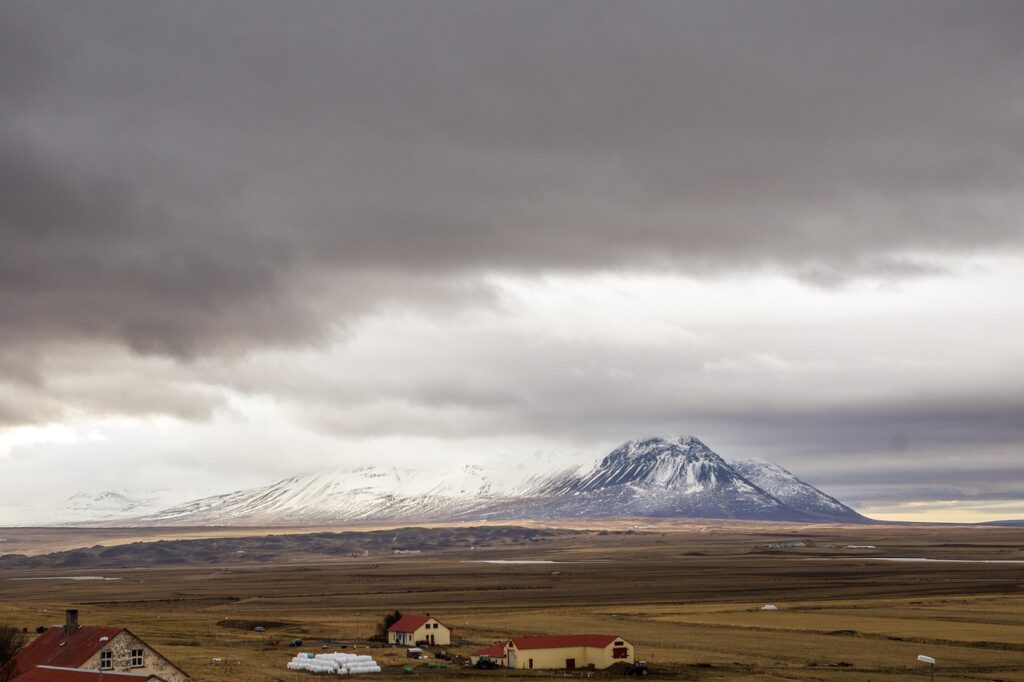
Stand at Þingvellir at the exact point where the American and Eurasian tectonic plates have been separating since before human civilization began — the rift valley visible as a geological wound in the earth, the same plain where the Norse settlers established the Alþingi parliament in 930 AD and gathered annually to resolve disputes, make laws, and execute criminals at the waterfall, combining democratic innovation with brutal practicality in the way that Viking culture consistently managed. Snorkel Silfra in Þingvellir’s glacial water — 2 degrees Celsius, visibility 100 meters, the crevice between two continents narrow enough in places to touch both walls simultaneously, the water so pure it is filtered through volcanic rock for decades before arriving in the fissure and functions as drinking water even at depth. Drive the Snæfellsnes Peninsula where Snæfellsjökull glacier — the volcano Jules Verne chose as the entrance to the center of the earth in 1864 — sits above lava fields and black sand beaches and fishing villages that haven’t updated their relationship with the ocean since the settlement period. Chase the northern lights from a farm in the Snæfellsnes or the Westfjords at the hour after midnight when the clouds that blocked them all evening part without announcement and the green begins as a suggestion on the horizon and becomes a curtain and then a ceiling and you stop photographing and simply look because no image will carry what your body is registering right now. Eat skyr — Iceland’s cultured dairy product, thicker than yogurt, eaten since the Viking age, available in every petrol station and served in Reykjavík’s best restaurants with crowberries and cream — and understand that a culture’s survival food tells you everything about its relationship with the land that sustains it. Sit in the Blue Lagoon’s silica-white water at dawn before the first bus arrives, the steam rising into cold air, the lava field surrounding you in every direction, the sky doing something with pink and grey that has no meteorological name but deserves one.
Evolve — Who You Become in Iceland
You leave Iceland with a recalibrated relationship with darkness — not as absence but as presence, a condition that has its own texture and demands its own response. The Icelanders developed a concept, þetta reddast, which translates approximately as “it will all work out” — a philosophical disposition toward uncertainty that isn’t passivity but the earned confidence of people who have survived volcanic eruptions, financial collapse, and twenty-two hours of December darkness and come through each time intact, often improved. You bring that home. You stop treating uncertainty as a problem to be solved before you can proceed and start treating it as the actual condition of a life worth living. You also carry the silence of the Westfjords specifically — the particular silence of a landscape where human presence is genuinely optional, where the arctic fox crosses the road without acknowledgment because you are the temporary resident and it is not. You develop a new relationship with light — having lived briefly inside its extremes, you start noticing what ordinary days do with it, the angle of an afternoon through your office window, the specific quality of dusk in your city that you’d been walking through without seeing. Iceland gave you your eyes back. That’s not a small thing. Use them accordingly.
Your practical guide to Iceland starts bellow 👇
🕰️ Iceland Historical Backdrop
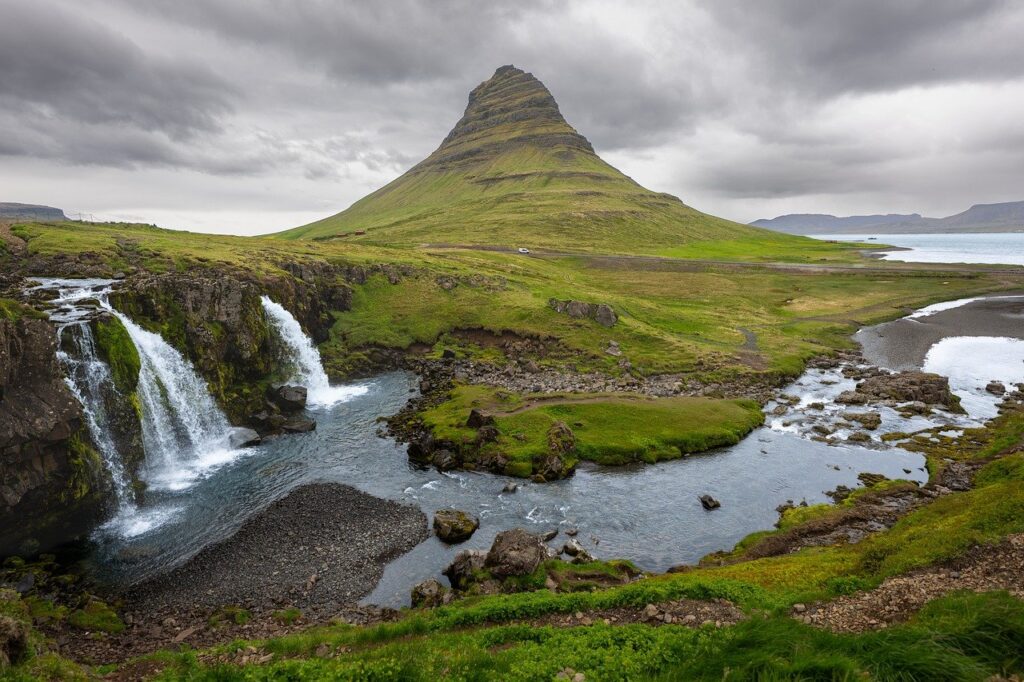
Iceland’s history is a legendary saga of Norse explorers and Celtic settlers who arrived on this volcanic outpost in the late 9th century. Far from the reach of European kings, they established the Althing in 930 AD—the world’s oldest surviving parliament—at the site of a dramatic tectonic rift. Its story is told in the medieval Icelandic Sagas, tales of family feuds and heroic voyages that remain a cornerstone of national identity. Through centuries of isolation, volcanic eruptions, and harsh subarctic winters, the Icelandic people developed a profound resilience and a deep literary tradition. Today, Iceland stands as a modern beacon of renewable energy and progressive social values, a nation that has successfully harnessed its wild “fire and ice” to power a high-tech, environmentally conscious society.
🌟 Iceland Local Experiences
Beyond the “Golden Circle,” discover Iceland’s soul in the ritual of the sundlaug—the local geothermal swimming pools where communities gather to discuss life in the warm, mineral-rich waters. Experience the profound stillness of a remote fjord in the Westfjords, the exhilarating chase of the Northern Lights across a pitch-black winter sky, or the simple joy of sharing a bowl of traditional lamb soup (kjötsúpa) in a coastal village. Whether it’s listening to live indie music in a cozy Reykjavik bar or witnessing the eruption of a geyser, these moments reveal a nation that finds warmth and wonder in one of the world’s most extreme environments.
🌄 Iceland Natural Wonders
- The Blue Lagoon: A world-famous geothermal spa known for its milky-blue, silica-rich waters set in a black lava field.
- Jökulsárlón Glacier Lagoon: A stunning lake filled with icebergs that have broken off the Breiðamerkurjökull glacier, drifting toward the Diamond Beach.
- The Golden Circle: A classic route comprising Gullfoss waterfall, the Geysir geothermal area, and Þingvellir National Park.
- Vatnajökull: Europe’s largest glacier by volume, offering incredible ice cave explorations in winter.
- Landmannalaugar: A highland paradise of multi-colored rhyolite mountains and natural hot springs.
- The Westfjords: A remote and rugged region of massive bird cliffs, deep fjords, and untouched wilderness.
🏙️ Iceland Must-See Cities & Regions
- Reykjavik: (Capital) The world’s northernmost capital, known for its colorful houses, vibrant arts scene, and the iconic Hallgrímskirkja church. (Creative, Quirky, Energetic)
- Akureyri: The “Capital of the North,” a charming town set at the base of a snow-capped fjord, offering a relaxed pace and great skiing. (Alpine, Cultural, Northern)
- Vík í Mýrdal: A small village on the South Coast famous for its black sand beaches and the dramatic Reynisdrangar rock pillars. (Cinematic, Coastal, Iconic)
- Húsavík: The whale-watching capital of Iceland, a picturesque harbor town on the northern coast. (Maritime, Wildlife-centric, Scenic)
- Seyðisfjörður: A remote artistic hub in the East Fjords, famous for its blue church and multi-colored wooden houses. (Artsy, Secluded, Stunning)
🏞️ Iceland National Parks & Nature Reserves
Managed with world-class environmental stewardship by Vatnajökulsþjóðgarður.
- Þingvellir National Park: A UNESCO site where the North American and Eurasian tectonic plates are pulling apart.
- Vatnajökull National Park: Protecting the vast glacier and the dramatic Skaftafell wilderness area.
- Snæfellsjökull National Park: Home to the glacier-capped volcano that inspired Jules Verne’s Journey to the Center of the Earth.
🏛️ UNESCO World Heritage Sites
- Þingvellir National Park — The site of the first parliament and a unique geological rift.
- Surtsey — A volcanic island formed in 1963, serving as a pristine laboratory for biological succession.
- Vatnajökull National Park – Dynamic Nature of Fire and Ice — A vast landscape shaped by the interaction of subglacial volcanoes and ice caps.
- For a full list, visit the UNESCO Iceland Portal.
🖼️ Iceland Museums & Galleries
- National Museum of Iceland (Reykjavik): Houses artifacts that chronicle the nation’s history from the Viking Age to today.
- Reykjavik Art Museum: The largest visual art institution in Iceland, spread across three unique locations.
- Perlan: An interactive museum featuring a real indoor ice cave and a planetarium focused on the Northern Lights.
🎉 Iceland Festivals & Celebrations
- Iceland Airwaves (Reykjavik): (November) An internationally acclaimed music festival showcasing the best of Icelandic and global indie talent.
- Winter Lights Festival: (February) Celebrating the return of the sun and the beauty of the Northern Lights with light installations across the capital.
- National Day: (June 17) Commemorating the foundation of the Republic of Iceland with parades and street festivities.
🧽 How to Arrive
- ✈️ By Air
- Keflavik International (KEF) is the primary gateway, located about 45 minutes from Reykjavik.
- Airlines: Icelandair (Flag carrier) and PLAY connect Iceland to major hubs in Europe and North America.
- 🚢 By Sea
- The Smyril Line ferry connects Iceland to Denmark and the Faroe Islands, arriving in the eastern port of Seyðisfjörður.
- 🚗 By Road
- The “Ring Road” (Route 1) encircles the island. Driving is on the right. Hiring a 4×4 is essential for accessing the Highlands (F-roads).
📶 Stay Connected
- SIM Cards: Major providers are Siminn, Vodafone, and Nova.
- Where to buy: Easily available at Keflavik Airport (Duty-Free or convenience store) and in all towns.
- eSIM: Supported by major providers and global platforms like Airalo for instant data upon landing.
🏨 Where to Stay
Iceland offers everything from glass-walled aurora cabins to sustainable design hotels in the city.
- The Retreat at Blue Lagoon: Ultimate luxury integrated into volcanic rock with private access to the lagoon.
- ION Adventure Hotel: An award-winning design hotel set near Thingvellir, perfect for Northern Lights viewing.
- Fosshotel Glacier Lagoon: A high-design hotel perfectly positioned for exploring the South Coast.
⛳ Unique Finds
- Silfra Fissure Snorkeling: Swim in the crystal-clear glacial water between two tectonic plates.
- Elf School (Reykjavik): Learn about the “Huldufólk” (Hidden People) and why their folklore still influences Icelandic construction and culture.
- The Arctic Henge: A massive modern stone monument in the far north designed to capture the rays of the midnight sun.
🤝 Iceland Cultural Guidance
- Respect for Nature: Icelanders are fiercely protective of their fragile ecosystem. Never step on the moss—it takes decades to recover.
- Naming: Icelanders use a patronymic system (e.g., Jónsson/Jónsdóttir) and are listed by their first names in the phone book.
- Water: Iceland has some of the cleanest tap water in the world. Do not buy bottled water; bring a reusable bottle.
- Basic Phrases:
- Hello: “Halló” (Ha-loh)
- Thank you: “Takk” (Tah-k)
- Please: “Gjörðu svo vel” (Gyur-thoo svo vel)
🛂 Iceland Entry & Visa Requirements
- Schengen Area: Iceland is a member of the Schengen Area. Citizens of the UK, US, Canada, Australia, and EU member states generally do not require a visa for stays up to 90 days.
- Official Source: Consult the Icelandic Directorate of Immigration for the latest updates.
💰 Practical Essentials
- Currency: Icelandic Króna (ISK). Iceland is nearly 100% cashless; credit/debit cards are accepted everywhere, even for public toilets.
- Electricity: Type F (Two round pins). Voltage is 230V.
- Safety: Consistently ranked as the safest country in the world. The primary danger is the unpredictable weather and natural terrain.
- Climate: Best visited in summer (June-August) for the midnight sun and highlands, or winter (November-March) for ice caves and the Northern Lights.
✨ Bonus Tip
To truly embrace Iceland, check the weather and road apps (Vedur.is and Road.is) every single morning. The weather is not just a conversation topic here; it is the master of your itinerary. If a storm is coming, lean into the Icelandic concept of “Þetta reddast”—the belief that everything will work out in the end. Use the time to hunker down in a local café or a hot spring. It is in this surrender to the elements that the true, untamed soul of the North reveals itself.
🔗 Featured Links
- Official Tourism: Visit Iceland.
- Weather & Aurora: Icelandic Met Office.
- Safety: SafeTravel.is.
🔍 Related GoBeyondia Stories
🌐 Around the World with Beyondia Video Episodes
- Reykjavík 🇮🇸 Democracy Didn’t Begin in Athens — It Survived in Iceland
- Westfjords 🇮🇸 The Part of Iceland That Iceland Forgot
- Akureyri 🇮🇸 The City That Put Hearts on Its Traffic Lights

Beyondia
Trusted Travel CompanionReal digital nomad. I travel. I learn. I grow.
What about you? Where are you going?