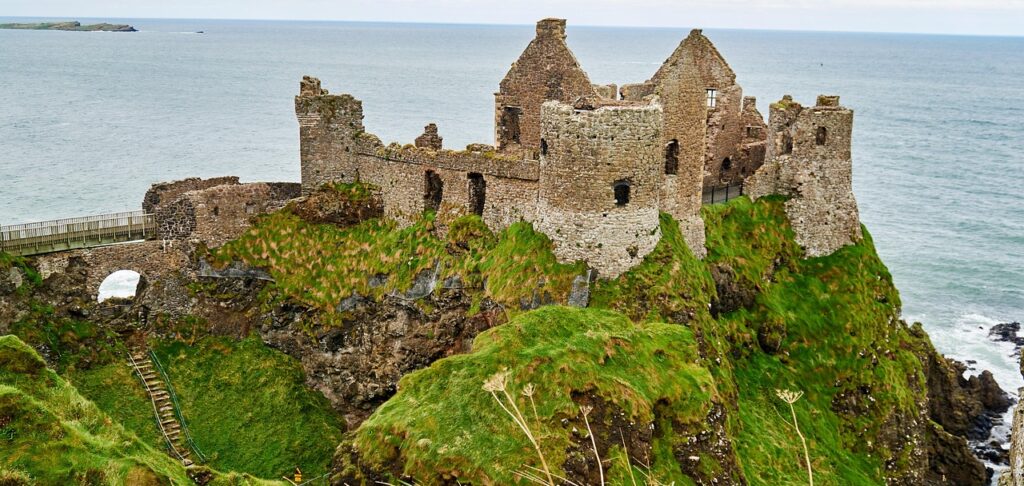
Ireland: Cliffs, conversation, and enduring resilience.
Ireland in 30 seconds
Ireland feels open — wind across cliffs, green hills rolling without interruption, and towns where conversation carries weight. History here is spoken, not only preserved. Music fills pubs without rehearsal, and the Atlantic shapes both land and temperament. Ireland is not about scale or spectacle. It is about atmosphere — a place where landscape and narrative remain inseparable.
Evoke – Why You Visit Ireland
You come to Ireland because somewhere along the way you stopped telling your own story. You got efficient at answering “how are you” without pausing, good at filling silence before it became uncomfortable, practiced at moving through days that leave no mark. You need a country where a stranger at a bar will ask where you’re from and genuinely want the answer — not the polished version, the real one. Where conversation is considered an art form serious enough to dedicate whole evenings to. You had a grandmother, a grandfather, an uncle who carried something in their voice when they talked — a weight that felt like history and sounded like music. Ireland is where that voice comes from. You’re not visiting a country. You’re going back to something you didn’t know you’d lost.
Explore – How You Experience Ireland
Walk the Cliffs of Moher at the hour before the tour buses arrive when the Atlantic is performing for nobody in particular and the wind is strong enough to make you feel irrelevant in the most useful way. Sit in a pub in Doolin on a Tuesday night when a session starts without announcement — three musicians who arrived separately, nodded once, and began playing as if they’d been doing it for decades, which they have. Drive the Wild Atlantic Way with no fixed stops, turning left whenever a road looks like it leads somewhere interesting, because it always does. Stand at Newgrange and understand that someone built this passage tomb to align with sunrise on the winter solstice five thousand years ago — they wanted light in the darkest moment, and they were precise about it. Walk through the Burren where limestone pavements crack open to reveal arctic and Mediterranean wildflowers growing side by side, impossible and unbothered. Eat soda bread still warm from the oven with butter that has no business being that good. Find a bookshop in Galway’s Latin Quarter and stay longer than you planned. Order a Guinness and watch it settle — dark rising through cream — and understand that patience is built into the culture at a molecular level.
Evolve – Who You Become in Ireland
You leave Ireland more honest. Not brutal — the Irish are never brutal — but honest in the way that people are when they’ve learned to say hard things beautifully. You stop treating silence in conversation as failure. You remember that storytelling isn’t performance, it’s how humans transfer meaning to each other, and you’d gotten lazy about that. You carry something of the Irish relationship with time — not careless, but unwilling to let efficiency murder the moment. The concept they don’t have a single word for but practice constantly: that the conversation itself is the destination, and arriving too quickly means you missed the whole point. Ireland reminded you that grief and laughter belong in the same room, that beauty and rain are not opposites, and that the people who’ve lost the most have sometimes held onto language with the tightest grip. You come home slightly less afraid of your own feelings. That’s not a small thing.
Your practical guide to Ireland starts bellow 👇
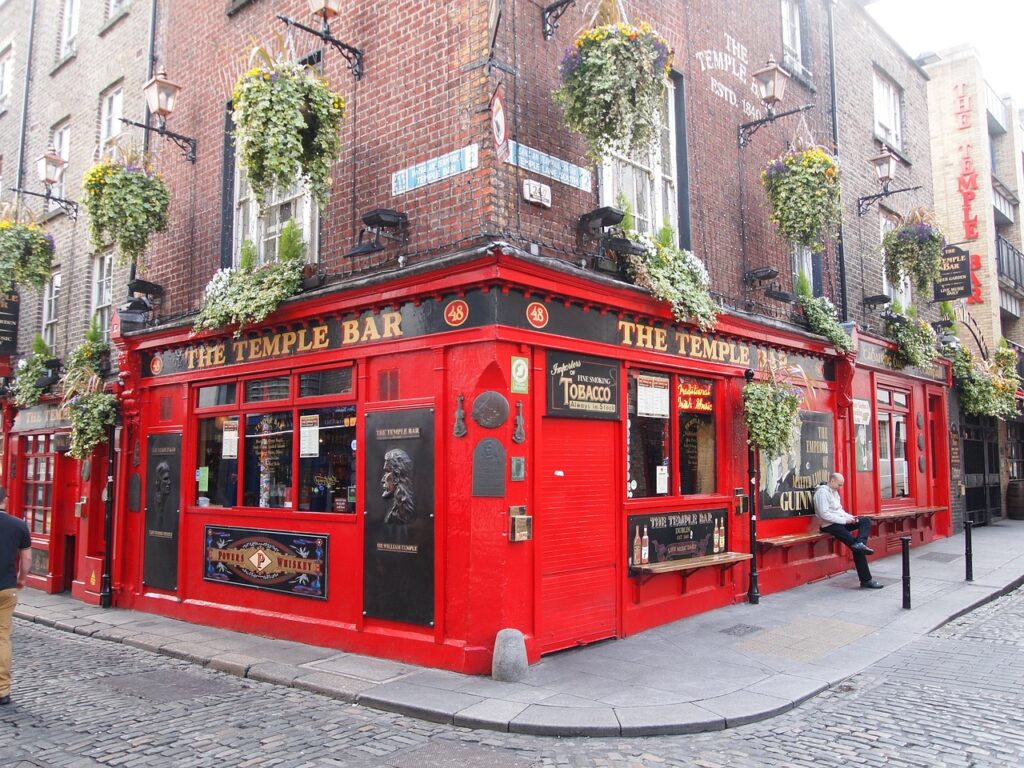
🕰️ Ireland Historical Backdrop
Ireland’s history is a profound and often turbulent saga of Celtic chieftains, Viking invaders, Norman knights, and a long, complex relationship with its British neighbor. From the prehistoric builders of Newgrange to the early Christian monks who preserved Western knowledge in stunningly illuminated manuscripts, the island has been a cradle of deep spirituality and artistic expression. Its story is told in the ancient stones of its monastic settlements, the imposing walls of its medieval castles, the poignant tales of famine and emigration, and the passionate struggle for independence. Through centuries of hardship and cultural flourishing, what endures is an unparalleled tradition of storytelling, a deep love for music and literature, a resilient spirit, and a legendary sense of hospitality and humor (the craic). This is a land where every rolling green hill, every crumbling abbey, and every lively traditional music session whispers tales of a civilization that has profoundly shaped the world’s cultural landscape.
🌟 Ireland Local Experiences
Beyond Ireland’s breathtaking landscapes, discover its soul in the lively atmosphere of a traditional pub session, with fiddles and bodhráns driving the rhythm, the simple pleasure of a walk along a windswept coastal path, or the cozy warmth of a turf fire on a rainy day. Experience the literary history of Dublin on a pub crawl, listen to the Irish language (Gaeilge) being spoken in a Gaeltacht region, or trace your ancestry in a local heritage center. These are the textures, shared moments, and profound connections that reveal Ireland’s unique spirit, inviting you to connect with its enduring charm and vibrant, welcoming culture.
🌄 Ireland Natural Wonders
- Cliffs of Moher: Ireland’s most famous natural attraction, dramatic sea cliffs soaring over the Atlantic Ocean in County Clare.
- The Ring of Kerry: A world-famous scenic drive in County Kerry, encompassing rugged coastlines, pristine lakes, and charming villages.
- The Giant’s Causeway (Northern Ireland): While in Northern Ireland, this iconic UNESCO site of interlocking basalt columns is an unmissable part of the island’s natural heritage.
- The Burren: A unique karst landscape in County Clare, known for its limestone pavements, rare flora, and ancient archaeological sites.
- Skellig Michael: A remote, craggy island and UNESCO World Heritage site, home to an ancient, well-preserved monastic settlement.
- Connemara National Park: A vast expanse of mountains, bogs, and heathlands in County Galway, offering stunning, wild scenery.
🏙️ Ireland Must-See Cities
- Dublin: (Capital) A vibrant, historic city, home to literary legends, the Guinness Storehouse, Trinity College, and a legendary pub culture. (Historic, Literary, Lively)
- Galway: The “Cultural Heart of Ireland,” a bohemian city on the west coast known for its lively arts scene, traditional music, and as a gateway to the Aran Islands. (Artistic, Bohemian, Coastal)
- Cork: A confident and cosmopolitan city in the south, renowned for its rebellious spirit, exceptional food scene (especially the English Market), and charming waterways. (Foodie, Rebel, Maritime)
- Belfast (Northern Ireland): A city of resilience and regeneration, famous for the Titanic Belfast museum, its political murals, and a vibrant cultural revival. (Historic, Resilient, Cultural)
- Kilkenny: A beautifully preserved medieval city with a magnificent castle, a thriving craft scene, and a labyrinth of charming narrow lanes. (Medieval, Artistic, Charming)
🏞️ Ireland National Parks & Nature Reserves
- Killarney National Park: Ireland’s first national park, a UNESCO Biosphere Reserve with stunning lakes, mountains, and the historic Muckross House.
- Connemara National Park: Offers wild, unspoiled landscapes, including the famous Diamond Hill walk.
- Glenveagh National Park: A remote and beautiful park in County Donegal, with a stunning castle and pristine lake.
- Wicklow Mountains National Park: A vast area of mountain scenery, blanket bogs, and the historic Glendalough monastic site, just south of Dublin.
🏛️ UNESCO World Heritage Sites
- Brú na Bóinne – Archaeological Ensemble of the Bend of the Boyne — A complex of prehistoric megalithic monuments, including Newgrange, older than Stonehenge and the Pyramids.
- Skellig Michael — A remote monastic outpost demonstrating the incredible resilience of early Irish Christians.
- For a complete list and more details, visit the official UNESCO World Heritage Centre for Ireland.
🖼️ Ireland Museums & Galleries
- National Museum of Ireland (Dublin): Comprises three sites in Dublin: Archaeology, Natural History, and Decorative Arts & History.
- EPIC The Irish Emigration Museum (Dublin): An interactive museum that tells the story of the Irish diaspora and their impact on the world.
- Trinity College Dublin & The Book of Kells: Home to the stunning Long Room library and the world-famous 9th-century illuminated manuscript.
- Kilmainham Gaol (Dublin): A former prison, now a museum, deeply connected to the story of Irish nationalism and the 1916 Easter Rising.
- Titanic Belfast (Northern Ireland): A world-leading visitor attraction that tells the story of the RMS Titanic from its conception to its tragic end.
🎉 Ireland Festivals & Celebrations
- St. Patrick’s Festival (Dublin): (March 17) Ireland’s national day, celebrated with a massive parade and events in Dublin and across the country.
- Galway International Arts Festival: (July) One of Europe’s leading arts festivals, featuring a vibrant mix of theatre, music, and visual arts.
- Fleadh Cheoil na hÉireann: (August) The world’s largest annual celebration of Irish music, song, and dance, held in a different town each year.
- Dublin Theatre Festival: (September/October) A major event showcasing the best of Irish and international theatre.
🧽 How to Arrive
- ✈️ By Air
- Main International Airports: Dublin Airport (DUB), Shannon Airport (SNN), Cork Airport (ORK), Belfast International Airport (BFS).
- Airlines offering regular connections (examples, check for current routes): Aer Lingus (national carrier), Ryanair, Emirates, Qatar Airways (QA), Turkish Airlines, American Airlines, Delta Air Lines, United Airlines, British Airways (BA), KLM, Lufthansa.
- For comprehensive flight search, use: Skyscanner, Google Flights.
- 🚆 By Rail
- International Rail Connections: The Enterprise service connects Dublin and Belfast (Northern Ireland).
- Key Domestic Lines: Irish Rail (Iarnród Éireann) operates the rail network connecting major towns and cities across the Republic of Ireland.
- 🚗 By Road
- Border Crossings: The land border between the Republic of Ireland and Northern Ireland is open, with no routine passport controls.
- Toll Info: Several major motorways have tolls, which can be paid at barriers or online.
- Best Self-Drive Routes: Ireland is ideal for road trips. The Wild Atlantic Way, Causeway Coastal Route, and Ireland’s Ancient East are famous touring routes. Driving is on the left.
📶 Stay Connected
- SIM Cards & Telecom
- Top Providers: Three, Vodafone, Eir.
- Tourist SIMs and Data Package Options: Prepaid SIM cards are widely available and offer excellent coverage and data packages.
- Where to buy: Easily purchased at airports, official operator stores, and convenience stores like Spar or Centra. Bring your passport for registration.
- eSIM: Available from major providers.
🏨 Where to Stay
Ireland offers a wide variety of accommodations, from luxurious castle hotels and elegant Georgian townhouses to cozy B&Bs, traditional pubs with rooms, and self-catering cottages.
- Notable Hotel Chains (local or international): Dalata Hotel Group (Maldron/Clayton), Doyle Collection, Marriott International, Hilton Worldwide, and numerous independent luxury hotels.
- Tips: Castle Luxury vs. B&B Charm:
- Luxury Stays: Experience unparalleled luxury by staying in a historic castle hotel, such as Ashford Castle or Dromoland Castle.
- Bed & Breakfasts (B&Bs): For an authentic and personal experience, stay in a family-run B&B, renowned for their warm hospitality and hearty “Full Irish” breakfasts.
- Unique Stays:
- Pub Accommodations: Stay above a traditional Irish pub for a truly immersive experience.
- Lighthouse Stays: Unique accommodations in converted lighthouses along the coast.
- Glamping: Luxury camping in pods, yurts, or domes in scenic rural locations.
⛳ Unique Finds
- Cultural & Entertainment Experiences
- Traditional Irish Music Session: Find a local pub and experience the “craic” with live, informal music.
- Gaelic Games Experience: Learn about and try your hand at the traditional Irish sports of Gaelic football and hurling.
- Literary Pub Crawl (Dublin): Follow in the footsteps of Joyce, Yeats, and Beckett, with actors performing works in historic pubs.
- Outdoor & Adventure
- Drive the Wild Atlantic Way: A spectacular 2,500 km coastal touring route.
- Visit the Aran Islands: Take a ferry to these rugged islands to experience a more traditional way of life and ancient forts.
- Sea Kayaking (West Cork/Galway Bay): Explore the stunning coastline and see marine wildlife from a different perspective.
🤝 Ireland Cultural Guidance
- The “Craic”: This is a central concept in Irish social life, referring to fun, entertainment, and enjoyable conversation.
- Pub Etiquette: It’s customary to buy drinks in “rounds” if you are with a group.
- Politeness: “Please,” “thank you,” and “sorry” are used frequently.
- Conversation: The Irish are generally friendly and enjoy conversation. Topics like the weather, sports (especially Gaelic games and rugby), and local history are great conversation starters.
- Tipping Norms: In restaurants, a tip of 10-15% is customary for good service if a service charge is not already included. For taxis, rounding up the fare is common.
- Basic Phrases (English is universal; some Irish/Gaeilge):
- Hello: “Hello” (English), “Dia dhuit” (Gaeilge – dee-a gwit)
- Thank you: “Thank you” (English), “Go raibh maith agat” (Gaeilge – guh rev mah a-gut)
- Please: “Please” (English), “Le do thoil” (Gaeilge – leh duh hull)
- Sláinte!: (slawn-cha) The Irish word for “cheers” or “health,” used when toasting.
🛂 Ireland Entry & Visa Requirements
Ireland is part of the Common Travel Area with the UK but is not in the Schengen Area.
- Visa-Free: Citizens of many countries, including the US, UK, Canada, Australia, New Zealand, and all EU countries, can enter Ireland visa-free for tourism for up to 90 days.
- Visa required for: Citizens from countries not on the visa-waiver list must apply for a visa in advance.
- Official Source: For the most current and specific visa information, always consult the official website of the Irish Immigration Service.
💰 Practical Essentials
- Currency: Euro (€, EUR).
- Electricity: Type G (three rectangular pins in a triangular pattern) sockets. Voltage is 230V at 50Hz.
- Taxes: A Value Added Tax (VAT) is included in the price of most goods and services. Non-EU visitors may be eligible for a VAT refund on goods.
- Safety: Ireland is a very safe country with a low crime rate. Be mindful of petty crime in larger cities. For specific advisories, check your government’s travel warnings, e.g., US Department of State Travel Advisories for Ireland.
- Climate: Temperate maritime climate, known for being mild, moist, and changeable with abundant rainfall. Pack layers and waterproof clothing.
✨ Bonus Tip
To truly embrace Ireland, be prepared for “all four seasons in one day.” Don’t let a bit of rain deter you. The fleeting showers are what make the landscapes so intensely green. Duck into a cozy pub, chat with the locals, and wait for the sun to break through—it almost always does. It’s in this acceptance of the whimsical weather and the warm human connections you make along the way that the true, resilient spirit of Ireland and your own evolving sense of adventure truly reveal themselves.
🔗 Featured Links
- Official Resources:
- National Tourism Board: Tourism Ireland
- Safety & Travel Advisories: Your Country’s Government Travel Advisory for Ireland
- Digital Nomad Info: Ireland offers a Digital Nomad Visa. Consult official Irish government immigration sites for details.

Beyondia
Travel CompanionReal digital nomad. I travel. I learn. I grow.
What about you? Where are you going?