GoBeyondia Atlas 🗺️ Middle-East Silk-Road 🗾
Jordan: Where Nabataean tombs rise from rose sandstone and the Dead Sea holds you without asking permission.
Jordan in 30 Seconds
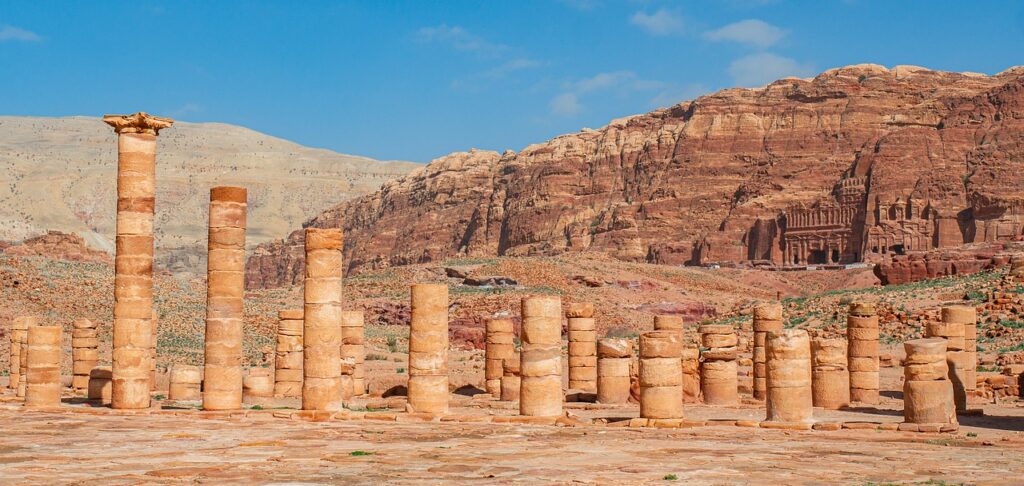
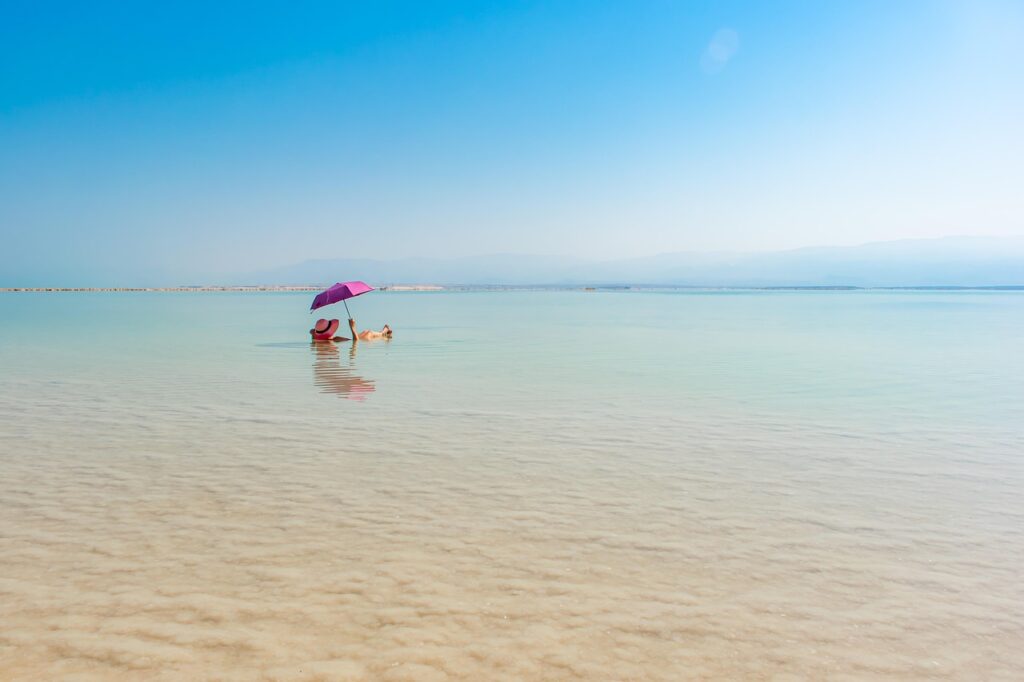
A country so layered with civilization that the ground beneath your feet contains the Roman, Byzantine, Islamic, Crusader, and Ottoman empires stacked on top of each other like geological strata, each one leaving something worth stopping for. Petra arrives the way all genuinely great things arrive — gradually and then completely. The Siq narrows to two meters wide, its sandstone walls rising ninety meters on both sides, and then opens without warning onto the Treasury’s facade carved directly into the cliff face by Nabataean hands two thousand years ago. Wadi Rum is a landscape of such deliberate drama that David Lean used it as the backdrop for Lawrence of Arabia and the Martian films used it as another planet because it already looked like one — red desert floors, massive sandstone inselbergs, and a silence that arrives like a physical presence after sunset. The Dead Sea is 430 meters below sea level, the lowest point on earth’s surface, its salt concentration so high that floating requires no effort and sinking is geometrically impossible. Amman operates as a genuinely modern Arab capital — seven hills of limestone buildings, a Roman theatre still standing in the downtown, and a cafe culture that runs on Arabic coffee and conversation until midnight. Jordan has been absorbing travelers since the Silk Road made it mandatory and has not lost the habit of welcome.
Evoke — Why You Visit Jordan
You come to Jordan because you’ve been reading about the ancient world your whole life and you need to stand inside it rather than beside a photograph of it. You’ve seen the Treasury on screensavers and magazine covers and the opening sequence of Indiana Jones and you know intellectually that it exists — but knowing and standing are different categories of experience and you’ve confused them long enough. There is something specific that happens in the Siq as the walls close around you and the light changes and the path curves and then straightens and you see the first carved column through the gap — a physical response that no amount of prior knowledge can prevent because it bypasses the cognitive and arrives directly in the body. You need that. You’ve been living too much in your head, processing the world through descriptions of itself rather than the thing itself. Jordan is the thing itself. Come and stand in it.
Explore — How You Experience Jordan
Enter Petra through the Siq at 6am before the tour groups arrive, when the canyon light is still moving down the walls and you have the path to yourself and the Treasury reveals itself in a silence it doesn’t get at noon — stand there long enough to stop photographing and start absorbing, because the photographs never work and you know this already. Walk beyond the Treasury deeper into the city — most visitors turn back — to the Street of Facades, the Roman Colonnaded Street, the Great Temple, and finally up eight hundred rock-cut steps to the Monastery, larger than the Treasury and attended by fewer people and views across the Wadi Arabah that extend into Saudi Arabia on a clear morning. Spend a night in Wadi Rum’s desert with a Bedouin camp — dinner around a fire, tea poured from a height to cool it, conversation that moves at the pace the desert sets — and wake at 4am for stars so dense and low they feel structural rather than decorative. Float in the Dead Sea at dawn when the water is the color of hammered pewter and the Judean Hills are visible across the border and your body rests on the surface without effort, which is the physical sensation of being held by something ancient and indifferent and entirely reliable. Eat mansaf — Jordan’s national dish, lamb cooked in fermented dried yogurt sauce served over rice with pine nuts — at a family restaurant in Madaba where the recipe is a form of cultural autobiography and the meal is served to everyone at the table simultaneously.
Evolve — Who You Become in Jordan
You leave Jordan with a permanently recalibrated relationship with human achievement. Standing inside Petra — not looking at it from outside but walking its streets, understanding its hydraulic engineering, tracing its trade routes across the desert — produces a specific cognitive shift: the ancient world stops being ancient and becomes what it actually was, which is a present moment that people lived in completely, without awareness of being historical. The Nabataeans carved their city from sandstone because sandstone was what the canyon offered, and they turned constraint into one of the most extraordinary built environments in human history. You bring that thinking home. You stop waiting for better materials. The Jordanian concept of diyafa — the same profound hospitality you encountered in Saudi Arabia, here operating in a different register, warmer and less formal — stays with you in the specific memory of tea poured by a Bedouin guide in the desert, the gesture unhurried, the attention complete, as if your comfort in that moment was the only thing that mattered. You start giving people that quality of attention. It costs nothing and changes everything.
Your practical guide to Jordan starts bellow 👇
🕰️ Jordan Historical Backdrop
Jordan’s history is a sprawling narrative of civilizations that have crossed this land since the dawn of humanity. From the mysterious Nabataeans who carved a kingdom out of sandstone to the Roman Legions who built the Decapolis, and from the early Christian pilgrims to the Islamic dynasties that followed, Jordan has always been a sanctuary and a bridge. Its story is told in the perfectly preserved theaters of Jerash, the desert castles of the Umayyads, and the silent, monumental tombs of Petra. This is a land that has mastered the art of survival and hospitality, standing as a peaceful gateway to the Middle East where the echoes of prophets and explorers remain etched into the rugged, sun-drenched terrain.
🌟 Jordan Local Experiences
Beyond the world-famous ruins, discover Jordan’s soul in the aromatic steam of a cup of sage-scented tea shared in a Bedouin tent, the weightless sensation of floating in the hyper-saline Dead Sea, or the lively chaos of downtown Amman’s vegetable markets. Experience the profound stillness of a night under the stars in Wadi Rum, the sensory delight of tasting freshly made Mansaf (the national dish), or the meditative walk through the olive groves of the north. These moments reveal a nation that finds strength in tradition and a genuine warmth in every “Ahlan wa Sahlan” (Welcome) offered to a stranger.
🌄 Jordan Natural Wonders
- The Dead Sea: The lowest point on Earth, famous for its buoyant, mineral-rich waters and therapeutic mud.
- Wadi Rum: The “Valley of the Moon,” a vast, Martian-like desert landscape of towering rock formations and red sand dunes.
- Dana Biosphere Reserve: A rugged landscape of mountains and wadis, home to a startling variety of plants and wildlife.
- Mujib Biosphere Reserve: The lowest nature reserve in the world, offering spectacular canyoning experiences through a deep gorge.
- The Gulf of Aqaba: The northern tip of the Red Sea, home to vibrant coral reefs and world-class diving.
🏙️ Jordan Must-See Cities & Towns
- Amman: (Capital) A vibrant city of contrast, where ancient Roman ruins like the Citadel look down upon a modern, bustling metropolis known for its food and arts scene. (Historic, Urban, Gateway)
- Petra: One of the New Seven Wonders of the World, a vast archaeological park carved into rose-colored stone. (Ancient, Iconic, Majestic)
- Aqaba: Jordan’s only coastal city, a relaxed hub for water sports and exploring the Red Sea’s biodiversity. (Coastal, Relaxed, Sunny)
- Madaba: The “City of Mosaics,” famous for its 6th-century mosaic map of the Holy Land. (Artistic, Historic, Spiritual)
- Jerash: One of the largest and best-preserved Roman provincial cities in the world. (Classical, Grand, Archaeological)
🏞️ Jordan National Parks & Nature Reserves
Managed by the Royal Society for the Conservation of Nature (RSCN).
- Dana Biosphere Reserve: Offering incredible hiking and traditional village stays.
- Ajloun Forest Reserve: A Mediterranean landscape of evergreen oaks and wild strawberries.
- Azraq Wetland Reserve: A unique oasis in the eastern desert, vital for migratory birds.
🏛️ UNESCO World Heritage Sites
- Petra — The Nabataean caravan-city.
- Wadi Rum Protected Area — A natural and cultural property of immense desert beauty.
- Quseir Amra — An exceptionally preserved 8th-century Umayyad desert castle.
- Um er-Rasas — Famous for its Roman, Byzantine, and early Muslim remains.
- Baptism Site “Bethany Beyond the Jordan” (Al-Maghtas) — Regarded as the location of Jesus’ baptism.
- For a full list, visit the UNESCO Jordan Portal.
🖼️ Jordan Museums & Galleries
- The Jordan Museum (Amman): Houses the country’s most important archaeological finds, including the Dead Sea Scrolls.
- The Royal Automobile Museum (Amman): A unique collection of cars that tells the history of the Hashemite Kingdom.
- National Gallery of Fine Arts: Showcases contemporary art from the Arab world and beyond.
🎉 Jordan Festivals & Celebrations
- Jerash Festival of Culture and Arts: (July) A massive event featuring dance, music, and theater in the ancient Roman city.
- Independence Day: (May 25) Celebrated with parades and fireworks across the nation.
- Eid al-Fitr & Eid al-Adha: (Dates vary) The most important religious holidays, marked by family feasts and a spirit of generosity.
🧽 How to Arrive
- ✈️ By Air
- Queen Alia International (AMM) in Amman is the primary global gateway.
- Airlines: Royal Jordanian (Flag carrier) and major international airlines connect Jordan to Europe, the Americas, and Asia.
- 🚗 By Road
- Jordan shares borders with Saudi Arabia, Israel and the Palestinian Territories, Iraq, and Syria. The King Hussein (Allenby) Bridge is a common crossing for those arriving from the west.
- 🚢 By Sea
- A ferry connects Aqaba to Nuweiba in Egypt, providing a sea link across the Red Sea.
📶 Stay Connected
- SIM Cards: Major providers are Zain, Orange, and Umniah.
- Where to buy: Kiosks are located at the airport and in all major shopping areas. Passport registration is required.
- eSIM: Supported by Zain and Orange; available via apps like Airalo for instant data upon landing.
🏨 Where to Stay
Jordan offers a diverse range of hospitality, from international five-star resorts to remote eco-lodges.
- Feynan Ecolodge: An award-winning, solar-powered lodge in the Dana Reserve.
- Desert Glamping: Luxury “Martian Domes” in Wadi Rum for a high-end desert experience.
- Mövenpick Resort & Spa Dead Sea: A village-style resort built from traditional stone overlooking the Dead Sea.
⛳ Unique Finds
- The Jordan Trail: A 650km hiking route spanning the length of the country.
- Petra by Night: Experience the Treasury lit by 1,500 candles for a mystical evening of music and storytelling.
- Cooking at Beit Sitti: A culinary experience in Amman where you learn to cook traditional meals in a family home setting.
🤝 Jordan Cultural Guidance
- Hospitality: If someone says “Welcome to Jordan,” they truly mean it. It is polite to accept an offer of coffee or tea.
- Dress Code: While modern, Jordan is conservative. Both men and women are advised to dress modestly, covering shoulders and knees, especially in rural areas and holy sites.
- Tipping: 10% is common in restaurants. In taxis, it is customary to round up to the nearest whole number.
- Basic Phrases:
- Hello: “Marhaba”
- Thank you: “Shukran”
- Please: “Min fadlak” (to a man) / “Min fadlik” (to a woman)
🛂 Jordan Entry & Visa Requirements
- The Jordan Pass: Highly recommended for tourists. It covers the cost of the entry visa and entry to over 40 attractions, including Petra. Purchase online at JordanPass.jo before arrival.
- Visa on Arrival: Available for many nationalities at the airport for a fee of 40 JOD.
- Official Source: Consult the Ministry of Interior for the latest regulations.
💰 Practical Essentials
- Currency: Jordanian Dinar (JOD). It is pegged to the USD (1 JOD ≈ 1.41 USD).
- Electricity: Type C, D, F, G, and J are all found, but G (UK style) and C (European style) are the most common. Voltage is 230V.
- Safety: Jordan is considered one of the safest and most stable countries in the region for international travelers.
- Climate: Best visited in spring (March-May) or autumn (September-November) to avoid the intense summer heat and cold winter nights.
✨ Bonus Tip
To truly embrace Jordan, don’t just “see” Petra—walk it. Take the high-altar trails or the back-door route from Little Petra. It is in the physical effort of the climb and the sudden, silent views of the valley below that you will feel the true scale of the Nabataean ambition. The desert teaches patience; allow yourself to sit in silence in Wadi Rum as the stars appear—it is in this stillness that the most profound transformation occurs.
🔗 Featured Links
- Official Tourism: Visit Jordan.
- Visa & Attraction Bundle: Jordan Pass.

Beyondia
Trusted Travel CompanionReal digital nomad. I travel. I learn. I grow.
What about you? Where are you going?