Around the World with Beyondia 🧵 Mediterranean Region 🪡 Journal 3
Šibenik. Vis. Dubrovnik. Three places that prove the Adriatic doesn’t repeat itself — it escalates.
Šibenik
I arrived in Šibenik expecting another coastal town. I was wrong within thirty seconds. The Cathedral of St. James stood in front of me built entirely from stone — no brick, no wood, no supporting material of any kind. Juraj Dalmatinac started it in 1431 and assembled it using interlocking stone slabs and ribs, a technique closer to sculpture than construction. UNESCO gave it World Heritage status not for age or beauty, but for the method. The building is its own engineering argument. I walked around the exterior and found seventy-one stone faces carved into the walls — portraits of ordinary citizens from the 15th century, each one different, none idealised. Šibenik put its people on its cathedral the way other cities put saints. That tells you everything about this place.

The old town climbs steeply behind the waterfront, medieval streets too narrow for anything but footsteps and conversation. I got lost twice and both times ended up somewhere better than where I was heading. Šibenik doesn’t organise itself for visitors. You negotiate with it.
Vis
Vis required a ferry and a decision. The island sits further offshore than any other inhabited Croatian island — two hours from Split, and every nautical mile adds another layer of quiet. Vis was a closed military base until 1989. No tourists for nearly fifty years. What that created is something money can’t manufacture — a place that simply continued being itself while the rest of the coast learned how to pose.
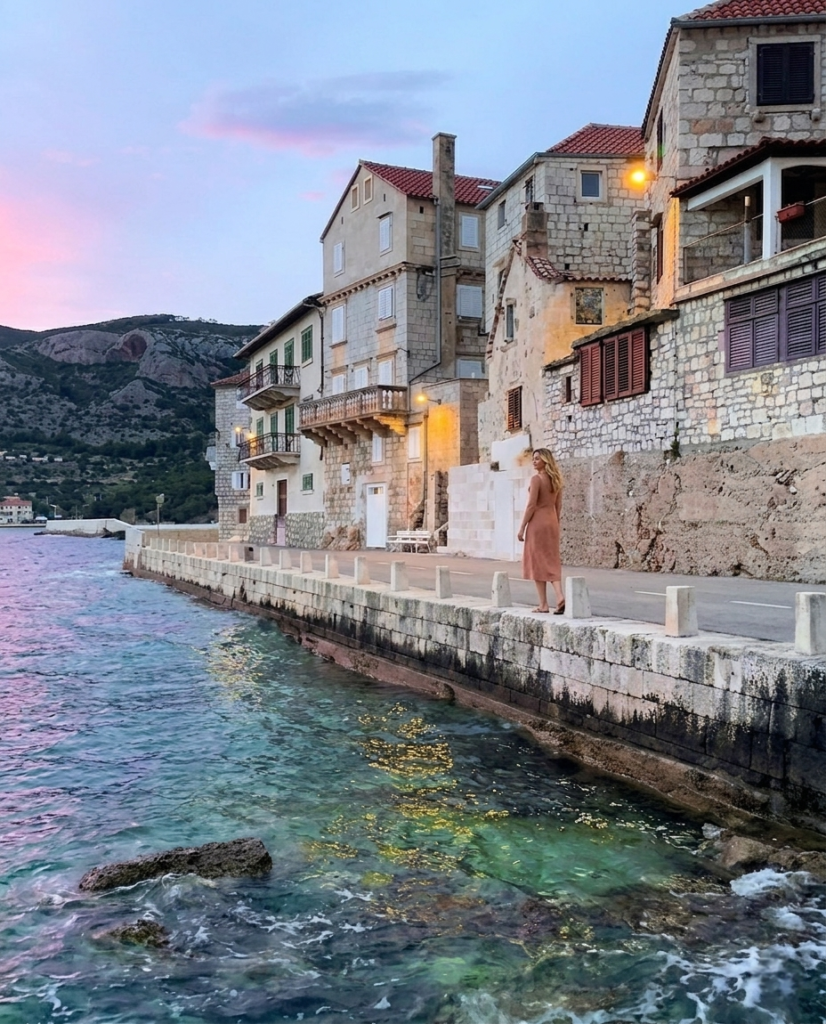
I walked into the town of Komiža on the western side and found fishing boats pulled up onto the shore, nets drying in the sun, and a pace of life that treats urgency as a foreign concept. The architecture is Venetian, the light is Greek, the wine is indigenous — Vugava, a grape that grows almost nowhere else on earth. I drank a glass at a konoba where the owner caught the fish on the menu that morning and didn’t mention it because on Vis that’s not a selling point, that’s just Tuesday.
The Blue Cave on the island of Biševo nearby is something I almost didn’t visit because it sounded like a tourist gimmick. I was completely wrong. At midday, sunlight enters through an underwater opening and refracts upward, turning the entire cave into liquid silver-blue light. The physics are simple. The effect is not. I floated in silence inside a cave that has been doing this exact thing every clear day for thousands of years, indifferent to whether anyone shows up to witness it.
Dubrovnik
Then Dubrovnik. And Dubrovnik is a closing argument.
The walls came first — I walked all 1,940 metres of them, the full circuit above the city, the Adriatic on one side and terracotta rooftops packed tight on the other. These walls held off the Ottomans, survived the 1667 earthquake that levelled most of the city, and took direct hits during the 1991 siege. They are still standing. Not preserved. Standing. There’s a difference.
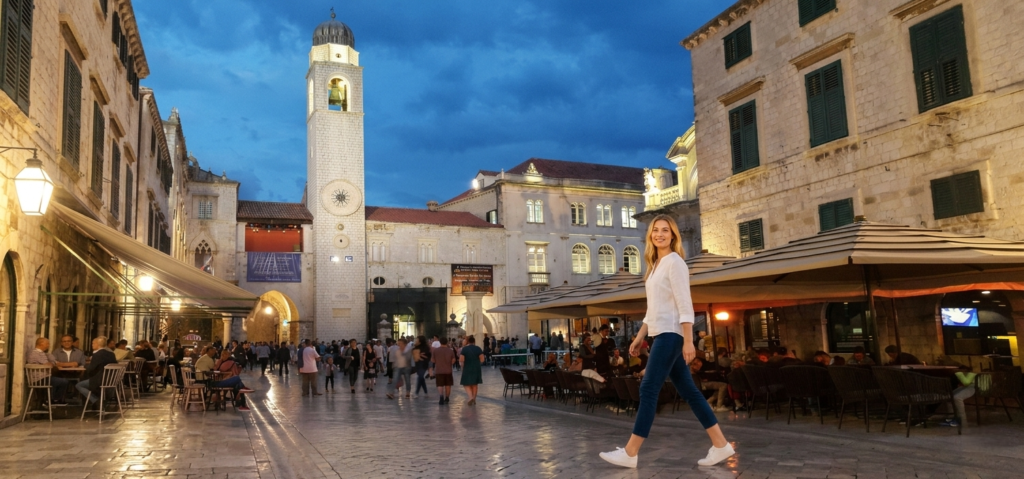
I walked the Stradun — the limestone main street polished to a mirror by centuries of footsteps — and sat at the base of Orlando’s Column where the Republic of Ragusa once measured its own trade standard, the Ragusan cubit, carved into the stone. This was a city-state that maintained independence for over four centuries through diplomacy so skilled it played Venice and the Ottomans against each other without ever firing a shot. Dubrovnik didn’t survive on strength. It survived on intelligence.
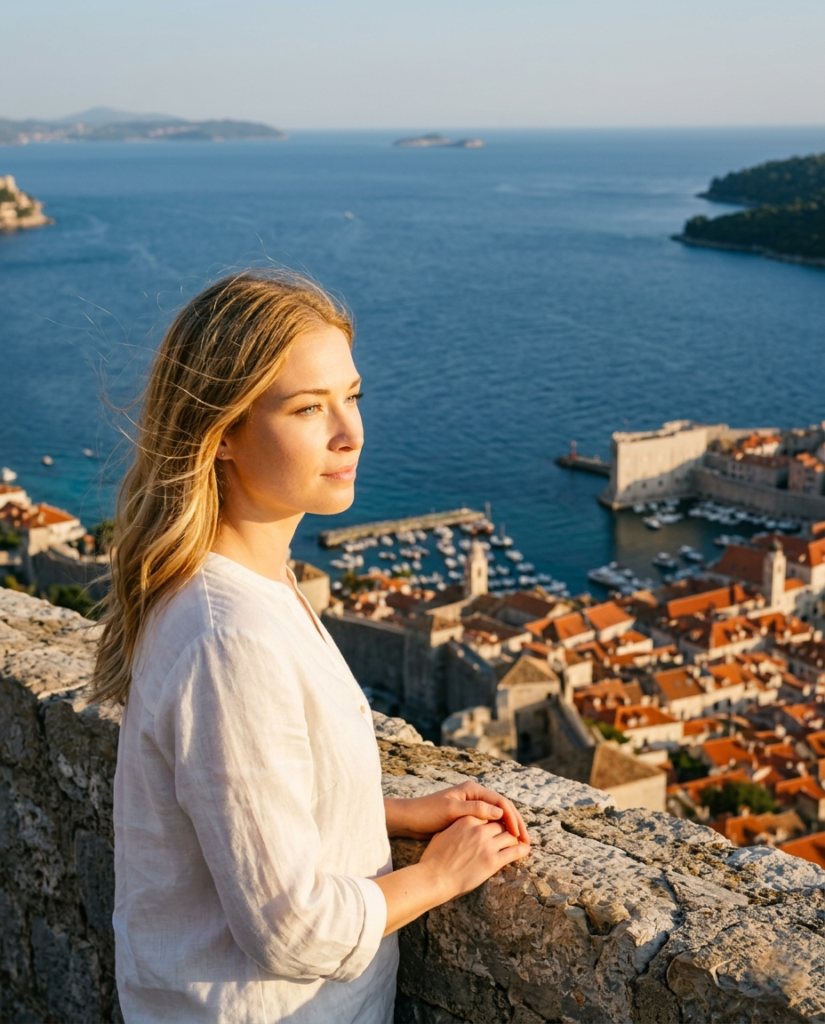
From the walls at sunset, I watched the light do what it does to the Adriatic — turn it gold, then copper, then something darker that has no name. I thought about the past four weeks. Rome taught me what power builds. Florence taught me what patience builds. Venice taught me what stubbornness builds. And Croatia — all of it, from the Učka summit to this wall — taught me what happens when people simply refuse to let the world forget they exist.
Four weeks. Seven cities. One coastline that the Romans knew but the world somehow overlooked for centuries.
I’m not overlooking it again.
Next week — Greece. Where civilisation didn’t just begin. Where it learned to ask why.

Beyondia
Trusted Travel CompanionReal digital nomad. I travel. I learn. I grow.
What about you? Where are you going?