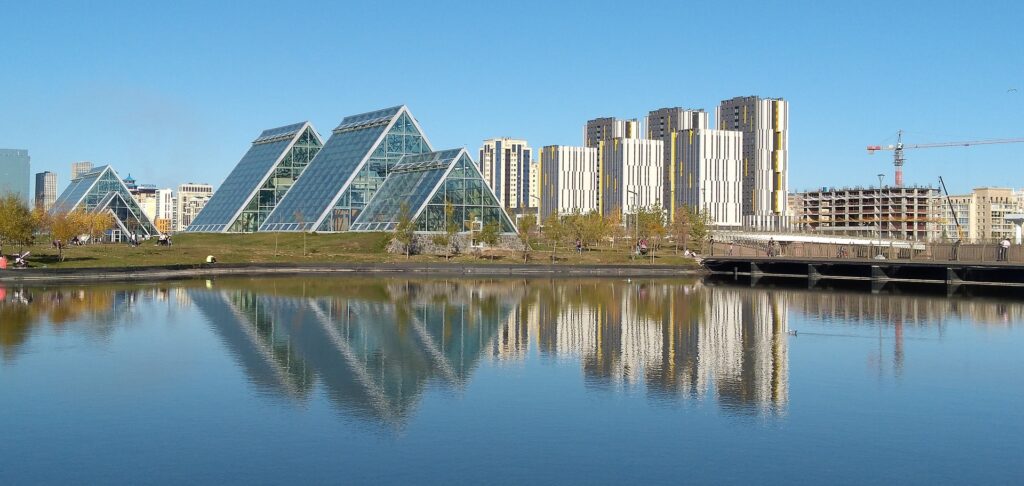
Kazakhstan: Where every apple on earth traces its DNA to wild forests in the Tian Shan mountains that eighty percent of the world has never heard of, the first human being left the planet from a launchpad in the Kazakh steppe that still belongs to someone else, a botanist discovered the origin of the fruit that feeds the world and then starved to death in prison, and the fourth-largest lake on earth was drained for cotton — because Kazakhstan is where things begin and the world never looks back.
Kazakhstan in 30 Seconds
The ninth-largest country on earth and one of the least densely populated — a landmass the size of Western Europe with eighteen million people scattered across steppe, desert, and mountain ranges that touch China. In the foothills of the Tian Shan near Almaty, wild apple trees grow in dense forests that are genetically identical to the fruit in every supermarket on the planet. DNA analysis confirmed in 2010 what Soviet botanist Nikolai Vavilov discovered in 1929: every domesticated apple descends from Malus sieversii, a species native to Kazakhstan. Almaty means Father of Apples. In the southern steppe, Baikonur Cosmodrome — the world’s oldest and largest space launch facility — sent Sputnik into orbit in 1957 and Yuri Gagarin into space in 1961. The Soviets deliberately misnamed the site after a town two hundred miles away to hide its location. Today Russia leases the facility from Kazakhstan for one hundred and fifteen million dollars a year. And in the west, the Aral Sea — once the world’s fourth-largest lake — shrank to ten percent of its original size after Soviet irrigation projects drained its source rivers to grow cotton. Kazakhstan built the Kokaral Dam in 2005 to save the northern portion, and the water is returning.
Evoke — Why You Visit Kazakhstan
You come to Kazakhstan because you have built something that was used by others and forgotten — the infrastructure that made someone else’s success possible — and you need a country that has done this at civilizational scale without apology. Every apple in every orchard on every continent started here, carried out by birds and bears along the Silk Road before humans ever cultivated them, and nobody thinks of Kazakhstan when they bite into a Granny Smith. The most important moment in the history of human spaceflight — Gagarin’s one hundred and eight minutes orbiting the earth, the event that forced Kennedy to declare a moon landing, the achievement that divided human history into before and after — launched from Kazakh soil, and the world calls it Russian space history. The botanist who proved that all apples originate from the forests outside Almaty, Nikolai Vavilov, was arrested by Stalin’s secret police, sentenced to death, and starved in prison in 1943 — the man who dedicated his life to ending famine, killed by famine, while his colleagues at the Leningrad seed bank he built starved to death protecting the very seeds they could have eaten rather than let the collection be lost. You come because you have been the origin of something that was credited elsewhere, and you have been wondering whether the origin matters if nobody remembers it. Kazakhstan will show you that origins are the only thing that survives.
Explore — How You Experience Kazakhstan
Hike into the wild apple forests of the Tian Shan, south of Almaty, where trees grow fifty feet tall and three hundred years old in dense groves that look nothing like cultivated orchards — apples ranging from deep crimson to pale gold hanging from branches that have never been pruned, the genetic source code for a fifty-billion-dollar global industry growing exactly as it has for millennia. Walk through Almaty itself, the former capital at the foot of snow-covered mountains, where a granite apple fountain anchors the city center and vendors at the Green Bazaar sell varieties that taste like the originals Vavilov found nearly a century ago. Travel south to Baikonur and stand at Gagarin’s Start — the launchpad where five hundred missions left earth — now being converted into a museum because the funding to modernize it never came. The cottage where Gagarin slept the night before his flight is still preserved, the bed still made. Visit the Aral Sea region and witness what happens when an empire drains a body of water the size of Ireland for short-term profit — rusted fishing boats stranded in desert that was seabed within living memory, the port city of Aralsk now twenty-five kilometers from water that once lapped at its docks. Then see the Kokaral Dam, where Kazakhstan decided that even a partial restoration was worth building — the water level rising, fish returning, rain clouds forming over shores that had been dust for decades.
Evolve — Who You Become in Kazakhstan
You leave Kazakhstan understanding that the origin survives even when the world forgets to look. The apple forests are still growing. The launchpad is still standing. The water is coming back. Vavilov’s seed collection — the one his colleagues died protecting — is still housed in the institute that now bears his name, still providing genetic material for crop research eighty years after his death. You come home and look at the work you did that someone else presented, the foundation you laid that someone else built on, the idea you had that someone else scaled — and you stop measuring your contribution by who received credit. Almaty means Father of Apples, and the city does not need the world to know this for it to be true. Gagarin’s Start is being turned into a museum, and the steppe does not need the rockets to keep launching for the ground to remain sacred. The Aral Sea was drained by an empire that no longer exists, and Kazakhstan is filling it back up anyway — not to full, not to what it was, but enough. The origin is never the part that gets celebrated. It is always the part that remains.
Your practical guide to Kazakhstan starts bellow 👇
🕰️ Kazakhstan Historical Backdrop
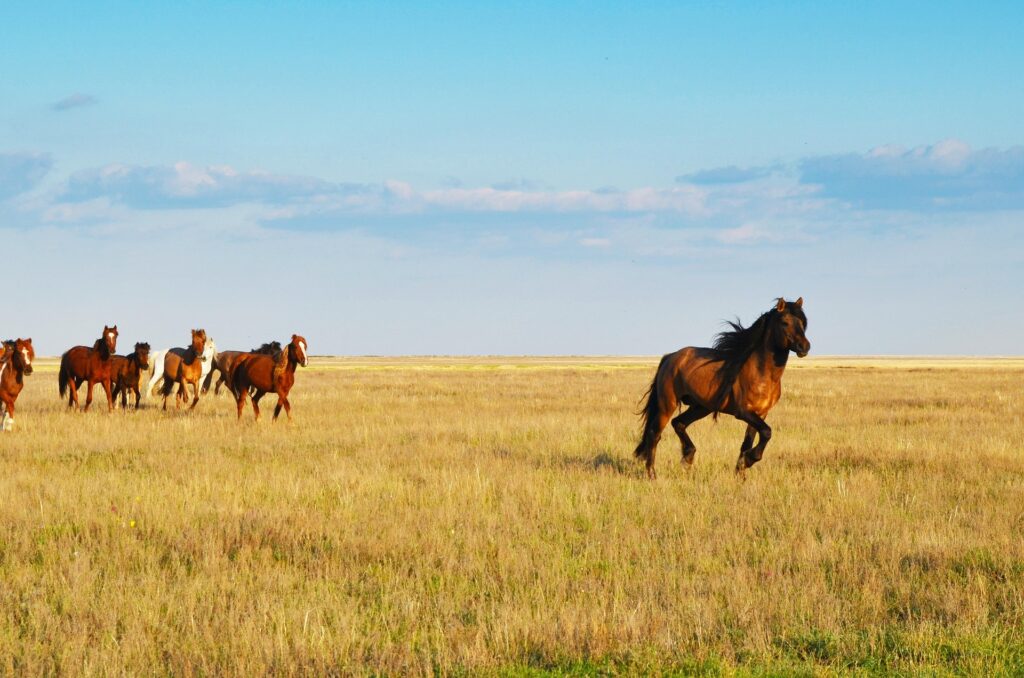
Kazakhstan’s history is a “Strategic Pivot” between the sedentary empires of the south and the nomadic heartlands of the north. For millennia, the Kazakh steppe was the ultimate “Logistics Corridor” for the Silk Road, mastered by nomadic tribes who lived in harmony with the vastness. Its story is told in the petroglyphs of Tamgaly, the blue-tiled mausoleums of Turkistan, and the 20th-century transition from a Soviet space-race hub (Baikonur) to a modern energy powerhouse. Kazakhstan functions as a “Geopolitical Bridge”; it is a nation that has successfully audited its nomadic heritage to fund a high-tech, futuristic vision. It is a land where the “Yurt” (a masterpiece of portable architecture) remains a symbol of resilience in a country that is now reaching for the stars.
🌟 Kazakhstan Local Experiences
Beyond the monumental architecture, discover Kazakhstan’s soul in the ritual of the “Dastarkhan”—a feast where hospitality is a sacred duty and the table is a “High-Margin” display of communal wealth. Experience the profound “Acoustic Stillness” of the Singing Dunes in Altyn-Emel, the exhilarating “Vertical Shift” of a cable car ride to Shymbulak, or the simple joy of tasting Baursak (puffy fried bread) in a mountain village. Whether it’s witnessing a traditional falconry demonstration or exploring the “Ship Graveyard” of the receding Aral Sea, these moments reveal a nation that finds its greatest strength in the scale of its geography and the warmth of its welcome.
🌄 Kazakhstan Natural Wonders
- Charyn Canyon: Known as the “Little Brother of the Grand Canyon,” featuring spectacular red sedimentary rock formations and the “Valley of Castles.”
- Big Almaty Lake: A high-altitude turquoise reservoir reflecting the surrounding peaks of the Trans-Ili Alatau.
- Kolsai & Kaindy Lakes: Stunning mountain lakes; Kaindy is famous for its “sunken forest,” where spruce trees emerge from the water like masts of ghost ships.
- Altyn-Emel National Park: Home to the “Singing Dunes,” which produce a low-frequency hum like an airplane engine when the wind moves the sand.
- The Altai Mountains: A remote, high-altitude wilderness on the border with Russia and Mongolia, the legendary birthplace of the Turkic peoples.
- The Steppe: The defining landscape of the nation—a vast, golden sea of grass that represents the spirit of freedom.
🏙️ Kazakhstan Must-See Cities & Regions
- Almaty: The cultural and soul-capital, a leafy, European-style city nestled at the foot of the mountains. (Green, Sophisticated, Vibrant)
- Astana (Nur-Sultan): The futuristic “planned capital,” a laboratory of avant-garde architecture designed by global masters like Norman Foster. (Futuristic, Monumental, Ambitious)
- Turkistan: The spiritual heart of the country, home to the UNESCO-listed Mausoleum of Khoja Ahmed Yasawi. (Sacred, Ancient, Historic)
- Shymkent: The third-largest city and the gate to the traditional south, known for its mild climate and vibrant bazaars. (Traditional, Culinary, Warm)
- Aktau: A coastal city on the Caspian Sea, the gateway to the otherworldly desert landscapes of the Mangystau region. (Coastal, Desert-chic, Remote)
🏞️ Kazakhstan National Parks & Nature Reserves
Managed with an emphasis on preserving the “Primary Assets” of the Central Asian ecosystem.
- Ile-Alatau National Park: Directly bordering Almaty, offering Alpine hiking and the famous Shymbulak ski resort.
- Burabay (Borovoe) National Park: Often called the “Switzerland of Kazakhstan,” featuring unique rock formations and pine-fringed lakes.
- Korgalzhyn Nature Reserve: A UNESCO-listed wetland sanctuary for the world’s northernmost colony of greater flamingos.
🏛️ UNESCO World Heritage Sites
- Mausoleum of Khoja Ahmed Yasawi — A masterpiece of Timurid architecture and a prototype for the Registan in Samarkand.
- Petroglyphs within the Archaeological Landscape of Tamgaly — Over 5,000 prehistoric rock carvings detailing life in the Bronze Age.
- Saryarka – Steppe and Lakes of Northern Kazakhstan — Protecting the crucial habitats of migratory birds and the endangered Saiga antelope.
- For more information, visit the UNESCO Kazakhstan Portal.
🖼️ Kazakhstan Museums & Cultural Sites
- National Museum of the Republic of Kazakhstan (Astana): Home to the “Golden Man”—a 4th-century Scythian warrior clad in thousands of gold pieces.
- Baikonur Cosmodrome: The world’s first and largest space launch facility; tours must be booked months in advance via specialized operators.
- ALZHIR Memorial (near Astana): A moving memorial to the wives of “enemies of the people” during the Soviet era.
🎉 Kazakhstan Festivals & Celebrations
- Nauryz: (March 21-23) The most significant holiday, celebrating the spring equinox with traditional games, music, and the making of Nauryz-kozhe.
- Astana Day: (July 6) A massive celebration of the capital’s foundation with concerts, fireworks, and festivals.
- Spirit of Tengri: (Spring/Summer) A major contemporary world music festival in Almaty celebrating nomadic sounds and heritage.
🧽 How to Arrive
- ✈️ By Air
- Almaty International (ALA) and Nursultan Nazarbayev International (NQZ) in Astana are the primary hubs.
- Direct from Doha: Air Astana operates direct flights from Doha to Almaty, making this a “Low-Friction” transit for Qatar residents.
- Airlines: Air Astana, Qatar Airways, Turkish Airlines, and FlyArystan (Low-cost).
- 🚆 By Rail
- Kazakhstan has an extensive rail network. The Talgo high-speed trains connect the main cities comfortably.
- 🚗 By Road
- Kazakhstan shares borders with Russia, China, Kyrgyzstan, Uzbekistan, and Turkmenistan. Crossing from Kyrgyzstan (Bishkek to Almaty) is a common tourist route. Driving is on the right.
📶 Stay Connected
- SIM Cards: Major providers are Kcell/Activ, Beeline, and Tele2.
- Where to buy: Kiosks are abundant at airports and in malls (MEGA/Dostyk Plaza). Registration with a passport and phone IMEI is mandatory.
- eSIM: Supported by all major providers and available via global platforms like Airalo.
- Connectivity: High-speed Wi-Fi is standard in cities, but expect “off-grid” status in the deep Steppe and Altai regions.
🏨 Where to Stay
Kazakhstan offers a “Diversified Portfolio” ranging from five-star skyscrapers to mountain lodges and ethnic yurts.
- The Ritz-Carlton, Almaty: Situated in the Esentai Tower, offering Tier 1 views of the mountains.
- The St. Regis Astana: The pinnacle of luxury in the capital, located along the Ishim River.
- Halyk Saltanat: Experience a high-margin “Glamping” stay in a traditional yurt equipped with modern comforts.
⛳ Unique Finds
- The Golden Man: Visit the National Museum to see the craftsmanship of the early nomads.
- Shymbulak Ski Resort: Ski on world-class runs just 30 minutes from Almaty city center.
- Arbat Walking Street: In Almaty, the best place for local street art, music, and café culture.
- Apples of Almaty: Almaty is the genetic birthplace of the domestic apple (Malus sieversii); be sure to taste a local “Aport” apple.
🤝 Kazakhstan Cultural Guidance
- Respect for Elders: Always offer the best seat and the first portion of food to the oldest person in the group.
- The “Nomadic Welcome”: If you are invited to a home, it is customary to finish everything on your plate, or the host may think you are still hungry.
- Modesty: While Almaty and Astana are very liberal, dress modestly when visiting the holy sites in the south (Turkistan).
- Basic Phrases:
- Hello: “Salem” (Informal) / “Assalam-u-alaikum” (Traditional)
- Thank you: “Rakhmet”
- How are you?: “Kalaisyz?”
- Everything is good: “Bary jaksy!”
🛂 Kazakhstan Entry & Visa Requirements
- Visa-Free: Citizens of over 80 countries (including UK, US, Canada, EU, and Gulf nations) can enter visa-free for up to 30 days.
- E-Visa: Efficient digital process for many other nationalities.
- Official Source: Consult the Ministry of Foreign Affairs of Kazakhstan.
💰 Practical Essentials
- Currency: Kazakh Tenge (KZT). Kazakhstan is increasingly cashless; cards (Visa/Mastercard) are accepted almost everywhere in cities. Apple Pay/Google Pay are widely used.
- Electricity: Type C and F (European round pins). Voltage is 220V.
- Safety: Very safe for travelers with low crime rates. Use official taxi apps like Yandex Go.
- Climate: Continental. Best visited in Late Spring (May-June) or Early Autumn (September-October) to avoid the extreme heat of the steppe and the Siberian winters.
✨ Bonus Tip: The Horizon Recalibration
To truly embrace Kazakhstan, you must practice “Active Scale Observation.” Most travelers are overwhelmed by the size of the country. Instead of trying to “conquer” it, choose one region and let the scale settle you. Spend a day in the Steppe, where there is no visible boundary between earth and sky. It is in this “Limitless Audit” of space—where the nomadic horsemen found their freedom—that your own evolving sense of perspective and long-term roadmap will finally come into focus.
🔗 Featured Links
- Official Tourism: Kazakhstan.travel.
- Railway Tickets: Kazakhstan Temir Zholy (KTZ).

Beyondia
Trusted Travel CompanionReal digital nomad. I travel. I learn. I grow.
What about you? Where are you going?