GoBeyondia Atlas 🗺️ Mediterranean Region 🗾
Malta: Where Neolithic builders erected temples a thousand years before the Egyptians stacked their first stone, seven hundred knights held off forty thousand Ottoman soldiers for four months on an island you can drive across in an hour, a fugitive painter signed his only work in the blood of a saint, and the smallest country in the European Union keeps proving that scale is the most overrated metric in history.
Malta in 30 Seconds
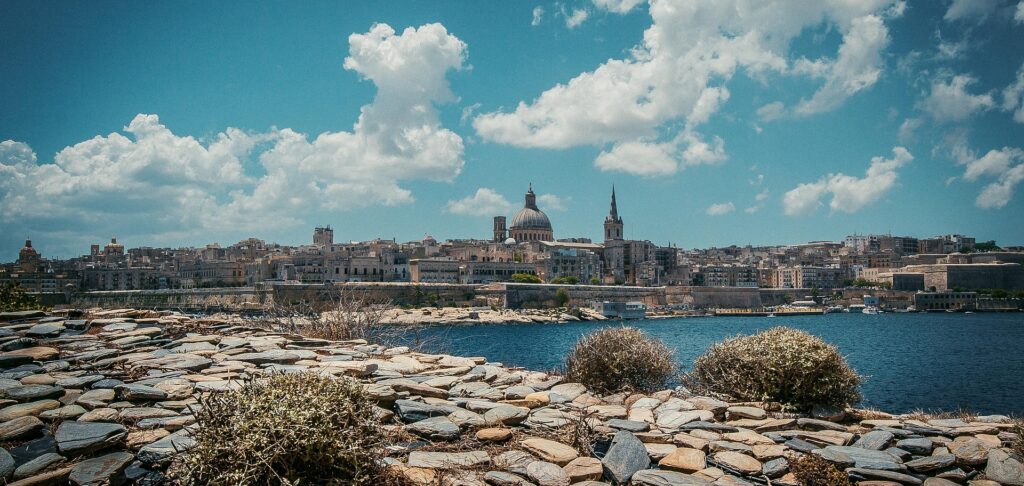
An archipelago of 316 square kilometers — roughly the size of a mid-range golf resort — containing some of the oldest freestanding structures on earth, a subterranean necropolis where seven thousand bodies were buried over fifteen centuries, a capital city designed on paper before a single stone was laid, and the only signed painting by the most dangerous artist in Western history. The Ġgantija temples on the island of Gozo were erected between 3600 and 3200 BC by a civilization that had neither metal tools nor the wheel, making them over a thousand years older than the Great Pyramids and five hundred years older than Stonehenge — and the locals explained their existence by crediting a giantess who carried her baby on one shoulder while lifting megaliths with the other. Beneath the suburb of Paola, the Ħal Saflieni Hypogeum descends three levels into the limestone — a subterranean temple and necropolis carved with antler and obsidian tools starting around 4000 BC, discovered by accident in 1902 when a construction worker broke through its roof, its Oracle Room engineered to resonate at 110 hertz, the same frequency that stimulates the emotional centers of the human brain. In 1565, the Ottoman Empire sent roughly forty thousand soldiers to take Malta from the Knights Hospitaller — and Grand Master Jean de Valette held the island with some seven hundred knights and eight thousand soldiers through four months of siege so brutal that both sides decapitated their enemy’s dead and fired the heads into opposing camps, until the Ottomans withdrew having lost approximately twenty-five thousand men and their reputation for invincibility. The following year, a grateful Christendom funded Valletta — designed on a perfect grid by military engineer Francesco Laparelli, the first European city planned entirely on paper since the Roman Empire, and called Superbissima because no one could believe that much ambition fit on that small a peninsula. Inside its St. John’s Co-Cathedral hangs Caravaggio’s The Beheading of Saint John the Baptist — his largest work and the only painting he ever signed, the signature written in the red blood spilling from the Baptist’s throat, painted in 1608 by an artist who had fled Rome on a murder charge, was briefly knighted by the Order, then imprisoned after another brawl, escaped, and was expelled in absentia before this very painting as a “foul and rotten member.”
Evoke — Why You Visit Malta
You come to Malta because you have been telling yourself a story about resources — that you need more of them before you can begin building something that matters — and Malta will destroy that story before you finish your first espresso. This is an island where a Neolithic civilization with no metal and no wheels erected temples that outlasted every structure built by every empire that followed them. Where seven hundred men in armor stopped the largest military force in the Mediterranean by refusing to retreat from walls that were already crumbling. Where a murderer on the run, painting in a borrowed studio with a borrowed knighthood and borrowed time, produced what scholars call one of the ten greatest paintings in Western art and signed it in the only medium available — a dead man’s blood. Every achievement in Maltese history is a lesson in disproportion. The island is too small for what happened on it, the builders were too primitive for what they built, the knights were too few for what they held, and Caravaggio was too broken for what he created. You come because somewhere you confused preparation with readiness, and Malta will show you that the people who changed history were never ready — they were just unwilling to wait until they were.
Explore — How You Experience Malta
Take the ferry to Gozo and stand inside the Ġgantija temples where limestone blocks weighing over fifty tons were raised by people who solved the engineering problem of moving them by inventing stone ball bearings — spherical stones found on-site that functioned as prehistoric rollers — then look at the five-apse floor plan and recognize that this is not primitive construction but sophisticated sacred architecture designed five and a half thousand years ago by a civilization that vanished so completely that even their name is lost. Descend into the Ħal Saflieni Hypogeum where only eighty people per day are permitted — book months in advance — and stand in the Oracle Room where a word spoken at the right pitch reverberates through the entire complex with a physical vibration in the chest, an acoustic property so precisely engineered that modern researchers cannot fully explain how Neolithic builders achieved it with hand tools in the dark. Walk the grid streets of Valletta where every intersection frames the harbor because Laparelli designed the city so sea breezes would ventilate every block, then enter St. John’s Co-Cathedral where the plain limestone facade opens into a nave of such concentrated Baroque magnificence that your peripheral vision cannot process it, the floor composed of four hundred marble tombstones of dead knights inlaid with colored stone, each one a work of art being walked upon. Stand before Caravaggio’s Beheading and find his signature in the blood — the “f” before his name indicating his status as a knight of the Order, a status that would be revoked in this very room six months later — and understand that you are looking at the work of a man who knew exactly what violence looked like because he had committed it. Cross the Grand Harbour to Birgu where the knights first settled and walk the narrow streets where the Order built arsenals and the Sacra Infermeria that could accommodate five hundred patients — then climb Fort Saint Angelo and look across the water at the positions the Ottomans held and comprehend the mathematics of defending that harbor with six hundred men still able to bear arms.
Evolve — Who You Become in Malta
You leave Malta with your understanding of scale permanently recalibrated. You had been measuring potential by inputs — by how much funding, how many people, how large a platform, how perfect a plan — and Malta demonstrated that the most consequential things in human history were built by people who had almost none of those advantages. The temple builders had no metal. The knights had no numbers. Caravaggio had no future. And each produced something that the entire world still travels to witness. The lesson is not that constraints don’t matter. The lesson is that constraints are the architecture, not the obstacle — that the Ġgantija temples are extraordinary precisely because they were built without metal tools, that the Great Siege matters precisely because the odds were impossible, that the Beheading is Caravaggio’s masterpiece precisely because he painted it while his life was collapsing. You come home and stop waiting for the resources to match the ambition. Malta proved they never will. You build anyway — on whatever rock you’ve been given, with whatever tools you have, in whatever time remains. The giantess carried the baby on one shoulder and lifted the megaliths with the other. She did not put the baby down first. Neither should you.
Your practical guide to Malta starts bellow 👇
🕰️ Malta Historical Backdrop
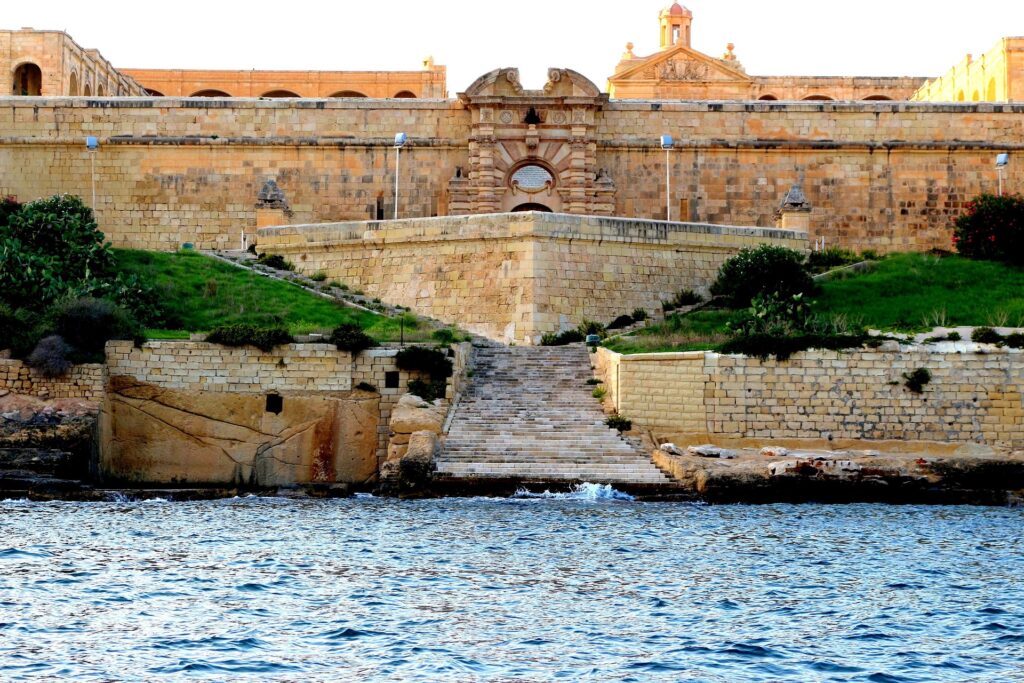
Malta’s history is a 7,000-year epic concentrated on a tiny, strategic archipelago. From the mysterious builders of the world’s oldest free-standing stone temples to the shipwreck of St. Paul and the arrival of the Sovereign Military Order of the Knights of St. John, Malta has always been the “Fortress of the Mediterranean.” Its story is told in the impenetrable bastions of Valletta, the subterranean mysteries of the Ħal Saflieni Hypogeum, and its heroic stand during the Siege of 1565 and the Second World War. Today, Malta is a vibrant European republic that has successfully transitioned from a British naval base to a high-tech cultural hub, all while preserving the baroque grandeur and traditional village life that makes the islands feel like a living film set.
🌟 Malta Local Experiences
Beyond the coastal resorts, discover Malta’s soul in the ritual of the Sunday morning fish market in Marsaxlokk, the intoxicating scent of orange blossoms in the San Anton Gardens, or the simple joy of eating a flaky Pastizzi on a sun-drenched church square. Experience the profound silence of Mdina after the day-trippers leave, the exhilarating chaos of a summer village festa with its brass bands and fireworks, or the meditative clarity of a boat trip through the limestone arches of the Blue Grotto. Whether it’s sharing a platter of local Gbejna (sheep’s cheese) or exploring the hidden sea caves of Gozo, these moments reveal a nation that finds strength in tradition and joy in its sun-soaked geography.
🌄 Malta Natural Wonders
- The Blue Lagoon (Comino): A world-famous inlet of crystal-clear cyan water, perfect for snorkeling between the uninhabited islands of Comino and Cominotto.
- The Blue Grotto: A complex of seven sea caves on the southern coast known for their brilliant phosphorescent reflections.
- Dingli Cliffs: The highest point of the islands, offering sheer drops into the sea and spectacular sunset views over the Mediterranean.
- Inland Sea (Gozo): A unique lagoon linked to the Mediterranean through a natural 80-meter tunnel in the limestone cliffs.
- Wied il-Għasri: A secluded, narrow sea canyon in Gozo that snakes its way between high cliffs to a tiny pebble beach.
🏙️ Malta Must-See Cities & Regions
- Valletta: (Capital) A UNESCO World Heritage city built by the Knights, described as “a city built by gentlemen for gentlemen.” (Baroque, Historic, Monumental)
- Mdina: The “Silent City,” a fortified medieval town of narrow winding streets and aristocratic palaces perched on a central plateau. (Medieval, Noble, Peaceful)
- The Three Cities (Vittoriosa, Senglea, Cospicua): The original home of the Knights, offering a more authentic, local look into Malta’s maritime history. (Maritime, Authentic, Historic)
- Victoria (Rabat, Gozo): The bustling heart of Malta’s sister island, dominated by the magnificent medieval Citadella. (Rural, Historic, Panoramic)
- Sliema & St. Julian’s: The modern, cosmopolitan face of Malta, known for waterfront promenades, high-end shopping, and vibrant nightlife. (Modern, Lively, Urban)
🏞️ Malta National Parks & Nature Reserves
Managed with a focus on bird conservation and habitat restoration by Heritage Malta and BirdLife Malta.
- Għadira Nature Reserve: Malta’s largest remaining salt marsh and a vital stopover for migratory birds.
- Majjistral Nature and History Park: A wild coastal landscape on the northwest coast featuring rare flora and archaeological remains.
- Il-Majjistral: A protected area of rocky garigue and coastal cliffs, perfect for trekking.
🏛️ UNESCO World Heritage Sites
- City of Valletta — One of the most concentrated historic areas in the world.
- Ħal Saflieni Hypogeum — A unique subterranean prehistoric burial site carved directly into the rock (Booking months in advance is essential).
- Megalithic Temples of Malta — Seven prehistoric temples including Ġgantija, Ħaġar Qim, and Mnajdra, some of which are older than the Pyramids.
- For a full list, visit the UNESCO Malta Portal.
🖼️ Malta Museums & Galleries
- National Museum of Archaeology (Valletta): Houses the iconic “Sleeping Lady” and “Venus of Malta.”
- MUŻA (National Community Art Museum): A green-powered museum exploring the link between art and the community.
- St. John’s Co-Cathedral: A baroque masterpiece housing Caravaggio’s only signed work, The Beheading of Saint John the Baptist.
- Lascaris War Rooms: The underground headquarters where the defense of Malta and the invasion of Sicily were planned in WWII.
🎉 Malta Festivals & Celebrations
- Malta Carnival: (February) A wild and colorful week of parades and grotesque masks, particularly famous in Valletta and Nadur (Gozo).
- Malta International Fireworks Festival: (April) A spectacular competition across the Grand Harbour celebrating the nation’s love of pyrotechnics.
- Isle of MTV: (July) One of Europe’s largest free open-air music festivals held at the Granaries in Floriana.
- Notte Bianca: (October) An all-night celebration of art and culture where Valletta’s palaces and museums stay open until dawn.
🧽 How to Arrive
- ✈️ By Air
- Malta International Airport (MLA) is the sole international gateway.
- Airlines: KM Malta Airlines (Flag carrier) and major carriers (Emirates, Turkish Airlines, Lufthansa, Ryanair) connect Malta to Europe, North Africa, and the Middle East.
- 🚢 By Sea
- Frequent high-speed catamarans connect Valletta to Pozzallo, Sicily (approx. 90 minutes).
- Valletta is a major Mediterranean cruise hub, with ships docking at the historic Valletta Waterfront.
- 🚗 By Road
- There is no rail network. Driving is on the left (British legacy). Car rental is recommended for Gozo, but the public bus system is comprehensive on the main island.
📶 Stay Connected
- SIM Cards: Major providers are Epic, GO, and Melita.
- Where to buy: Kiosks are available at the airport arrival hall and in every major town. Registration with a passport is required.
- eSIM: Supported by all major providers; highly recommended for instant data activation via international apps like Airalo.
🏨 Where to Stay
Malta offers a unique blend of “Palazzo” boutique hotels, modern coastal resorts, and traditional farmhouses.
- The Phoenicia Malta (Valletta): An iconic Art Deco hotel located just outside the city gates.
- Iniala Harbour House: Ultimate luxury overlooking the Grand Harbour.
- Ta’ Cenc & Spa (Gozo): A tranquil retreat integrated into the rocky landscape of Gozo.
- Palazzo Boutique Hotels: Explore the “Heritage Hotels” of Valletta and Mdina for stays in 400-year-old aristocratic homes.
⛳ Unique Finds
- Pastizzi Hunting: Visit Crystal Palace in Rabat for the islands’ most legendary flaky pea or cheese pastries.
- Luzzu Eye: Look for the “Eye of Osiris” painted on traditional fishing boats—an ancient Phoenician custom to ward off evil.
- The “Silent” Stroll: Walk through the backstreets of Mdina after 8:00 PM to experience the city exactly as it felt in the Middle Ages.
- Ftira Maltija: Taste the traditional sourdough flatbread, often stuffed with tuna, capers, and olives—a UNESCO-recognized heritage food.
🤝 Malta Cultural Guidance
- Hospitality: The Maltese are famously friendly but can be loud and expressive—don’t mistake passion for anger.
- Dress Code: Malta is a Catholic country. Dress modestly (cover shoulders and knees) when entering churches. Many provide shawls at the entrance.
- Tipping: 10% is customary in restaurants if a service charge isn’t included.
- Basic Phrases (Maltese – the only Semitic language written in Latin script):
- Hello: “Bonġu” (Bon-ju)
- Thank you: “Grazzi” (Grat-zi)
- Please: “Jekk jogħġbok” (Yek yoj-bok)
- Cheers: “Saħħa” (Sah-ha – also means “Health” and “Goodbye”)
🛂 Malta Entry & Visa Requirements
- Schengen Area: Malta is a full member of the Schengen Area. Citizens of the UK, US, Canada, Australia, and EU states do not require a visa for tourism stays up to 90 days.
- Official Source: Consult the Central Visa Unit – Malta for current regulations.
💰 Practical Essentials
- Currency: Euro (€). Cards are accepted everywhere, though small change is useful for village buses and local bakeries.
- Electricity: Type G (Three rectangular pins—same as the UK/Middle East). Voltage is 230V.
- Safety: Malta is consistently ranked as one of the safest countries in the world with a very low crime rate.
- Climate: Mediterranean. Best visited in Spring (April–June) for wildflowers or Autumn (September–October) for swimming in warm seas without the summer heat.
✨ Bonus Tip
To truly embrace Malta, you must understand the “Village Pulse.” Every town has its own identity centered around its parish church. Find a local band club (Każin) during the morning hours, order a small coffee, and watch the world go by. It is in these unhurried moments—away from the tourist trails of Valletta—that you will feel the deep, rhythmic heartbeat of an island that has weathered every storm of history with grace and a smile.
🔗 Featured Links
- Official Tourism: Visit Malta.
- Island Logistics: Malta Public Transport.

Beyondia
Trusted Travel CompanionReal digital nomad. I travel. I learn. I grow.
What about you? Where are you going?