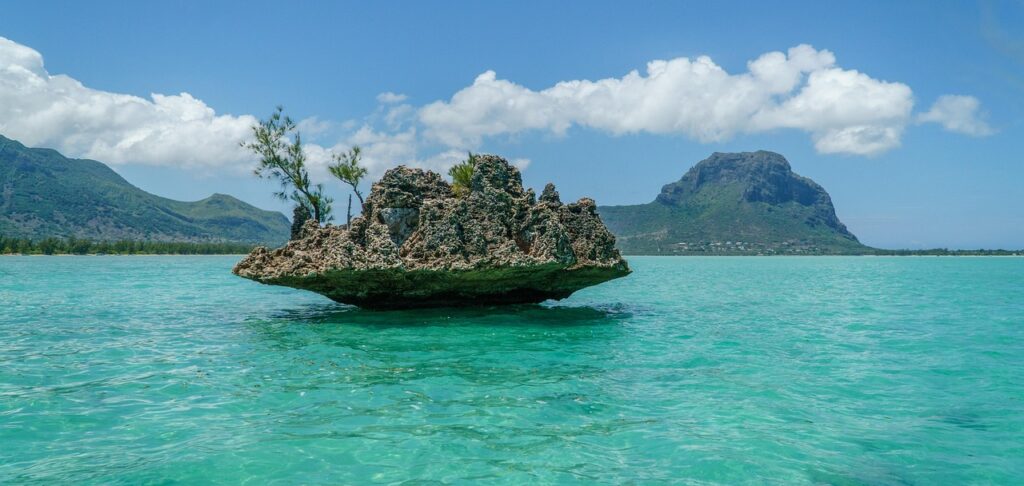
Mauritius: Where the Indian Ocean runs turquoise over coral and the interior rises into jungle-covered mountains nobody told the tourists about.
Mauritius in 30 seconds
An island in the Indian Ocean that has no business being this beautiful and is aware of it without being smug about it. Born from volcanic eruption and refined by three centuries of colonial layering — Dutch, French, British, and finally independent — Mauritius carries all of its history simultaneously in its food, its languages, its people, and its extraordinary cultural mix of Indian, African, Chinese, and European influences that produced a Creole synthesis unlike anywhere else on earth. The lagoon on the western coast is the one in the photographs — turquoise shading into cobalt, coral reef holding the Indian Ocean at a respectful distance, beach sand so white it reads as blue in the shadows. But the interior is the Mauritius that visitors miss: volcanic peaks draped in cloud forest, tea plantations at altitude where the air drops twenty degrees and smells of earth and rain, the Black River Gorges where Mauritius kestrels — once down to four individuals, now recovered — hunt above endemic forest. Port Louis operates as a real city rather than a resort backdrop — the Central Market a compression of everything the island’s cultures brought and blended, the waterfront a conversation between the colonial and the contemporary. Mauritius doesn’t have to try. That’s its defining quality.
Evoke – Why You Visit Mauritius
You come to Mauritius because you’ve earned something and haven’t collected it yet. Not a reward for suffering — a reward for sustained effort that deserves a counterweight. You need a place where the water is the color it is in screen savers and actually looks like that in person. Where breakfast arrives on a terrace above the lagoon and the only decision before 10am is which direction to point your chair. But underneath that — and you need this more than you’ve admitted — you need a place where different cultures built something together rather than against each other, where the food on your plate is the physical evidence that Creole, Indian, Chinese, and French traditions found a common language in the kitchen when they couldn’t always find it elsewhere. You came here to rest. You’ll discover that Mauritius is also quietly instructive about what coexistence actually looks like when it works.
Explore – How You Experience Mauritius
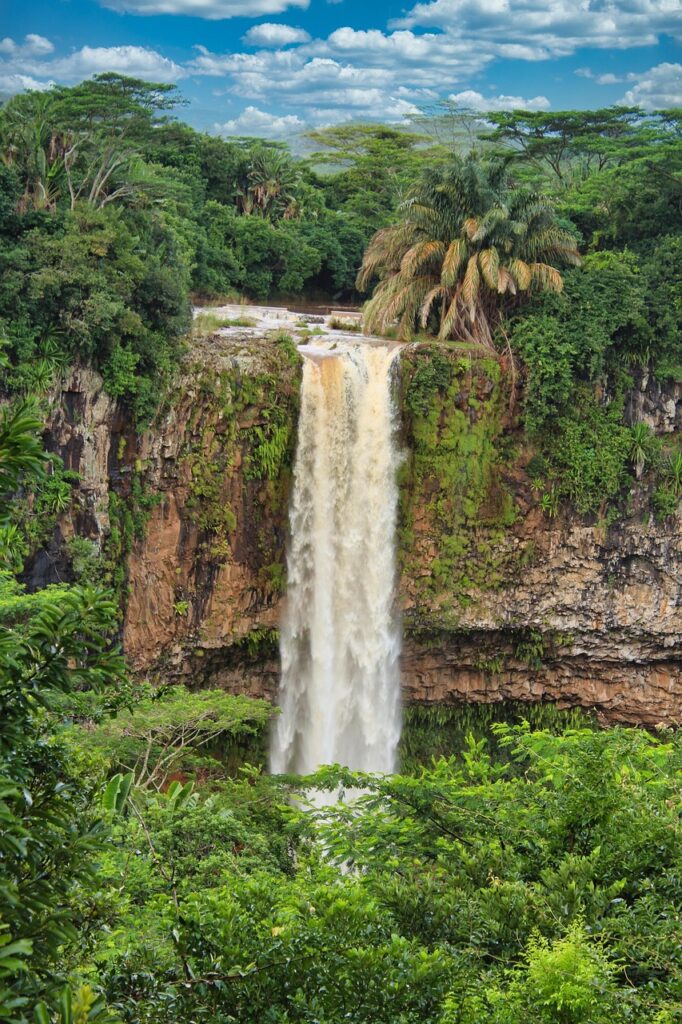
Snorkel the Blue Bay Marine Park on the southeast coast at the hour the light first enters the water — parrotfish, lionfish, sea turtles moving through coral formations that predate the island’s colonial history by ten thousand years. Drive to Chamarel in the island’s interior where the Seven Colored Earths — volcanic soil in seven distinct shades of red, brown, violet, green, blue, purple, and yellow — sit in a landscape that looks digitally altered and isn’t, and where the Chamarel waterfall drops ninety meters into a gorge the color of old jade. Walk through Port Louis Central Market before noon and eat a dholl puri — a flatbread filled with ground split peas, served with curry and pickles, the island’s most democratic food — standing at a counter that has been serving the same thing for three generations and has no intention of changing. Take a catamaran to the Ile aux Cerfs lagoon and swim through water so transparent that your shadow on the sand below appears to be a separate person moving independently. Visit the Pamplemousses Botanical Garden where giant Victoria amazonica water lilies float on ponds large enough to hold a child’s weight and trees from every tropical country on earth have been growing together since the eighteenth century. Eat a full Mauritian curry dinner — the kind that requires six small dishes, three types of bread, two chutneys, and a minimum of two hours — at a family restaurant in Mahébourg where the recipe is not written down because it was never meant to be.
Evolve – Who You Become in Mauritius
You leave Mauritius rested in a way that sleep alone doesn’t produce — the particular restoration that happens when beauty is sustained over days rather than glimpsed in passing. But you also leave with something less expected: a quiet optimism about what people can build when geography forces cooperation. Mauritius has no dominant culture — every community arrived from somewhere else and the island required them to negotiate a shared identity, which produced the Creole language, the Sega music, and a cuisine so hybridized it has become entirely its own thing. You start applying that to problems at home that seemed intractable. The dodo went extinct here — famously, completely, as the world’s most cited example of human carelessness toward other species. Mauritius has spent the decades since in serious ecological recovery, protecting what remains with the urgency of a place that knows what permanent loss feels like. You come home marginally more careful with irreplaceable things. That includes certain relationships you’d been treating as renewable resources. Mauritius clarified the distinction.
Your practical guide to Mauritius starts bellow 👇
🕰️ Mauritius Historical Backdrop
Mauritius’ history is a unique narrative of an uninhabited volcanic jewel transformed by successive waves of global migration. First discovered by Arab sailors and later named by the Dutch after Prince Maurice of Nassau, the island eventually became the French “Isle de France” before being ceded to the British in 1810. Its story is told in the vast sugarcane fields that once fueled the empire, the poignant ruins of the Aapravasi Ghat—the gateway for indentured laborers—and the majestic Le Morne Brabant, a mountain sanctuary for maroons (escaped slaves). Through centuries of blending African, Indian, European, and Chinese influences, what endures is a profound spirit of multicultural harmony, a world-renowned hospitality, and a resilient commitment to environmental preservation. This is a land where every offshore islet, every aromatic spice market, and every colorful Hindu temple whispers tales of a civilization built on the strength of diverse identities coming together in paradise.
🌟 Mauritius Local Experiences
Beyond the luxury beach resorts, discover Mauritius’ soul in the vibrant chaos of the Port Louis central market, the intoxicating beat of a Sega dance performance on a moonlit beach, or the simple joy of sharing a dholl puri (lentil wrap) from a street-side vendor. Experience the tranquil reverence of Grand Bassin (Ganga Talao), a sacred crater lake for the island’s Hindu population, or witness the artisanal skill of traditional ship-model makers. These are the textures, shared moments, and profound connections that reveal Mauritius’ unique spirit, inviting you to connect with its enduring warmth and vibrant, multi-ethnic authenticity.
🌄 Mauritius Natural Wonders
- Seven Coloured Earths (Chamarel): A geological phenomenon where sand dunes settle in seven distinct layers of color (red, brown, violet, green, blue, purple, and yellow).
- Le Morne Brabant: A spectacular basaltic monolith and UNESCO site that served as a refuge for runaway slaves, offering breathtaking summit views.
- Trou aux Cerfs: A dormant volcanic crater in Curepipe, providing 360-degree views of the island and the Rempart Mountain range.
- The Underwater Waterfall: An incredible optical illusion off the coast of Le Morne, best viewed from a helicopter or seaplane.
- Île aux Cerfs: A stunning offshore island famous for its pristine white sand beaches and emerald lagoons.
- Chamarel Waterfall: The highest waterfall in Mauritius, plunging over 100 meters into a lush gorge.
🏙️ Mauritius Must-See Towns & Districts
- Port Louis: (Capital) A bustling port city where colonial history meets modern commerce, featuring the Caudan Waterfront, historic forts, and the island’s most famous street markets. (Capital, Historical, Bustling)
- Grand Baie: The “Saint-Tropez of Mauritius,” a vibrant coastal village known for its nightlife, shopping, and world-class water sports. (Coastal, Lively, Tourist Hub)
- Flic-en-Flac: A popular west-coast stretch famous for its long white-sand beach, spectacular sunsets, and excellent diving spots. (Beach, Relaxed, Sunset)
- Mahébourg: A historic town in the south that retains a traditional Mauritian feel, known for its waterfront and Monday market. (Authentic, Historic, Coastal)
- Chamarel: A scenic mountain village and gateway to the island’s most famous natural attractions and coffee plantations. (Nature, Scenic, Highlands)
🏞️ Mauritius National Parks & Nature Reserves
- Black River Gorges National Park: The island’s largest protected forest, home to endangered endemic species like the Mauritius Kestrel and Echo Parakeet.
- Île aux Aigrettes: A tiny coralline island reserve managed by the Mauritian Wildlife Foundation, offering a glimpse of what the island looked like before settlement.
- La Vallée des Couleurs Nature Park: An adventure-focused park featuring 23-colored earths and the longest zipline in the Indian Ocean.
- Bras d’Eau National Park: A peaceful sanctuary in the northeast, featuring exotic mahogany trees and diverse birdlife.
🏛️ UNESCO World Heritage Sites
- Aapravasi Ghat — The historic immigration depot where the ‘Great Experiment’ of indentured labor began in 1834.
- Le Morne Cultural Landscape — A rugged mountain that stands as a symbol of resistance and the fight for freedom by maroons.
- For a complete list, visit the official UNESCO World Heritage Convention – Mauritius.
🖼️ Mauritius Museums & Galleries
- L’Aventure du Sucre (The Sugar Adventure): An interactive museum in an old sugar factory that tells the story of the island’s economic and cultural history through sugar.
- Blue Penny Museum (Port Louis): Home to two of the world’s rarest stamps and a deep collection of Mauritian maritime history.
- Mauritius Photography Museum (Port Louis): A charming private museum showcasing the history of photography in the Indian Ocean.
- National History Museum (Mahébourg): Housed in a colonial mansion, exploring the island’s naval battles and natural history.
🎉 Mauritius Festivals & Celebrations
- Maha Shivaratri: (February/March) The largest Hindu festival outside India, involving a massive pilgrimage to the sacred lake of Grand Bassin.
- Diwali: (October/November) The Festival of Lights, celebrated with elaborate light displays and the sharing of traditional sweets (mithai).
- Cavadee: (January/February) A profound Tamil festival involving processions and devotional rituals in honor of Murugan.
- Chinese Spring Festival: (January/February) Celebrated with lion dances, fireworks, and the iconic “Gate of Port Louis” light-up.
- Sega Festival: (Occasional/Hotels) While an ongoing part of culture, dedicated festivals celebrate the Afro-Creole music and dance that is the island’s heartbeat.
🧽 How to Arrive
- ✈️ By Air
- Main International Airport: Sir Seewoosagur Ramgoolam International Airport (MRU).
- Airlines: Air Mauritius (National Carrier), Emirates (direct from Dubai), Qatar Airways (direct from Doha), British Airways, Air France, Turkish Airlines.
- Flight search: Skyscanner, Google Flights.
- 🚆 By Rail
- Metro Express: A modern light-rail system (Mauritius Metro Express) now connects Port Louis to Rose Hill, Quatre Bornes, and Curepipe, providing an efficient way to travel through the urban center.
- 🚗 By Road
- Toll Info: There are currently no toll roads in Mauritius.
- Best Self-Drive Routes: The coastal road from Grand Baie to Cap Malheureux or the mountain pass through Chamarel. Driving is on the left.
📶 Stay Connected
- SIM Cards & Telecom
- Top Providers: my.t (Mauritius Telecom), Emtel, Chili.
- Where to buy: SIM cards are easily available at the airport arrival hall and in major shopping malls. A passport is required for registration.
- eSIM: Supported by my.t and Emtel.
🏨 Where to Stay
Mauritius is the world leader in luxury beachfront resorts, but also offers charming eco-lodges and boutique mountain retreats.
- Notable Hotel Chains: Beachcomber Resorts, LUX* Resorts, Sunlife, Accor (Sofitel, Pullman), Marriott (St. Regis, Westin).
- Tips: Coastal Luxury vs. Mountain Retreat:
- North/West Coast: Best for calm lagoons, sunsets, and proximity to nightlife.
- East/South Coast: Offers wilder beauty, turquoise shallow lagoons, and world-class kite surfing.
- Unique Stays:
- Bubble Lodge (Bois Cheri): Transparent eco-domes set in the middle of a historic tea plantation.
- Lakaz Chamarel: A boutique lodge in the highlands offering ultimate peace and stunning views.
- Otentic Eco Tent: A glamping experience on the banks of the Grande Rivière Sud Est.
⛳ Unique Finds
- The Underwater Waterfall Helicopter Tour: A “bucket list” experience to witness the famous optical illusion from above.
- Tea Route Tour: Visit the Bois Chéri tea plantation for a tasting session overlooking a volcanic crater lake.
- Swimming with Wild Dolphins (Tamarin): An early morning boat trip to encounter pods of spinner and bottlenose dolphins in their natural habitat.
- Rum Tasting (Rhumerie de Chamarel): Sample award-winning agricultural rum made from the estate’s own sugarcane.
🤝 Mauritius Cultural Guidance
- Harmony and Respect: Mauritius is a model for multiculturalism. Respect religious sites—remove shoes and dress modestly (cover shoulders and knees) when entering temples or mosques.
- Hospitality: Mauritians are famously friendly. A simple “Bonjour” or “Hello” goes a long way.
- Dining Etiquette: When invited to a home, it is customary to bring a small gift. Food is often shared communally.
- Tipping Norms: Not mandatory, but 10% is appreciated for good service in restaurants. Rounding up for taxis is common.
- Basic Phrases (Mauritian Creole / French):
- Hello: “Ki manyer?” (How are you?) / “Bonjour”
- Thank you: “Mersi”
- Please: “Siouple” / “S’il vous plaît”
- No problem: “Pa ena problem”
- Goodbye: “Salam” (common in some communities) / “Au revoir”
🛂 Mauritius Entry & Visa Requirements
- Visa-Free: Citizens of most countries, including the UK, US, Canada, EU, and Gulf nations (Qatar, UAE), can enter Mauritius visa-free for tourism for up to 90 days.
- Mauritius All-in-One Form: All travelers must fill out the digital Mauritius All-in-One Form before arrival to generate a QR code for health and immigration.
- Official Source: Always check the latest at the Mauritius Passport & Immigration Office.
💰 Practical Essentials
- Currency: Mauritian Rupee (MUR). Cards are widely accepted in resorts and malls, but cash is needed for markets and local transport.
- Electricity: Type G (three-pin, same as UK/Qatar) and Type C (two-pin European). Voltage is 230V.
- Safety: Mauritius is very safe for tourists. Be mindful of pickpocketing in crowded markets like Port Louis. Avoid walking in secluded areas at night.
- Climate: Tropical year-round. Best visited May to December. Cyclone season is January to March.
✨ Bonus Tip
To truly embrace Mauritius, get out on the water at dawn. The island is defined by its barrier reef, which creates a protective, shallow lagoon that encircles almost the entire landmass. Whether it’s taking a local pirogue out for a morning of line-fishing or paddleboarding in the silent turquoise shallows of the east coast, the ocean is where you will find the island’s true sense of peace. It is in this horizontal blue infinity that the complexities of the island’s history fade away, leaving you with a profound sense of clarity and renewed energy.
🔗 Featured Links
- Official Resources:
- National Tourism Board: MyMauritius.travel
- Safety & Travel Advisories: Your Country’s Government Travel Advisory for Mauritius.
- Logistics: Air Mauritius.

Beyondia
Travel CompanionReal digital nomad. I travel. I learn. I grow.
What about you? Where are you going?