GoBeyondia Atlas 🗺️ Mediterranean Region 🗾
Montenegro: Where sailors spent five centuries constructing an island one rock at a time after every successful voyage, a teenager who inherited a country of feuding tribes became the greatest poet in South Slavic literature before dying at thirty-seven, a river carved the deepest canyon in Europe through mountains whose very name means “black,” and the youngest nation on the Adriatic proves that identity is not something you inherit but something you lay down, stone by stone, until there is enough ground to stand on.
Montenegro in 30 Seconds
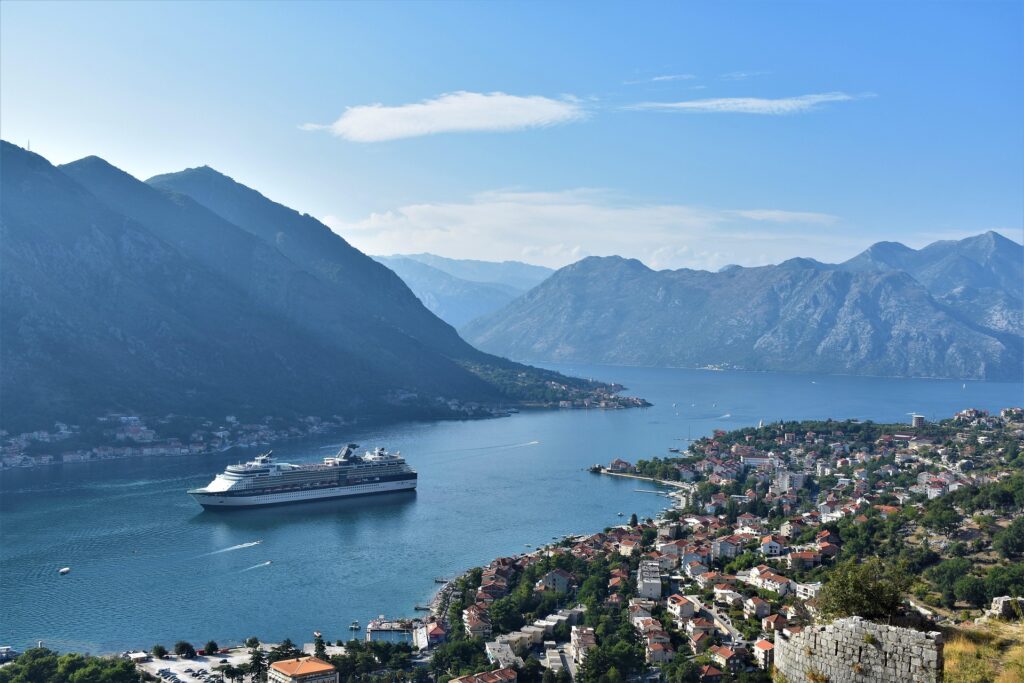
A country of 13,812 square kilometers that did not exist as an independent nation until 2006, containing Europe’s deepest canyon, the Adriatic’s most intact medieval fortifications, and an artificial island built entirely by human devotion. The Bay of Kotor penetrates the coastline like a drowned labyrinth — not a fjord, despite what every travel brochure claims, but a ria, a submerged river valley whose waters rose to flood the canyon that a prehistoric river had carved, creating an inlet so sheltered and so improbable that Venetians, Byzantines, Ottomans, Habsburgs, and Napoleon all fought to control it. The old town of Kotor sits at the bay’s innermost point, encircled by 4.5 kilometers of walls up to twenty meters high and sixteen meters thick, built from the ninth century onward and climbing 1,350 steps to the fortress of San Giovanni, where the view explains every war ever fought over this water. Off the coast of Perast, an island exists that should not — Our Lady of the Rocks, an artificial islet built over five centuries by sailors who, according to tradition, found an icon of the Madonna and Child on a sea rock on July 22, 1452, and vowed to lay a stone on that spot after every safe return, scuttling old ships and piling rocks until three thousand square meters of ground rose from the Adriatic, topped by a Baroque church containing sixty-eight paintings, a collection of silver votive tablets from grateful survivors of shipwrecks, and an embroidered tapestry that a woman named Jacinta Kunić-Mijović worked for twenty-five years using gold thread and strands of her own hair while waiting for her sailor to return — she went blind before finishing it. In the mountains above, the mausoleum of Petar II Petrović-Njegoš crowns Mount Lovćen at 1,657 meters — 461 steps through a marble tunnel to reach a twenty-eight-ton granite statue of a prince-bishop who became the ruler of Montenegro at seventeen, unified warring tribes, wrote The Mountain Wreath in 1847 — the epic poem that gave a scattered people a shared identity — and died of tuberculosis at thirty-seven, requesting burial on the peak so he could watch over the country he had willed into coherence. And in the north, the Tara River has spent millennia carving a canyon 1,300 meters deep and eighty-two kilometers long — the deepest in Europe, called the Tear of Europe for its crystal water — spanned by the Đurđevića Bridge, built between 1938 and 1940, then blown up by partisans in 1942 to prevent the Italian advance, and rebuilt after the war because Montenegro does not leave its bridges destroyed.
Evoke — Why You Visit Montenegro
You come to Montenegro because you suspect that the things worth building take longer than a single lifetime, and you need a country that proves it. This is where fishermen decided in 1452 that they would create an island by carrying stones across open water after every voyage — not for a month, not for a year, but for centuries — and the tradition continues every July twenty-second when boats decorated with flowers sail from Perast and drop rocks into the sea, because the island is never finished. Where a teenager looked at a nation of blood feuds and tribal warfare and decided that what his people needed was not another battle but a poem, and wrote one so powerful that it became the thing holding them together long after the prince-bishop was dead. Where a river so clean you can drink from it while rafting has been carving the same canyon for geological ages with a patience that makes human ambition look frantic. You come because you have been building something and the returns are not yet visible, and Montenegro will show you that the sailors who laid the first stones on that reef in the fifteenth century never saw the church that stands there now — but they carried the rocks anyway.
Explore — How You Experience Montenegro
Enter Kotor through the Sea Gate where the winged lion of Venice still watches from above and walk the labyrinth of stone streets that four centuries of Venetian rule shaped into what UNESCO recognized in 1979 as one of the best-preserved medieval towns on the Adriatic — then climb the 1,350 steps along the fortress walls where each switchback reveals more of the bay below until the mathematics of this landscape become undeniable, the water folding inward through straits only three hundred meters wide before opening into basins seven kilometers across. Take a boat from Perast to Our Lady of the Rocks and stand inside the church where Jacinta’s embroidery hangs behind glass — twenty-five years of gold, silver, and her own hair stitched into a devotional image that she could no longer see by the time it was nearly complete — then look at the silver tablets on the walls, each one a story of a sailor who survived what should have killed him and came back to say thank you with metal and stone. Drive the twenty-five hairpin turns from Kotor to Lovćen and climb the 461 steps to the Njegoš Mausoleum where Ivan Meštrović carved the prince-bishop from a single block of black granite and placed him under a golden mosaic ceiling, then walk behind the mausoleum to the circular viewing platform — modeled on the guvno, the traditional threshing floor where Montenegrin villages made their most important decisions — and look out over a country so vertical that you can see the Adriatic, Skadar Lake, and the mountains of Albania simultaneously. Raft the Tara River through its 1,300-meter canyon walls where primeval black pine forests contain trees over four hundred years old, passing beneath the Đurđevića Bridge that rises 172 meters above the water — a structure so beautiful that local legend credits fairies with its construction, so strategic that partisans destroyed it to stop an army, and so necessary that the country rebuilt it before the war was even over.
Evolve — Who You Become in Montenegro
You leave Montenegro understanding that building and finishing are not the same discipline — and that building is the one that matters. The sailors of Perast did not lay stones because they could see the completed island. They laid stones because the act of laying them was the point — each rock a prayer, each voyage a reason to add another. Jacinta did not embroider because she expected to see the finished tapestry. She stitched because devotion is measured in what you give when you cannot see the result. Njegoš did not write The Mountain Wreath because Montenegro was ready for unity. He wrote it because the poem itself was the act of unification — the words doing what politics could not. You come home and look at whatever you have been building — the project, the company, the life — and you stop measuring it by its completion. You measure it by the consistency of your labor. Montenegro taught you that an island is just an accumulation of stones dropped by people who kept showing up. The Fašinada happens every July. The boats still sail. The rocks still fall. The island is still growing. So is yours.
Your practical guide to Montenegro starts bellow 👇
🕰️ Montenegro Historical Backdrop
Montenegro’s history is a legendary saga of mountain-guarded independence and maritime defiance. Known historically as Crna Gora, this small but formidable nation was one of the few in the Balkans to maintain its autonomy against the Ottoman Empire for centuries, shielded by its impenetrable limestone peaks. Its story is told in the ancient mountain capital of Cetinje, the formidable fortifications of the Bay of Kotor, and the coastal towns that bear the elegant mark of the Venetian Republic. Having transitioned through life as a kingdom, a part of Yugoslavia, and finally to a peaceful independence in 2006, Montenegro remains a land of profound contrasts. It is a place where the heroism of the highland tribes meets the sophisticated seafaring traditions of the Boka sailors, resulting in a culture that is as ruggedly resilient as it is Mediterranean-warm.
🌟 Montenegro Local Experiences
Beyond the coastal beaches, discover Montenegro’s soul in the ritual of the morning “Domaća Kafa” (domestic coffee) in a stone-paved plaza, the intoxicating scent of wild herbs in the Durmitor highlands, or the simple joy of sharing a platter of Njegusi prosciutto and local honey in a mountain village. Experience the profound stillness of the Tara River Canyon, the exhilarating climb up the 1,350 steps to San Giovanni Fortress, or the meditative clarity of a boat ride through the lily pads of Lake Skadar. Whether it’s listening to the legends of the sea in Perast or witnessing a local “Kolo” dance during a village festival, these moments reveal a nation that finds strength in its heritage and peace in its breathtaking geography.
🌄 Montenegro Natural Wonders
- The Bay of Kotor (Boka Kotorska): Often called Europe’s southernmost fjord, a spectacular winding bay surrounded by high mountains.
- Tara River Canyon: The deepest river canyon in Europe and second in the world, featuring turquoise water and dramatic limestone cliffs.
- Lake Skadar: The largest lake in Southern Europe, a dolphin-shaped bird sanctuary famous for its floating lilies and medieval island monasteries.
- Biogradska Gora: One of the last three primeval forests in Europe, centered around a stunning glacial lake.
- The Black Lake (Crno Jezero): A mystical “mountain eye” lake in the Durmitor range, surrounded by dense pine forests.
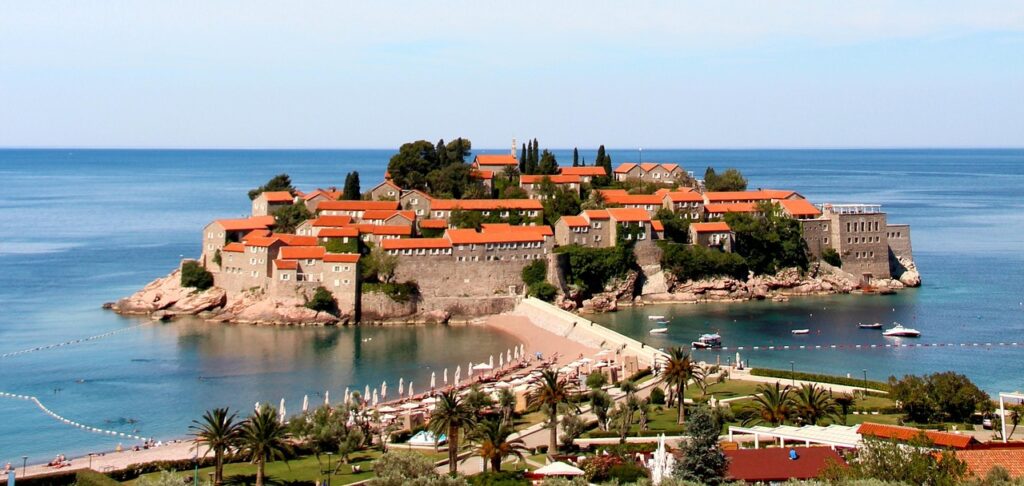
- Sveti Stefan: A unique pink-sand isthmus connecting the mainland to a 15th-century fortified island village.
🏙️ Montenegro Must-See Cities & Regions
- Kotor: A UNESCO World Heritage site and a masterpiece of medieval urban design, famous for its labyrinthine streets and massive city walls. (Historic, Atmospheric, Dramatic)
- Budva: The “Miami of Montenegro,” known for its historic Old Town, vibrant nightlife, and some of the most popular beaches on the Riviera. (Lively, Coastal, Ancient)
- Perast: A tiny, impeccably preserved baroque town on the bay, known as a sanctuary for sea captains and home to 16 churches. (Elegant, Secluded, Picturesque)
- Cetinje: The honorary capital and cultural heart of Montenegro, home to historic embassies, museums, and the Cetinje Monastery. (Royal, Cultural, Quiet)
- Žabljak: The highest town in the Balkans and the primary gateway to the high-altitude adventures of Durmitor National Park. (Alpine, Adventurous, Remote)
🏞️ Montenegro National Parks & Nature Reserves
Managed with a focus on “Wild Beauty” by the National Parks of Montenegro (NPCG).
- Durmitor National Park: A UNESCO site of incredible biodiversity, featuring 18 glacial lakes and 48 peaks above 2,000 meters.
- Lovćen National Park: Home to the Njegoš Mausoleum at the summit of “Jezerski Vrh,” offering 360-degree views of the entire country.
- Biogradska Gora National Park: A sanctuary of ancient trees and emerald waters in the Bjelasica mountain range.
- Prokletije National Park: The “Accursed Mountains” on the border with Albania, offering the most rugged and untouched trekking in the region.
🏛️ UNESCO World Heritage Sites
- Natural and Culturo-Historical Region of Kotor — A unique testimony to the artistic and architectural traditions of the Mediterranean.
- Durmitor National Park — Carved by glaciers and traversed by underground rivers.
- Stećci Medieval Tombstone Graveyards — Shared with neighboring countries, reflecting a unique regional funerary tradition.
- Venetian Works of Defence between the 16th and 17th Centuries — Including the fortifications of Kotor.
- For more information, visit the UNESCO Montenegro Portal.
🖼️ Montenegro Museums & Galleries
- National Museum of Montenegro (Cetinje): A complex of four museums and two galleries detailing the nation’s history and art.
- Maritime Museum (Kotor): Housed in the Grgurina Palace, showcasing the legendary seafaring history of the Boka region.
- King Nikola’s Palace (Cetinje): Offering a glimpse into the life of Montenegro’s only King and the royal Petrović-Njegoš dynasty.
🎉 Montenegro Festivals & Celebrations
- Boka Night (Bokeljska Noć): (August) A centuries-old tradition in Kotor featuring a parade of creatively decorated boats and fireworks.
- Sea Dance Festival: (August) An award-winning electronic and pop music festival held on the shores of the Adriatic.
- Mimosa Festival (Herceg Novi): (February) Celebrating the arrival of spring with the blooming of yellow mimosa flowers and street festivities.
- Southern Soul Festival: (June) A boutique music festival on the long sandy beach of Ulcinj, focusing on jazz, soul, and funk.
🧽 How to Arrive
- ✈️ By Air
- Podgorica Airport (TGD) and Tivat Airport (TIV) are the two international gateways.
- Note: Many travelers fly into Dubrovnik (DBV) in Croatia and take the 20-minute drive across the border to Montenegro.
- Airlines: Air Montenegro (Flag carrier) and major European low-cost carriers (Ryanair, EasyJet, Wizz Air).
- 🚢 By Sea
- Port of Bar: Regular ferry connections from Bari, Italy.
- Port of Kotor: A major destination for Mediterranean cruise ships and private yachts.
- 🚗 By Road
- Montenegro shares borders with Croatia, Bosnia and Herzegovina, Serbia, Kosovo, and Albania. Driving is on the right. Note that roads can be extremely narrow and winding in the mountains.
- 🚆 By Rail
- The Belgrade-Bar Railway is often cited as one of the world’s most spectacular train journeys, crossing the 200-meter-high Mala Rijeka Viaduct.
📶 Stay Connected
- SIM Cards: Major providers are M:tel, T-Mobile, and One.
- Where to buy: Kiosks (Tabak) and official operator stores are abundant. Registration with a passport is mandatory.
- eSIM: Supported by major providers and global platforms like Airalo.
🏨 Where to Stay
Montenegro offers everything from ultra-luxury Adriatic retreats to authentic “Katun” mountain settlements.
- One&Only Portonovi: The first One&Only in Europe, offering ultimate luxury on the Bay of Kotor.
- Aman Sveti Stefan: An iconic resort occupying a converted 15th-century island village.
- Hotel Regent Porto Montenegro: Set in the world’s only platinum-rated superyacht marina.
- Eco-Katuns: Stay in traditional shepherd wooden huts in the Durmitor or Bjelasica mountains for a raw, authentic nature experience.
⛳ Unique Finds
- The Ostrog Monastery: A miracle of engineering, this 17th-century monastery is carved directly into a vertical rock face high above the Bjelopavlići plain.
- Vranac Wine: Taste the native black grape of Montenegro, particularly from the plantations of Plantaže, which features one of Europe’s largest single vineyards.
- The “Serpentine” Road: Drive the 25 hair-raising switchbacks from Kotor to Lovćen for the most famous view in the Balkans.
- Lipka Sheep Cheese: Visit the northern markets to find some of the highest-quality artisanal cheeses in the region.
🤝 Montenegro Cultural Guidance
- Hospitality: Montenegrins are extremely proud and hospitable. It is customary to offer guests something to eat or drink immediately upon arrival.
- The “Ten Commandments”: Look for the humorous “Montenegrin Ten Commandments” in souvenir shops—they reflect the local self-deprecating humor about their relaxed approach to life.
- Religion: The majority are Orthodox Christians. Dress modestly (shoulders and knees covered) when entering monasteries or churches.
- Basic Phrases:
- Hello: “Zdravo” (Zdra-voh)
- Thank you: “Hvala” (Hva-lah)
- Please: “Molim” (Moh-leem)
- Cheers: “Živjeli” (Zhee-vye-lee)
🛂 Montenegro Entry & Visa Requirements
- Visa-Free: Citizens of the UK, US, Canada, Australia, and EU member states do not require a visa for tourism stays up to 90 days.
- Official Source: Consult the Ministry of Foreign Affairs of Montenegro for current regulations.
💰 Practical Essentials
- Currency: Euro (€). Though not a member of the EU, Montenegro uses the Euro. Cash is essential for smaller shops, taxis, and rural mountain areas.
- Electricity: Type C and F (Two round pins). Voltage is 230V.
- Safety: Montenegro is very safe for travelers. Standard urban vigilance is advised in busy tourist hubs like Budva.
- Climate: Mediterranean on the coast (hot summers, mild winters) and Alpine in the interior (cool summers, snowy winters). Best visited May–September.
✨ Bonus Tip
To truly embrace Montenegro, move from the “Horizontal” to the “Vertical.” Most travelers stay at sea level along the coast, but the country’s true name—Black Mountain—is earned in the interior. Take the train or drive into the north. Stand on the Đurđevića Tara Bridge or walk the rim of the Tara Canyon. It is in this vertical scale, where the air is thin and the limestone is ancient, that the true, untamed spirit of Montenegro and your own sense of perspective truly reveal themselves.
🔗 Featured Links
- Official Tourism: Visit Montenegro.
- Adventure & Trails: Montenegro Wilderness.

Beyondia
Trusted Travel CompanionReal digital nomad. I travel. I learn. I grow.
What about you? Where are you going?