
GoBeyondia Atlas 🗺️ South-America Antarctica 🗾
Panama: Where a strip of land thinner than most countries are wide separated two oceans for three million years until twenty-five thousand people died cutting through it, a jungle so hostile it remains the only break in a highway stretching from Alaska to Argentina, and the isthmus that rose from the sea to bridge two continents triggered a migration of species so vast that it rearranged the biology of the entire Western Hemisphere.
Panama in 30 Seconds
A country narrower than the distance between most commuter cities, shaped like an S lying on its side between Costa Rica and Colombia — the place where North America and South America physically touch. Three million years ago, this isthmus rose from the ocean floor and changed the planet: it separated the Atlantic from the Pacific, redirected ocean currents into what became the Gulf Stream, triggered the formation of the Arctic ice cap, and launched the Great American Biotic Interchange — bears, horses, and cats walking south while armadillos, opossums, and porcupines walked north through the corridor that is now Panama. In 1881, Ferdinand de Lesseps, the builder of the Suez Canal, arrived to cut a channel through this corridor and connect the oceans. The jungle killed twenty-two thousand of his workers — malaria, yellow fever, landslides, heat — and bankrupted France’s greatest engineering company. Fifteen years later, the Americans returned, solved the disease problem by eliminating mosquitoes, abandoned the sea-level design for a lock system, and finished in 1914 with another five thousand six hundred dead. Each mile of the canal cost five hundred lives. And in the southeast, the Darién Gap — a hundred kilometers of rainforest so dense, so mountainous, so resistant to human will that it remains the only break in the nineteen-thousand-mile Pan-American Highway — holds one of the most biodiverse ecosystems on earth, where one in five species is found nowhere else, guarded by the same hostility that has killed explorers and migrants for five centuries.
Evoke — Why You Visit Panama
You come to Panama because you have been told that connection is always good — more networks, more platforms, more bridges between everything and everyone — and you need a country that shows you what connection actually costs. This is where the dream of linking two oceans consumed two empires, two generations of engineers, and twenty-five thousand human lives before the water finally flowed from the Atlantic to the Pacific — not at sea level, as the French insisted, but through locks that lift ships twenty-six meters into an artificial lake and lower them back down, because the land would not surrender to the plan and the plan had to surrender to the land. Where a chief engineer named John Findley Wallace imported his own metal coffin to Panama because he expected to die there — and when he fled after a year, three quarters of his workforce had already gone home. Where the man who replaced him, John Stevens, understood that the first thing to build was not a canal but a hospital system, because you cannot connect oceans if your workers are dead. You come because you have been connecting things without counting the cost — merging teams, scaling platforms, bridging markets — and Panama will show you that the most consequential connection in the history of engineering required first learning how to keep people alive.
Explore — How You Experience Panama
Stand at the Miraflores Locks and watch a container ship the length of three football fields rise twenty-seven feet in nine minutes on nothing but gravity and water — no pumps, no engines, just the weight of Gatun Lake flowing into chambers designed in 1907 and still functioning with their original concrete — and understand that the canal does not force the ocean through the land but invites the land’s own water to do the work. Walk the cobblestones of Casco Viejo, the old quarter of Panama City, where Spanish colonial ruins sit beside jazz bars and rooftop restaurants and the skyline behind you looks like a miniature Dubai rising from a fishing village — because Panama has always been a place where centuries collide without apology. Take a boat through the canal’s Gatun Lake, the artificial body of water that was the largest man-made lake on earth when it was created by damming the Chagres River, and pass through rainforest islands that were hilltops before the valley was flooded — each one now a biological research station, including Barro Colorado Island, where the Smithsonian has studied tropical ecology since 1923. Fly to the San Blas Islands where the Guna people govern their own archipelago of three hundred and sixty-five coral islands under a semi-autonomous territory they negotiated with the Panamanian government — one of the few indigenous groups in the Americas with genuine political sovereignty over their ancestral land. And know that southeast of here, the Darién waits — the jungle that defeated the Spanish, defeated the Scottish, defeated the highway engineers, and continues to defeat anyone who mistakes a map line for a road.
Evolve — Who You Become in Panama
You leave Panama understanding that connection is not free. Every bridge has a body count. Every shortcut was cut through something that did not want to be cut. The French believed the Suez template would work anywhere and the jungle buried twenty-two thousand of their certainties. The Americans succeeded not because they were braver but because they were humbler — they changed the design, killed the mosquitoes, and accepted that the land would dictate the terms. The Darién has refused every attempt at connection for five centuries and remains one of the most biodiverse places on the planet precisely because it was never paved. You come home and look at the connections you have been forcing — the partnerships that require constant maintenance, the integrations that drain more energy than they create, the bridges you built because you could, not because you should — and you ask the question the canal’s history teaches: what did this connection cost, and was the cost worth paying? Some connections change the world. Some connections bury the workers. And some jungles are better left as gaps.
Your practical guide to Panama starts bellow 👇
🕰️ Panama Historical Backdrop
Panama’s history is a compelling narrative of geography as destiny. Since the 16th century, when the Spanish utilized the Isthmus as a transit point for gold from Peru, Panama has been the world’s most vital crossroads. Its story is defined by the bold vision of the Panama Canal—one of the greatest engineering feats in human history—and the diverse cultural currents that flowed in with its construction. From the ruins of Panama Viejo (the first European city on the Pacific) to the vibrant Afro-Antillean heritage of Colón and the resilient autonomy of the Guna people, Panama is a mosaic of global influences. Today, it stands as a sophisticated financial hub and a pioneer in marine conservation, a nation that has successfully turned its unique position between two oceans into a gateway for both commerce and conscious exploration.
🌟 Panama Local Experiences
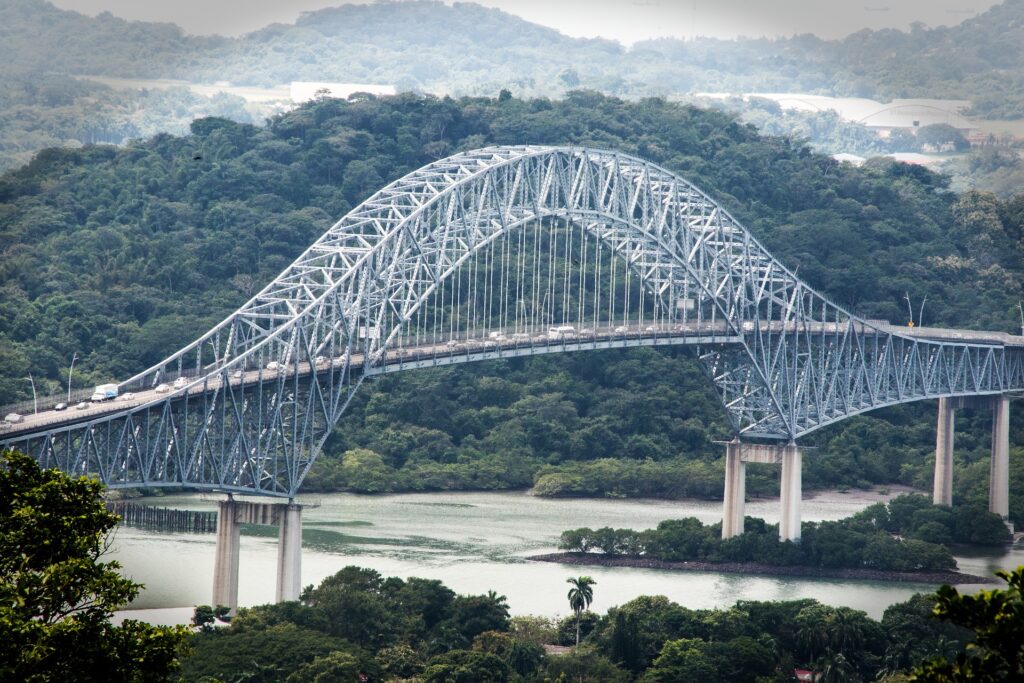
Beyond the canal’s transit, discover Panama’s soul in the rhythmic clink of coffee cups in a Boquete café, the intoxicating scent of salty air and coconut milk in Bocas del Toro, or the profound stillness of a dugout canoe journey into the Emberá territories. Experience the “Scale Shift” of standing beneath the Bridge of the Americas, the sensory delight of tasting a rare Geisha coffee at high altitude, or the simple joy of an evening stroll through the colonial plazas of Casco Viejo. These moments reveal a nation that finds strength in its role as a connector and peace in its untamed, vertical landscapes.
🌄 Panama Natural Wonders
- The San Blas Islands (Guna Yala): An archipelago of 365 coral islands, largely uninhabited and managed autonomously by the indigenous Guna people.
- Barú Volcano: The highest point in Panama, offering a rare opportunity on clear days to see both the Atlantic and Pacific oceans from its summit.
- The Darién Gap: One of the world’s last great wildernesses, a dense and roadless rainforest of immense biological importance.
- Coiba Island: A former penal colony turned National Park, boasting some of the best diving in the Eastern Pacific and a “Galápagos-like” level of endemic species.
- The Pearl Islands: A stunning group of islands in the Gulf of Panama, famous for whale watching and pristine white-sand beaches.
- Chiriquí Gulf: A marine paradise of mangroves, coral reefs, and uninhabited islands teeming with marine life.
🏙️ Panama Must-See Cities & Regions
- Panama City: (Capital) A dramatic metropolis where a “Miami-style” skyline meets the UNESCO-listed colonial charm of Casco Viejo. (Dynamic, Cosmopolitan, Historic)
- Boquete: Nestled in the highlands of Chiriquí, known for its “eternal spring” climate, volcanic soil, and world-class coffee plantations. (Highland, Adventurous, Scenic)
- Bocas del Toro: A Caribbean archipelago offering a vibrant Afro-Caribbean culture, overwater bungalows, and world-renowned surf breaks. (Island, Tropical, Relaxed)
- Portobelo: A sleepy Caribbean town housing the ruins of massive Spanish colonial fortifications once raided by Sir Francis Drake. (Historic, Maritime, Atmospheric)
- Santa Catalina: A world-class surf and dive destination serving as the primary gateway to Coiba National Park. (Adventurous, Coastal, Rustic)
🏞️ Panama National Parks & Nature Reserves
Managed with an increasing focus on carbon-negative initiatives by MiAmbiente (Ministry of Environment).
- Coiba National Park: A UNESCO site protecting a vast marine area and primary tropical forest.
- Soberanía National Park: Located just 45 minutes from the capital, world-famous for birdwatching along the “Pipeline Road.”
- Metropolitan Natural Park: The only tropical forest in Latin America located within a city’s limits.
🏛️ UNESCO World Heritage Sites
- Archaeological Site of Panamá Viejo and Historic District of Panamá — Chronicling the history of the first European city on the Pacific.
- Fortifications on the Caribbean Side of Panama: Portobelo-San Lorenzo — Masterpieces of Spanish military architecture.
- Coiba National Park and its Special Zone of Marine Protection — A critical refuge for threatened species.
- Talamanca Range-La Amistad Reserves — Shared with Costa Rica, protecting massive mountainous rainforests.
- For a full list, visit the UNESCO Panama Portal.
🖼️ Panama Museums & Cultural Sites
- Biomuseo (Panama City): Designed by Frank Gehry, tell the story of how the Isthmus of Panama rose from the sea to change the world’s biodiversity.
- Panama Canal Museum (Casco Viejo): Housed in the former French Canal Company headquarters, detailing the titanic struggle to build the waterway.
- Miraflores Visitor Center: The essential location to witness the locks in operation and understand the canal’s modern expansion.
🎉 Panama Festivals & Celebrations
- Carnival: (February/March) A massive nationwide celebration, with the most famous festivities occurring in Las Tablas (the “Tunas” battle).
- Feria de las Flores y del Café (Boquete): (January) A spectacular display of high-altitude horticulture and coffee culture.
- The Black Christ of Portobelo: (October 21) A deeply spiritual pilgrimage and festival attracting thousands to the Caribbean coast.
- Independence Days (Fiestas Patrias): (November) A month-long series of celebrations marking various milestones of Panamanian independence.
🧽 How to Arrive
- ✈️ By Air
- Tocumen International (PTY) in Panama City is known as the “Hub of the Americas.”
- Airlines: Copa Airlines (Flag carrier) offers world-leading connectivity across the Americas. Major European and Middle Eastern carriers (Lufthansa, KLM, Air France, Turkish Airlines) also serve PTY.
- 🚢 By Sea
- Panama is a global cruising hub, with terminals at the Amador Causeway (Pacific) and Colón (Caribbean).
- Frequent sailboat transfers connect Panama to Cartagena, Colombia via the San Blas Islands.
- 🚗 By Road
- Panama is the southern terminus of the northern section of the Pan-American Highway. You can drive from Mexico to Yaviza, where the road ends at the Darién Gap. Driving is on the right.
📶 Stay Connected
- SIM Cards: Major providers are Tigo and +Móvil.
- Where to buy: Kiosks are abundant at Tocumen Airport and in every shopping mall (Multiplaza/Albrook). Registration with a passport is standard.
- eSIM: Supported by both Tigo and +Móvil; available via digital platforms like Airalo.
- Connectivity: High-speed Wi-Fi is the norm in Panama City and Boquete, but expect to be fully “off-grid” in the San Blas islands.
🏨 Where to Stay
Panama offers a spectrum from futuristic skyscrapers to colonial palazzos and sustainable island lodges.
- American Trade Hotel (Casco Viejo): A beautifully restored heritage landmark in the heart of the historic district.
- Waldorf Astoria Panama: A symbol of the capital’s modern luxury and financial district.
- Islas Secas: A world-class, sustainable private island resort in the Gulf of Chiriquí.
- Guna Yala Eco-Lodges: For an authentic experience, stay in traditional huts on the San Blas islands, run entirely by the indigenous community.
⛳ Unique Finds
- Geisha Coffee Tasting: Try the world’s most expensive and complex coffee in the highlands of Boquete.
- The Panama Hat Myth: Learn why the famous “Panama” hat is actually made in Ecuador but earned its name here during the canal’s construction.
- Taboga Island: Known as the “Island of Flowers,” a quick ferry ride from the city offering a Mediterranean-style escape.
🤝 Panama Cultural Guidance
- Punctuality: Socially, time is relaxed, but for business and canal-related activities, punctuality is absolute.
- Hospitality: Panamanians are polite and formal. A handshake is standard, and greeting with “Buenas” (short for Buenos días/tardes) is common in passing.
- Respect the Guna: When visiting San Blas, remember you are on autonomous indigenous land. Always ask before taking photos of people or their Molas (traditional textiles).
- Basic Phrases:
- Hello: “Hola”
- Thank you: “Gracias”
- How are you?: “¿Cómo está?”
- Everything good: “Todo bien” / “¡Chévere!”
🛂 Panama Entry & Visa Requirements
- Visa-Free: Citizens of the UK, US, Canada, Australia, and EU states do not require a visa for tourism stays up to 90 days.
- Digital Nomad Visa: Panama offers a specific Short Stay Visa for Remote Workers.
- Official Source: Consult the National Migration Service of Panama.
💰 Panama Practical Essentials
- Currency: The US Dollar (USD) is the primary currency. The local “Balboa” exists only in coins and is pegged 1:1.
- Electricity: Type A and B (Two flat pins—same as North America). Voltage is 110V/120V.
- Safety: Panama is one of the safest countries in the region. Use standard urban vigilance in Panama City and Colón.
- Climate: Tropical. Best visited during the “Dry Season” (January to mid-April).
✨ Bonus Tip: The Transit Shift
To truly embrace Panama, move beyond the role of a spectator at the locks. Take the Panama Canal Railway—the world’s first transcontinental railroad—from the Pacific to the Atlantic. It is in this hour-long journey through the jungle, following the path of 19th-century gold seekers and canal workers, that you will feel the true weight of human ambition and the resilience of the forest that surrounds it. Panama is a lesson in how a single thin strip of land can move the entire world.
🔗 Featured Links
- Official Tourism: Visit Panama.
- Canal Operations: Panama Canal Official (ACP).

Beyondia
Trusted Travel CompanionReal digital nomad. I travel. I learn. I grow.
What about you? Where are you going?