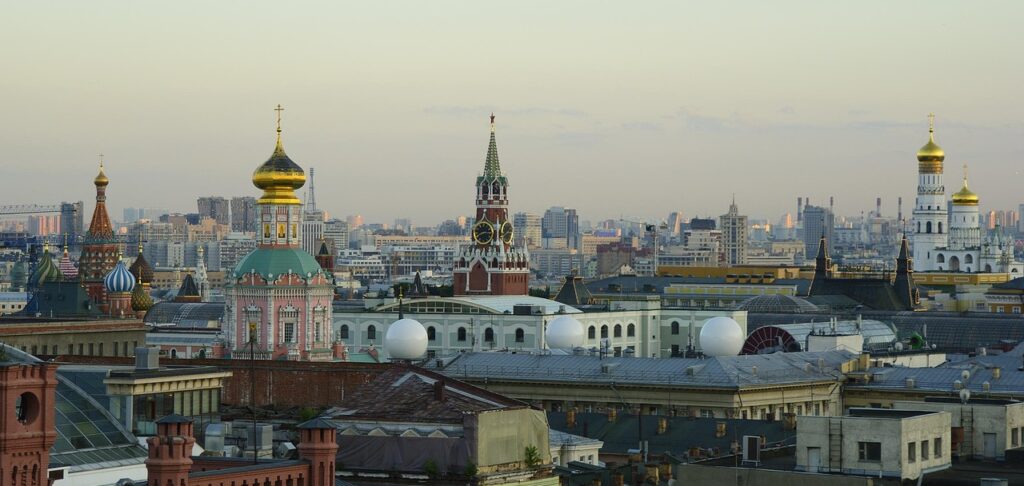
Russia: Where the winters are brutal, the literature is brutalizing, and the beauty arrives without warning.
Russia in 30 seconds
Despite the current ongoing situation, Russia remains one of the most culturally significant countries on earth — a civilization that produced Tolstoy, Dostoevsky, Tchaikovsky, and Chekhov within the same century, that built St. Petersburg as a deliberate act of European ambition on a swamp, that sent the first human into space, and that contains within its borders eleven time zones, the world’s deepest lake, and a fifth of the planet’s unfrozen fresh water. St. Petersburg arrives like a fever dream of Italian baroque architecture transplanted to Baltic marshland — the Hermitage alone contains three million objects across a Winter Palace built for excess that somehow undersells itself. Moscow operates at a different frequency entirely — denser, faster, the Kremlin’s red walls enclosing a history so layered that every century contradicts the one before it. East of the Urals, Siberia begins and doesn’t stop — the taiga stretching across seven time zones in a green silence so complete it functions as a different category of experience. Lake Baikal holds twenty percent of the world’s surface fresh water so clear you can see sixty meters down through it in winter when the ice forms in pressure ridges and transparent sheets that creak and breathe. Russia is not a country you visit simply. It is a country that visits you afterward, for years, in ways you didn’t expect.
Evoke – Why You Visit Russia
You come to Russia because you’ve been reading around it your whole life without going in. You read Tolstoy and understood something about human nature that you couldn’t have learned elsewhere. You heard the Ode to Joy and then discovered that Beethoven’s Ninth moved the Russians to tears in ways they described as physical. You’ve been circling a civilization that produced the most psychologically precise literature in human history and you need to stand inside the landscape that produced it — the birch forests, the frozen rivers, the specific quality of winter light that Tolstoy described and Chekhov mourned and Pasternak turned into Doctor Zhivago’s entire emotional world. You know the current situation. You came anyway, or you’re waiting until you can, because culture this deep doesn’t pause and curiosity this specific doesn’t either.
Explore – How You Experience Russia
Stand in the Hermitage’s Jordan Staircase in St. Petersburg — white marble, gilded balustrades, ceiling frescoes so dense with allegory they require a separate visit to decode — and understand that this was built as a daily entrance for a royal family who considered this normal. Walk the Nevsky Prospekt at white night in June when the sun barely sets and the city exists in a permanent golden dusk that Dostoevsky used as the psychological backdrop for Crime and Punishment — walk it and feel why. Take the Trans-Siberian Railway eastward from Moscow and watch Russia’s geography change in real time through the window over eight days — from Moscow’s urban density to the Ural Mountains to West Siberian plain to Lake Baikal — a journey so long it resets your relationship with distance permanently. Stand on Baikal’s ice in February and look down through transparent frozen water into a depth that recedes past visibility and understand that twenty percent of the world’s fresh water is beneath your feet and has been here for twenty-five million years. Visit Kizhi Island in Lake Onega where a twenty-two-domed wooden church built in 1714 without a single metal nail still stands — built by craftsmen using only axes, because the legend says the master builder threw his axe into the lake afterward and declared no finer church could ever be built with it.
Evolve – Who You Become in Russia
You leave Russia with a permanently expanded sense of what human beings are capable of — in both directions. The literature prepared you for the darkness but not for how the beauty coexists with it, how St. Petersburg can be simultaneously the most elegant city in Europe and the site of a 900-day siege in which a million people died of starvation while refusing to surrender. Russia taught you that contradiction isn’t failure — it’s the actual texture of serious civilizations, and perhaps of serious people. You carry Baikal specifically: the image of standing on ancient ice above the world’s deepest lake in a silence so complete that your own breathing was the loudest thing for kilometers. You develop a different relationship with literature after Russia — not as entertainment or even education but as a civilization’s attempt to tell the truth about itself, which is the bravest thing a culture can do. Dostoevsky asked whether beauty will save the world. You don’t have the answer. But you looked at the domes of St. Petersburg reflected in the Neva at midnight in June and thought he might have been onto something.
Your practical guide to Russia starts bellow 👇
🕰️ Russia Historical Backdrop
Russia’s history is a vast, sweeping epic that mirrors the scale of its territory. From the early Kievan Rus’ and the rise of Muscovy under Ivan the Terrible to the Westernizing ambitions of Peter the Great and the opulent, tragic era of the Romanovs, Russia has always been a land of profound contrast. Its story is told in the red-brick walls of the Kremlin, the golden spires of St. Petersburg, the sobering monuments of the Soviet era, and the resilient spirit of a people who have endured revolution, world wars, and dramatic systemic shifts. Through centuries of producing world-class art, science, and literature—from Dostoevsky’s prose to Tchaikovsky’s ballets—what endures is a deep-seated national pride, a complex relationship with the West, and an unshakeable connection to the “Motherland.” This is a land where every frost-covered cathedral, every birch-lined path, and every cup of tea by a samovar whispers tales of a civilization that masters the art of survival and artistic brilliance.
🌟 Russia Local Experiences
Beyond the iconic landmarks, discover Russia’s soul in the steam-filled heat of a traditional banya (bathhouse) followed by a plunge into cold water, the contemplative silence of a winter walk through a birch forest, or the lively debates over a table filled with zakuski (appetizers). Experience the refined elegance of a night at the Bolshoi or Mariinsky Theatre, ride the palatial Metro stations of Moscow that double as underground museums, or witness the haunting beauty of the “White Nights” in St. Petersburg. These are the textures, shared moments, and profound connections that reveal Russia’s unique spirit, inviting you to connect with its enduring intensity and hidden, warm-hearted hospitality.
🌄 Russia Natural Wonders
- Lake Baikal: The world’s oldest and deepest freshwater lake, a UNESCO site known for its crystal-clear water and unique species like the Nerpa seal.
- Kamchatka Peninsula: A wild land of fire and ice, home to over 300 volcanoes, geysers, and the highest concentration of brown bears in the world.
- Mount Elbrus: The highest peak in Europe, situated in the Caucasus Mountains, offering world-class climbing and dramatic alpine scenery.
- The Curonian Spit: A unique, 98km-long sand dune spit shared with Lithuania, featuring the “Dancing Forest.”
- The Altai Mountains: A breathtaking region where Russia, China, Mongolia, and Kazakhstan meet, known for its pristine lakes and nomadic heritage.
🏙️ Russia Must-See Cities
- Moscow: (Capital) A high-energy megacity blending medieval history with Soviet monumentalism and modern luxury. (Dynamic, Power, Historic)
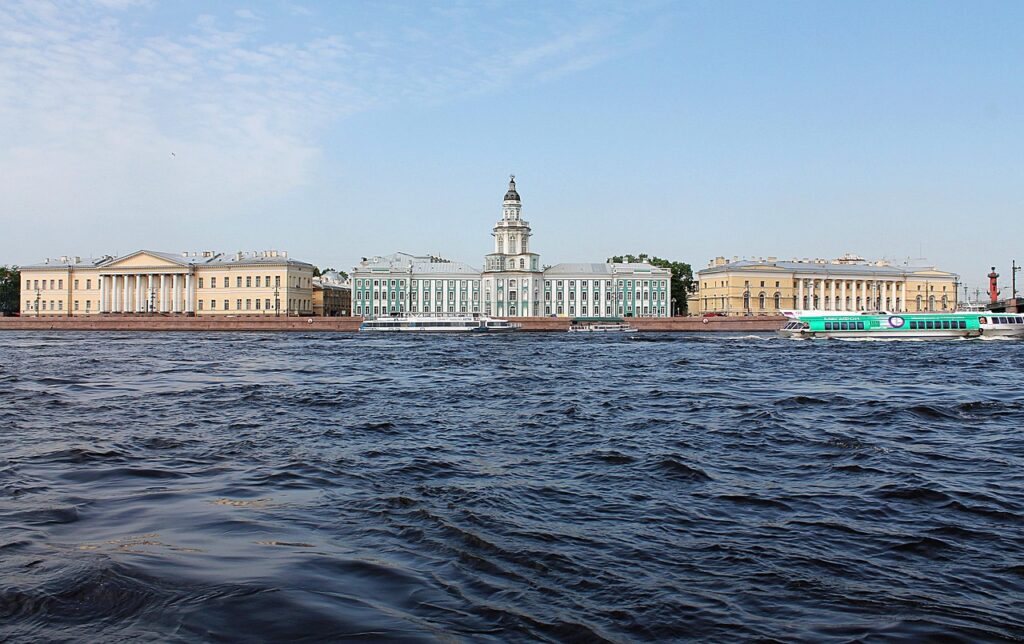
- St. Petersburg: The “Venice of the North,” Peter the Great’s imperial window to the West, filled with canals, palaces, and the world-class Hermitage. (Imperial, Romantic, Artistic)
- Kazan: The capital of Tatarstan, where Slavic and Turkic cultures merge, symbolized by its unique white-walled Kremlin. (Multicultural, Ancient, Vibrant)
- Vladivostok: The terminal point of the Trans-Siberian Railway, a hilly port city on the Pacific with a distinct Far East character. (Maritime, Remote, Gateway)
- Suzdal & Vladimir: Jewels of the “Golden Ring,” offering a glimpse into medieval Russia with white-stone churches and idyllic countryside. (Medieval, Picturesque, Peaceful)
🏞️ Russia National Parks & Nature Reserves
- Stolby Nature Reserve: Famous for its dramatic syenite rock pillars that attract climbers and hikers from across Siberia.
- Kronotsky Nature Reserve: The “Land of Fire and Ice” in Kamchatka, accessible only by helicopter.
- Prypyatsky National Park: A sprawling wetland and forest area in the heart of European Russia.
🏛️ UNESCO World Heritage Sites
- Kremlin and Red Square, Moscow — The political and spiritual heart of the nation.
- Historic Centre of Saint Petersburg — An entire city planned by the Tsars to rival Paris and Versailles.
- Cultural and Historic Ensemble of the Solovetsky Islands — A remote monastery in the White Sea that served as both a spiritual center and a fortress.
- Virgin Komi Forests — The largest virgin forest area in Europe.
- Lake Baikal — The pearl of Siberia and a laboratory for evolutionary science.
🖼️ Russia Museums & Galleries
- The State Hermitage Museum (St. Petersburg): One of the world’s largest art museums, housed in the former Winter Palace.
- The State Tretyakov Gallery (Moscow): The ultimate collection of Russian fine art, from ancient icons to Kandinsky.
- Pushkin State Museum of Fine Arts (Moscow): A major collection of European art, including significant Impressionist works.
- The State Russian Museum (St. Petersburg): The largest depository of Russian fine art in the world.
🎉 Russia Festivals & Celebrations
- Maslenitsa: (February/March) A joyful spring festival celebrated with blini (pancakes), folk games, and the burning of a straw effigy of winter.
- Victory Day: (May 9) A solemn and massive celebration of the end of WWII, marked by military parades on Red Square and “Immortal Regiment” walks.
- White Nights Festival (St. Petersburg): (June) A series of concerts, ballets, and the spectacular Scarlet Sails celebration during the period of midnight sun.
- New Year’s Eve: The most significant holiday in Russia, celebrated with family feasts, Ded Moroz (Grandfather Frost), and champagne at the stroke of midnight.
🧽 How to Arrive
- ✈️ By Air
- Main International Airports: Sheremetyevo (SVO), Domodedovo (DME), Vnukovo (VKO) (Moscow); Pulkovo (LED) (St. Petersburg).
- Airlines: Aeroflot (National Carrier), S7 Airlines, Turkish Airlines, Emirates, Qatar Airways. (Note: Check current availability due to international sanctions).
- Flight search: Skyscanner.
- 🚆 By Rail
- International Rail Connections: Historically connected to Europe, Central Asia, and China. (Note: Check current status of international routes like the Allegro to Helsinki).
- Trans-Siberian Railway: The world’s longest rail journey connecting Moscow to Vladivostok (9,289 km).
- 🚗 By Road
- Border Crossings: Shares borders with 14 countries. Common entries from Estonia, Latvia, Finland, Belarus, and Georgia (Note: Check for current entry restrictions).
📶 Stay Connected
- SIM Cards & Telecom
🏨 Where to Stay
Russia offers everything from world-renowned imperial-era grand hotels to trendy Soviet-chic hostels and remote mountain lodges.
- Notable Hotel Chains: Metropol Moscow, Hotel Astoria (St. Petersburg), Lotte Hotels, Radisson.
- Tips: Imperial Grandeur vs. Modern Urban:
- Imperial Grandeur: Stay in historic hotels in the city centers of Moscow or St. Petersburg for a taste of Romanov-era luxury.
- Soviet Modernism: Many hotels in regional cities offer a fascinating “Socialist Modernist” architectural experience with updated interiors.
- Unique Stays:
- Trans-Siberian Sleeping Cars: Your “hotel” on wheels across the continent.
- Wooden Guest Houses (Golden Ring): Experience traditional rural life in Izba-style accommodations.
⛳ Unique Finds
- Moscow Metro Tour: Explore the “Underground Palaces” of the Soviet era, particularly the Komsomolskaya and Mayakovskaya stations.
- Banya Ritual: An essential Russian experience. Hire a parovshik (steam master) for a traditional oak-leaf venik massage.
- Literary Pilgrimage: Visit Yasnaya Polyana (Tolstoy’s estate) or the Pushkin Apartment in St. Petersburg.
- Trans-Siberian Stopover: Stop in Irkutsk to see the “Paris of Siberia” and the wooden houses with lace-like carvings.
🤝 Russia Cultural Guidance
- Smile Intelligently: In Russia, a smile is a serious matter. It is rarely shared with strangers on the street but is incredibly warm once a connection is made.
- Hospitality: If invited to a Russian home, bring a gift (flowers—odd numbers only—or a bottle of something). Be prepared for a long, abundant feast.
- Superstitions: Never shake hands over a threshold. Do not whistle indoors (it leads to financial loss).
- Dress Modestly in Churches: Women should cover their heads (a scarf) and men should remove hats when entering Orthodox churches.
- Basic Phrases (Russian):
- Hello: “Zdravstvuyte” (Formal) / “Privet” (Informal)
- Thank you: “Spasibo”
- Please: “Pozhaluysta”
- No problem: “Nichego strashnogo”
- Welcome: “Dobro pozhalovat'”
🛂 Russia Entry & Visa Requirements
Check the latest travel security advisory before travel
- E-Visa: Citizens of 55 countries can apply for a unified Russian E-Visa for stays up to 16 days.
- Standard Visa: Required for many Western nationals, often necessitating an “Invitation Letter” from a hotel or travel agency.
- Official Source: Always check the latest requirements at the Consular Department of the Ministry of Foreign Affairs.
💰 Practical Essentials
- Currency: Russian Ruble (RUB). (Note: Foreign-issued Visa/Mastercard/Amex currently do not work inside Russia. Cash is essential; bring USD or EUR to exchange locally).
- Electricity: Type C and F (two round pins, same as most of Europe). Voltage is 220V at 50Hz.
- Safety: Generally safe in major cities, but exercise caution due to the geopolitical situation. Avoid political gatherings. For specific advisories, check US Department of State Travel Advisories for Russia.
- Climate: Vastly varied. Best visited in Late Spring (May/June) or Early Autumn (September). Winter is beautiful but harsh.
✨ Bonus Tip
To truly embrace Russia, don’t fear the silence. Russians appreciate the “pause.” Whether it’s sitting for a moment of silence before a long journey (an old tradition called Prisest na dorozhku) or the quiet reflection found in a darkened church, these silences are where the “broad Russian soul” resides. It is in this stillness, away from the bustle of the Red Square, that you can best hear the echoes of the empire and find your own evolving sense of perspective.
🔗 Featured Links
- Official Resources:
- National Tourism Board: Visit Russia
- Safety & Travel Advisories: Your Country’s Government Travel Advisory for Russia.
- Logistics: Russian Railways (RZD).

Beyondia
Travel CompanionReal digital nomad. I travel. I learn. I grow.
What about you? Where are you going?