GoBeyondia Atlas 🗺️ Middle-East Silk-Road 🗾
Saudi Arabia: Where Nabataean cities rose from rose-red rock and a civilization older than Islam is becoming visible again.
Saudi Arabia in 30 seconds
A Kingdom in active transformation — Vision 2030 is not a slogan but a structural reorganization of one of the world’s most significant civilizations, opening to international tourism for the first time in its modern history with a speed that has surprised observers and residents equally. Riyadh has a skyline that arrived fully formed in the desert — the Kingdom Tower visible from everywhere, the old Diriyah district of mud-brick palaces outside the city now restored as the birthplace of the Saudi state. The Empty Quarter — the Rub’ al Khali — is the world’s largest continuous sand desert, 650,000 square kilometers of dunes that reach 250 meters high and contain a silence so absolute it has a physical texture. AlUla in the northwest is the revelation: a canyon landscape of ochre and rose sandstone containing Hegra, Saudi Arabia’s first UNESCO World Heritage Site — Nabataean tombs carved directly into cliff faces with the same hand that carved Petra, less famous only because the country was closed when the world was looking. Jeddah’s Al-Balad district is a UNESCO-listed historic center of coral-built towers and carved wooden latticework that functioned as the gateway to Mecca for pilgrims arriving by sea for a thousand years. Saudi Arabia is not a destination that finished becoming — it is one in the process, which makes this precise moment historically unusual to witness.
Evoke – Why You Visit Saudi Arabia
You come to Saudi Arabia because you’ve made assumptions about a place based on what you’ve read rather than what you’ve seen, and you’re honest enough to recognize that distinction matters. Every traveler carries a map of the world made partly from experience and partly from other people’s descriptions, and Saudi Arabia has been described mostly by people who weren’t there. You need the direct experience of a civilization that controlled the world’s most significant trade routes for centuries — frankincense, spices, silk — and built cities in landscapes that should have made cities impossible. You’re also arriving at a specific historical moment: a country opening its doors to the world for the first time in a generation, which means you are witnessing a transformation in progress rather than a story already told. That window doesn’t stay open indefinitely. Conscious travelers recognize the difference between being early and being on time.
Explore – How You Experience Saudi Arabia
Arrive in AlUla and drive the canyon road at golden hour when the sandstone cliffs transition through every shade between cream and deep copper and the Nabataean tombs carved into the rock faces catch the last light in ways that make the 2,000-year-old craftsmanship suddenly and completely legible. Stand at Hegra’s Qasr al-Farid — the “Lonely Castle” tomb — the largest Nabataean tomb in existence, unfinished, carved from a single isolated rock formation, and understand that the civilization that built Petra built this first and that you are standing in the less crowded version of one of the ancient world’s great achievements. Walk Jeddah’s Al-Balad at dusk when the coral-stone buildings exhale the day’s heat and the carved Rawasheen screens throw geometric shadows across the alleyways and the call to prayer arrives from multiple minarets in overlapping waves. Drive into the Empty Quarter at dawn with a guide who knows the dune systems and watch the light arrive across sand formations so large they have their own weather patterns. Eat a full Saudi breakfast — foul medames with olive oil, shakshuka, fresh flatbread from a tandoor, dates from Medina — at a family restaurant in Riyadh where the menu is not in English and the food does not require it to communicate. Visit Diriyah’s At-Turaif district where the mud-brick palace complex of the first Saudi state has been restored to its eighteenth century form and the scale of what was built here in the desert, without modern machinery, resets your understanding of what pre-oil Arabian civilization actually was.
Evolve – Who You Become in Saudi Arabia
You leave Saudi Arabia with assumptions replaced by observations, which is the most valuable exchange travel offers and the hardest to manufacture without actually going. You carry AlUla specifically — the particular experience of standing in a landscape of extraordinary archaeological significance that most of the world hasn’t found yet, where the silence of the canyon and the scale of the Nabataean tombs combine into something that operates below the level of thought and above the level of emotion. You develop a more nuanced relationship with transformation — Saudi Arabia is a country rewriting itself at speed, which produces both extraordinary possibility and genuine complexity, and sitting with that complexity without resolving it into a simple verdict is a skill the trip teaches. You also carry the hospitality — diyafa in Arabic, a cultural obligation so deeply embedded that guests are treated with a generosity that feels structural rather than personal. You come home and reconsider what you owe the people who arrive at your door. Saudi Arabia reminded you that welcome is a practice, not a feeling.
Your practical guide to Saudi Arabia starts bellow 👇
🕰️ Saudi Arabia Historical Backdrop
Saudi Arabia’s history is a profound narrative of ancient trade routes, the cradle of Islam, and a modern-day transformation that is capturing the world’s imagination. For millennia, the Arabian Peninsula was a crossroads for caravans carrying frankincense and spices between the Mediterranean and the East. This heritage is anchored in the Nabataean tombs of Hegra and the mud-brick palaces of Diriyah, the ancestral home of the Saudi state. Today, the Kingdom is undergoing a historic “Renaissance” through Vision 2030—a bold roadmap that is opening the doors of this once-hidden gem to global travelers. It is a land where deep-rooted traditions of the Bedouin—defined by generosity and resilience—now coexist with some of the most ambitious architectural and ecological projects on the planet.
🌟 Saudi Arabia Local Experiences
Beyond the monumental skylines, discover Saudi’s soul in the aromatic ritual of a traditional coffee ceremony, where the scent of cardamom and the sweetness of local dates offer a warm introduction to Arabian life. Experience the vibrant sensory immersion of a Jeddah souq at midnight, the exhilarating silence of a desert camp under a blanket of stars in the Empty Quarter, or the cool, misty air of the southern Asir mountains. Whether it’s witnessing the ancient art of falconry or engaging in a lively conversation with a local guide about the country’s future, these moments reveal a nation that is proudly reclaiming its past while boldly crafting its future.
🌄 Saudi Arabia Natural Wonders
- The Edge of the World (Jebel Fihrayn): A dramatic geological escarpment northwest of Riyadh, offering uninterrupted, breathtaking views across an ancient seabed.
- AlUla’s Sandstone Canyons: A labyrinth of rock formations and hidden oases that house thousands of years of human history.
- Wadi Al Disah: A spectacular valley in the Tabuk province characterized by towering red sandstone pillars and lush palm greenery.
- The Empty Quarter (Rub’ al Khali): The world’s largest contiguous sand desert, a landscape of shifting dunes and absolute serenity.
- The Farasan Islands: A marine sanctuary in the Red Sea, home to pristine coral reefs and diverse birdlife.
🏙️ Saudi Arabia Must-See Cities
- Riyadh: (Capital) A high-energy metropolis where the historic Masmak Fortress stands in the shadow of gleaming glass skyscrapers. (Modern, Dynamic, Cultural)
- Jeddah: A cosmopolitan port city known for its UNESCO-listed Al-Balad district, a vibrant arts scene, and the stunning Red Sea corniche. (Artistic, Coastal, Historic)
- AlUla: A world-class heritage destination, home to Hegra and the stunning Maraya, the world’s largest mirrored building. (Ancient, Mystical, Luxurious)
- Abha: Located in the Asir mountains, offering a cool climate, unique architecture, and breathtaking cable car views. (Mountainous, Traditional, Scenic)
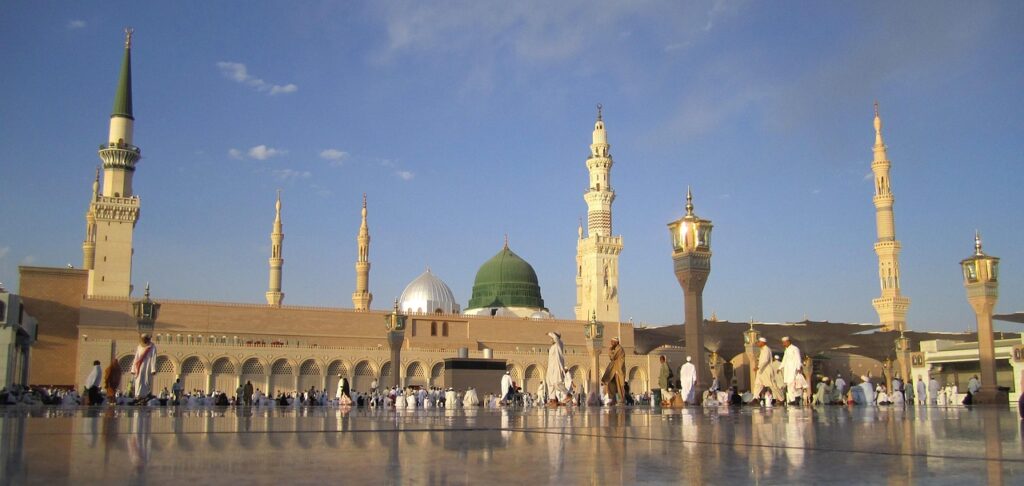
- Medina (Al-Madinah): One of Islam’s holiest cities, centered around the profound spiritual atmosphere of the Prophet’s Mosque. (Spiritual, Serene, Historic)
🏞️ Saudi Arabia National Parks & Nature Reserves
Managed by the National Center for Wildlife, focusing on the reintroduction of native species.
- Sharaan Nature Reserve (AlUla): A vast protected area dedicated to preserving the desert ecosystem and the endangered Arabian Leopard.
- Asir National Park: The Kingdom’s first national park, featuring diverse wildlife and dramatic mountain landscapes.
🏛️ UNESCO World Heritage Sites
- Hegra Archaeological Site (Al-Hijr) — The largest conserved site of the Nabataean civilization south of Petra.
- At-Turaif District in ad-Dir’iyah — The first capital of the Saudi Dynasty, showcasing traditional Najdi architecture.
- Historic Jeddah — A unique architectural ensemble of coral stone tower houses.
- Rock Art in the Hail Region — Ancient petroglyphs depicting 10,000 years of history.
- Al-Ahsa Oasis — A lush landscape of 2.5 million date palms and ancient canals.
- For a full list, visit the UNESCO Saudi Arabia Portal.
🖼️ Saudi Arabia Museums & Galleries
- National Museum of Saudi Arabia (Riyadh): A comprehensive journey through the history of the Arabian Peninsula.
- Ithra (Dhahran): The King Abdulaziz Center for World Culture, a hub for art, innovation, and global dialogue.
🎉 Saudi Arabia Festivals & Celebrations
- Riyadh Season: (Winter) A massive entertainment festival with international concerts, sports, and themed zones.
- Winter at Tantora (AlUla): A high-end cultural festival blending music, heritage, and art in the desert.
- Saudi National Day: (September 23) A nationwide celebration of pride with fireworks, parades, and folk dances.
🧽 How to Arrive
- ✈️ By Air
- 🚆 By Rail
- The Haramain High Speed Railway provides efficient travel between Makkah, Medina, and Jeddah.
- 🚗 By Road
- Saudi Arabia shares borders with the UAE, Oman, Qatar, Kuwait, Jordan, and Iraq. Driving is on the right, and the highway network is modern and extensive.
📶 Stay Connected
- SIM Cards: Major providers are STC, Mobily, and Zain.
- Where to buy: Kiosks are available at all arrival airports. Registration with a passport is mandatory.
- eSIM: Widely supported and available through provider apps or international platforms like Airalo.
🏨 Where to Stay
Saudi Arabia offers a burgeoning range of luxury and boutique hospitality experiences.
- Banyan Tree AlUla: Stunning tented villas integrated into the sandstone rock.
- Habitas AlUla: An eco-friendly resort focused on community and sustainable luxury.
- City Excellence: International brands like Fairmont, Four Seasons, and Ritz-Carlton dominate the Riyadh and Jeddah skylines.
⛳ Unique Finds
- The Maraya Building: A literal mirage in the desert, this mirrored building reflects the ancient beauty of AlUla.
- Traditional Souqs: Explore Souq Al Zal in Riyadh for authentic carpets and incense.
- Red Sea Diving: Experience world-class, untouched dive sites along the Kingdom’s western coast.
🤝 Saudi Arabia Cultural Guidance
- Hospitality: Saudis take immense pride in hosting guests. Accepting coffee (Qahwa) is a gesture of friendship.
- Dress Code: While modern Saudi is increasingly open, modesty is respected. Travelers are advised to cover shoulders and knees in public.
- Greetings: A warm “Salam Alaikum” (Peace be upon you) is the standard greeting.
- Basic Phrases:
- Hello: “Marhaba” / “Salam”
- Thank you: “Shukran”
- Please: “Min fadlak” (to a man) / “Min fadlik” (to a woman)
🛂 Saudi Arabia Entry & Visa Requirements
- e-Visa: Citizens of over 60 countries can apply for a tourism visa online via the Saudi e-Visa Portal.
- Visa on Arrival: Available for residents of certain countries and holders of valid US/UK/Schengen visas.
- Official Source: Consult the Ministry of Tourism for the latest entry regulations.
💰 Practical Essentials
- Currency: Saudi Riyal (SAR). Credit cards are accepted almost everywhere, including most small shops.
- Electricity: Type G (Three rectangular pins). Voltage is 230V.
- Safety: Saudi Arabia is consistently ranked as one of the safest destinations globally for international travelers.
- Climate: Best visited from October to March. Summers (June-August) are extremely hot in the interior, though the coastal areas and southern mountains remain pleasant.
✨ Bonus Tip
To truly embrace Saudi Arabia, seek out the “Gap between the Eras.” Stand in the 300-year-old mud house in Diriyah and look out at the modern skyline of Riyadh. This juxtaposition is the essence of the Kingdom today—a nation that is fiercely protecting its heritage while aggressively building a futuristic world. It is in this transition that you will find the most inspiring stories of change.
🔗 Featured Links
- Official Tourism: Visit Saudi.
- Heritage Exploration: Experience AlUla.

Beyondia
Trusted Travel CompanionReal digital nomad. I travel. I learn. I grow.
What about you? Where are you going?