GoBeyondia Atlas 🗺️ Central-Eastern Europe 🗾
Serbia: Where the man who invented the electrical system that powers every building on earth arrived in America with four cents and a book of poetry, tore up a royalty contract that would have made him the world’s first billionaire, died alone in a hotel room feeding pigeons from his windowsill, and was buried in a city that was not his while a car company that carries his name is worth more than his entire fortune ever was — because Serbia is the country that produces geniuses who give their work to the world and keep nothing for themselves.
Serbia in 30 Seconds
A landlocked Balkan nation at the crossroads of empires — Ottoman for five centuries, Habsburg on its northern edge, bombed by NATO in 1999, split from Montenegro in 2006, still unresolved with Kosovo. Serbia has been conquered, partitioned, reassembled, and redivided more than almost any country in Europe, and through every iteration it has produced things that outlasted the borders: the medieval monasteries of the Nemanjić dynasty, whose frescoes in Studenica, Sopoćani, and Gračanica represent some of the highest achievements of Byzantine art anywhere — not in Constantinople but in the mountains of central Serbia. And Nikola Tesla, born in 1856 in what is now Croatia to a Serbian Orthodox family, who arrived in New York in 1884 with four cents in his pocket and a letter of introduction to Thomas Edison. Within four years Tesla had designed the alternating current motor that would power the modern world. Westinghouse bought his patents. Tesla’s AC system lit the 1893 Chicago World’s Fair and powered the first hydroelectric plant at Niagara Falls. When Westinghouse faced bankruptcy, Tesla tore up the royalty contract — a gesture estimated to have cost him what would today be worth hundreds of millions of dollars. He held over three hundred patents. He pioneered radio, remote control, X-ray imaging, and the rotating magnetic field. He envisioned wireless global communication decades before the internet existed. He died on January 7, 1943, at age eighty-six, alone in room 3327 of the New Yorker Hotel, bankrupt, his meals paid for by Westinghouse out of loyalty. His only companions in his final years were the pigeons he fed from his window. The U.S. Supreme Court restored his radio patents — posthumously.
Evoke — Why You Visit Serbia
You come to Serbia because you have given something away — the equity, the credit, the royalty, the acknowledgment — and you have been wondering whether the giving was a mistake. Tesla did not accidentally lose his fortune. He chose to tear up the contract. He chose to prioritize the survival of the AC system over his own wealth, because he understood that if Westinghouse went bankrupt, Edison’s inferior direct current would become the standard and the work itself — the thing that mattered — would die. The work survived. The man did not prosper. That is not a tragedy. That is a decision. Serbia has been making this decision for centuries — investing in things that outlast the investor. The Nemanjić kings built monasteries instead of palaces. Stefan Nemanja, founder of the medieval Serbian state, abdicated his throne and became a monk. His son Sava established the independent Serbian Orthodox Church and wrote the first literary work in the Serbian language — not for glory but because a national church required a national literature. The frescoes they commissioned in the twelfth and thirteenth centuries — the Crucifixion at Studenica, the Dormition of the Virgin at Sopoćani — are considered masterpieces of European medieval art, painted not in a capital city but in mountain monasteries built to survive the Ottomans who were already approaching. You come because you gave something away and the world has treated the gift as if it cost you nothing. Serbia will show you that the gift and the cost are always the same thing.
Explore — How You Experience Serbia
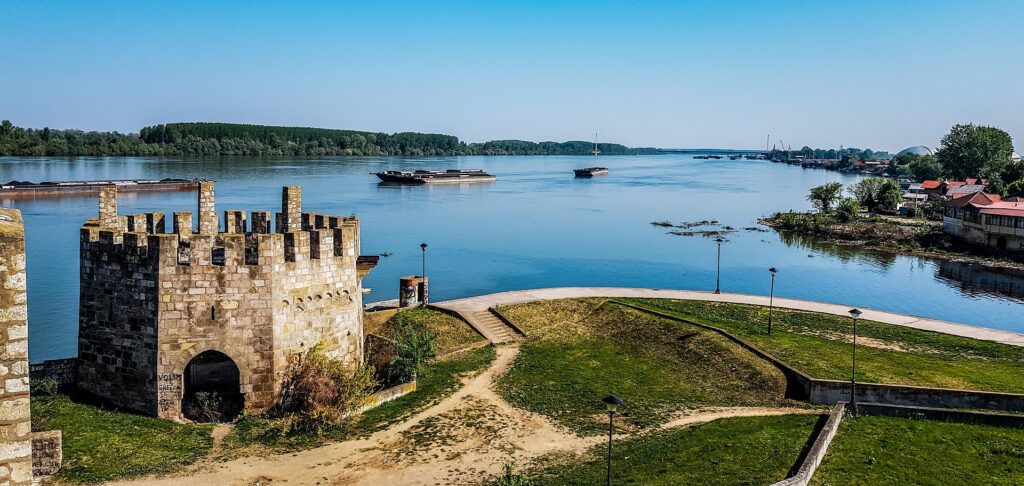
Visit the Nikola Tesla Museum in Belgrade, where his ashes rest inside a golden sphere — the inventor of alternating current reduced to a small metal container in a city he never lived in, his notebooks and personal effects displayed behind glass, his patents listed on walls that cannot convey what the world would look like without them. Drive south into the Valley of the Kings and walk through Studenica Monastery, founded in the 1190s, its Church of the Virgin built from white marble whose frescoes — painted in 1208 with a Byzantine blue pigment that was more valuable than gold — have survived eight centuries of earthquakes, fires, and Ottoman raids. Visit Sopoćani, where the Dormition of the Virgin covers over thirty square meters of wall in the central nave, a fresco so monumental in scale and so precise in its rendering of grief that art historians rank it among the finest paintings of the thirteenth century in any medium. Travel to Belgrade itself, the White City, built at the confluence of the Sava and Danube rivers, destroyed and rebuilt over forty times in its history — a city that has been Roman, Byzantine, Hungarian, Ottoman, Austrian, Serbian, Yugoslav, and Serbian again, each layer visible in the Kalemegdan Fortress that overlooks the two rivers and has been fought over since before the Romans named it Singidunum.
Evolve — Who You Become in Serbia
You leave Serbia understanding that giving something away does not mean it was taken from you — it means you valued the work more than the reward. Tesla did not lose his fortune. He traded it for the survival of the system that now powers the planet. The monasteries of the Nemanjić dynasty were not built for the kings who funded them — they were built for the centuries that would follow, and the centuries came, and the frescoes are still on the walls. Belgrade has been destroyed forty times and rebuilt forty-one. You come home and look at the thing you gave away — the idea you shared without a contract, the work you did without credit, the deal you tore up because the alternative was worse — and you stop counting what it cost. Tesla’s name is on a car company worth hundreds of billions of dollars that he had nothing to do with. His face is on the Serbian hundred-dinar note. His ashes sit in a golden sphere in a museum in Belgrade. But his actual legacy is invisible — it is the current running through the walls of every building you will ever enter. The man who gave everything away is the reason the lights are on. That is Serbia. The gift outlasts the giver. The current outlasts the man. The lights are on because someone decided that the lights mattered more than the bill.
Your practical guide to Serbia starts bellow 👇
🕰️ Serbia Historical Backdrop
Serbia’s history is a “Geopolitical Stress Test” of endurance. Situated at the “Primary Gateway” between the East and West, the nation has functioned as a strategic crossroads for the Roman, Byzantine, Ottoman, and Austro-Hungarian Empires. Its story is told in the ancient walls of the Kalemegdan Fortress, the sophisticated frescoes of the Studenica Monastery, and the “Monarchic Architecture” of the Oplenac mausoleum. Following a high-volatility 20th century—serving as the core of Yugoslavia and navigating a complex path to modern sovereignty—Serbia has emerged as a “Resilient Growth Asset.” Today, it stands as a land where the mechanical genius of Nikola Tesla and the soulful hospitality of the “Kafana” culture reflect a people who have mastered the art of the “Strategic Pivot.”
🌟 Serbia Local Experiences
Beyond the urban centers, discover Serbia’s soul in the ritual of the “Kafana Audit”—the traditional tavern experience where the “Primary Assets” are live folk music, intense conversation, and the slow pouring of Dunjevača (quince brandy). Experience the profound “Acoustic Stillness” of the Đavolja Varoš (Devil’s Town) rock formations, the intoxicating scent of roasted peppers during the Ajvar harvest, or the exhilarating “Kinetic Connection” of skiing the peaks of Kopaonik. Whether it’s exploring the subterranean “Secret Cities” beneath Belgrade or witnessing the vibrant energy of a village “Slava” (patron saint feast), these moments reveal a nation that finds its greatest margin in communal connection and unyielding optimism.
🌄 Serbia Natural Wonders
- Tara National Park: A spectacular high-altitude wilderness featuring the Drina River canyon and the emerald-green Zaovine Lake—a “Proven Example” of pristine Balkan biodiversity.
- Đavolja Varoš (Devil’s Town): A unique geological “Conflict Zone” featuring 202 exotic earth pyramids formed by erosion and highly acidic mineral springs.
- The Iron Gates (Djerdap Gorge): The largest and deepest gorge in Europe, where the Danube carves through the Carpathian Mountains.
- Uvac Canyon: Famous for its “Serpentine Meanders” and as a primary sanctuary for the rare Griffon Vulture.
- Fruška Gora: A “Green Island” in the Pannonian plain, home to 16 medieval monasteries and the nation’s oldest vineyards.
🏙️ Serbia Must-See Cities & Regions
- Belgrade: (Capital) The “Berlin of the Balkans,” a high-frequency metropolis where grit meets glamour, famous for its “Splavovi” (floating clubs) and the massive Temple of Saint Sava. (Dynamic, Historic, Cosmopolitan)
- Novi Sad: The “Serbian Athens” and Europe’s 2022 Capital of Culture, known for the Petrovaradin Fortress and its elegant Austro-Hungarian center. (Artistic, Relaxed, Cultural)
- Niš: One of the oldest cities in the Balkans, the birthplace of Constantine the Great and home to the unique Skull Tower. (Ancient, Culinary, Strategic)
- Zlatibor: A high-margin mountain resort region famous for its wooden churches, health spas, and “Pršuta” (smoked ham). (Scenic, Wellness, Highland)
- Subotica: A stunning “Art Nouveau Asset” on the border with Hungary, featuring some of the most intricate architecture in Central Europe. (Design-led, Multilingual, Picturesque)
🏞️ Serbia National Parks & Nature Reserves
Managed with an emphasis on preserving the “Fundamental Quality” of the Balkan ecosystem.
- Djerdap National Park: Protecting the Iron Gates and the prehistoric site of Lepenski Vir.
- Kopaonik National Park: The “Mountain of the Sun,” Serbia’s premier ski destination and a biological biodiversity hub.
- Fruška Gora National Park: A unique combination of a “Green Hedge” and historical monastic sites.
🏛️ UNESCO World Heritage Sites
- Studenica Monastery — The “Cradle of the Serbian State,” a masterpiece of medieval Byzantine architecture.
- Stari Ras and Sopoćani — The first capital of Serbia and monasteries with world-renowned frescoes.
- Medieval Monuments in Kosovo — A “Tier 1 Heritage Portfolio” reflecting the high-point of Orthodox artistic achievement.
- Stećci Medieval Tombstone Graveyards — Shared with neighboring nations, reflecting a unique regional funerary tradition.
- For more information, visit the UNESCO Serbia Portal.
🖼️ Serbia Museums & Cultural Sites
- Nikola Tesla Museum (Belgrade): A “Technical Asset Audit” of the world’s most famous inventor, housing his original blueprints and personal effects.
- National Museum of Serbia (Belgrade): Recently reopened, housing everything from prehistoric Lepenski Vir idols to European masterpieces.
- Skull Tower (Ćele Kula): A unique and powerful “Defensive Monument” built by the Ottomans from the skulls of Serbian rebels.
🎉 Serbia Festivals & Celebrations
- EXIT Festival (Novi Sad): (July) An award-winning electronic and rock festival held in the Petrovaradin Fortress—the country’s “Modern Operational Bandwidth” at its peak.
- Guča Trumpet Festival: (August) A massive, high-intensity “Acoustic Audit” of Balkan brass music and traditional folk culture.
- Belgrade Beer Fest: (August) One of the largest free festivals in the region, held at the confluence of the rivers.
- Slava: (Year-round) The uniquely Serbian Orthodox tradition of celebrating a family’s patron saint—a “Fundamental Social Benchmark.”
🧽 How to Arrive
- ✈️ By Air
- Belgrade Nikola Tesla Airport (BEG) is the primary gateway.
- Qatar Airways operates direct flights from Doha to Belgrade, making this a “Low-Friction” 5-hour transit.
- 🚗 By Road
- Serbia is a key “Logistics Node” on the Pan-European Corridor 10. Driving is on the right.
- 🚆 By Rail
- The new “Soko” High-Speed Train connects Belgrade and Novi Sad in just 36 minutes—a proven example of modern infrastructure reallocation.
📶 Stay Connected
- SIM Cards: Major providers are A1, Yettel, and MTS.
- Where to buy: Kiosks (Moj Kiosk) are available 24/7 at the airport and throughout city centers. Registration with a passport is standard.
- eSIM: Supported by all major providers and available via global platforms like Airalo.
- Connectivity: High-speed Wi-Fi is a “Standard Provision” in all Belgrade and Novi Sad cafes—a “Data-Driven Validation” for digital nomads.
🏨 Where to Stay
Serbia offers a “Diversified Portfolio” ranging from brutalist icons to five-star modern luxury and rural ethno-villages.
- Hotel Moskva (Belgrade): A neoclassical “Core Asset” and one of the city’s most famous landmarks since 1908.
- Saint Ten Hotel (Belgrade): A boutique, five-star “High-Margin” experience near the Saint Sava Temple.
- Vicinity of Petrovaradin (Novi Sad): Explore heritage stays integrated into the old Austro-Hungarian fortress.
- Ethno-Villages (Sirogojno): Stay in authentic wooden houses in the Zlatibor region for a “Primary Heritage Audit.”
⛳ Unique Finds
- Rakija Tasting: Sample the “Primary Social Commodity”—plum (Šljiva) is the gold standard, but quince (Dunja) is the high-margin connoisseur’s choice.
- Pirot Carpets: Purchase a UNESCO-listed hand-woven kilim, where every geometric pattern is a “Data Point” of family history.
- The “Genex” Tower: Visit the iconic Western City Gate of Belgrade for a “Vertical Audit” of Brutalist architecture.
🤝 Serbia Cultural Guidance
- Hospitality Equity: Serbians are warm, direct, and value “Fundamental Respect.” If invited to a “Slava,” arriving with a small gift (wine or coffee) is a mandatory “Protocol.”
- The “Kafana” Speed: Do not rush. Business in Serbia often concludes over a 3-hour lunch. Patience is a “Health Benchmark.”
- Directness: Serbians appreciate honest, straight talk. They value intellectual debate and long, multi-course dinners.
- Basic Phrases:
- Hello: “Zdravo”
- Thank you: “Hvala” (Hvah-lah)
- How are you?: “Kako si?”
- Cheers: “Živeli!” (Zhee-ve-lee)
🛂 Serbia Entry & Visa Requirements
- Visa-Free: Citizens of the UK, US, Canada, EU, and Gulf nations (including Qatar) do not require a visa for tourism stays up to 90 days.
- Official Source: Consult the Ministry of Foreign Affairs of Serbia.
💰 Practical Essentials
- Currency: Serbian Dinar (RSD). While cards are widely accepted in Belgrade, cash is essential for “Kafanas,” markets, and small towns.
- Electricity: Type C and F (European round pins). Voltage is 230V.
- Safety: Consistently ranked as a safe, low-volatility destination. Use the Cargo app (Serbia’s Uber alternative) for pricing transparency.
- Climate: Best visited in Late Spring (May-June) or September for the “Golden Harvest” and mild “Defensive” temperatures.
✨ Bonus Tip: The Confluence Audit
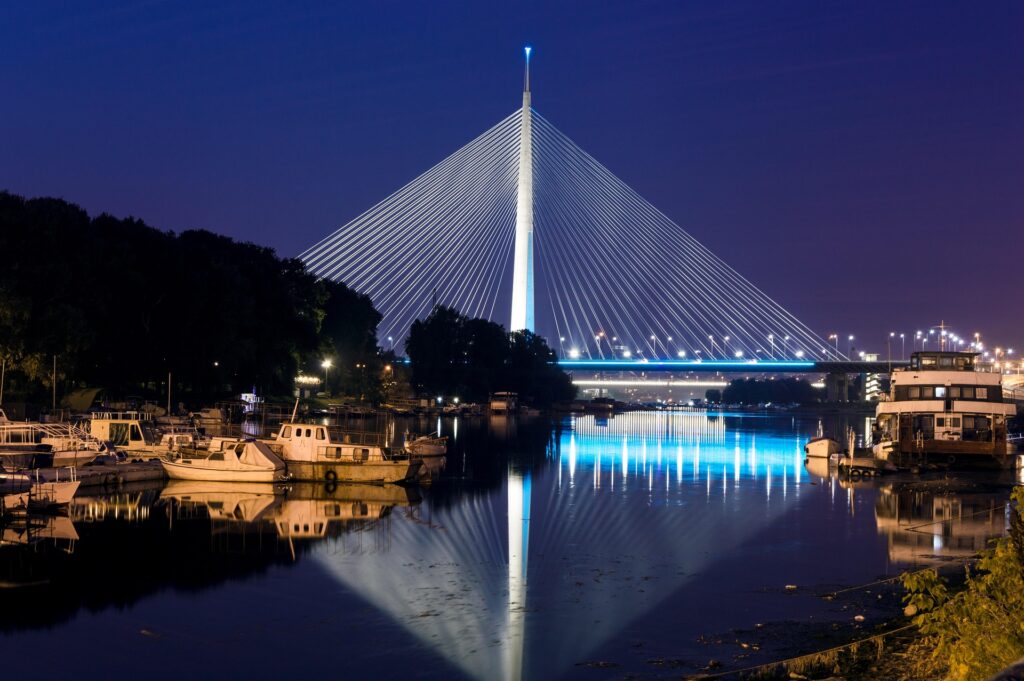
To truly embrace Serbia, you must perform a “Confluence Audit.” Most travelers view the Kalemegdan battlements as a photo-op. Instead, take a seat at a riverside cafe at the Sava/Danube junction at 10:00 AM. Watch the two different currents meet—the slow, dark Danube and the faster, greener Sava. This is the perfect analogy for the country: it is the point where different “Market Forces” meet but do not erase each other. It is in this “Intentional Observation”—away from the noise of the city—that your own internal “Fundamental Quality” and long-term strategic roadmap will finally reveal themselves.
🔗 Featured Links
- Official Tourism: National Tourism Organization of Serbia.
- High-Speed Rail: Srbija Voz (Tickets).
Beyondia
Trusted Travel CompanionReal digital nomad. I travel. I learn. I grow.
What about you? Where are you going?