GoBeyondia Atlas 🗺️ Mediterranean Region 🗾
Slovenia: Where a carpenter’s son who replied to a marriage proposal with “I am already married to my architecture” spent thirty years transforming a provincial Habsburg town into a capital worthy of a nation that did not yet exist, a lamplighter preparing torches for an emperor’s visit crossed a makeshift bridge over an underground river and whispered “Here is a new world,” a blind salamander that locals mistook for a baby dragon gave up its eyes in exchange for a century of life in perfect darkness, and a priest bought the summit of the highest mountain for one florin so that no foreign flag would ever fly from it.
Slovenia in 30 Seconds
A country of twenty thousand square kilometers — smaller than New Jersey — that contains the Julian Alps, the Adriatic coast, Pannonian plains, and the karst limestone plateau that gave the entire geological phenomenon its name, all within two hours of driving in any direction from a capital whose population barely exceeds a quarter million. Ljubljana is the city that Jože Plečnik rebuilt without tearing down, a carpenter’s son from the provinces who studied under the great Otto Wagner in Vienna, renovated Prague Castle for the first Czechoslovak president, then returned home in 1921 to find a sleepy town that had just lost its empire and needed to become the capital of a people who had never had their own state. What Plečnik did next was what UNESCO, inscribing his works in 2021, called “human centred urban design” — he did not demolish the medieval streets or impose a modernist grid, but listened to the city’s existing geometry and wove bridges, markets, libraries, and embankments into what was already there, creating a capital so quietly coherent that his influence has been compared to Gaudí’s Barcelona, except that Plečnik worked with public space rather than private commission, and with restraint rather than spectacle. The National and University Library stands as his manifesto — its facade of rough-cut stone and smooth brick symbolizing the passage from darkness to enlightenment, its entrance a deliberately darkened stairway that forces you to climb toward light, because Plečnik believed knowledge should feel earned. An hour southwest, Postojna Cave stretches twenty-four kilometers through limestone the Pivka River has been dissolving for three million years — the most biologically diverse cave in the world, home to over a hundred and fifty species including the olm, a blind aquatic salamander called the “human fish” for its pale skin, which lives for a century and survives eight years without eating, and which locals believed were baby dragons flushed out by floods. In 1818, a lamplighter named Luka Čeč was preparing the cave for Emperor Francis I when he crossed the underground river and stumbled into passages that would make Postojna the birthplace of speleobiology. And above it all stands Triglav, the three-headed mountain at 2,864 meters whose name invokes the ancient Slavic deity ruling sky, earth, and underworld — so central to Slovenian identity that it appears on the flag, the coat of arms, and the fifty-cent coin, and tradition holds that every true Slovenian must climb it once in a lifetime. In 1895, a priest named Jakob Aljaž bought the summit for one florin and had five men carry a small metal tower to the peak and assemble it in five hours so that the mountain would be marked forever as Slovenian ground.
Evoke — Why You Visit Slovenia
You come to Slovenia because everything you have been building has been too loud, and you need a country that proves greatness works better at a whisper. This is where an architect kept the old bridge instead of demolishing it, adding two pedestrian spans on either side to create the Triple Bridge — honoring what existed while expanding what was possible. Where a salamander evolved for millions of years in absolute darkness, surrendering sight and pigment and the need to eat more than once a decade, and in return gained a lifespan that dwarfs every other amphibian — because adaptation is not about adding capabilities but about knowing which ones to release. Where a nation of two million people covers sixty percent of its territory in forest because they decided that what you protect defines you more than what you build. You come because you have been adding features, chasing scale, saying yes to everything, and Slovenia will teach you that the carpenter’s son who became the greatest architect in his country’s history responded to a woman’s written marriage proposal with five words: “I am already married to my architecture.” Focus is not deprivation. It is the thing that makes everything else possible.
Explore — How You Experience Slovenia
Walk Plečnik’s Ljubljana along the Ljubljanica embankments — not as a tourist following a map but as someone retracing the decisions of an architect who treated every bridge and market colonnade as a conversation with the city already there — from the Triple Bridge to the Cobbler’s Bridge with its Corinthian and Ionic columns making a classical square float on water, to the Central Market whose semicircular arches frame the river, to the Roman Wall at Mirje where Plečnik incorporated ancient ruins into new structure, making the old visible inside the modern. Enter the National and University Library through the dark vestibule that Plečnik designed as a metaphor — you climb a deliberately unlit stairway, and when you reach the reading room the light floods in through high windows, because the architect wanted every visitor to physically experience the journey from ignorance to knowledge. Take the underground railway through Postojna Cave — the only cave in the world with its own train, running for over a hundred and forty years — past the five-meter stalagmite called Brilliant, then stand in the Vivarium where the olm drifts through water at thirteen degrees, a creature so perfectly adapted that it has no need for the one thing every other vertebrate considers essential, and ask yourself what you might accomplish if you stopped trying to see everything and instead mastered the darkness you are already in. Drive to the Vrata Valley where Triglav’s north face rises one thousand meters in a single wall, then climb the route that eighty thousand people attempt each year, sleeping in a mountain hut where the menu is jota and the conversation is about weather windows, until you stand at the Aljaž Tower where a priest’s one-florin purchase ensured that the highest point in Slovenia would belong to Slovenia, and where on the day of independence in 1991 the national flag was raised from the same tower that communists had once painted red.
Evolve — Who You Become in Slovenia
You leave Slovenia understanding that refinement is not the absence of ambition — it is ambition’s most sophisticated form. Plečnik did not build less than Gaudí. He built with more discipline, choosing public squares over private fantasies, continuity over rupture. The olm did not fail to develop eyes. It succeeded in eliminating what it did not need, and the reward was a century of life in a world perfectly suited to its capacities. Aljaž did not conquer Triglav. He bought it for the price of a coffee so it could never be taken, and the tower he built in five hours has outlasted every empire that tried to claim the mountain. You come home and look at what you have been building and you start subtracting. Not because you are giving up but because Slovenia taught you that the most elegant solution removes everything unnecessary until what remains appears inevitable. Plečnik kept the old bridge. The olm released its eyes. Aljaž needed only one florin and five hours. What are you carrying that you no longer need?
Your practical guide to Slovenia starts bellow 👇
🕰️ Slovenia Historical Backdrop
Slovenia’s history is a resilient narrative of a small nation maintaining a distinct linguistic and cultural identity at the intersection of the Slavic, Germanic, and Romance worlds. From its early settlement by the Alpine Slavs to centuries under the Habsburg Monarchy and its 20th-century chapter within Yugoslavia, Slovenia has always looked toward the heart of Europe. Its story is told in the medieval cliffside castles, the Alpine legends of the Zlatorog (Goldenhorn), and its pioneering role as the first nation to declare independence during the dissolution of Yugoslavia in 1991. Today, Slovenia stands as a global leader in sustainability—the first country to be declared a “Green Destination of the World”—proving that true progress lies in the meticulous preservation of one’s natural and cultural heritage.
🌟 Slovenia Local Experiences
Beyond the panoramic viewpoints, discover Slovenia’s soul in the ritual of the Saturday morning market in Ljubljana, where the city’s culinary pulse meets the warmth of its farmers. Experience the profound stillness of a kayak journey down the emerald Soča River, the intoxicating scent of aging wine in the Goriška Brda hills, or the simple joy of sharing a slice of Potica (nut roll) in a remote mountain hut. Whether it’s exploring the crystalline halls of a vast karst cave or cycling through the car-free streets of the capital, these moments reveal a nation that finds strength in its “Green Soul” and peace in its unhurried, high-quality lifestyle.
🌄 Slovenia Natural Wonders
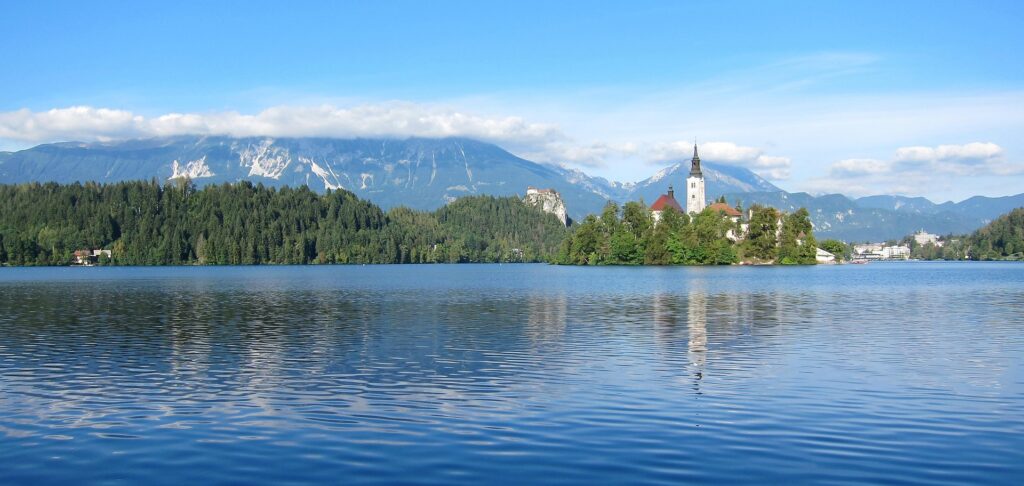
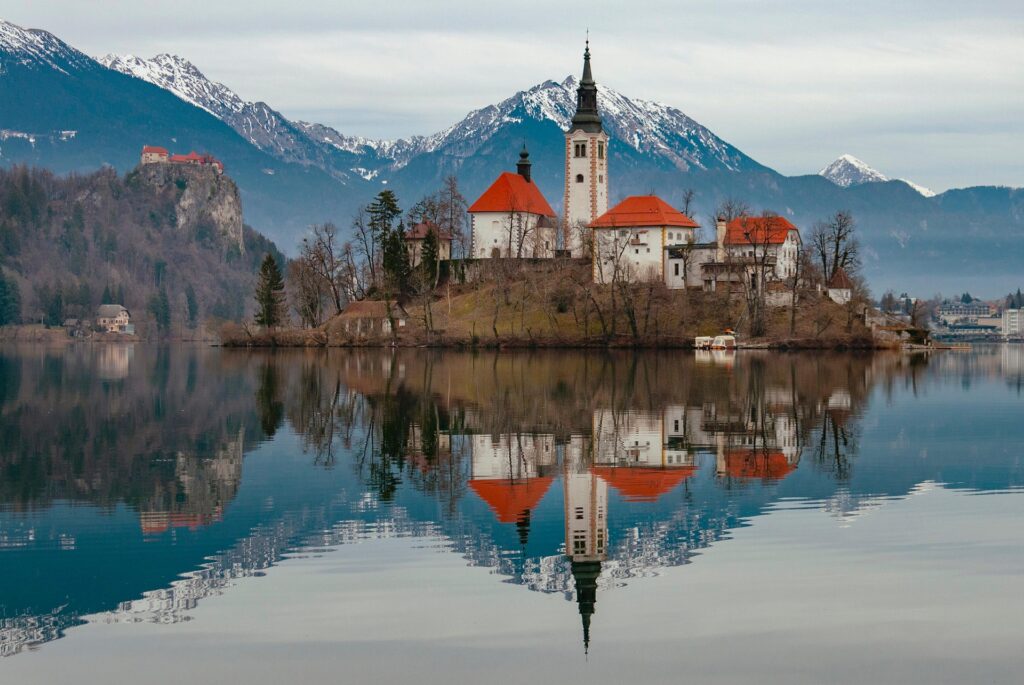
- Lake Bled: An iconic glacial lake with a castle-topped cliff and a charming island church.
- Lake Bohinj: A wilder, more serene alternative to Bled, located in the heart of the Julian Alps.
- The Soča Valley: Famous for its stunning turquoise river and as a premier destination for kayaking, rafting, and hiking.
- Postojna Cave & Škocjan Caves: Spectacular subterranean worlds; Postojna features a unique cave train, while Škocjan is a deep UNESCO-listed canyon.
- Vintgar Gorge: A wooden-walkway trail through a narrow canyon carved by the Radovna River.
- The Logar Valley (Logarska Dolina): One of the most beautiful Alpine glacial valleys in Europe.
🏙️ Slovenia Must-See Cities & Regions
- Ljubljana: (Capital) A vibrant, pedestrianized city known for its “Dragon Bridge,” its hilltop castle, and the elegant architecture of Jože Plečnik. (Green, Artistic, Lively)
- Bled: The country’s most famous Alpine resort, offering world-class scenery and the legendary Bled Cream Cake. (Iconic, Romantic, Scenic)
- Piran: A stunning Venetian-style town on the Adriatic coast, characterized by narrow winding streets and a magnificent circular plaza. (Coastal, Historic, Picturesque)
- Maribor: Home to the world’s oldest living vine and the gateway to the Pohorje mountains. (Viticultural, Relaxed, Cultural)
- Ptuj: The oldest city in Slovenia, famous for its Roman heritage and its unique Carnival traditions (Kurentovanje). (Ancient, Historic, Traditional)
🏞️ Slovenia National Parks & Nature Reserves
Managed with world-leading environmental standards by Slovenia Green.
- Triglav National Park: Slovenia’s only national park, encompassing the majority of the Julian Alps and the country’s highest peak, Mt. Triglav.
- Sečovlje Salina Nature Park: Where salt is still harvested by hand using 700-year-old traditional methods on the Adriatic coast.
- Kozjansko Regional Park: A landscape of high-trunk orchards and medieval castles, emphasizing rural preservation.
🏛️ UNESCO World Heritage Sites
- Škocjan Caves — One of the largest known underground canyons in the world.
- Prehistoric Pile Dwellings around the Alps — Shared archaeological heritage in the Ljubljana Marshes.
- Heritage of Mercury: Almadén and Idrija — Highlighting the historic mercury mines of Idrija.
- The Works of Jože Plečnik in Ljubljana — A human-centered urban design that transformed the capital.
- For a full list, visit the UNESCO Slovenia Portal.
🖼️ Slovenia Museums & Galleries
- National Gallery of Slovenia (Ljubljana): The primary museum for historical art in Slovenia.
- Kobarid Museum: An award-winning museum dedicated to the Isonzo Front of WWI, located in the stunning Soča Valley.
- Museum of Apiculture (Radovljica): Celebrating Slovenia’s deep-rooted tradition of beekeeping and its unique painted hive ends.
🎉 Slovenia Festivals & Celebrations
- Ljubljana Festival: (Summer) A world-class arts festival featuring music, theatre, and dance in the capital’s open-air venues.
- Kurentovanje (Ptuj): (February) A mystical and exuberant spring-awakening festival featuring the iconic “Kurent” sheepskin masks.
- Festival of Old Vine (Maribor): (September/October) A celebration of the world’s oldest vine and the region’s rich viticultural heritage.
- Cow’s Ball (Lake Bohinj): (September) A traditional event marking the end of the Alpine grazing season.
🧽 How to Arrive
- ✈️ By Air
- Ljubljana Jože Pučnik Airport (LJU) is the primary international gateway.
- Note: Many travelers fly into Venice (VCE) or Zagreb (ZAG) and take a shuttle service (GoOpti) for a quick 1-2 hour transfer to Slovenia.
- Airlines: Major European carriers (Lufthansa, Air France, Turkish Airlines, Swiss) connect Ljubljana to the world.
- 🚆 By Rail
- Slovenian Railways (SŽ) offers efficient connections to Vienna, Munich, Venice, and Budapest.
- 🚗 By Road
- Slovenia is a member of the Schengen Area. A Vignette (electronic road tax) is mandatory for motorways and can be purchased online. Driving is on the right.
📶 Stay Connected
- SIM Cards: Major providers include Telekom Slovenije, A1, and Telemach.
- Where to buy: Easily available at airports, gas stations (Petrol/OMV), and official stores. Registration with a passport is standard.
- eSIM: Supported by all major providers and available via global platforms like Airalo.
🏨 Where to Stay
Slovenia offers everything from eco-certified glamping to historic boutique hotels and Alpine huts.
- Hotel InterContinental (Ljubljana): Contemporary luxury with panoramic views of the Alps and the castle.
- Garden Village Bled: A pioneering eco-resort featuring treehouses and pier tents.
- Sunrose 7 (Bohinj): An award-winning heritage hotel focusing on “digital detox” and sustainable luxury.
- Tourist Farms: For an authentic experience, stay on a family-run farm (Slovenian Farm Tourism).
⛳ Unique Finds
- The Beekeeping Trail: Learn why Slovenia is the soul of World Bee Day and taste rare forest honeys.
- Predjama Castle: Explore the world’s largest cave castle, dramatically built into the mouth of a cavern.
- Lake Bled Cream Cake (Kremna Rezina): An essential culinary stop at the Park Hotel café.
- Lipica Stud Farm: Visit the ancestral home of the world-famous white Lipizzaner horses.
🤝 Slovenia Cultural Guidance
- Bonton: Slovenians value politeness and orderliness. Punctuality is highly respected.
- Sustainability: Do not litter; recycling is taken very seriously. Slovenia is one of the world’s cleanest countries—help keep it that way.
- Hospitality: If invited to a home, it is customary to bring a small gift (wine or sweets) and remove your shoes at the door.
- Basic Phrases:
- Hello: “Dober dan” (Doh-ber dahn)
- Thank you: “Hvala” (Hvah-lah)
- Please: “Prosim” (Pro-seem)
- Cheers: “Na zdravje” (Nah zdrah-vyeh)
🛂 Slovenia Entry & Visa Requirements
- Schengen Area: Slovenia is a full member of the Schengen Area. Citizens of the UK, US, Canada, Australia, and EU member states do not require a visa for tourism stays up to 90 days.
- Official Source: Consult the Slovenian Ministry of Foreign Affairs for current regulations.
💰 Practical Essentials
- Currency: Euro (€). Cards are accepted almost everywhere, but cash is useful for small mountain huts and local markets.
- Electricity: Type C and F (Two round pins). Voltage is 230V.
- Safety: Consistently ranked as one of the top 10 safest countries in the world.
- Climate: Alpine in the north, Mediterranean on the coast, and Continental in the east. Best visited May–September for nature and December for festive markets.
✨ Bonus Tip
To truly embrace Slovenia, learn the difference between “Seeing” and “Sensing” the green. Most travelers rush through Ljubljana to get to Bled. Instead, spend an extra day in the Bohinj Valley. It is in the silence of the Triglav wilderness, away from the crowds of the resort towns, that you will feel the country’s true, prehistoric power. Slovenia isn’t just a destination; it’s a recalibration of your relationship with the earth.
🔗 Featured Links
- Official Tourism: I Feel Slovenia.
- Sustainable Travel: Slovenia Green.

Beyondia
Trusted Travel CompanionReal digital nomad. I travel. I learn. I grow.
What about you? Where are you going?