
GoBeyondia Atlas 🗺️ North-America Caribbean 🗾
Tagline: Where the colonial authorities banned African drums in the late nineteenth century because they feared the rhythms could communicate messages of rebellion.
Trinidad & Tobago in 30 Seconds
Two islands at the southern end of the Caribbean chain, so close to Venezuela that on a clear day you can see the South American mainland from Trinidad’s southwest coast. Trinidad is the larger, industrial, cosmopolitan island — oil refineries, the world’s largest natural deposit of asphalt, a population of approximately one point four million whose ethnic composition may be the most complex in the Caribbean: African, East Indian, Chinese, Syrian, Lebanese, Portuguese, Spanish, British, French Creole, indigenous Amerindian, and every combination thereof, in roughly equal proportions of African and East Indian descent. Tobago is the smaller, quieter sister island — coral reefs, rainforest, the oldest protected forest reserve in the Western Hemisphere, established in 1776.
Evoke — Why You Visit Trinidad & Tobago
You come to Trinidad and Tobago because someone has taken something from you — a voice, a platform, a means of expression — and you need a country that had everything taken and responded by inventing something new each time. The sequence is precise: drums banned, bamboo created. Bamboo banned, metal percussion created. Metal percussion suppressed, the steelpan invented. The colonial logic was consistent: suppress the sound, and the resistance dies. The Trinidadian response was equally consistent: suppress the sound, and a better instrument emerges. The prohibition did not silence the music. The prohibition was the music. Each ban forced innovation. Each suppression produced a more sophisticated form. The steelpan is not a consolation prize for the loss of the drum. It is a more versatile instrument — chromatic, capable of playing any music written for any instrument, forged from the literal waste products of the petroleum industry that extracted wealth from the island. The oppressor’s economy provided the raw material. The oppressed provided the genius. You come because someone has told you to be quiet. Trinidad will teach you that the instruction to be quiet is the first note of the next instrument.
Explore — How You Experience Trinidad & Tobago
Arrive in Port of Spain and go to a panyard — not during Carnival, but during the months of rehearsal before it, when the steelbands are learning their Panorama arrangements, when the music is still being shaped and the community gathers to listen and comment and argue about the arrangement the way other countries argue about politics. Because in Trinidad, music is politics. Stand on the Savannah — the Queen’s Park Savannah, the largest roundabout in the Caribbean — during J’ouvert, the pre-dawn opening of Carnival, when the streets fill with revelers covered in mud, oil, paint, chocolate, anything that subverts the distinction between clean and dirty, rich and poor, and the music starts before the sun rises and the city becomes a single body moving to a rhythm that started in West Africa and was processed through bamboo and biscuit tins and oil drums into the soca that vibrates through the ground. Visit La Brea and walk on the Pitch Lake — feel the surface flex beneath your feet, hear the hissing and burping of the earth, bathe in the sulfur pools that locals claim cure everything. Cross to Tobago and enter a different country: the Main Ridge Forest Reserve, protected since 1776, one of the oldest legally protected forests on earth, where the biodiversity per square kilometer exceeds most places in the Caribbean. Eat doubles — the street food of fried flatbread filled with curried chickpeas — and understand that this is East Indian food transformed by Trinidad, the same way beef noodle soup was transformed by Taiwan: something that arrived from elsewhere and became more itself in the new place than it ever was in the old.
Evolve — Who You Become in Trinidad & Tobago
You leave Trinidad and Tobago understanding that suppression is not the opposite of expression — it is the catalyst for expression. Every instrument on this island exists because a previous instrument was banned. Every literary tradition — calypso, novel, political treatise — exists because a previous form of speech was suppressed. C.L.R. James understood that cricket was the arena where colonial subjects could defeat the colonizer using the colonizer’s own rules. Naipaul understood that the novel could map the interior landscape of societies the world considered too small to matter. The calypsonian understood that wit was more subversive than protest, that a song the authorities couldn’t quite prove was about them was more dangerous than a song that clearly was. The steelpan maker understood that an oil drum — the container that carried the petroleum wealth out of the island — could be hammered into an instrument that carried the island’s culture out into the world. The container became the content. The export vessel became the export. You come home and look at the thing that was taken from you — the voice, the platform, the access — and you stop mourning it. The loss is the raw material. The prohibition is the first note. The next instrument is already inside the ban, waiting to be hammered out, tempered, tuned. The dustbin is the concert hall. The outcasts are the orchestra. They looked underneath the drums in London and could not believe the sound was real. It was real. It was always real. It was made from what was thrown away by people who were thrown away, and it can play Beethoven.
Your practical guide to Trinidad & Tobago starts bellow
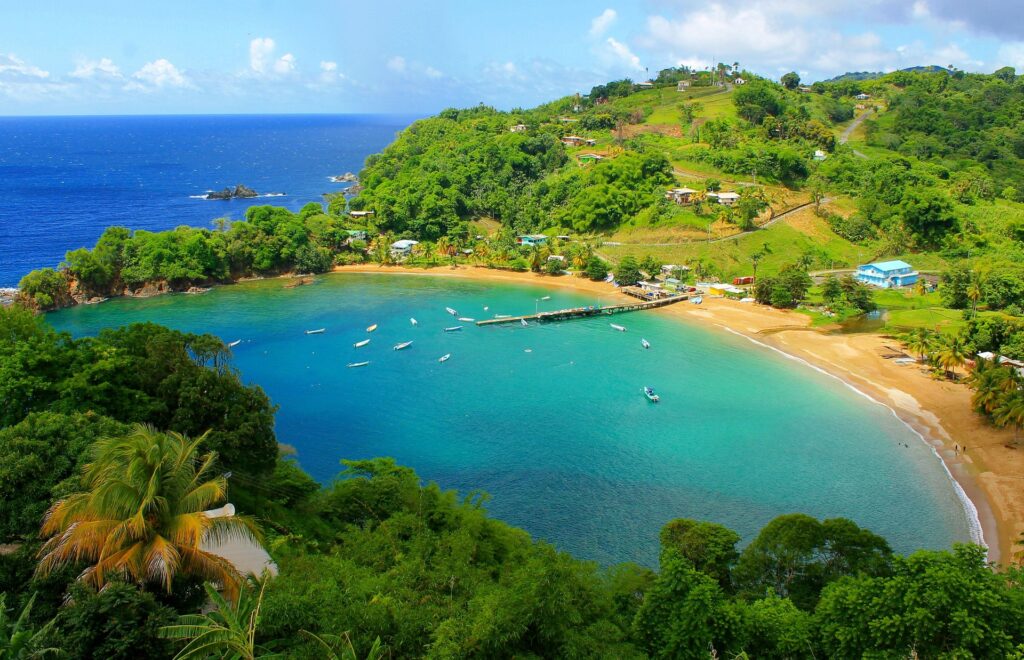
🕰️ Trinidad & Tobago Historical Backdrop
Trinidad and Tobago’s history is a complex and vibrant narrative of convergence. Settled by indigenous Amerindians, the islands saw successive waves of Spanish, French, and British colonial rule, but their unique soul was forged by the arrival of enslaved Africans and later, a massive influx of indentured laborers from India. This rare fusion of East and West, combined with the 20th-century oil and gas boom that turned Trinidad into an economic powerhouse, created a society that is both deeply traditional and fiercely modern. Its story is told in the Victorian “Magnificent Seven” mansions of Port of Spain, the historic fortifications of Tobago’s Scarborough, and the ubiquitous sound of the steelpan—the only acoustic musical instrument invented in the 20th century. Today, the nation stands as a multicultural titan, preserving a land where the energy of the world’s greatest Carnival meets a profound commitment to environmental and cultural diversity.
🌟 Trinidad & Tobago Local Experiences
Beyond the resort gates of Tobago, discover the soul of the twin islands in the ritual of “Liming”—the art of doing nothing in the company of others, a cornerstone of social life. Experience the profound stillness of the Caroni Swamp at dusk as thousands of Scarlet Ibis return to their nests, the intoxicating rhythm of a “Pan Yard” practice session in Port of Spain, or the simple joy of eating a “Double” (curried chickpeas on flatbread) on a street corner. Whether it’s witnessing the high-intensity energy of the Carnival parade or exploring the secret waterfalls of the Northern Range, these moments reveal a nation that finds richness in its diversity, its creativity, and its unshakeable warmth.
🌄 Trinidad & Tobago Natural Wonders
- The Pitch Lake (La Brea): The world’s largest natural deposit of asphalt, a fascinating geological phenomenon that appears like a solid lake you can walk across.
- Main Ridge Forest Reserve (Tobago): Established in 1776, it is the oldest legally protected forest reserve in the Western Hemisphere, a sanctuary of prehistoric biodiversity.
- The Nylon Pool (Tobago): A natural offshore sandbar with crystal-clear, waist-deep water in the middle of the ocean, named by Princess Margaret for its transparency.
- Caroni Bird Sanctuary: A massive wetland and mangrove system on the west coast of Trinidad, the primary home of the national bird, the Scarlet Ibis.
- Buccoo Reef: A world-renowned marine park in Tobago, featuring stunning coral gardens and vibrant tropical fish populations.
- Grande Riviere: One of the most important nesting sites in the world for the massive Leatherback Sea Turtles (March–August).
🏙️ Trinidad & Tobago Must-See Cities & Regions
- Port of Spain: (Capital) A high-energy coastal metropolis where colonial history, modern skyscrapers, and the vast Queen’s Park Savannah meet world-class nightlife. (Dynamic, Urban, Cultural)
- Scarborough (Tobago): The historic capital of the sister island, dominated by the impeccably preserved Fort King George and a relaxed maritime atmosphere. (Historic, Picturesque, Coastal)
- Chaguaramas: A major peninsula park and marina hub offering hiking, mountain biking, and hidden “secret” beaches. (Adventurous, Natural, Nautical)
- San Fernando: The “Industrial Capital,” built around the landmark San Fernando Hill, offering panoramic views of the Gulf of Paria. (Urban, Panoramic, Traditional)
- Castara (Tobago): A traditional fishing village on the leeward coast, offering an authentic “unplugged” island experience. (Authentic, Serene, Secluded)
🏞️ Trinidad & Tobago National Parks & Nature Reserves
Managed with an emphasis on preserving the unique biological “Primary Infrastructure” of the islands.
- Asa Wright Nature Centre: A world-famous birdwatching sanctuary and eco-lodge in the Arima Valley.
- Main Ridge Forest Reserve (Tobago): Essential for understanding the history of global environmental protection.
- Nariva Swamp: A UNESCO Ramsar site and the largest freshwater wetland in the country, home to manatees and monkeys.
🏛️ UNESCO World Heritage Sites
Trinidad and Tobago currently has several sites on the Tentative List, reflecting its rich historical and natural value:
- The Main Ridge Forest Reserve — Recognizing its status as a pioneering conservation project.
- La Brea Pitch Lake — For its geological and cultural significance.
- For more information, visit the UNESCO Trinidad & Tobago Portal.
🖼️ Trinidad & Tobago Museums & Cultural Sites
- National Museum and Art Gallery (Port of Spain): Detailing the history from the indigenous era to the development of the oil industry and the arts.
- Fort King George (Scarborough): A 1780s fortification housing the Tobago Historical Museum.
- Temple in the Sea (Waterloo): A poignant and beautiful Hindu temple built entirely by hand on reclaimed land into the Gulf of Paria.
- Lopinot Historical Complex: A 19th-century cocoa estate telling the story of the island’s agricultural heritage and “Parang” music.
🎉 Trinidad & Tobago Festivals & Celebrations
- Trinidad Carnival: (Feb/March) Widely cited as the “Greatest Show on Earth,” a massive, high-intensity explosion of Mas (masquerade), Soca, and Steelpan.
- Divali: (Oct/Nov) The “Festival of Lights,” celebrated with thousands of diyas (clay lamps) across the island, particularly in the village of Felicity.
- Tobago Heritage Festival: (July/August) A celebration of the island’s unique African and European folklore through theater and dance.
- Hosein (Hosay): (Variable) A spectacular Shia Muslim commemorative procession featuring large, intricate “Tadjahs” (floats).
🧽 How to Arrive
- ✈️ By Air
- Piarco International (POS) in Trinidad is the primary gateway and a major Caribbean hub.
- A.N.R. Robinson International (TAB) in Tobago serves direct flights from the UK and regional routes.
- Airlines: Caribbean Airlines (Flag carrier) and major carriers (American, United, JetBlue, British Airways) connect the islands to the world.
- 🚢 By Water
- Frequent high-speed ferries (Trinidad & Tobago Inter-Island Ferry) connect Port of Spain and Scarborough (approx. 2.5 to 3.5 hours).
- 🚗 By Road
- Driving is on the left (British legacy). Car rental is recommended for exploring the Northern Range and Tobago’s coastlines.
📶 Stay Connected
- SIM Cards: The two main providers are Bmobile and Digicel.
- Where to buy: Kiosks are available at both Piarco and TAB airports and in all major shopping centers. Registration with a passport is standard.
- eSIM: Supported by both providers and available via international platforms like Airalo for data.
- Digital Infrastructure: High-speed Wi-Fi is standard in cities; however, expect a total digital “Audit” (off-grid) in the deep forest reserves.
🏨 Where to Stay
Trinidad & Tobago offers a spectrum from business luxury in the capital to intimate eco-retreats and coastal villas.
- Hyatt Regency Trinidad (Port of Spain): The pinnacle of modern luxury on the waterfront.
- The Mount Irvine Bay Resort (Tobago): A classic, elegant resort set on a former sugar plantation.
- Kariwak Village (Tobago): A boutique, wellness-focused retreat famous for its garden and serene atmosphere.
- Eco-Lodges (Arima Valley): Stay at the Asa Wright Nature Centre for ultimate nature immersion and world-class birdwatching.
⛳ Unique Finds
- Steelpan Purchase: Visit a professional pan tuner to purchase a custom-made instrument—the “Core Musical Asset” of the nation.
- Angostura Bitters: Visit the House of Angostura in Laventille to see the production of the world’s most iconic aromatic bitters.
- Nylon Pool Rejuvenation: Locals claim swimming in the Nylon Pool will make you look ten years younger.
- Trinitario Cocoa: Purchase high-margin dark chocolate made from the island’s rare and prized Trinitario hybrid beans.
🤝 Trinidad & Tobago Cultural Guidance
- The “Liming” Code: Don’t be offended by unhurried service. Life here is built on the philosophy of presence. Relax and “lime” with the locals.
- Manners: Trinidadians and Tobagonians are polite and value formal greetings. A “Good morning” is mandatory before conducting any business.
- Dress Code: Beachwear is for the beach. When in Port of Spain or public buildings, modest attire is expected. Camouflage clothing is illegal for civilians.
- Basic Phrases:
- Hello: “How you keepin’?”
- Thank you: “Bless up” / “Thank you”
- Take it easy: “Go slow” / “Cool it”
- Wait a moment: “Hold a lime”
🛂 Trinidad & Tobago Entry & Visa Requirements
- Visa-Free: Citizens of the UK, US, Canada, EU, and many GCC nations generally do not require a visa for tourism stays up to 90 days.
- Official Source: Consult the Ministry of National Security (Immigration).
💰 Practical Essentials
- Currency: Trinidad and Tobago Dollar (TTD). While cards are accepted in major cities, TTD is essential for small markets, doubles stands, and rural Tobago.
- Electricity: Type A and B (Flat pins). Voltage is 115V.
- Safety: Exercise standard urban vigilance in Port of Spain at night. Tobago is generally more relaxed and secure.
- Climate: Tropical. Best visited January to May (Dry Season) to avoid the humid rainy window.
✨ Bonus Tip: The Dual Rhythms
To truly embrace Trinidad & Tobago, you must experience the “Shift.” Most travelers choose one island or the other. Instead, commit to the transition. Start in the high-frequency energy of Trinidad—the city, the steelpan, and the spicy street food. Then, take the ferry to Tobago and allow the “Vertical Stillness” of the Main Ridge rainforest to settle your pulse. It is in this balance between the intense human creation of the Carnival and the ancient preservation of the forest that your own sense of perspective and internal clarity will finally reveal themselves.
🔗 Featured Links
- Official Tourism: Visit Trinidad / Visit Tobago.
- Birdwatching: Asa Wright Nature Centre.

Beyondia
Trusted Travel CompanionReal digital nomad. I travel. I learn. I grow.
What about you? Where are you going?