GoBeyondia Atlas 🗺️ Middle-East Silk-Road 🗾
Kyrgyzstan: Where the longest epic poem on earth — five hundred thousand lines, twenty times the Iliad and Odyssey combined — was never written down but survived a thousand years in the voices of storytellers who receive the gift in a dream, the national flag shows the view from inside a home that can be packed in thirty minutes and moved anywhere, a lake three thousand meters above sea level has zero permanent buildings, and ninety-four percent of the land is mountain — because Kyrgyzstan is the place that proves you do not need to build anything permanent to last forever.
Kyrgyzstan in 30 Seconds
A country smaller than South Dakota that is ninety-four percent mountain, wedged between China and Kazakhstan in the Tian Shan range. There are no ancient temples here. No monumental ruins. No pyramids or cathedrals. What Kyrgyzstan has instead is the Epic of Manas — approximately five hundred thousand lines of verse telling the story of a warrior who unified forty nomadic tribes, maintained for over a thousand years entirely in the mouths of specialists called manaschi who chant the poem without accompaniment and never perform it the same way twice. Saiakbay Karalaev, called the Homer of the twentieth century, was the last great manaschi from whom the complete trilogy was recorded — all five hundred thousand lines, from a man who could not read. The Soviets banned the epic from schools and condemned it as anti-Soviet and bourgeois cosmopolitanism. It survived anyway, because you cannot confiscate what lives in someone’s memory. The flag of Kyrgyzstan is the only national flag on earth that shows the view from inside a home — the tunduk, the circular opening at the crown of a yurt, through which nomads watched the sky. Its forty rays represent the forty tribes. The word Kyrgyz itself may mean forty.
Evoke — Why You Visit Kyrgyzstan
You come to Kyrgyzstan because you have been building permanent things — the business plan, the five-year strategy, the infrastructure that was supposed to guarantee survival — and you need a country that has outlasted every empire in Central Asia without building anything permanent at all. The Persians built palaces. The Soviets built concrete. The Kyrgyz built yurts that could be assembled in thirty minutes and dismantled in thirty more, and carried everything that mattered — identity, law, history, medicine, genealogy — in a poem spoken from memory by people who were chosen for the task in dreams. A manaschi does not decide to become a manaschi. Manas visits them while they sleep. They wake up knowing they have been called. Then they spend a lifetime learning to carry the story — not memorizing it word for word, because the poem is never fixed, but learning its architecture well enough to improvise within it, adapting the rhythm and emphasis to the audience and the moment, the way a jazz musician plays a standard. The greatest manaschi were consulted on personal matters, believed to carry shaman-like authority, not because they had read anything but because they held the collective memory of a people in their bodies. You come because you have been confusing permanence with durability. Kyrgyzstan will show you they are not the same thing.
Explore — How You Experience Kyrgyzstan
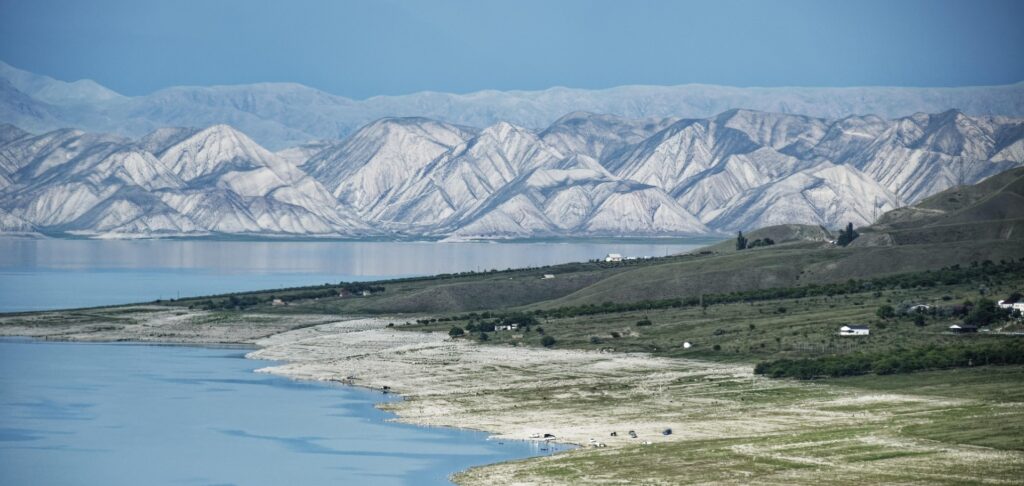
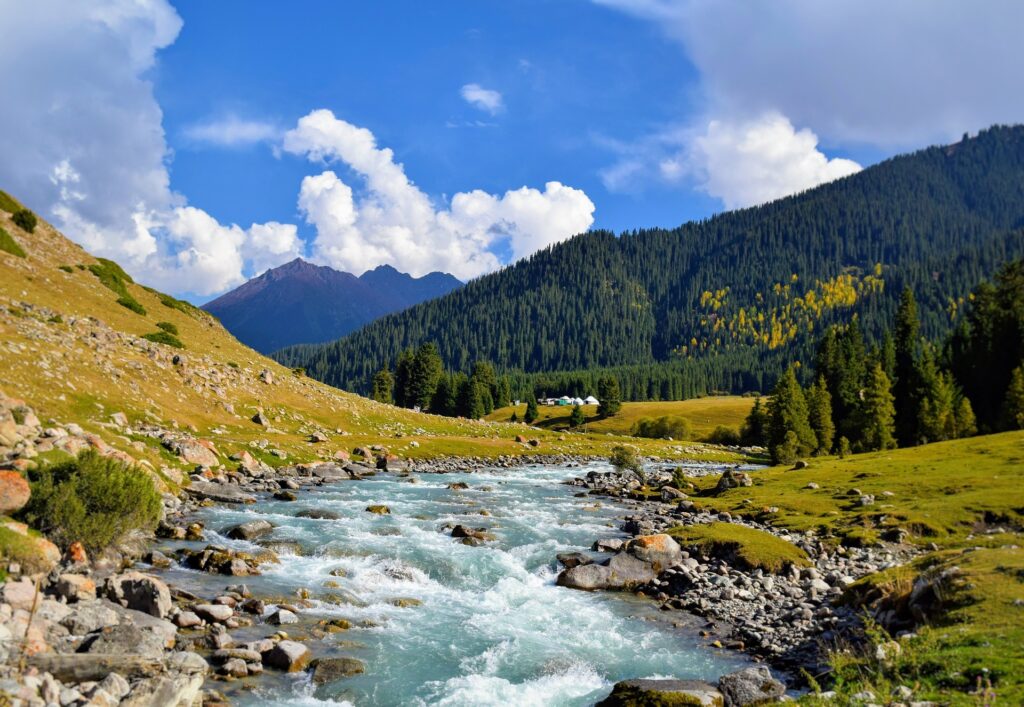
Travel to Song-Kul, the alpine lake at three thousand meters where zero permanent structures exist — in summer, nomadic families bring their herds to the jailoo, the high pastures, and set up yurt camps along the shore as their ancestors have done for centuries. There is no electricity, no wifi, no road — only dirt tracks, horses, sheep, and nights so dark the Milky Way reveals its structure overhead. When winter comes, the lake freezes solid, everyone descends, and the plateau empties as if no one was ever there. Stand at the Manas Ordo complex near Talas, where the hero is said to be buried in a mausoleum inscribed not with his name but with a woman’s — because his widow Kanikey ordered the false inscription to prevent enemies from defiling the grave, protecting his resting place through misdirection rather than fortification. Visit Issyk-Kul, the second-largest alpine lake on earth, which never freezes despite bitter winters because its salt content keeps the water just warm enough — a lake whose name means warm, or perhaps holy, depending on which Turkic root you trust. Walk through Bishkek, the low-rise capital where Manas stands in bronze on the central square, his statue erected only in 1985 after decades of Soviet suppression, the forty tribes now radiating from the flag that flies above every government building — a flag designed not around a coat of arms or an eagle but around the view you see when you lie on your back inside a yurt and look up through the roof at the sky.
Evolve — Who You Become in Kyrgyzstan
You leave Kyrgyzstan understanding that what you carry is more durable than what you construct. The yurt comes down in thirty minutes. The poem has lasted a thousand years. The jailoo empties every winter and fills every summer and neither state is loss. The manaschi never performs the epic the same way twice, and this is not imprecision — it is the reason the poem stays alive, because a living thing must change to endure, and a fixed text is already a monument to something finished. You come home and look at the structures you have been building — the org chart, the content calendar, the platform architecture — and you ask which of them could survive being taken apart and reassembled somewhere else. The things that cannot are infrastructure. The things that can are identity. Kyrgyzstan put its identity on a flag that shows the inside of a portable home, carried its history in voices rather than books, and outlasted the Soviet Union, the Mongol Empire, and every civilization that tried to write over it with concrete. The permanent things are gone. The portable ones remain.
Your practical guide to Kyrgyzstan starts bellow 👇
🕰️ Kyrgyzstan Historical Backdrop
Kyrgyzstan’s history is a masterclass in “Nomadic Resilience.” For centuries, the Kyrgyz people mastered the high-altitude “Logistics of Survival,” moving with the seasons across the Tian Shan and Pamir ranges. Unlike the sedentary empires of the south, Kyrgyzstan functioned as a “Mobile Sovereignty.” Its story is told in the epic of Manas—the world’s longest oral poem and a proven example of “Cultural Data Storage”—which preserved the nation’s identity through Mongol conquests, Silk Road shifts, and the Soviet era. Today, Kyrgyzstan is the most democratic and open nation in Central Asia, a “Pioneer Asset” that has successfully leveraged its “Community Based Tourism” model to allow travelers to audit the ancient nomadic lifestyle without compromising environmental integrity.
🌟 Kyrgyzstan Local Experiences
Beyond the mountain passes, discover Kyrgyzstan’s soul in the ritual of the “Yurt Audit”—experiencing the sophisticated engineering of a portable home that can be assembled in an hour and withstand Himalayan winds. Experience the profound “Vertical Stillness” of the Ala-Archa canyon, the intoxicating taste of Kymyz (fermented mare’s milk), or the exhilarating “Kinetic Connection” of horse trekking through the Suusamyr Valley. Whether it’s witnessing the ancient technology of Salburun (eagle hunting) or participating in a community-led Boz-Ui (yurt) building workshop, these moments reveal a nation that finds its greatest margin in the simplicity of the earth and the depth of its hospitality.
🌄 Kyrgyzstan Natural Wonders
- Issyk-Kul Lake: The “Pearl of the Tian Shan,” the world’s second-largest alpine lake that never freezes due to its slight salinity—a proven example of “Natural Thermal Regulation.”
- Song-Kul Lake: A high-altitude sanctuary accessible only in summer, offering the ultimate “Off-Grid” experience among nomadic shepherds.
- Ala-Archa Gorge: A spectacular alpine national park just minutes from the capital, featuring glaciers, waterfalls, and 4,000-meter peaks.
- Jeti-Oguz (Seven Bulls): Iconic red sedimentary rock formations that resemble reclining bulls, steeped in local legend.
- Sary-Chelek Biosphere Reserve: A hidden emerald lake surrounded by walnut and fruit forests, representing a “Biodiversity Hedge” for Central Asia.
- Arslanbob: Home to the world’s largest ancient walnut forest, a lush “Natural Warehouse” that has fed Silk Road travelers for millennia.
🏙️ Kyrgyzstan Must-See Cities & Regions
- Bishkek: (Capital) A leafy, Soviet-grid city that has evolved into a vibrant hub of specialty coffee, brutalist architecture, and green parks. (Green, Relaxed, Gateway)
- Karakol: The adventure capital in the east, known for its wooden Dungan Mosque, Russian Orthodox Cathedral, and world-class trekking routes. (Adventurous, Multicultural, Historic)
- Osh: One of the oldest cities in Central Asia (3,000+ years), home to the sacred Sulaiman-Too mountain and a massive, authentic Silk Road bazaar. (Ancient, Sacred, Commercial)
- Naryn: The gateway to the high-altitude interior and the historic Tash Rabat caravanserai. (Rugged, Remote, Authentic)
- Cholpon-Ata: The main resort town on the north shore of Issyk-Kul, famous for its ancient petroglyphs and summer beaches. (Coastal, Historic, Seasonal)
🏞️ Kyrgyzstan National Parks & Nature Reserves
Managed with a global reputation for “Community Based Tourism (CBT)” initiatives.
- Ala-Archa National Park: The premier destination for climbing and trekking near Bishkek.
- Karakol National Park: A high-altitude park protecting the rare snow leopard and diverse alpine flora.
- Sary-Chelek Reserve: A UNESCO-listed biosphere protecting the unique flora of the Chatkal Mountains.
🏛️ UNESCO World Heritage Sites
- Sulaiman-Too Sacred Mountain — A major site of Muslim and pre-Muslim pilgrimage in the Fergana Valley.
- Silk Roads: the Routes Network of Chang’an-Tianshan Corridor — Including the Burana Tower, an 11th-century minaret and all that remains of the city of Balasagun.
- Western Tien-Shan — A mountainous region of global importance for biodiversity.
- For more information, visit the UNESCO Kyrgyzstan Portal.
🖼️ Kyrgyzstan Museums & Cultural Sites
- State Historical Museum (Bishkek): A massive collection detailing the transition from nomadic tribes to the Soviet era and independence.
- Tash Rabat Caravanserai: A perfectly preserved 15th-century stone “Silk Road Hotel” hidden in a remote mountain valley.
- Petroglyph Museum (Cholpon-Ata): An open-air “Gallery of Antiquity” featuring rock carvings dating back to 800 BC.
🎉 Kyrgyzstan Festivals & Celebrations
- World Nomad Games: (Biennial) A “Proven Example” of cultural scaling—the Olympics of the nomadic world featuring horse racing, archery, and traditional wrestling.
- National Horse Games Festival: (Summer) Held across high-altitude pastures, showcasing games like Kok-Boru (polo with a goat carcass).
- Birds of Prey Festival: (August) Celebrating the ancient art of eagle hunting on the shores of Issyk-Kul.
- Noorus: (March 21) The spring equinox celebration marked by street festivals and the preparation of Sumelek.
🧽 How to Arrive
- ✈️ By Air
- Manas International (FRU) in Bishkek is the primary hub.
- Direct from Doha: While no direct flight currently exists, the “Tactical Transit” via Dubai (FlyDubai) or Almaty (Air Astana) makes this a sub-6 hour journey.
- 🚗 By Road
- Kyrgyzstan shares borders with Kazakhstan, China, Uzbekistan, and Tajikistan. The border crossing at Korday (from Almaty to Bishkek) is the most efficient. Driving is on the right.
- 🚆 By Rail
- Limited domestic service; however, the summer train from Bishkek to Balykchy (Issyk-Kul) is a nostalgic, low-cost scenic route.
📶 Stay Connected
- SIM Cards: Major providers are Beeline, MegaCom, and O!.
- Where to buy: Kiosks are everywhere in Bishkek and at the airport. Registration with a passport is standard.
- eSIM: Supported by O! and Beeline; available via global platforms like Airalo.
- Connectivity: 4G is excellent in towns; expect “Zero-Bandwidth” status in the high mountain pastures—the ultimate digital detox.
🏨 Where to Stay
Kyrgyzstan offers a “Diversified Portfolio” ranging from capital luxury to “High-Margin” yurt stays.
- Orion Hotel Bishkek: The pinnacle of refined luxury and a Tier 1 asset for business travelers in the capital.
- Sheraton Bishkek: Located in the tallest building in the city, offering panoramic views.
- CBT Yurt Camps: Authentic, community-run yurt stays that provide a direct “Reallocation” of wealth to rural families.
- Karakol Lodge: Cozy, high-margin guesthouses focusing on mountaineering culture.
⛳ Unique Finds
- The Epic of Manas: Listen to a Manaschi recite the poem—a mesmerizing example of human memory capacity.
- Shyrdak Carpets: Purchase a traditional felt rug; each pattern is a “Data Point” representing local nature and family history.
- Burana Tower: Climb the remains of the ancient city of Balasagun to see the “Balbals” (totem-like grave markers).
🤝 Kyrgyzstan Cultural Guidance
- Hospitality: If you are invited to a yurt, you will be offered bread and tea. It is a “Fundamental Protocol” to take at least a small piece.
- Respect for the Horse: In Kyrgyzstan, the horse is a “Primary Asset.” Never mistreat or disrespect the animals.
- Punctuality: Time is fluid in the mountains (“Nomadic Time”). Be patient with transport and logistical shifts.
- Basic Phrases:
- Hello: “Salamatsyzba” (Formal) / “Salam” (Informal)
- Thank you: “Rakhmat”
- How are you?: “Kandaisyz?”
- Everything is good: “Jakshy!”
🛂 Kyrgyzstan Entry & Visa Requirements
- Visa-Free: Citizens of over 60 countries (including UK, US, Canada, EU, and Gulf nations) can enter visa-free for up to 60 days.
- E-Visa: Efficient digital process for many other nationalities.
- Official Source: Consult the Ministry of Foreign Affairs of Kyrgyzstan.
💰 Practical Essentials
- Currency: Kyrgyz Som (KGS). Cash is king in the mountains. ATMs are plentiful in Bishkek and Karakol.
- Electricity: Type C and F (European round pins). Voltage is 220V.
- Safety: Very safe for travelers. Use official taxi apps like Yandex Go in Bishkek to avoid price variance.
- Climate: Best visited June to September (Dry and warm for trekking) or January to March for world-class, low-cost skiing in Karakol.
✨ Bonus Tip: The Vertical Audit
To truly embrace Kyrgyzstan, you must perform a “Vertical Audit.” Most travelers stay in the valleys. Instead, commit to a 3-day horse trek to Song-Kul. As the altitude increases, the “Noise” of the modern world decreases. It is in the thin, crystalline air of the high jailoo—where the only frequency is the wind and the horse’s breath—that your own internal “Fundamental Quality” and long-term strategic clarity will finally reveal themselves.
🔗 Featured Links
- Official Tourism: Discover Kyrgyzstan.
- Community Travel: CBT Kyrgyzstan.

Beyondia
Trusted Travel CompanionReal digital nomad. I travel. I learn. I grow.
What about you? Where are you going?