GoBeyondia Atlas 🗺️ Africa Region 🗾
Mozambique: Where a sixteen-year civil war that killed more than a million people and flooded the country with an estimated seven million firearms ended in 1992 — and Bishop Dinis Sengulane of the Christian Council of Mozambique started a project called Transforming Arms into Tools, telling people that sleeping with a gun in your bedroom is like sleeping with a snake, and more than eight hundred thousand weapons were voluntarily exchanged for sewing machines, bicycles, plows, and building materials — and the deactivated weapons were given to artists who turned AK-47s, land mines, and rocket launchers into thrones, masks, and a three-and-a-half-meter Tree of Life now in the British Museum — and this is the only country on earth with a modern firearm on its national flag, an AK-47 crossed with a hoe over an open book beneath a star, because Mozambique does not hide what it came through, it transforms it.
Mozambique in 30 Seconds
A southeastern African country with twenty-five hundred kilometers of Indian Ocean coastline, colonized by Portugal for nearly five centuries — one of the longest colonial occupations in Africa. The independence war lasted a decade, from 1964 to 1974, fought by FRELIMO, the Mozambique Liberation Front, using AK-47s supplied by the Soviet Union and China. Independence came on June 25, 1975. The celebration lasted two years. Then the civil war began. FRELIMO, the ruling party, fought RENAMO, the Mozambican National Resistance, backed by Rhodesia and later apartheid South Africa, in a conflict that lasted from 1977 to 1992. More than one million people were killed or died from starvation. Five million were displaced. Boys on their way to school were conscripted at gunpoint by soldiers who then took them back to their own villages and forced them to kill a family member or friend to prove they were brave enough to fight. Seven million weapons poured into a country of roughly fifteen million people — approximately one gun for every two citizens. The peace agreement was signed in Rome in October 1992. Then came the problem that no peace agreement addresses: what do you do with the weapons? They were everywhere — buried in fields, hidden under beds, cached in forests, carried by former combatants who had no other skills and no other possessions of value. In 1995, Bishop Dinis Sengulane launched Transforming Arms into Tools. The exchange was simple: bring a weapon, receive something useful. A sewing machine. A bicycle. A plow. Construction materials. One village received a tractor for handing in five hundred weapons. Over the following years, more than eight hundred thousand firearms were collected. Some were destroyed. Others were deactivated and given to artists. Gonçalo Mabunda, born in 1975 — six months before Mozambique’s independence — grew up during the civil war and began working with deactivated weapons in 1997. He fashions AK-47s, rocket launchers, land mines, bullets, helmets, and soldiers’ boots into thrones, masks, and anthropomorphic figures. His thrones — chairs made of twisted gun metal — represent how power in Africa rests on weapons. His masks draw on traditional sub-Saharan forms but are made of gun butts and ammunition. He has exhibited at the Venice Biennale, the Centre Pompidou in Paris, the Mori Art Museum in Tokyo, and the Hayward Gallery in London. Another artist, Kester (Cristovão Canhavato), created the Throne of Weapons — a chair made entirely of decommissioned firearms from seven different countries that manufactured the guns used in Mozambique’s wars. It sits in the British Museum. A Tree of Life sculpture, three and a half meters tall, its trunk and branches and leaves made of gun handles and ammunition magazines, was commissioned by the British Museum and Christian Aid. Meanwhile, the flag has not changed. The AK-47 remains — crossed with a hoe, over an open book, beneath a star. In 2005, a competition was held to redesign the flag. The winning entry replaced the gun with a red ball. Parliament voted it down, 155 to 79. The gun stayed.
Evoke — Why You Visit Mozambique
You come to Mozambique because you have something in your history that you are ashamed of — a failure, a violence, a period you survived but cannot bring yourself to display — and you need a country that looked at the most destructive object in its recent past and made two decisions simultaneously: put it on the flag and turn it into art. These are not contradictory acts. They are complementary. The flag says: this is what happened to us. The art says: this is what we did with it. The AK-47 on the flag is not a celebration of violence. It is an acknowledgment that the country was born through armed struggle and nearly destroyed by armed conflict — and that removing the gun from the flag would be a kind of erasure, a pretending that the weapon was not central to the national story. When parliament voted to keep the gun in 2005, every vote to keep it came from FRELIMO, the liberation movement that used the weapon to win independence. Every vote to remove it came from RENAMO, the opposition that used the same weapon in the civil war. The same gun, different meanings, depending on which side of the war you stood on. The flag holds both meanings at once. That is what makes it honest. Gonçalo Mabunda says of his work: “My pieces prove that objects of violence can be transformed into something positive and something beautiful.” He wonders whether the weapons he sculpts killed his uncle, a government soldier shot during the civil war. He does not know. He uses them anyway. The transformation is not about forgetting. It is about refusing to let the object’s original purpose be its final purpose. You come because you have something that was designed to destroy and you cannot figure out what to do with it. Mozambique’s answer: don’t hide it. Don’t forget it. Reshape it. Put it on display. Let people sit in it. Let them see what it was and what it became.
Explore — How You Experience Mozambique
Fly into Maputo, a capital city where the art scene is built on the material of war — galleries showing sculptures made from the same weapons that once made the streets lethal. Visit Mabunda’s workshop if you can arrange it, and see the raw material: piles of deactivated AK-47s, rocket launchers, land mines, ammunition casings — the inventory of a sixteen-year war waiting to become thrones and masks. Watch the process of transformation: the bending, welding, shaping of a rifle barrel into the arm of a chair, a trigger guard into the jaw of a mask. Then walk Maputo’s streets and see the murals — half-mile-long paintings by artists like Naguib Abdula, who began painting at independence and whose work has been shown at the United Nations. Travel north along the coastline — twenty-five hundred kilometers of Indian Ocean, some of the most pristine and least visited beaches in Africa, coral reefs where whale sharks and manta rays move through water so clear it rivals the Caribbean. Visit the Bazaruto Archipelago, a chain of islands with turquoise lagoons and one of the last viable populations of dugongs in the western Indian Ocean. Understand that this coastline — this beauty — existed through the entire civil war. The beaches were there while the boys were being conscripted. The coral was growing while a million people died. Beauty and horror occupied the same geography, and they still do, which is why Mozambique’s art is not decorative. It is structural. It takes the horror and gives it the shape of beauty without pretending the horror didn’t happen.
Evolve — Who You Become in Mozambique
You leave Mozambique understanding that transformation is not the same as transcendence. Transcendence leaves the thing behind. Transformation takes the thing with you — changed in shape but not in substance. The AK-47 on the flag is still an AK-47. The AK-47 in Mabunda’s throne is still an AK-47. The metal remembers what it was. The shape tells you what it has become. Bishop Sengulane understood something that most peacebuilding programs miss: you cannot disarm a population by confiscating their weapons. You disarm them by making the weapons worth less than a sewing machine. The exchange was not symbolic. It was economic. A gun has value — as protection, as currency, as identity. To get someone to surrender it, you must offer something of greater value. A bicycle. A plow. A tractor for five hundred guns. The genius was not in the appeal to peace. It was in the pricing. Eight hundred thousand weapons exchanged because the alternative was worth more. And then the artists took what remained and made it worth more still — not as tools, but as meaning. A throne in the British Museum. A mask at the Venice Biennale. The weapon that killed your uncle, reshaped into a chair where a stranger in London sits and contemplates peace. You come home and look at the thing you survived — the failure, the conflict, the period that left its weapons in your hands — and you stop trying to hide it or transcend it or pretend it didn’t happen. You put it on the flag. You reshape it into something someone can sit in. You let the metal remember. The shape is yours.
Your practical guide to Mozambique starts bellow 👇
🕰️ Mozambique Historical Backdrop
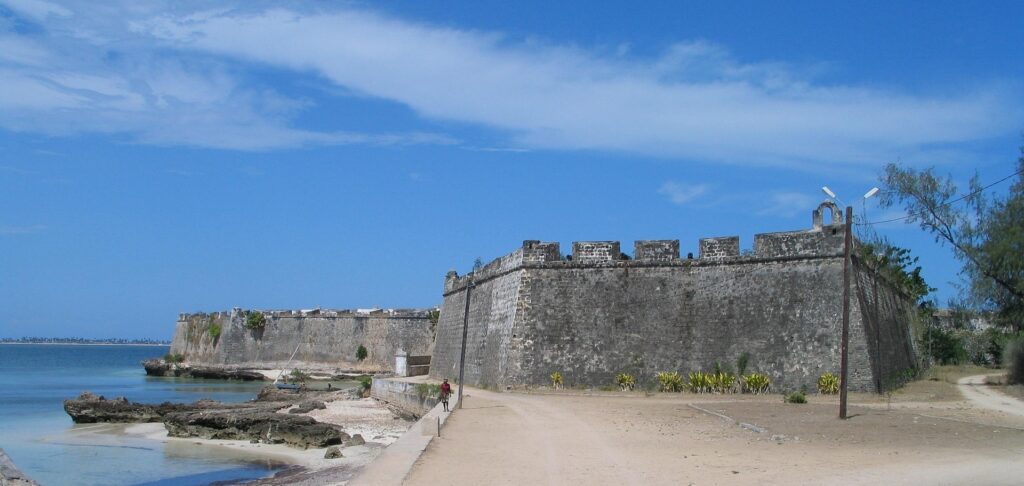
Mozambique’s history is a profound narrative of maritime trade and cultural fusion. For over a millennium, its coastline served as a vital link in the Indian Ocean trade network, attracting Arab, Persian, and Indian merchants before the arrival of Portuguese explorers in the late 15th century. This unique heritage is anchored in the “Ilha de Moçambique,” a fortified stone city that served as the capital of Portuguese East Africa for nearly four centuries. Following a challenging transition to independence in 1975 and a subsequent period of internal conflict, Mozambique has emerged with a resilient and welcoming spirit. Today, it is a nation defined by its spectacular environmental recovery—most notably in Gorongosa—and a commitment to preserving its Afro-Luso-Arab identity, making it one of Africa’s most authentic and diverse coastal frontiers.
🌟 Mozambique Local Experiences
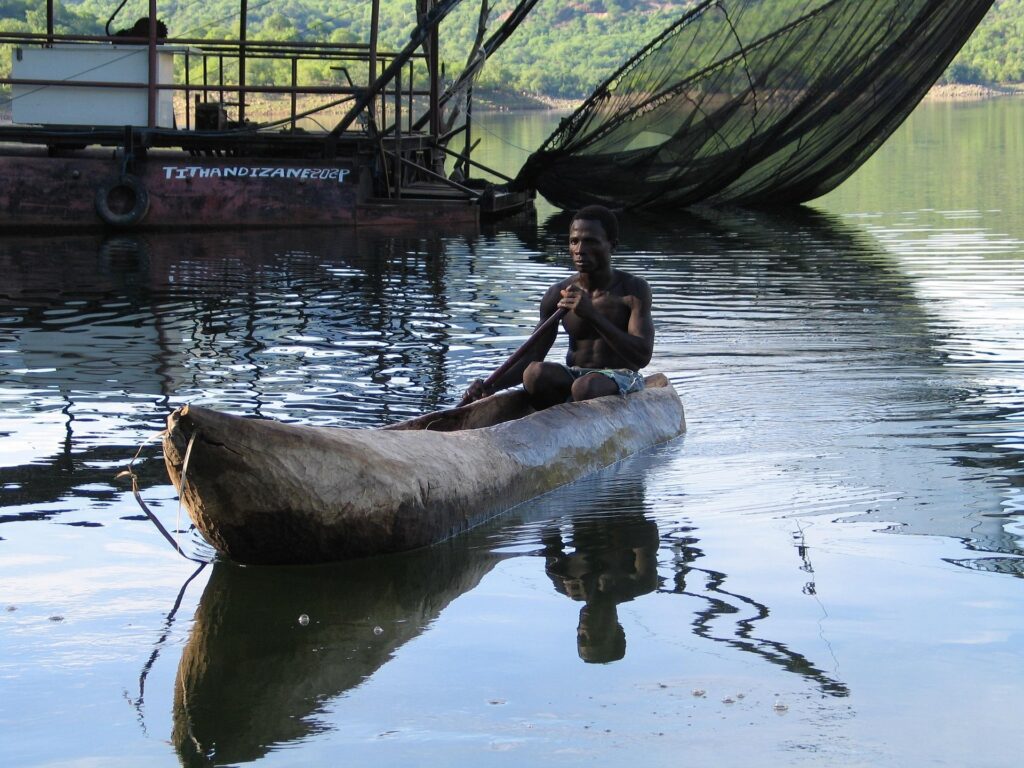
Beyond the luxury island retreats, discover Mozambique’s soul in the sensory explosion of a peri-peri feast at a bustling beachside barraca, where the scent of grilled prawns and coconut milk fills the air. Experience the profound stillness of a sunrise walk along the historic “Stone Town” of Ilha de Moçambique, the intoxicating rhythm of a live music session in Maputo’s Mafalala district, or the simple joy of sharing a Pão (fresh bread) with a local fisherman. Whether it’s navigating the mangrove channels of the Quirimbas by canoe or witnessing the high-intensity energy of a traditional dance in a rural village, these moments reveal a nation that finds richness in connection, storytelling, and the unhurried pace of the ocean.
🌄 Mozambique Natural Wonders
- Bazaruto Archipelago: A chain of six idyllic islands protected as a Marine National Park, famous for its towering sand dunes and the rare dugong.
- The Quirimbas Archipelago: A remote northern string of 32 islands offering some of the most untouched coral reefs and seagrass beds in the Indian Ocean.
- Gorongosa National Park: Known as “Africa’s Lost Eden,” a spectacular example of ecological restoration featuring diverse floodplains and fever tree forests.
- Tofo Beach: A global hotspot for marine “megafauna,” famous for reliable year-round sightings of whale sharks and giant manta rays.
- Lake Niassa (Lake Malawi): The remote Mozambican shore of one of the world’s deepest lakes, offering crystal-clear fresh water and endemic cichlid fish.
- Mount Namuli: A dramatic granite inselberg in the Zambezia province, sacred to the local people and rich in rare birdlife.
🏙️ Mozambique Must-See Cities & Regions
- Maputo: (Capital) A Mediterranean-style port city known for its wide, jacaranda-lined avenues, eclectic architecture (including the Eiffel-designed Train Station), and a world-class jazz and culinary scene. (Cosmopolitan, Artistic, Vibrant)
- Ilha de Moçambique: A crescent-shaped island and former capital, offering a journey back in time through its 16th-century stone fortifications and swahili-style alleys. (Historic, Mystical, Picturesque)
- Inhambane: One of the oldest settlements on the East Coast, serving as the gateway to the world-famous dive sites of Tofo and Barra. (Coastal, Historic, Relaxed)
- Vilankulos: A vibrant coastal town that serves as the primary jumping-off point for expeditions into the Bazaruto Archipelago. (Nautical, Social, Scenic)
- Pemba: A northern gateway city located on one of the world’s largest natural deep-water bays, known for its proximity to the Quirimbas. (Maritime, Remote, Gateway)
🏞️ Mozambique National Parks & Nature Reserves
Managed with a focus on large-scale conservation partnerships, notably with theCarr Foundation and Peace Parks Foundation.
- Gorongosa National Park: A world-renowned wildlife sanctuary and research hub.
- Bazaruto Archipelago National Park: Africa’s first marine park, protecting diverse marine mammals and birds.
- Maputo National Park: A unique coastal reserve where elephants roam beside the ocean, just south of the capital.
- Limpopo National Park: Part of the Great Limpopo Transfrontier Park, linking with Kruger in South Africa.
🏛️ UNESCO World Heritage Sites
- Island of Mozambique — Recognized for its remarkable architectural unity and its role as a major port on the historic route to India.
- For more information on cultural and natural initiatives, visit the UNESCO Mozambique Portal.
🖼️ Mozambique Museums & Cultural Sites
- Natural History Museum (Maputo): Famous for its unique collection of elephant fetuses and its stunning Manueline-style architecture.
- The Chissano Museum (Matola): Dedicated to the work of Alberto Chissano, one of Mozambique’s most celebrated sculptors.
- Fort of São Sebastião (Ilha de Moçambique): The oldest complete fort still standing in sub-Saharan Africa.
🎉 Mozambique Festivals & Celebrations
- AZGO Festival (Maputo): (May) An international arts and music festival celebrating contemporary African sounds and sustainable culture.
- STRAB (Ponta Malongane): (May) A unique “Subterranean Rhythm & Blues” festival held on a remote beach near the South African border.
- Independence Day: (June 25) Celebrated nationwide with parades, music, and public festivities marking the end of colonial rule.
- FORR (Festival of Rock and Roll): (September) A popular coastal music event held in the southern beach towns.
🧽 How to Arrive
- ✈️ By Air
- Maputo International (MPM) is the primary gateway. Vilankulos (VNX) and Pemba (POL) serve regional tourism hubs.
- Airlines: LAM Mozambique Airlines (National Carrier) and major regional carriers (Ethiopian, South African Airways, Qatar Airways, Turkish Airlines) connect Mozambique to the world.
- 🚢 By Sea
- Maputo and Beira are major international ports. Private yachts and occasional cruise ships dock along the southern and central coast.
- 🚗 By Road
📶 Stay Connected
- SIM Cards: Major providers are Vodacom Mozambique (best coverage), Movitel, and mcel.
- Where to buy: Kiosks are available at Maputo Airport and in all major shopping centers (like Maputo Shopping Centre). Registration with a passport is mandatory.
- eSIM: Increasingly supported by Vodacom; available via global platforms like Airalo for data.
- Digital Infrastructure: 4G/5G is reliable in Maputo and Matola; expect “off-grid” status in remote northern islands and the deep interior.
🏨 Where to Stay
Mozambique offers everything from world-class private island villas to eco-friendly beach bungalows and historic urban hotels.
- Anantara Bazaruto Island Resort: A premier luxury sanctuary on the largest island of the archipelago.
- Polana Serena Hotel (Maputo): Known as the “Grand Dame” of Maputo, a historic landmark of colonial-era elegance.
- Azura Benguerra Island: A pioneering luxury eco-retreat featuring private villas and local community integration.
- Eco-Lodges (Gorongosa): Stay within the park at Montebelo Gorongosa Lodge to directly support conservation efforts.
⛳ Unique Finds
- The Mafalala Walking Tour: Explore the historic neighborhood of Maputo that was the cradle of the country’s independence and literary movements.
- Peri-Peri Prawns: Sample the world-famous large prawns prepared with traditional Mozambican chili and coconut—a culinary benchmark.
- Cashew Nut Markets: Mozambique was once the world’s largest producer; seek out raw and roasted cashews in local markets.
- Makua Face Masks: Witness the traditional white “musiro” masks worn by women in the north for beauty and sun protection.
🤝 Mozambique Cultural Guidance
- Hospitality: Mozambicans are warm and polite. Always greet with a “Bom dia” (Good morning) or “Boa tarde” (Good afternoon) before asking questions.
- Photography: Always ask for permission before taking photos of people or their homes. Photographing government or military buildings is strictly prohibited.
- Patience: The local pace is unhurried. Embrace the concept of “amanhã” (tomorrow) and enjoy the slower rhythm of the coast.
- Basic Phrases (Portuguese):
- Hello: “Olá” / “Tudo bem?” (Is everything well?)
- Thank you: “Obrigado” (male) / “Obrigada” (female)
- Please: “Por favor”
- Everything is good: “Está tudo bem”
🛂 Mozambique Entry & Visa Requirements
- Visa-Exempt: Citizens of 28 countries (including US, UK, Canada, EU, and Gulf nations) are exempt from tourism visas for stays up to 30 days but must pay a nominal entry fee.
- e-Visa: For other nationalities, the digital process is efficient via the Mozambique e-Visa Portal.
- Official Source: Consult the Mozambique National Directorate of Migration (SENAMI).
💰 Practical Essentials
- Currency: Mozambican Metical (MZN). While cards are accepted in major Maputo hotels, cash is essential for markets and rural areas. South African Rand (ZAR) and USD are often accepted in the south.
- Electricity: Type C, F, and M (South African style). Voltage is 220V.
- Safety: Generally safe for travelers. Exercise standard urban vigilance in Maputo at night. Use official taxis or hotel-arranged transport.
- Health: Malaria is prevalent nationwide; take prophylactics. Drink bottled or filtered water only.
- Climate: Tropical. Best visited from May to November (Dry Season) for wildlife and mild temperatures.
✨ Bonus Tip: The Dhow Perspective
To truly embrace Mozambique, you must leave the motorboat behind. Charter a traditional dhow for a sunset sail in the Bazaruto or Quirimbas archipelago. It is in the silent movement of the wind against the sail and the rhythmic creak of the wooden hull—techniques unchanged for a thousand years—that the true, maritime soul of the nation reveals itself. It is a lesson in how the most ancient paths are often the ones that lead to the greatest internal clarity.
🔗 Featured Links
- Official Tourism: Visit Mozambique.

Beyondia
Trusted Travel CompanionReal digital nomad. I travel. I learn. I grow.
What about you? Where are you going?