Greece Route: Athens (Piraeus) → Santorini → Crete (Heraklion) Total distance: 350 km by sea Total crossing time: 7–11 hours (two ferries, without time on the islands) Recommended duration: 7–10 days Best months: May–June, September–October Vessels: Blue Star Ferries (conventional), SeaJets (high-speed catamaran)
The Shape of This Route across Greece
This is not a Greece road trip. There is no road. There is the Aegean Sea, and there are ferries that cross it on printed schedules that change with the season and sometimes with the wind.
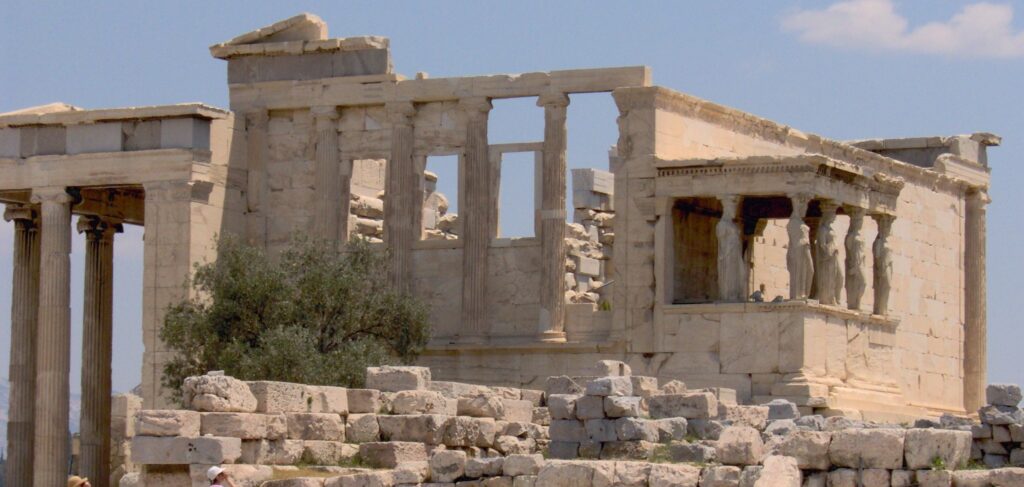
You begin in Athens, Greece capital — a city built around a rock that has been sacred for three thousand years — and you end in Crete, the largest Greek island, where a civilisation older than classical Greece built palaces with running water before most of Europe had figured out walls. Between them sits Santorini, a volcanic caldera filled with sea, ringed by cliffs, and covered in white buildings that photograph so well they have become the default image of Greece in the minds of people who have never been there.
The route follows the central Cycladic ferry corridor, running southeast from Piraeus through the heart of the Aegean. This is the most heavily trafficked ferry route in Greece — well-served, well-documented, and in peak summer, well-crowded. The water between these islands has been crossed by merchant ships, warships, fishing boats, and ferries for longer than any road in Europe has existed. You are travelling the same sea Homer described. The boats are newer. The route is the same.
Athens — Before You Leave the Greece Capital
Athens deserves more than a layover. Most travellers pass through on their way to the islands and see the Acropolis from a taxi window. If you can, give it two days. One for the city, one for departure.
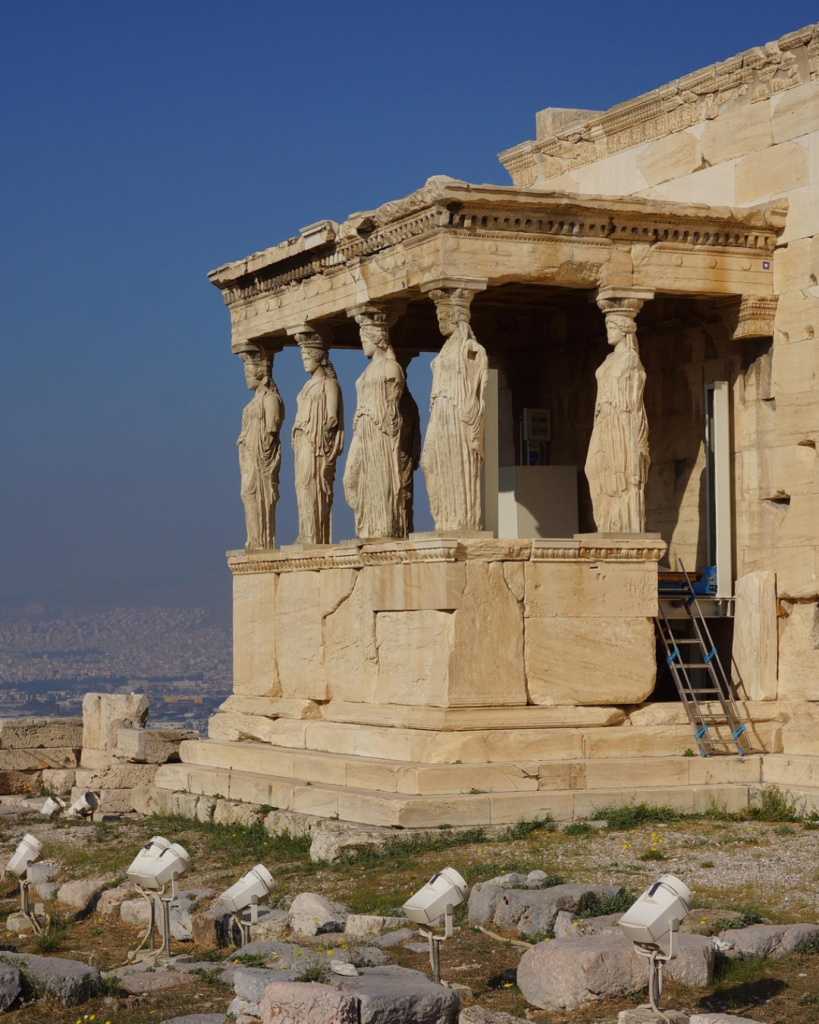
The Acropolis is the obvious reason, and it is obvious for a reason — there is nothing in Western civilisation quite like standing on the Parthenon platform and understanding that this single building influenced the design of courthouses, banks, and parliaments across half the world for two and a half thousand years, history of Greece. Buy tickets online. The combined ticket covers the Acropolis and six surrounding archaeological sites and is valid for five days.
Below the Acropolis, the Plaka neighbourhood is the oldest continuously inhabited district in Athens. Eat there in the evening. Walk through Monastiraki in the morning when the flea market is setting up and the city feels like it belongs to the people who live in it rather than the people visiting it.
The port of Piraeus is approximately 15 km south of the city centre. The metro runs directly there — Line 1, the Green Line, terminus at Piraeus station. The ride takes about 25 minutes from Monastiraki. A taxi from central Athens costs approximately €20–25 and takes 30–45 minutes depending on traffic. From the airport, budget an hour by taxi or take the suburban rail to Piraeus.
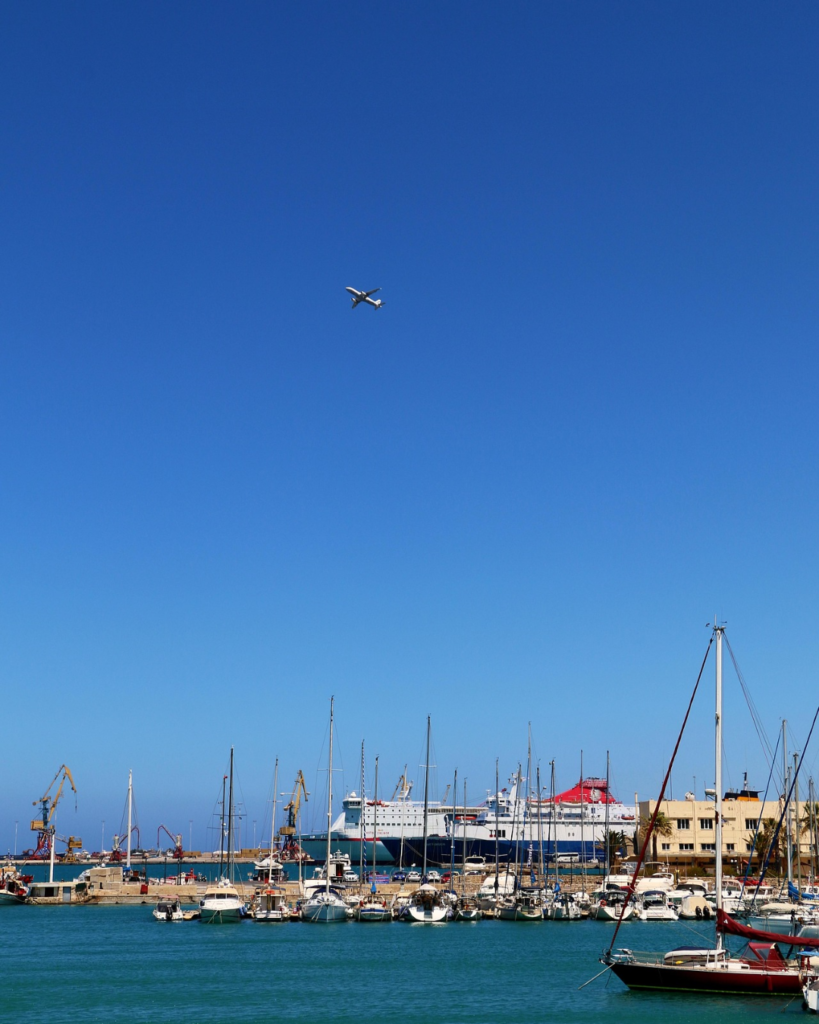
Piraeus is a working port — large, busy, and not particularly charming. Gates E6, E7, and E9 serve the Cycladic routes, including Santorini. Your gate number will be on your ticket. Arrive at the port at least one hour before departure. In summer, arrive ninety minutes early. The gates are directly across from the metro station, but the walk between gates can take ten minutes.
Crossing One — Piraeus to Santorini
Distance: 230 km (125 nautical miles) Crossing time: 5–8 hours (high-speed) or 7.5–11 hours (conventional) Ticket cost: approximately €48–110 (deck/economy seat) Operators: SeaJets, Blue Star Ferries, Fast Ferries
You have two choices and they are genuinely different experiences.
The high-speed catamaran — operated by SeaJets — covers the distance in approximately five hours. It is fast, air-conditioned, and sealed. You sit in aircraft-style seats and watch the Aegean through tinted windows. In calm weather it is efficient and comfortable. In the Meltemi winds that blow across the Cyclades from July through August, it bounces. Some people find this tolerable. Some do not. SeaJets cancels high-speed sailings when winds exceed safe thresholds, which happens several times each summer. If cancelled, you are rebooked or refunded.
The conventional ferry — typically Blue Star Ferries — takes seven and a half to eight hours. It is a large, stable ship with open decks, a self-service restaurant, a café, and space to walk around. You can sit outside and watch the islands pass — Syros, Paros, Naxos — each one appearing on the horizon, growing larger, pausing alongside while passengers and cargo transfer, then falling behind. The conventional ferry almost never cancels. It is slower but it is certain, and the open deck experience of crossing the Aegean with the wind and the light and the islands materialising from blue distance is something the sealed catamaran cannot offer.
Book in advance. Both vessel types sell out in summer, especially for morning departures. Ferryhopper and the operator websites are the standard booking platforms. E-tickets generate a QR code boarding pass — no printing required.
The first morning departure from Piraeus is typically 07:00. An early start means arriving in Santorini by early afternoon, giving you a full first evening on the island.
Ferries arrive at Athinios port on the western side of Santorini, located at the base of the caldera cliffs about 8 km south of Fira. The port is small and becomes chaotic when a large ferry unloads. Buses, taxis, and hotel transfers crowd a single road that switchbacks up the cliff. Pre-arrange your transfer or be prepared to queue. The public bus to Fira costs approximately €2.50 and runs timed to ferry arrivals.
Santorini — The Caldera
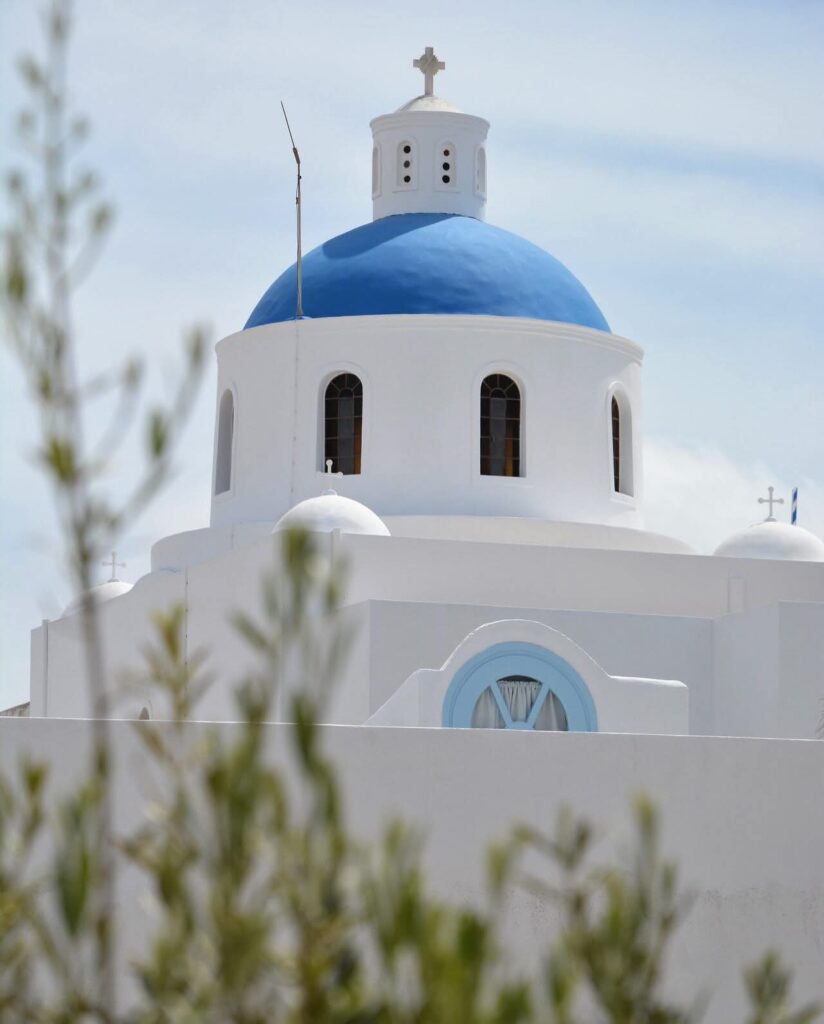
Santorini is a volcanic caldera — what remains after an eruption roughly 3,600 years ago blew the centre of the island into the sea. The cliffs you see are the inner walls of that collapsed volcano. The sea inside the caldera is deep, dark blue, and the villages along the rim — Fira, Imerovigli, Oia — are built into the cliff edge with the particular architectural confidence of people who decided to live on the lip of a catastrophe and make it beautiful.
The island is small enough to cross in thirty minutes by car or bus. Fira is the capital and the transport hub. Oia, at the northern tip, is famous for its sunset and its crowds at sunset — arrive ninety minutes early if you want a position at the castle ruins, or find a restaurant terrace where someone else has solved the logistics for you.
The caldera-facing side of the island is cliffs, villages, and views. The eastern side is flatter, quieter, and has the better beaches — Kamari and Perissa are black volcanic sand. Red Beach, near the ancient site of Akrotiri, is dramatic and small.
Akrotiri is the archaeological site most visitors underestimate. It is a Minoan settlement buried by the same eruption that created the caldera — preserved in volcanic ash the way Pompeii was preserved centuries later, except Akrotiri is older by roughly 1,500 years. The covered excavation site is walkable and well-interpreted. It connects Santorini to Crete in a way the ferries only imitate — the Minoans traded between these islands before classical Greece existed.
Give Santorini three nights. Two for the caldera, the villages, and the light. One for the archaeology and the eastern beaches. If you stay longer, the island rewards it. If you stay shorter, you will see the sunset and miss everything it is sitting on top of.
Crossing Two — Santorini to Crete
Distance: 120 km (63 nautical miles) Crossing time: 1.5–2 hours (high-speed) or 3–3.5 hours (conventional) Ticket cost: approximately €15–93 (deck/economy seat) Operators: SeaJets, Blue Star Ferries
This is a shorter, simpler crossing. The high-speed catamaran covers it in under two hours. The conventional ferry takes about three. Both depart from Athinios port and arrive at Heraklion port in Crete.
Most ferries depart Santorini in the afternoon — the first high-speed is typically around 15:30. This means a morning in Santorini and an evening arrival in Crete, which is a natural rhythm: spend the morning at a caldera-side café, take the bus to the port after lunch, cross the Aegean, and arrive in Heraklion in time for dinner.
This crossing moves with the prevailing Meltemi wind rather than against it, which often makes it smoother than the Piraeus-to-Santorini leg. On calm days, the Aegean between Santorini and Crete is flat enough to see the horizon as a single unbroken line.
Book in advance during summer. The Santorini-Heraklion route is popular and afternoon departures fill up.
Crete — The Island That Is a Country
Crete is not an island in the way Santorini is an island. Santorini is a place you visit. Crete is a place you could live in and not run out of things to understand for years. It is 260 km long, has its own mountain ranges, its own dialects, its own cuisine distinct from mainland Greece, and a history that predates the Parthenon by a thousand years.
Heraklion is the capital and the arrival point. The port is 2 km from the city centre — walkable with light luggage, a short taxi ride with more. The city is not conventionally beautiful in the way the islands are, but it is real in a way the islands sometimes are not. The Venetian harbour, the fortress of Koules, and the market street leading south from the harbour give you the city’s character inside an afternoon.
The Palace of Knossos is 5 km south of Heraklion. It is the largest Minoan archaeological site, associated with the legend of the labyrinth and the Minotaur, and it is the reason this route exists in the series. The Minoans built this palace complex around 1900 BC — running water, drainage systems, frescoes, multi-storey architecture — at a time when most of Europe was still building in wood. The site is partially reconstructed, which divides opinion among archaeologists but makes the scale and sophistication legible to non-specialists. Arrive early. The site has no shade and midday in summer is genuinely punishing.
If you have time beyond Heraklion, Crete opens westward. Rethymno — an hour and a half by car or bus — has a Venetian old town that rivals anything in the Cyclades without the crowds. Chania — two and a half hours west — has a harbour, a covered market, and a quieter version of the Cretan character. The Samariá Gorge in the White Mountains is one of Europe’s longest gorges and a full-day hike that ends at the Libyan Sea.
A car transforms Crete. Unlike Santorini, where a car is optional, Crete’s size and spread mean that buses connect the main towns but leave the interior and the south coast unreachable without your own transport. Rental agencies operate from Heraklion airport and port. Roads are generally good along the north coast motorway and progressively more adventurous as you head south into the mountains.
Practical Notes
Booking ferries: Ferryhopper is the most widely used comparison and booking platform for Greek ferries. Operator websites (Blue Star Ferries, SeaJets) also sell direct. Book early for July and August — popular routes sell out weeks in advance. Morning departures from Piraeus fill first.
Meltemi winds: The Meltemi is a seasonal northerly wind that blows across the Aegean from roughly mid-June through September, strongest in July and August. It can reach gale force. High-speed catamarans cancel when it does. Conventional ferries almost never cancel but will roll. If you are prone to seasickness, take the Blue Star. If your dates are flexible, monitor the wind forecast and book the calmer days for high-speed crossings.
Luggage: Greek ferries have no formal check-in for luggage. You carry your bags on and store them in designated racks on the car deck or beside your seat. There is no weight enforcement in practice, but the official limit is typically 50 kg per person.
Getting around the islands: Santorini has a reliable public bus network connecting Fira to Oia, Kamari, Perissa, Akrotiri, and the port. Taxis exist but are scarce in peak season — pre-book transfers. Crete’s KTEL bus system connects Heraklion, Rethymno, and Chania along the north coast highway, with less frequent service to southern towns.
Costs: Budget approximately €60–110 per person for the Piraeus-to-Santorini ferry and €15–93 for the Santorini-to-Heraklion ferry, depending on vessel type and seat class. Santorini is expensive by Greek standards — accommodation, food, and transport are priced for international tourism. Crete is significantly more affordable, especially outside Heraklion and the resort towns.
Season: May, early June, and September offer the best balance of weather, ferry availability, and crowd levels. The Meltemi is gentler, prices are lower, and the islands feel like places where people live rather than places where tourists are processed. Late June through August is peak season — everything is open, everything is full, and the heat in Crete’s interior can reach 40°C.
Currency and payments: Greece uses the euro. Cards are widely accepted in Athens, Santorini, and Heraklion’s tourist areas. Carry cash for smaller tavernas, rural Crete, and port-side purchases. Ferry tickets purchased online require no cash.
What This Route Is Really About
Every ferry route in the Aegean retraces something. The Minoans sailed between Crete and Santorini four thousand years ago. The Athenians controlled these sea lanes during the classical period. The Venetians fortified the harbours. The Ottomans taxed the crossings. You are on the same water, following the same wind patterns, passing the same islands that emerge from the horizon in the same sequence they always have.
The difference is that the ferry has a schedule and a snack bar. The Aegean is the same.
Athens gives you the beginning — the place where philosophy, democracy, and theatre were invented within walking distance of each other. Santorini gives you the interruption — a landscape so dramatic it forces you to stop thinking about what came before and just look. Crete gives you the depth — a civilisation older than the one you started in, still present in the stones and the frescoes and the layout of a palace that understood running water before Rome was a village.
The sea connects all three. It always has.
🔍 Related GoBeyondia Journeys Across Greece
- 🇬🇷 Greece — Where Myths Dance With Hypnotic Waves
- Beyond the Blue: Unlock the Ultimate Sacred Secrets of the Greek Islands
- The World Before the Word — Greece
- The Sea Has No Name

Beyondia
Trusted Travel CompanionReal digital nomad. I travel. I learn. I grow.
What about you? Where are you going?