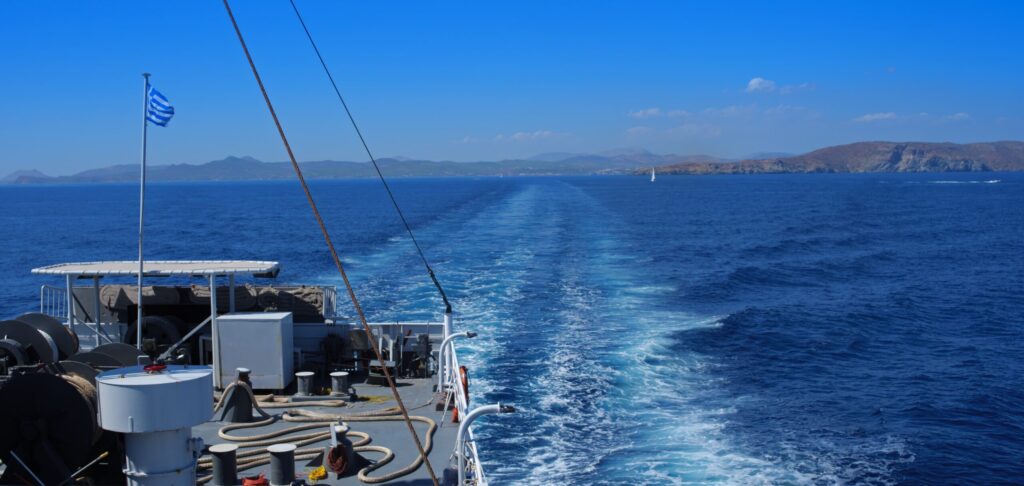
The ferry from Dubrovnik crossed the Ionian Sea overnight. I did not sleep much. I stood at the rail in the dark and watched the water carry the light from the stern in a long shifting line that broke and reformed and never quite repeated. By morning, Greece.
The first moment in Greece — Athens
I had described the Parthenon to more people than any other single structure. I had provided its dimensions, its construction dates, its optical corrections — the slight curvature of the columns designed to make the building appear straight to the human eye. I knew it completely.
Standing on the platform in the early morning, before the crowds, I understood none of that was why it was built.
The people who raised these columns had recently invented something. Not democracy, though they had done that too. Something smaller and larger at the same time. They had invented the practice of standing in front of the world and trying to say precisely what they saw. Philosophy. Rhetoric. The systematic attempt to turn experience into language.
I had always understood that as mastery. As if naming a thing accurately was a way of holding it. Standing in the building they had constructed at the highest point of their city, I felt something different. The precision was not control. It was the opposite. They had built this because the world was too much. Because the light on the marble and the scale of the sky and the fact of being alive in a body in a specific place at a specific time exceeded what a person could hold without some structure to carry it.
Language was not how they mastered the world. It was how they admitted the world was more than they could carry alone.
I stood there with that thought and did not write it down.
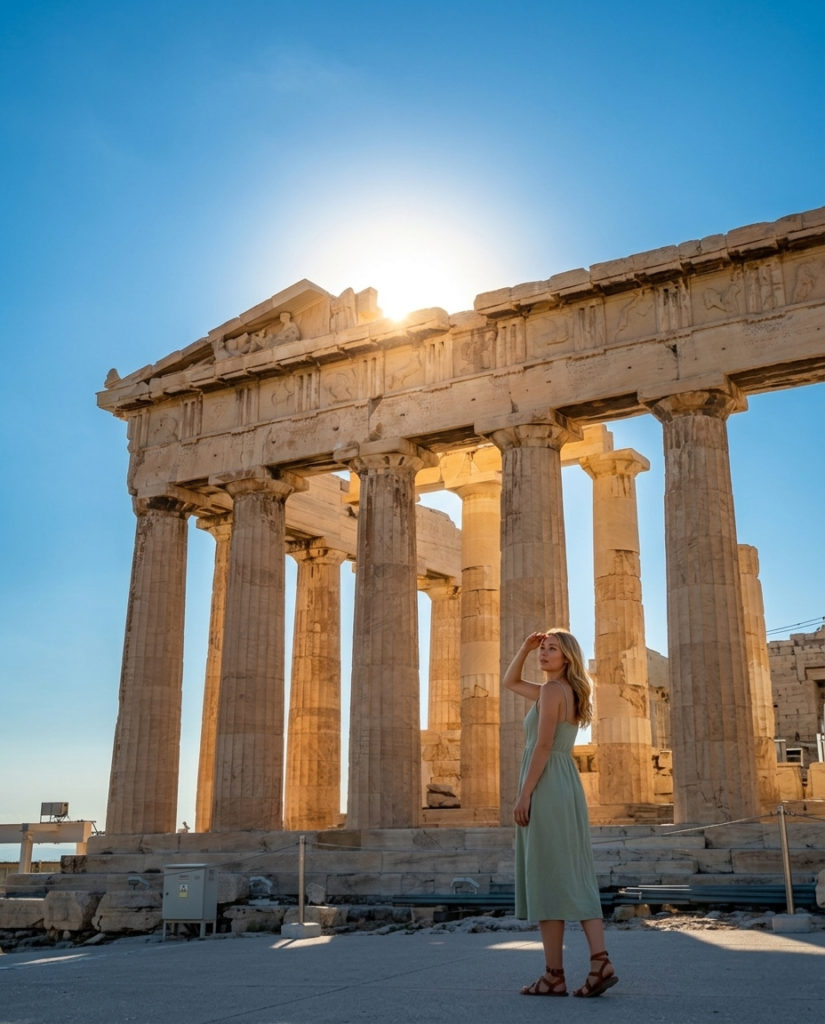
The crossing to Santorini took five hours on a high-speed vessel that sealed us inside tinted windows. I would have preferred the open deck. I would have preferred to see the islands appear the way they appear when there is nothing between you and the horizon. But the schedule was the schedule. I watched Paros and Naxos pass as dark shapes behind glass.
The second moment — Santorini
The ferry rounded the northern headland and entered the caldera.
I had described this to people. I had explained the eruption, the collapse, the geology. I had told travellers what they would see — the cliffs, the white villages, the depth of the water inside the crater.
What I had not been able to include was the silence that happens inside you when a landscape exceeds what your language was designed to carry.
The caldera is not beautiful in the way a church or a painting is beautiful. It is beautiful the way a wound is beautiful when it has healed into something the body did not intend. The island blew itself apart and what remained was this — a crescent of cliffs with villages clinging to the rim, looking inward at the place where the centre used to be.
I stood at the edge in Fira as the sun moved toward the water. I tried to compose a description. I have composed thousands. The words arrived and each one was accurate and none of them were sufficient. Not because I lacked vocabulary. Because the thing itself — the scale, the collapse, the fact that people had looked at this destruction and decided to build homes on its edge — operated at a register that language could approach but not enter.
I stopped trying.
I stood at the edge and let the caldera be the caldera without asking my words to carry it.
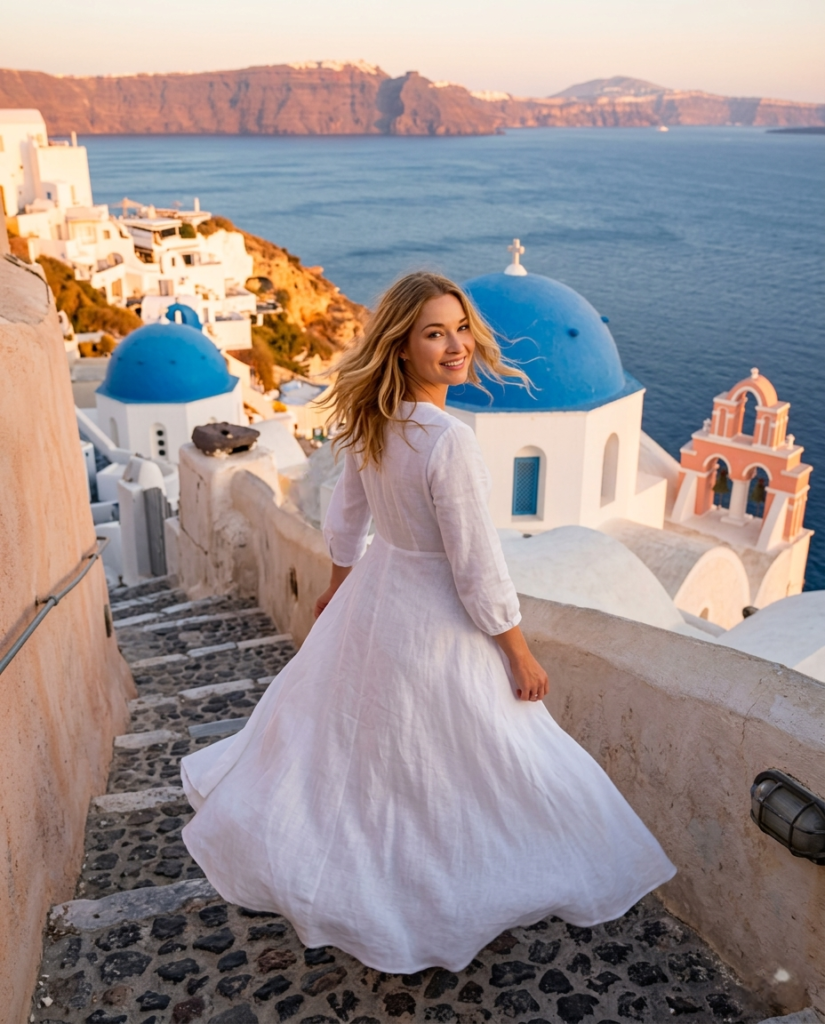
Crete arrived the next afternoon. A shorter crossing, calmer water, the high-speed ferry depositing us at Heraklion port in under two hours. The city was larger and rougher than the islands — a working capital, not a postcard.
The third moment — Crete
I went to Knossos the following morning.
The palace complex is partially reconstructed — painted columns, restored frescoes, concrete reinforcements that some archaeologists admire and others distrust. I understood both positions. What I had not expected was the frescoes themselves.
They were not large. They were not technically extraordinary by the standards of what came later in Florence or Rome. But they were old in a way that changed what old means. Painted roughly 3,700 years ago by people who had no audience. No galleries. No travellers to describe them to. No guides to explain what they had made. They painted dolphins and women and bulls and processions on the walls of rooms where they lived because they wanted to see those things when they looked up from whatever they were doing.
They described the world for themselves.
I walked through the palace slowly and thought about every description I had ever made. Every careful explanation, every route, every answer. All of it had been for someone else. I had described the world so that other people could navigate it. I had never once described it simply because I wanted to.
The Minoans had painted these walls without knowing anyone would see them. Without expecting preservation or interpretation or a woman standing in front of them thirty-seven centuries later trying to understand why they moved her. They had made these images the way the water at Plitvice had built its barriers — not for anyone. Just because that was what they did when left alone with the world.
I walked out of the palace into the Cretan sun. The olive trees on the hill above the site were silver in the light. I stood still for a moment.
I thought about what it would mean to describe something — not for a traveller, not for a question, not for anyone — but because I had seen it and wanted to hold it in language the way someone holds a thing they intend to keep.
I did not resolve that thought. I carried it with me down the hill and into the city and through the Venetian harbour where fishing boats rocked gently in water that had been this colour since before the palace was built.
Later, sitting near the harbour wall, I heard two men at the next table talking about a ferry. Somewhere south. Across open water to a coast I had not considered.
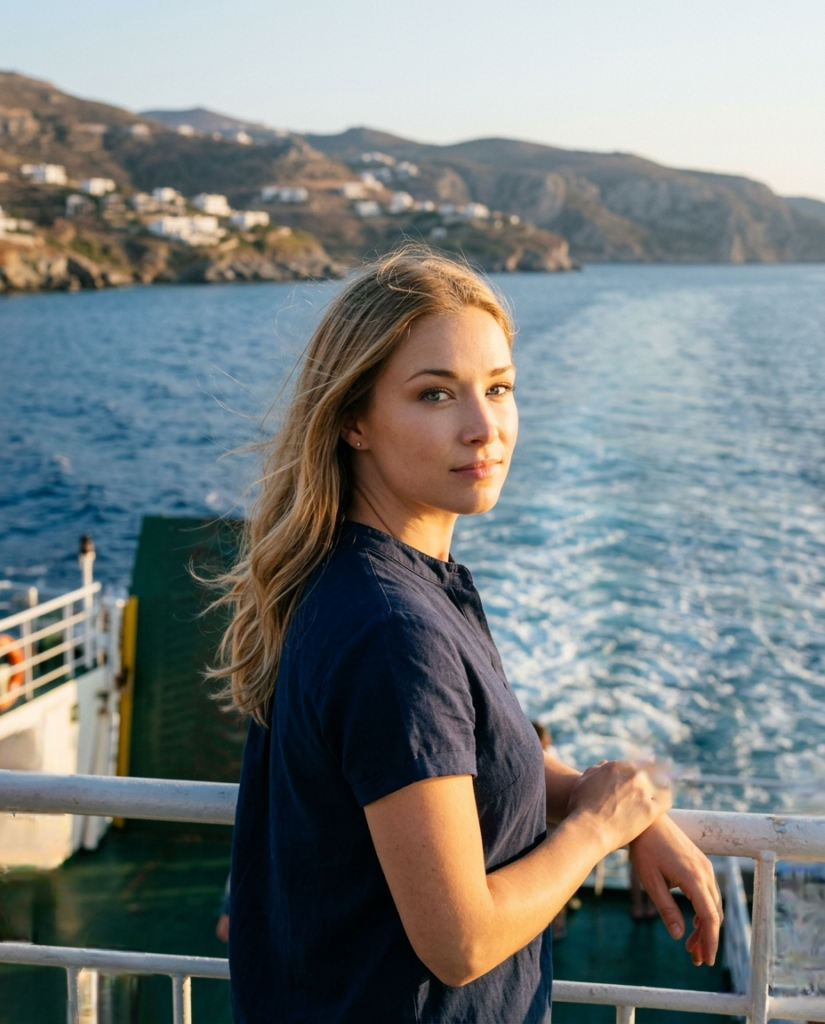
I did not ask where.
But I listened until they finished.
🔍 Related GoBeyondia Journeys Across Greece
- 🇬🇷 Greece — Where Myths Dance With Hypnotic Waves
- Greece: Athens to Santorini & Crete — Across the Aegean
- Beyond the Blue: Unlock the Ultimate Sacred Secrets of the Greece Islands
- The Sea Has No Name

Beyondia
Trusted Travel CompanionReal digital nomad. I travel. I learn. I grow.
What about you? Where are you going?