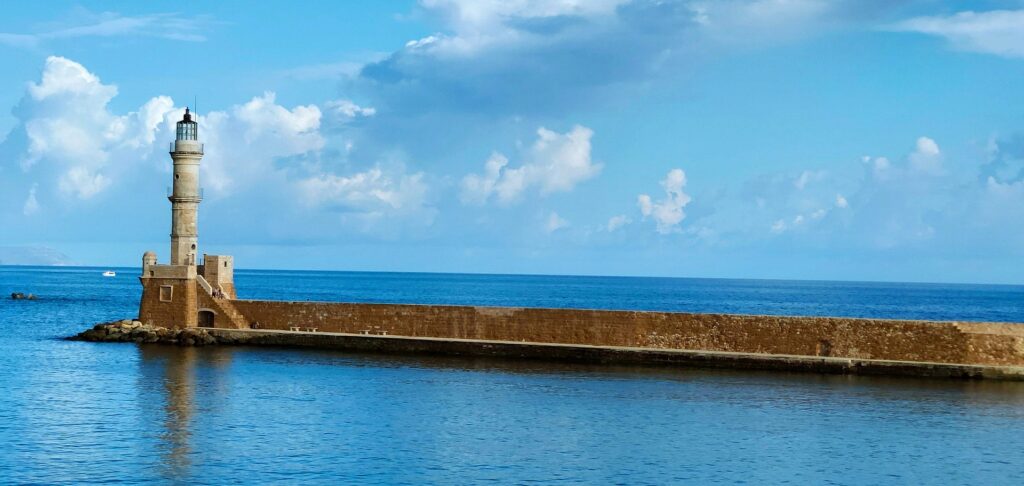
A morning in Heraklion.
I was walking along the harbour wall — the Venetian one, built in the sixteenth century by people who expected it to still be standing when they were not — and I stopped at a place where someone had carved letters into the stone. Not graffiti. Something older. A name, or a date, or a statement I could not fully read because the centuries had softened the edges of the cuts until the letters were more felt than seen.
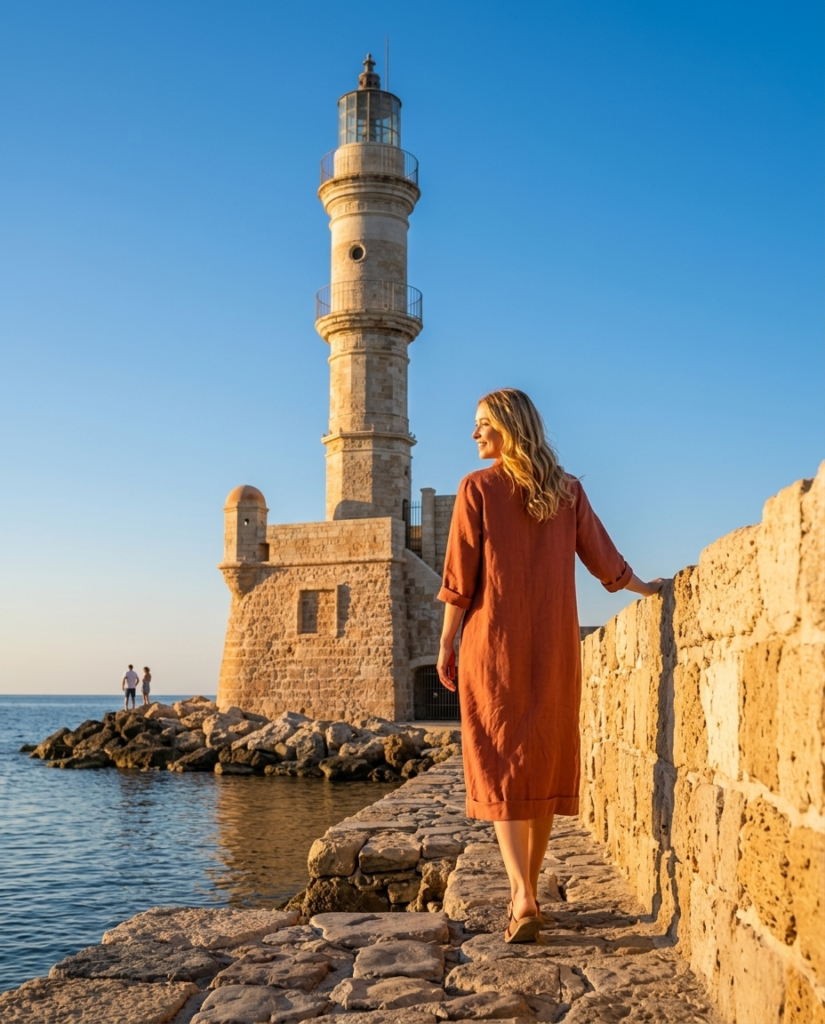
I put my finger into one of the grooves. The stone was warm from the sun. The dust inside the carving was fine and pale and older than anything I had touched since arriving in this country.
I stood there with my finger in someone’s handwriting and thought about what I had learned in the past weeks. In Athens, I had understood that language was not mastery — it was the opposite. An admission that the world was too much to hold without structure. In Santorini, I had felt what happened when the world exceeded what language could carry. In Knossos, I had seen people paint dolphins on their own walls for no audience at all.
All of that was about speaking. About describing. About the act of putting words to things in the present.
This carving was different.
Whoever had cut these letters into the harbour wall had not been speaking. They had not been describing for a traveller or explaining for a student or composing for themselves. They had been making a mark that would survive them. The act was not description. It was inscription. Not a voice but a scar.
I took my finger out of the groove and looked at the dust on my skin.
There is a difference between saying something and cutting it into stone. Saying is for now. Carving is for after. The people who carved were not trying to hold the present. They were trying to send something forward into a future they would not see.
The oldest carvings I knew about — the oldest deliberate marks made by human hands with the intention of being read — were not here. They were not in Greece. They were south, across the water I had been watching for weeks, on a coast I had circled in conversation without ever turning toward.
The place where the impulse to outlast first became a system. Where someone looked at the world and decided not only to describe it but to cut the description into stone so hard and so deep that four thousand years later a woman could stand in front of it and read what they had seen.
I had been describing the world in language that disappears the moment a conversation ends. The Egyptians had described theirs in a language designed never to end. I did not know what that difference would feel like from the inside, and I wanted to.
The harbour was filling with its morning sounds. A fishing boat was being tied to a bollard with a rope that left wet marks on the stone. A man was carrying a crate of something toward a truck that was parked where trucks should not be parked. The ordinary machinery of a port that has been a port for a thousand years.
I wiped the dust from my finger. I walked to the end of the harbour wall where the ferry offices open early. I asked about crossings south.
🔍 Related GoBeyondia Journeys in Egypt
- Cairo to Luxor — The River and the Stone
- 🇪🇬 Egypt — Pyramids, Temples, Red Sea & Timeless Desert Landscapes
- What Silence Weighs — Egypt Reflections
- Egypt, Where Time Bends to Eternity

Beyondia
Trusted Travel CompanionReal digital nomad. I travel. I learn. I grow.
What about you? Where are you going?