🌐 Around the World with Beyondia 🧵 Mediterranean Region 🪡 Episode 8
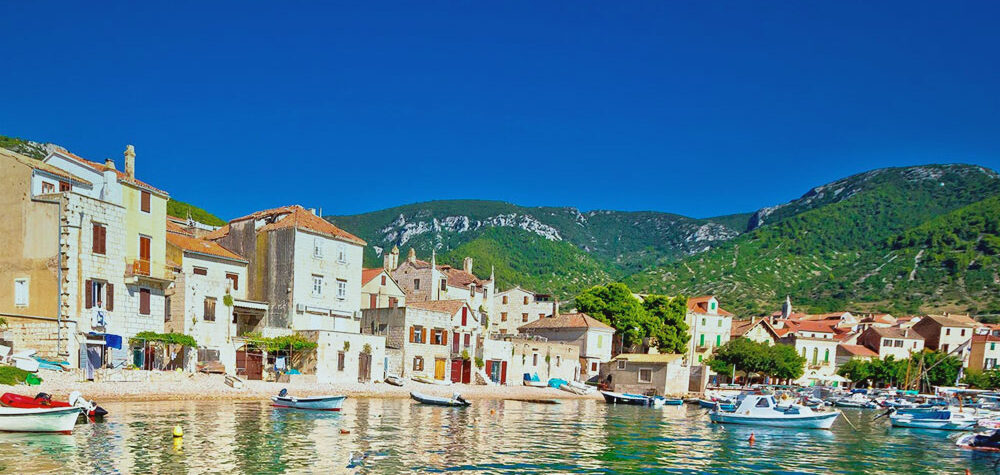
Vis was a military island until 1989. No tourists for fifty years. That’s why it still looks like this.
Vis is the farthest inhabited island from the Croatian mainland
It takes two and a half hours by ferry from Split, across a stretch of open Adriatic that has never been entirely tame, and even now, arriving at the small harbour of Vis Town feels like arriving somewhere the twentieth century was not quite allowed to finish with. From the late 1940s until 1989, the Yugoslav army kept Vis closed to foreigners. It was too strategic to share. Submarine pens were carved into the cliffs. Rocket silos were dug into the hillsides. A military runway was cut into the plateau above the village. For more than forty years, while mass tourism bulldozed its way across every other Mediterranean island from Mykonos to Mallorca, Vis was a file marked restricted. The island missed the sixties, the seventies, the eighties. It never had to recover from them.
What the army did not know was that it was not the first to preserve this island. In 397 BC, Dionysius the Elder of Syracuse — a Greek tyrant with a mind for naval geography — founded a colony here and called it Issa. That makes Vis, among other things, the oldest Greek colony in Croatia, older than most of the Roman ruins a visitor will see anywhere on this coast. Issa then did something Greek colonies on this side of the Adriatic rarely managed: it grew powerful enough to found colonies of its own, on the mainland, further north. Tragurion, which the world now knows as Trogir, was founded by settlers from Vis. So was Epetion, now a small neighbourhood on the edge of Split. The story most of this coast tells itself is that the islands are extensions of the mainland. On Vis, it went the other way. Here, the mainland is an extension of the island.
Between Dionysius and Tito — between 397 BC and 1989 AD — Vis did what every truly old Mediterranean place does when the large powers stop paying attention. It grew wine. The island became one of the last living homes of the Vugava vine, a white grape found almost nowhere else on earth, fermenting on stone terraces above Komiža the way it has since Greek ships first left empty amphorae here. In Komiža itself — the fishing town on the western, stormier side of Vis — the local boat-builders shaped the falkuša, a lateen-sailed wooden vessel used for sardine runs to the open-water islets of Svetac and Palagruža. The design is so specific to this harbour that the boats and the rowing songs that came with them have been preserved as living maritime heritage, still sailed today in ceremonial regattas by descendants of the fishermen who built the originals.
Stiniva is a cove on the southern coast, a horseshoe of white pebbles between two cliffs that lean toward each other until they nearly kiss. It has been voted Europe’s best beach more than once. You cannot drive there. You arrive either by boat or by a steep downhill path, which is why the cove on a Saturday in August looks almost exactly the way it looked in 1956. Biševo, a small islet twenty minutes west by boat, contains the Blue Cave — a sea cave where, around midday, sunlight enters through an underwater opening and turns the water inside it an electric, impossible blue. The island is still full of the things that were hidden from it, and from everyone else, for decades.
Some places pay a price for being forgotten. Vis collected interest. The army left in 1989. The tourists came slowly, not in numbers the island could not absorb, and by the time Mamma Mia! Here We Go Again filmed here in 2018 and told a few million cinemagoers that this was actually a Greek island, Vis had already made its peace with being seen again. Quietly. On its own terms.
Some islands are saved by their beauty. Vis was saved by its cliffs — twice. Once by the soldiers who hid inside them, and once by the waves that made the whole place too far to reach in the first place.
Nine regions. One hundred and twenty destinations. Three hundred and sixty weeks.
Every so often, the best thing a place can do is disappear for a while.

Beyondia
Trusted Travel CompanionReal digital nomad. I travel. I learn. I grow.
What about you? Where are you going?