🌐 Around the World with Beyondia 🧵 Mediterranean Region 🪡 Episode 16
Santorini wasn’t always beautiful. In 1600 BC, a volcanic eruption destroyed everything. What you see now is what grew back.
Santorini exploded
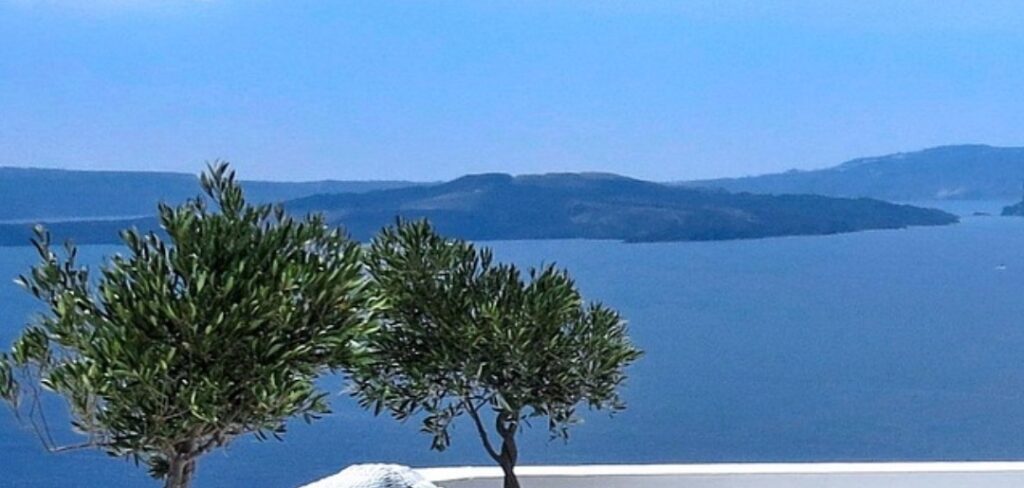
Around 1600 BC, give or take a few decades, the island now called Santorini exploded. Not figuratively. Volcanologists estimate that the eruption of Thera — the ancient name of the island — expelled roughly sixty cubic kilometres of rock, ash, and pumice into the sky, and ranks among the three largest eruptions the Earth has produced in the last ten thousand years. The mountain at the centre of the island collapsed into the sea. A tsunami radiated outward across the southern Aegean. Sulphur from the eruption was injected into the atmosphere in quantities that still appear, three and a half thousand years later, in tree rings sampled in Ireland and California and on the far side of North America. The Minoan civilisation on Crete, 110 kilometres south, never fully recovered. Egyptian chronicles recorded an unexplained darkness. A volume of water poured into the centre of the former island and filled the space where the mountain had been. The shape that was left — a crescent of cliffs surrounding a flooded caldera with two small volcanic islands still smouldering in the middle — is what you see today on every postcard of Greece. Santorini is the crater.
Everything the island became over the following three and a half thousand years was the answer to this single event. The caldera cliffs are the sheared inside wall of the old mountain. The red beach and the black sand are volcanic scoria and basalt cooled into two different colours. The soil is almost entirely pumice, which holds almost no water. The wind across these slopes is constant and dry. None of this is hospitable geography. And yet — or rather, because of all of this — the island produced one of the most distinct viticultural cultures in Europe. The Assyrtiko grape grows here in a method used nowhere else in the world: vines are trained into low basket-shaped coils on the ground called kouloura, to shield the fruit from the wind and to catch the dew that is almost the vine’s only moisture. A single Assyrtiko vine can live for 400 years because the phylloxera plague that destroyed most of Europe’s old vines in the nineteenth century could not cross the pumice soil. You are drinking, when you drink Santorini wine, from vines that remember the Ottoman Empire.
The famous houses are the same kind of answer. The caves cut into the caldera cliffs of Oia and Fira were originally dug because the volcanic tuff of the island is soft enough to excavate with hand tools — and because stone buildings, in this climate, would have heated up to unliveable temperatures. The cave houses were cool in summer and warm in winter and cost the builders nothing more than labour. The lime-wash that turns them white was applied annually because lime kills bacteria in stone walls and reflects the enormous Aegean light. The blue domes, the image that launched a million Instagram posts, were painted with a pigment made from copper sulphate — cheap, corrosion-resistant, and locally available through centuries of fishing and shipping contact. None of the signature aesthetic elements of Santorini were invented for beauty. All of them were invented for survival, and then, gradually, the survival turned beautiful.
On the southern tip of the island, at a site called Akrotiri, sits the deepest strangeness of the place. Before the 1600 BC eruption, a Minoan city stood there. A Bronze Age city, with paved streets, multi-storey houses, functioning indoor plumbing that pre-dates Roman plumbing by a millennium, and frescoed walls painted in lapis lazuli blue, saffron yellow, and terracotta red. The city was a trading port with reach across the Aegean, inhabited by perhaps thirty thousand people. In the months before the volcano erupted, the ground shook. The inhabitants understood the warnings. They packed what they could, walked out of their city, locked their doors, and went somewhere else. When excavations began in 1967, archaeologists found no human remains and no significant gold. The city had emptied itself in time. What the ash preserved instead were the frescoes — young boxers sparring, blue monkeys climbing rocks, women gathering saffron, a fisherman holding his catch. Some of the most radiant Bronze Age art ever recovered, in colour still so saturated that modern pigment chemists study how it was made. A city that fled in time, kept intact by the disaster it fled. Pompeii without the bodies. Sixteen hundred years before Pompeii existed.
This is what sits underneath the sunset photograph. Every visitor who stands at Oia at the golden hour, watching the sky turn the colour the islanders learned to paint with, is standing above a Bronze Age city that chose to leave before the mountain spoke. Every glass of cold Assyrtiko being poured on a restaurant terrace comes from a vine whose roots are in ash. Every cliffside house carved into the caldera wall is carved into the inside of a mountain that no longer exists. The view is not an accident. The view is the long aftermath.
Most tourist destinations try to keep their disasters out of the marketing. Santorini cannot. The disaster is the product. The crescent of the island is the crater. The wine is the soil. The white and the blue are the lime and the copper. The most photographed sunset in Europe is light setting across a flooded volcanic mouth. Nothing here is pretending. That is the island’s secret, hidden in plain sight behind thirty million identical photographs: the landscape is beautiful precisely because it has already done the worst thing it was capable of, and what you are looking at is what came back.
Nine regions. One hundred and twenty destinations. Three hundred and forty-five weeks remaining.
Some islands are pretty. This one earned it.

Beyondia
Trusted Travel CompanionReal digital nomad. I travel. I learn. I grow.
What about you? Where are you going?