🌐 Around the World with Beyondia 🧵 Nordic & Western Europe Region 🪡 Episode 63: Dingle
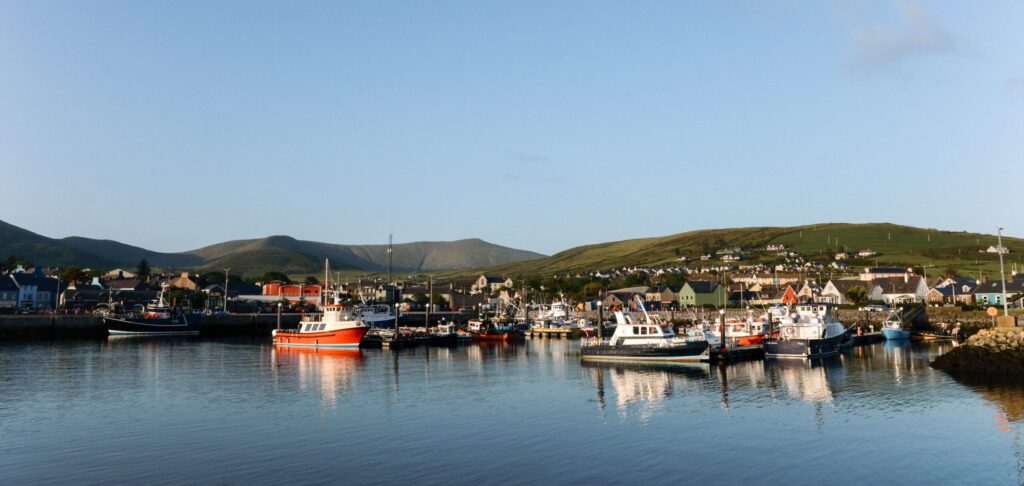
Dingle is a small town on the southern shore of Dingle Harbour on the western coast of County Kerry in the southwest of Ireland. The town has approximately 2,000 permanent residents, though the specific Dingle metropolitan area extends across the substantial Dingle Peninsula (population approximately 12,000 across the entire peninsula) and includes specific villages including Ballyferriter (Baile an Fheirtéaraigh), Ventry (Ceann Trá), Dunquin (Dún Chaoin), and specific smaller settlements. The town sits at approximately the geographic centre of the Dingle Peninsula — one of five substantial peninsular formations that project from Ireland’s southwestern coast into the Atlantic — approximately 50 kilometres west of Tralee (the specific County Kerry administrative centre) and approximately 350 kilometres southwest of Dublin. The specific position on the southern shore of a substantial natural harbour, protected from the specific Atlantic exposure by the specific Dingle Peninsula’s high spine (Slieve Mish and Central Dingle Peninsula mountains, with the specific Mount Brandon rising to 952 metres, Ireland’s second-highest mountain outside of the Kerry Reeks), produces the specific working harbour character that has substantially defined Dingle’s economic identity for centuries.
The Specific Language Character of Dingle
The specific Irish Gaelic language character of Dingle and the surrounding Dingle Peninsula is worth substantive treatment because most foreign readers do not carry the specific reality of contemporary Irish Gaelic community life. The Corca Dhuibhne Gaeltacht — the specific officially designated Irish-speaking region covering the western part of the Dingle Peninsula — is one of the substantial remaining Gaeltacht regions in Ireland. Specific villages and settlements within the Gaeltacht (Ballyferriter, Ventry, Dunquin, Cloghane, Ballydavid, and specific smaller settlements) operate substantially in Irish Gaelic as the primary community language for a specific majority of residents. Specific schools within the Gaeltacht operate substantially through Irish (particularly Pobalscoil Chorca Dhuibhne, the specific Gaeltacht secondary school, and multiple specific primary schools). Specific commercial and administrative activity within the Gaeltacht operates substantially in Irish. The specific Raidió na Gaeltachta broadcasting service — the specific national Irish-language radio broadcaster, established 1972 — operates its western studio from Ballyferriter, providing substantial specific Irish-language broadcasting to the Gaeltacht communities. Dingle town itself is a specific mixed community: while it lies immediately adjacent to the Gaeltacht boundary (and specific residents of Dingle town identify substantially as Irish speakers), the specific tourism-driven English language use, the specific in-migration of English-speaking Irish residents from other regions, and the specific commercial pressures of substantial international tourism have produced a specific bilingual character with substantial English predominance in specific commercial contexts and substantial Irish predominance in specific community and family contexts.
The specific reality of contemporary Irish Gaelic as a community language is worth naming carefully because it substantially differs from both popular tourism-marketing narratives and popular academic-critical narratives. The specific tourism-marketing narrative typically presents Irish Gaelic as either a substantial living language (implying substantial community vitality) or as a specific romantic heritage-language (implying that Irish is essentially a nostalgic remnant). Both characterisations substantially misrepresent the specific complex reality. Irish Gaelic is genuinely a living community language for approximately 20,000-25,000 daily speakers in the Gaeltacht regions (according to specific Central Statistics Office Ireland data and specific Údarás na Gaeltachta research), plus substantial additional daily speakers in specific Irish-language schools and community networks outside the Gaeltacht. The specific number of people who claim some Irish language competency in Ireland’s national census is approximately 1.7 million, but the specific reality is that substantial proportions of these self-reported speakers use Irish only in specific limited contexts (school, occasional cultural events, formal government documents). The specific difference between “having some Irish” and “being an Irish-speaker” is substantial, and the specific Gaeltacht communities represent the substantial community of specific fluent daily speakers.
The specific ongoing challenges facing Irish Gaelic as a community language are substantial: substantial emigration from Gaeltacht regions (particularly of young adults seeking employment); substantial in-migration of English speakers to specific Gaeltacht areas; substantial tourism pressure toward English use; substantial commercial pressure toward English use; substantial media pressure toward English (though the specific Irish-language broadcasting and publishing sectors have expanded substantially since the 1970s); and substantial ongoing debates about the effectiveness of specific Irish government language policy. The specific Dingle Peninsula Gaeltacht represents one of the substantial specific communities where these tensions are actively negotiated, and specific ongoing local initiatives (particularly through Údarás na Gaeltachta, the specific Gaeltacht regional development authority) attempt to substantially maintain the specific community language vitality against substantial contemporary pressures.
Dingle Peninsula Substantial Archaeological Inheritance
Beyond the specific linguistic character, the Dingle Peninsula’s substantial archaeological inheritance from the early Christian period is genuinely one of the more remarkable in Europe, and the article’s central substantive claim. The specific period between approximately 500 and 900 AD — the specific “Island of Saints and Scholars” phase of Irish Christianity — was substantially the period when Ireland was one of the substantial intellectual and religious centres of Latin Christianity in northwestern Europe. During this specific period, Irish monasteries substantially preserved classical learning (Latin manuscripts, specific theological and philosophical texts, specific historical and scientific writing) that had been substantially disrupted elsewhere in Europe following the collapse of the Western Roman Empire (476 AD). Irish monks travelled substantially across Europe — the specific “Peregrini Scoti” or “Wandering Scots” — establishing specific monasteries and specific centres of learning (specifically Colmcille establishing Iona in 563 AD as the source of subsequent Christianisation of Scotland and northern England; Columbanus establishing specific monasteries at Luxeuil and Bobbio in France and Italy from approximately 590 onwards; specific Irish monks establishing communities at St Gallen in Switzerland, at Bobbio in northern Italy, at Würzburg in Germany, at Vienna in Austria, and at numerous other specific European locations). The specific consequence — that Irish monastic culture substantially preserved and transmitted classical European learning during a specific critical period — has been substantially acknowledged in modern scholarship (particularly Thomas Cahill’s How the Irish Saved Civilization 1995, though the specific claim has been substantially debated in professional historiography, with specific scholars arguing that Cahill overstates the specific Irish role while others have substantially defended the substantial historical importance of the specific Irish monastic contribution).
The Dingle Peninsula was one of the specific centres of this substantial Irish monastic activity. The specific remote western position — one of the substantial westernmost points of Europe, exposed to substantial Atlantic weather, providing specific geographical isolation from mainstream civilisation — was substantially attractive to specific monastic communities seeking substantial ascetic isolation. Specific monastic settlements were established across the peninsula from approximately the 6th century onwards, and the specific archaeological inheritance remains substantially intact. Over 400 specific stone beehive huts (clocháns) are distributed across the peninsula, particularly on the specific slopes of Mount Brandon (which was itself a substantial specific pilgrimage destination throughout the medieval period, associated with the specific St Brendan the Navigator — the substantial 6th-century Irish monk associated with specific extraordinary transatlantic voyage traditions, whose specific Navigatio Sancti Brendani Abbatis / Voyage of St Brendan the Abbot was one of the most widely circulated Latin narratives of medieval Europe). Specific substantial concentrations of beehive huts survive at Fahan (near Ventry), on the slopes of Mount Brandon, and along the specific Slea Head Drive coastal route.
The Gallarus Oratory — the article’s central specific archaeological subject — sits approximately 6 kilometres northwest of Dingle town, on a specific hillside overlooking Smerwick Harbour. The building is approximately 4.8 metres long by 3 metres wide by 4.6 metres high, constructed entirely of dry-stone corbelled construction (each course of stones laid slightly inward until the walls meet at the top forming a specific vaulted stone roof, without any mortar or cement). The specific construction technique — corbelling — has substantial pre-Christian roots in Irish stone construction (the specific technique appears in specific Neolithic monuments including the substantial Newgrange passage tomb, dated to approximately 3200 BC), and was substantially preserved through the medieval period specifically for small monastic buildings where mortar-and-stone construction would have required specific materials and skills not available in remote rural locations. The Gallarus Oratory has been standing substantially unaltered since its specific construction, which is dated substantially between approximately 800 and 1200 AD (with specific dating substantially debated — some scholars argue for earlier construction in the 8th-9th centuries during the peak of Irish monastic activity, others argue for later construction in the 11th-12th centuries during the specific post-Viking Irish monastic revival). The specific building remains substantially watertight after over 1,000 years — rain does not penetrate the walls or roof, and the specific structure has never required substantial restoration. This represents one of the more substantial specific achievements of early medieval Irish stone construction technology, and demonstrates the substantial specific capabilities of pre-industrial Irish rural craftsmanship.
Other substantial specific archaeological sites on the Dingle Peninsula include the Kilmalkedar Church complex (approximately 3 kilometres northwest of the Gallarus Oratory, containing a specific 12th-century Romanesque church built by the specific medieval Irish stonemason tradition, plus specific earlier archaeological remains including a specific ogham stone from approximately the 5th-6th centuries — one of the substantial specific pre-Christian Irish inscribed stones — and a specific sundial from approximately the 7th-8th centuries), the specific Fahan beehive hut complex (containing multiple substantial specific beehive huts and monastic remains), the specific Reask Monastic Site (containing substantial specific early Christian carved stones and monastic ruins), the specific Riasc archaeological complex, and dozens of specific smaller sites distributed across the peninsula. The specific concentration of preserved early Christian archaeological remains within a specific approximately 50 square kilometre area of the western Dingle Peninsula is genuinely one of the most substantial in Europe, comparable in specific density to the substantial monastic archaeological concentrations of Mount Athos in Greece, the specific Coptic monasteries of Wadi el-Natrun in Egypt, and the specific Byzantine cave monasteries of Cappadocia in Turkey.
The Blasket Islands — the specific literary heritage that makes the western Dingle Peninsula substantially known beyond archaeological circles — sit approximately 3 kilometres off the specific western tip of the Dingle Peninsula. The six islands (the Great Blasket / An Blascaod Mór being the largest, with specific smaller islands including Beginish, Inis Tuaisceart, Tearaght, and specific rocky outcrops) were substantially inhabited from approximately the medieval period until 1953, when the Irish government substantially relocated the remaining 22 residents to the mainland following substantial concerns about the specific unsustainable population decline (from approximately 175 residents in 1911 to 22 by 1953) and the specific hardship of continued island life. During the specific late 19th and early 20th centuries, the Blasket Islands community produced substantial vernacular Irish-language literature that has become substantially important in modern Irish literary heritage. Peig Sayers (1873-1958) — the specific island resident whose specific autobiography Peig (1936) was substantially the primary Irish-language reading text in Irish school education from the 1930s until the 1990s — became one of the more consequential specific Irish-language writers of the 20th century, though specific generations of Irish schoolchildren developed specifically ambivalent relationships to her substantial work through the substantial school-curriculum experience (specific Irish adults of specific generations still associate Peig substantially with the specific difficulty of Irish-language school education, though contemporary literary appreciation has substantially rehabilitated her specific literary achievement). Tomás Ó Criomhthain (1855-1937) — another specific Blasket Islands resident — wrote An tOileánach / The Islandman (1929), one of the more substantial 20th-century Irish-language autobiographies, providing substantial specific documentation of island life during its specific decline. Muiris Ó Súilleabháin (1904-1950) wrote Fiche Blian ag Fás / Twenty Years A-Growing (1933), substantially translated into multiple international languages, providing substantial specific insight into island life from the perspective of a specific young man growing up on the Great Blasket.
The specific Blasket literary heritage represents one of the substantial specific cases of vernacular literary production from a specific dying rural community. The specific writers were not professional literary figures — they were specific island residents (fishermen, farmers, community members) who substantially recorded their specific community life in their own language during its specific final decades. The specific consequence — substantial preserved documentation of a specific rural European Atlantic island community that no longer exists — is one of the more substantial ethnographic-literary achievements of 20th-century European culture. The Blasket Centre (Ionad an Bhlascaoid Mhóir) in Dún Chaoin — opened 1994, a substantial specific museum and interpretive centre for the Blasket literary and community heritage — provides substantial specific engagement with the specific Blasket cultural inheritance. The Great Blasket itself remains substantially uninhabited (the specific island is a national heritage site with specific summer visitor access via ferry from Dunquin harbour), and specific summer residence programmes (particularly the specific Great Blasket residential programme) allow substantial specific visitors to spend specific extended periods on the island engaging with the specific literary and community heritage.
The specific Slea Head Drive — the specific approximately 47-kilometre coastal drive around the western tip of the Dingle Peninsula — provides substantial specific access to the peninsula’s substantial archaeological, natural, and cultural landmarks. The specific route from Dingle town proceeds westward through Ventry (Ceann Trá, with the specific 4-kilometre Ventry Strand beach), continues to Slea Head (with substantial specific views across to the Blasket Islands and specific access to substantial specific beehive hut complexes on the coastal hillsides), continues to Coumeenoole (with the specific dramatic cove that has been substantial specific filming location for multiple international productions including Ryan’s Daughter 1970 and Star Wars: The Last Jedi 2017), continues to Dunquin (with the specific Dunquin harbour from which the Blasket Islands ferry operates during summer months, and the specific Blasket Centre), continues to Ballyferriter (the specific Gaeltacht village with the specific Raidió na Gaeltachta studios), and returns through the specific Gallarus Oratory and Kilmalkedar Church complexes to Dingle town. The specific drive is one of the more substantial single day trips available in Ireland, combining substantial specific archaeological engagement with substantial specific coastal scenery.
Dingle Fish Market
The specific working character of Dingle town is worth substantive treatment. Dingle Harbour has been continuously operated as a specific fishing port for centuries, and the specific fishing industry remains substantially active despite specific decline in recent decades. The specific Dingle fish market operates continuously through the working week, providing substantial specific fresh Atlantic seafood to specific local restaurants and specific export markets. The specific traditional Dingle fishing boats — including the specific naomhóg (the specific Kerry curragh, a substantial specific tarred-canvas rowing boat used for specific inshore fishing and specific traditional water transport, still substantially operated by specific Dingle Peninsula fishermen for specific traditional purposes) — represent substantial specific continuity of pre-industrial Irish coastal fishing traditions. The specific Dingle food scene has developed substantially since the 1990s, with substantial specific gastronomic recognition of specific local Atlantic seafood, specific Irish rural food traditions, and specific artisanal production. The specific restaurant Out of the Blue (established 2001, one of the substantial specific seafood restaurants) exemplifies the specific quality-focused seafood approach; the substantial Dingle Farmers’ Market (established 2004, held every Friday) provides substantial specific engagement with specific local food producers.
The Dingle Distillery — established 2012 by the specific Porterhouse Brewing Company — represents the substantial specific new-Irish-distillery boom of the 2010s. Ireland’s specific whiskey industry had substantially declined through the 20th century (from approximately 30 substantial specific distilleries in the mid-19th century to just 3 distilleries by 1988), and the specific 2010s brought substantial specific revival with numerous new small distilleries established across Ireland. Dingle Distillery produces specific gin (launched 2013, substantially internationally recognised), specific whiskey (aged from 2013, first substantial specific releases from 2016), and specific vodka. The specific distillery tours provide substantial specific engagement with the specific whiskey-making process.
The specific Dingle music scene — while less substantially internationally famous than Doolin’s — remains substantially active. Specific pubs hosting substantial regular traditional music sessions include An Droichead Beag (one of the substantial specific traditional music pubs), John Benny Moriarty’s (with specific traditional sessions substantially year-round), Foxy John’s (a specific traditional pub with specific music), and other specific venues. The specific music at Dingle carries a slightly different specific character than Doolin’s — with substantial specific Kerry musical traditions (particularly the specific slow air and specific song tradition) alongside the standard Irish traditional repertoire.
The contemporary Dingle combines substantial specific elements. Approximately 500,000 visitors per year pass through Dingle and the Dingle Peninsula, most of them accessing the substantial specific coastal landscape, the substantial archaeological heritage, the substantial specific food and beverage scene, and the substantial specific Irish Gaelic cultural experience. The specific tourism economy supports substantial specific accommodation providers, specific restaurants, specific tour operators, and specific specialty retail. The specific ongoing negotiation between substantial specific tourism development and specific preservation of Gaeltacht character, specific working fishing economy, and specific community life is one of the specific ongoing tensions of contemporary Dingle. The specific housing pressure — substantial numbers of Dingle properties have been substantially converted to short-term tourism rental, producing specific reductions in permanent-resident housing availability — is one of the specific contemporary tensions comparable to the specific pressures identified at Doolin. The substantial specific community continues to negotiate these tensions substantially, with specific ongoing local initiatives attempting to substantially preserve the specific working character while accommodating substantial specific external commercial demand.
This is the deeper character of Dingle, and the article proposes to close on it. The town is a working fishing port on the southern shore of Dingle Harbour in County Kerry, at the base of the substantial Dingle Peninsula. It is one of the substantial working Irish Gaelic-speaking communities in Ireland — sitting adjacent to the substantial Corca Dhuibhne Gaeltacht, one of the substantial living Irish-language regions, containing specific Gaeltacht villages (Ballyferriter, Ventry, Dunquin) where Irish Gaelic remains the substantial community language. The peninsula contains one of the most substantial concentrations of early Christian monastic archaeological remains anywhere in Europe — the specific Gallarus Oratory (still substantially watertight after over 1,000 years of dry-stone corbelled construction), the specific Kilmalkedar Church complex, over 400 specific beehive huts and monastic remains, and specific additional archaeological sites distributed across the western peninsula. The peninsula was substantially part of the specific “Island of Saints and Scholars” phase of early medieval Irish Christianity that substantially preserved and transmitted classical European learning during a specific critical period. The Blasket Islands (immediately offshore) produced substantial specific vernacular Irish-language literature — particularly Peig Sayers (Peig 1936), Tomás Ó Criomhthain (An tOileánach 1929), and Muiris Ó Súilleabháin (Fiche Blian ag Fás 1933) — providing substantial documentation of a specific rural European Atlantic island community that no longer exists (population declined from approximately 175 in 1911 to zero in 1953 when the Irish government substantially relocated the remaining residents). The contemporary Dingle continues as a working fishing port, substantial food and beverage centre (with the substantial Dingle Distillery and substantial gastronomic scene), substantial traditional music venue, and substantial tourism destination (approximately 500,000 visitors per year). The specific ongoing negotiation between substantial preservation of Gaeltacht character, working economy, and archaeological heritage, and substantial accommodation of specific tourism development is the specific contemporary reality that shapes Dingle life.
Some places carry their history in specific museums. This one carries it in specific stone buildings that have been standing continuously for over a thousand years, in specific fishing boats that still operate the same specific traditional forms their ancestors used, and in specific everyday conversations conducted in the specific language that has been spoken on this specific peninsula since before recorded history. The Gallarus Oratory has been substantially watertight for over ten centuries. The specific Irish Gaelic conversation in specific Ballyferriter pubs has been substantially continuous for approximately fifteen centuries. The specific fishing boats have been substantially operating in Dingle Harbour for at least seven centuries. Very few small European coastal communities carry this specific accumulated continuity. Very few have done so while continuing to function as substantial working communities rather than as heritage museums.
Nine regions. One hundred and twenty destinations. Two hundred and ninety-eight weeks remaining.
The journey continues east. The next stop is one of Ireland’s substantial specific cities — a working commercial and cultural centre on the specific River Lee in the substantial south of the country, home to a substantial specific university, one of the substantial specific European English-language literary heritage centres, and the substantial specific food and beverage tradition that has substantially defined Irish gastronomy in recent decades.
Where are you going?

Beyondia
Trusted Travel CompanionReal digital nomad. I travel. I learn. I grow.
What about you? Where are you going?