🌐 Around the World with Beyondia 🧵 Nordic & Western Europe Region 🪡 Episode 66: Orkney
Orkney is a Scottish archipelago of approximately 70 islands off the northern coast of mainland Scotland, separated from the Scottish mainland by the substantial Pentland Firth (approximately 10 kilometres of some of the most dangerous tidal waters in the British Isles). Approximately 20 of the islands are permanently inhabited, with a total population of approximately 22,500 across the entire archipelago. The largest island is Mainland Orkney (Hrossey in Old Norse, meaning “horse island”), containing the specific main town of Kirkwall (population approximately 9,300, the administrative and commercial centre of the islands), the specific second town of Stromness (population approximately 2,200, historically the main port for the Hudson’s Bay Company’s Arctic trading expeditions), and the substantial concentration of major archaeological sites. The other major inhabited islands include Hoy (population approximately 400, containing the substantial Old Man of Hoy sea stack and much of Orkney’s dramatic coastal landscape), Rousay (population approximately 200, known for substantial concentration of Neolithic tombs), Sanday (population approximately 500), Westray (population approximately 600), and specific smaller inhabited islands. The archipelago sits at approximately 59 degrees north latitude — substantially north of the substantial Scottish mainland cities (Edinburgh at approximately 55.9 degrees north, Aberdeen at approximately 57.1 degrees north), on approximately the same latitude as Stavanger in Norway and southern Greenland — with substantial consequences for the specific climate, the substantial daylight variation across the year (approximately 18 hours of daylight in midsummer, approximately 6 hours in midwinter), and the substantial specific island character.
Orkney: Continuously Inhabited by humans for 8,500 Years
Orkney has been continuously inhabited by humans for at least 8,500 years. The earliest documented settlement is at Long Howe on Mainland Orkney, with evidence of Mesolithic (post-Ice Age hunter-gatherer) occupation from approximately 6500 BC. Substantial Neolithic (early farming) settlement began approximately 3800 BC, with substantial cultural development across approximately the following 1,500 years producing the substantial monuments that now define Orkney’s specific international archaeological reputation. The substantial subsequent occupation continued through the Bronze Age (approximately 2200-800 BC), the Iron Age (approximately 800 BC-400 AD), the Pictish period (approximately 400-800 AD), the substantial Viking period (approximately 875-1468 AD), and the substantial Scottish period (1468 AD onwards). The substantial specific archaeological continuity is one of the more remarkable in Northern Europe, with substantial physical evidence from every substantial period preserved in specific locations across the islands.
Neolithic Monuments of Orkney
The substantial Neolithic monuments of Orkney — the article’s central substantive claim — collectively represent one of the most substantial concentrations of Neolithic monumental architecture anywhere in the world. Four of the substantial sites are inscribed together as the “Heart of Neolithic Orkney” UNESCO World Heritage Site since 1999. The specific sites are the Ring of Brodgar (a substantial stone circle), the Standing Stones of Stenness (an earlier stone circle), the Maeshowe chambered tomb, and the Neolithic village of Skara Brae. These four sites all sit within approximately 10 kilometres of each other on the specific western part of Mainland Orkney, in a substantial concentrated Neolithic ritual and settlement landscape. Substantial additional Neolithic sites — including the substantial Barnhouse Settlement (a Neolithic village adjacent to the Standing Stones of Stenness, excavated in the 1980s), the substantial Cuween Hill chambered cairn, the substantial Blackhammer chambered cairn on Rousay, the substantial Midhowe chambered cairn on Rousay (a substantial “long cairn” containing 25 substantial specific stone stalls with 25 substantial specific burials), and dozens of specific other Neolithic tombs and settlements — extend the substantial concentration substantially beyond the four UNESCO-inscribed sites.
The Standing Stones of Stenness — the earliest of the substantial UNESCO-inscribed monuments — were built approximately 3100 BC. Originally 12 substantial stones arranged in a circle approximately 30 metres in diameter, with substantial specific stones rising to approximately 6 metres above the ground. Four of the substantial original stones still stand today, plus one broken stone. The substantial Stenness site is one of the earliest known stone circles in Britain, substantially predating Stonehenge’s stone circle phase (approximately 2500 BC) by approximately 500-600 years. The substantial specific circle sits on a small promontory between two substantial specific lochs (Loch of Stenness and Loch of Harray), in a substantial specific ritual landscape that includes the substantial Barnhouse Settlement (a Neolithic village of approximately 15 buildings dated to approximately 3200-2900 BC, apparently associated with the substantial Stenness ritual site), the substantial specific Watch Stone (a substantial specific standing stone marking one edge of the substantial ritual landscape), and the substantial specific approach routes from the substantial specific Ness of Brodgar (the substantial temple complex only discovered in 2003 and under substantial ongoing excavation).
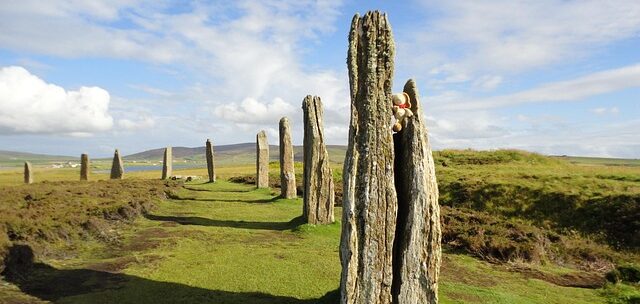
The Ring of Brodgar — built approximately 2500-2000 BC — is one of the substantial specific larger stone circles in the British Isles. Originally containing 60 substantial specific standing stones arranged in a substantial specific circle 104 metres in diameter, with a substantial specific surrounding earthwork ditch approximately 10 metres wide and 3 metres deep. Twenty-seven of the substantial specific original stones still stand today, plus several broken or fallen stones. The substantial specific Brodgar circle is the substantial specific third-largest stone circle in the British Isles (after Avebury and the substantial specific Great Circle at Stanton Drew), and one of the substantial specific largest surviving Neolithic stone circles anywhere. The substantial specific ring sits substantially between the two substantial specific lochs approximately 1.5 kilometres northwest of the Standing Stones of Stenness, with substantial specific views across the substantial specific ritual landscape to the substantial specific Ness of Brodgar and beyond. The substantial specific engineering — the substantial specific tallest stones rising to approximately 4.7 metres above ground, the substantial specific stone types (quarried from at least four different substantial specific locations on Orkney and possibly beyond), the substantial specific arrangement and alignment — represents substantial specific Neolithic ritual and engineering achievement.
The Maeshowe chambered tomb — built approximately 2800 BC — is one of the substantial specific finest chambered tombs in Northern Europe. The substantial specific structure consists of a substantial specific central chamber approximately 4.5 metres square with a substantial specific corbelled stone roof (built using the substantial specific dry-stone construction technique that also appears at the substantial specific Gallarus Oratory in Ireland, treated at Ep 63), three substantial specific side cells, and a substantial specific entrance passage approximately 11 metres long that is aligned so that the substantial specific setting sun on the winter solstice shines directly down the passage into the substantial specific central chamber for approximately three weeks each year. The substantial specific alignment is not accidental — it represents substantial specific deliberate astronomical engineering by the substantial specific Neolithic builders. The substantial specific stones used in the construction are substantial specific dressed stones (many weighing 10-30 tonnes each), transported from substantial specific quarries several kilometres away, and fitted together with substantial specific precision that has kept the substantial specific tomb structurally intact and substantially watertight for approximately 4,800 years. Maeshowe was substantially entered and looted by substantial specific Vikings in the 12th century — the substantial specific interior walls contain approximately 30 specific Norse runic inscriptions (the substantial specific largest single collection of Norse runic inscriptions in the British Isles), documenting the substantial specific Viking presence and providing the substantial specific inscriptions that give the substantial specific tomb one of its substantial specific most-discussed features: the substantial specific 12th-century Norse graffiti carved into a substantial specific 4,000-year-old Neolithic monument.
Skara Brae — the substantial specific Neolithic village on the western coast of Mainland Orkney — was continuously inhabited from approximately 3180 BC to approximately 2500 BC. The substantial specific village consists of eight substantial specific dry-stone houses, connected by substantial specific covered stone passages, buried substantially in specific mounds of midden material (accumulated domestic waste that substantially insulated the substantial specific houses). The substantial specific houses each contain substantial specific stone furniture built into the walls — substantial specific stone beds, substantial specific stone dressers (specific stone shelves used for storage and display), substantial specific stone hearths in the centre of each substantial specific room, and substantial specific stone drainage systems. The substantial specific drainage systems at Skara Brae — substantial specific stone-lined channels running beneath the substantial specific houses, connecting to substantial specific central drainage points — represent substantial specific engineering that was substantially more sophisticated than anything in substantial specific medieval European cities three thousand years later. The substantial specific village was substantially buried by substantial specific sand dune movement approximately 2500 BC and was substantially rediscovered in 1850 when a substantial specific storm exposed the substantial specific ruins. The substantial specific subsequent excavations (particularly Vere Gordon Childe’s excavations in the 1920s) revealed the substantial specific complete village with substantial specific everyday domestic artefacts preserved substantially in situ — the substantial specific stone furniture, substantial specific everyday tools, substantial specific decorated pottery (particularly the substantial specific Grooved Ware that was substantially invented in Orkney and later spread across substantial specific Neolithic Britain), and substantial specific ornaments including substantial specific bone pins and substantial specific stone beads. Skara Brae is one of the most complete surviving Neolithic villages in Northern Europe, and one of the substantial specific pieces of evidence that substantially reveals what everyday life in a substantial specific Neolithic community actually looked like.
The substantial specific Ness of Brodgar — the substantial specific Neolithic complex on the narrow isthmus between the Ring of Brodgar and the Standing Stones of Stenness — was only discovered in 2003 and has been under substantial specific active excavation since 2004. The substantial specific site contains substantial specific temple-complex structures dated to approximately 3300-2200 BC, including a substantial specific “great wall” enclosing an area approximately 2.5 hectares in size, substantial specific temple-like buildings with substantial specific decorated stones, substantial specific evidence of ritual feasting (with substantial specific animal bones from massive cattle-slaughtering events), substantial specific decorated pottery, and substantial specific artistic production including substantial specific stone carvings. The substantial specific Ness of Brodgar excavations have substantially transformed the archaeological understanding of Neolithic Orkney — the substantial specific site appears to have been a substantial specific ceremonial and religious centre of substantial specific importance, potentially attracting substantial specific pilgrims from across Neolithic Britain and possibly beyond. The substantial specific excavations concluded active field investigation in 2024 (the substantial specific project was scaled back for conservation reasons), but the substantial specific research substantially continues through substantial specific analysis of recovered materials.
Orkney’s Role in Neolithic Britain
The substantive claim about Orkney’s role in Neolithic Britain is worth naming carefully. Current archaeological consensus substantially supports the argument that Orkney was one of the centres of Neolithic monumental innovation in Britain — that substantial specific ideas about stone circles, chambered tombs, decorated pottery (Grooved Ware), and specific ritual practices developed substantially in Orkney and spread southward through subsequent contact and migration. The substantial specific Grooved Ware pottery — the substantial specific pottery style with substantial specific incised geometric decoration that was substantially invented in Orkney around 3200-3000 BC — subsequently spread across Neolithic Britain and became one of the substantial specific defining features of late Neolithic British material culture. The substantial specific stone circle tradition may have followed a similar trajectory — the substantial specific Stenness circle at 3100 BC substantially predates most other substantial specific British stone circles, and the substantial specific tradition may have spread from Orkney southward. This substantively reframes what most readers carry about prehistoric British cultural geography: Orkney is not the periphery inspired by the specific southern British centre; Orkney is one of the centres that inspired subsequent southern British development.
The substantial Norse period at Orkney — the article’s second substantive historical claim — extended from approximately 875 AD to 1468 AD, approximately 600 years of continuous Norse cultural presence. The substantial specific Norse arrival is documented in the substantial Orkneyinga Saga (compiled around 1200 AD by an anonymous Icelandic author, substantially documenting the Earls of Orkney across approximately 400 years of Norse rule). Norwegian Vikings substantially settled the islands during the 9th century — the substantial specific Norse settlement was not primarily a raiding operation but a substantial specific colonisation, with substantial specific families relocating from western Norway to Orkney and establishing substantial specific farms and settlements. King Harald Fairhair of Norway substantially annexed Orkney to the Norwegian crown around 875 AD, establishing the substantial specific Norse political structure that continued for approximately 600 years. Throughout this substantial specific period, Orkney was politically part of Norway (later Denmark-Norway after the substantial 1397 Kalmar Union), not Scotland — a substantial specific fact that most modern visitors do not carry.
The substantial specific Norse period substantially shaped Orkney’s specific cultural identity in ways that persist to the present. Approximately 90% of Orkney place names are Norse in origin — Kirkwall (from Old Norse Kirkjuvágr, “church bay”), Stromness (from Straumnes, “current point”), Hoy (from Háey, “high island”), Rousay (from Hrólfsey, “Rolf’s island”), and hundreds of specific others. The substantial specific Orkney dialect (called Orcadian) retains approximately 3,000 specific Norse loanwords not present in mainland Scottish English or Scots. Specific Norse legal and administrative traditions substantially continued through the substantial specific medieval period, with substantial specific lawthings (Norse assemblies) meeting substantially at Tingwall in Mainland Orkney into the medieval period. The substantial specific Christianisation of Orkney happened substantially through Norwegian rather than Scottish channels — the substantial specific Orkney bishopric was substantially part of the Norwegian church from approximately 1050 AD.
The substantial specific St Magnus Cathedral in Kirkwall is one of the substantial specific physical expressions of the Norse period. Built between 1137 and approximately 1300, the substantial specific cathedral was commissioned by Earl Rögnvald Kali Kolsson in 1137 to honour his martyred uncle, St Magnus Erlendsson (approximately 1080-1117), who had been substantially the co-Earl of Orkney and was substantially murdered by his cousin and rival Haakon Paulsson on the substantial specific island of Egilsay in 1117 during a substantial specific political dispute. The substantial specific St Magnus was subsequently canonised as a saint and became substantially the patron saint of Orkney. The substantial specific cathedral is genuinely one of the finest Norman-Romanesque cathedrals in Scotland — approximately 71 metres long by 17 metres wide across the nave, with substantial specific red and yellow sandstone construction, substantial specific Romanesque round-arched windows and doorways, and substantial specific Norman-influenced architectural detailing. The substantial specific cathedral is substantially unique in being built as a Norse cathedral (commissioned by a Norwegian Earl during Norwegian sovereignty) that only later became substantially Scottish after the substantial 1468 transfer of the islands. The substantial specific tomb of St Magnus is substantially preserved within one of the substantial specific cathedral pillars, discovered by substantial specific accident in 1919 during substantial specific restoration work.
The substantial specific transfer of Orkney to Scotland in 1468 was substantially not through conquest but through pledge. King Christian I of Denmark-Norway was substantially unable to pay the substantial specific dowry for his daughter Margaret’s marriage to King James III of Scotland (specifically 60,000 florins agreed as the marriage contract price), and substantially pledged Orkney (in 1468) and Shetland (in 1469) to the Scottish crown as substantial specific security against the substantial specific outstanding dowry. The substantial specific pledge was never redeemed, and the substantial specific islands became formally part of Scotland by substantial specific 1472 when the Scottish parliament substantially annexed the islands. This is a substantially unusual specific mechanism for territorial transfer in European history — Orkney became Scottish substantially through royal pawnshop transaction rather than through substantial specific conquest, purchase, or diplomatic treaty. The substantial specific consequence is that Orkney’s substantial specific transition from Norse to Scottish sovereignty was substantially administrative rather than substantially cultural — the substantial specific Norse cultural inheritance substantially continued for centuries after the substantial specific political transfer, with substantial specific Norse (or Norn — the substantial specific descended Norse dialect specific to Orkney and Shetland) substantially spoken in specific Orkney communities into approximately the 18th century.
Beyond the substantial Neolithic and Viking heritage, Orkney contains substantial specific 20th-century military history particularly concentrated at Scapa Flow. Scapa Flow is a substantial specific deep-water anchorage substantially south of Mainland Orkney, enclosed by Mainland Orkney to the north, Hoy to the west, and substantial specific smaller islands (Burray, South Ronaldsay, Flotta) to the east and south. The substantial specific anchorage — approximately 320 square kilometres of protected deep water, with approximately 15-40 metres depth — served as the substantial specific main British Home Fleet base during both World Wars. The substantial specific base substantially housed the substantial specific Grand Fleet during World War I and the substantial specific Home Fleet during World War II, with substantial specific naval activity substantially defining Orkney’s 20th-century history.
The substantial specific most famous event at Scapa Flow was the substantial June 1919 scuttling of the German High Seas Fleet. Following the substantial November 1918 armistice, the substantial specific German fleet (74 warships including 11 battleships and 5 battlecruisers) was substantially ordered to sail to Scapa Flow and remain there under British supervision pending the substantial specific Versailles negotiations. The substantial specific ships remained substantially interned at Scapa Flow for approximately seven months. On 21 June 1919 — believing (incorrectly) that the substantial specific armistice was about to expire without a peace treaty and that the substantial specific ships were about to be seized by the British — the substantial specific German Rear Admiral Ludwig von Reuter substantially ordered the German crews to scuttle their ships. Approximately 52 of the substantial specific German ships were substantially sunk (10 ships had already been transferred to British ports or successfully beached by British sailors during the substantial specific scuttling). The substantial specific event was substantially the largest single loss of warships in history, and the substantial specific wrecks substantially remain at the bottom of Scapa Flow today. Approximately 7 of the substantial specific major wrecks (particularly three substantial specific German battleships — SMS König, SMS Kronprinz Wilhelm, SMS Markgraf, and specific substantial cruisers) remain substantially in situ and are substantial specific major recreational diving destinations. The substantial specific salvaged German ship steel — being substantially free of atmospheric radioactive contamination (a substantial specific concern for post-World War II precision scientific instruments due to atomic weapons testing releasing substantial specific radioactive contamination into the atmosphere) — has been substantially valuable for specific scientific applications, and substantial specific salvage operations from Scapa Flow have supplied specific “low-background steel” for specific scientific instruments including specific Geiger counters and specific medical imaging equipment.
The substantial specific World War II history at Scapa Flow includes the substantial October 1939 sinking of HMS Royal Oak by German submarine U-47 (833 British sailors killed in the substantial specific attack, one of the substantial specific early Royal Navy losses of the war). Following the substantial specific attack, the substantial Churchill Barriers were substantially constructed between 1940 and 1944 — substantial specific concrete causeways connecting Mainland Orkney to Burray and South Ronaldsay, blocking the substantial specific eastern approaches to Scapa Flow to prevent further U-boat penetration. The substantial specific barriers were substantially constructed using Italian prisoner of war labour — approximately 500 substantial specific Italian POWs were substantially transferred to Orkney in 1942 and 1943 to work on the substantial specific barriers construction. The substantial specific POWs constructed the substantial Italian Chapel on the small island of Lamb Holm during 1943-1944 from two substantial specific Nissen huts (British military corrugated-iron prefabricated buildings) and substantial specific improvised materials, decorating the substantial specific interior with substantial specific elaborate trompe l’oeil paintings by the substantial specific POW artist Domenico Chiocchetti. The substantial specific chapel — approximately 15 metres long by 5 metres wide, with substantial specific painted interior including substantial specific vault frescoes, substantial specific altar decoration, and substantial specific chancel screen — is one of the most substantial specific 20th-century Italian art installations outside Italy. Chiocchetti substantially returned to Orkney in 1960 to substantially restore the substantial specific chapel, and again in 1964 for further restoration. The substantial specific chapel continues today as a substantial specific active place of worship and a substantial specific tourism destination.
The substantial specific natural landscape of Orkney includes the substantial specific dramatic Atlantic coastal cliffs, particularly on the western coast of Hoy. The substantial specific Old Man of Hoy — a substantial specific 137-metre sea stack on the western coast of Hoy, formed by substantial specific Atlantic erosion of the substantial specific Old Red Sandstone cliffs — is one of the substantial specific rock climbing challenges in the United Kingdom. The substantial specific stack was first substantially climbed by Chris Bonington, Rusty Baillie, and Tom Patey in July 1966 (in a substantial specific climb famously televised by the BBC in 1967, one of the substantial specific early television broadcasts of substantial specific outdoor adventure), and has substantially been climbed by hundreds of substantial specific climbers since. The substantial specific cliffs of Hoy — particularly St John’s Head at 335 metres, one of the substantial specific highest sea cliffs in the British Isles — provide substantial specific spectacular coastal scenery. The substantial specific bird colonies of Hoy and other Orkney islands include substantial specific concentrations of Atlantic puffins, guillemots, razorbills, fulmars, kittiwakes, and specific other seabird species. The substantial specific Rousay island — sometimes called “the Egypt of the North” due to substantial specific concentration of Neolithic tombs — contains substantial specific 15 substantial preserved chambered cairns including the substantial specific Midhowe cairn (approximately 5500 years old, approximately 30 metres long, containing 25 substantial specific stone stalls with 25 substantial specific human burials).
The contemporary Orkney combines substantial specific elements. Agriculture — particularly substantial specific beef and dairy farming, plus substantial specific sheep farming and specific arable farming — remains substantial specific significant, with Orkney beef substantially known as one of the substantial specific premium Scottish beef products (due to substantial specific pasture quality, substantial specific slow-growth conditions, and substantial specific animal welfare standards). Fisheries — particularly substantial specific white fish, shellfish, and salmon — remain substantially significant. Renewable energy production is substantial specific — Orkney generates substantially more renewable energy than it consumes (approximately 130% of consumption from renewables in recent years), making it one of the substantial specific renewable energy net exporters in Europe, with substantial specific wind power, substantial specific tidal power (with the substantial specific European Marine Energy Centre established in Orkney in 2003 as one of the substantial specific world’s leading marine renewable energy testing facilities), and substantial specific wave power all substantial specific contributing. Tourism receives approximately 250,000 visitors per year, substantial specific driven by the substantial specific archaeological sites, the substantial specific Viking heritage, the substantial specific Scapa Flow diving, and the substantial specific natural landscape.
The substantial specific cultural production of contemporary Orkney is substantial specific. The substantial St Magnus Festival — established 1977 by substantial specific composer Peter Maxwell Davies (who substantially lived in Orkney from 1971 until his death in 2016 and substantially composed substantial specific music inspired by the substantial specific island landscape and cultural heritage) — is a substantial specific classical music festival held annually in June, one of the substantial specific significant classical music festivals in Scotland. Substantial specific literary heritage — particularly substantial specific 20th-century Orkney literature — includes the substantial George Mackay Brown (1921-1996, born and substantially lived his life in Stromness, produced substantial specific poetry, short fiction, novels, and essays that substantially defined the 20th-century Orkney literary voice, including substantial specific An Orkney Tapestry 1969, substantial specific Greenvoe 1972, substantial specific Magnus 1973), Edwin Muir (1887-1959, born in Orkney, substantial specific poet whose substantial work substantially engaged with Orkney themes), and substantial specific contemporary writers including Amy Liptrot (born 1981, substantial specific The Outrun 2016, a substantial specific memoir of substantial specific recovery from addiction on Orkney, subsequently adapted for a substantial specific 2024 film). The substantial specific ongoing negotiations of contemporary Orkney life include substantial specific tensions common to substantial specific island communities: substantial specific housing pressure driven partly by substantial specific tourism development, substantial specific specific economic challenges of substantial specific remote location, substantial specific transport infrastructure (substantial ferry connections to mainland Scotland via Scrabster and Aberdeen, substantial air connections to Aberdeen and Edinburgh), and substantial specific ongoing engagement with substantial specific renewable energy development.
This is the deeper character of Orkney, and the article proposes to close on it. The archipelago is one of the substantial concentrations of Neolithic monumental architecture anywhere in the world, with substantial specific evidence that Orkney was a centre of Neolithic religious and cultural innovation approximately 500 years before Stonehenge — reversing the standard understanding of prehistoric British cultural geography. The Ring of Brodgar (2500-2000 BC), the Standing Stones of Stenness (3100 BC), the Maeshowe chambered tomb (2800 BC), and the Neolithic village of Skara Brae (3180-2500 BC) are inscribed together as UNESCO World Heritage since 1999. The ongoing Ness of Brodgar excavations (2004-2024) have substantially expanded the archaeological picture of Neolithic Orkney as a substantial ceremonial centre. Orkney was politically part of Norway rather than Scotland for approximately 600 years (approximately 875-1468 AD), and the substantial Norse cultural inheritance substantially persists in specific place names (approximately 90% Norse origin), specific dialect (approximately 3,000 Norse loanwords in Orcadian), specific administrative traditions, and specific physical monuments including St Magnus Cathedral in Kirkwall (built 1137-1300 by Norwegian Earls to honour Orkney’s martyred patron saint). The substantial 20th-century military history at Scapa Flow includes the substantial 1919 scuttling of the German High Seas Fleet (approximately 52 warships sunk in the substantial largest single loss of warships in history) and the substantial World War II Italian Chapel constructed by Italian POWs from two Nissen huts. The substantial natural landscape — particularly the substantial Old Man of Hoy sea stack and the substantial dramatic cliffs of Hoy — provides substantial specific coastal scenery. The contemporary Orkney combines substantial agriculture, substantial fisheries, substantial renewable energy production (approximately 130% of consumption from renewables, one of Europe’s substantial renewable energy net exporters), substantial tourism (approximately 250,000 visitors per year), and substantial cultural production. The specific islands function substantially as an integrated cultural landscape carrying approximately 8,500 years of continuous human occupation, with substantial specific physical evidence from every substantial major period preserved in specific locations across the archipelago.
Some places are peripheral to their nation’s story. This one predates the nation itself — the Neolithic monuments here were built approximately 5,100 years ago by builders whose specific ideas may have inspired Stonehenge; the substantial Norse rule here lasted approximately 600 years and ended only because a Danish king couldn’t pay his daughter’s dowry; the substantial German High Seas Fleet sits substantially at the bottom of Scapa Flow because German admirals substantially preferred sinking their own warships to seeing them captured. Orkney is a small Scottish archipelago that has been substantial for a long time. It has substantially been substantial for approximately five thousand years, in fact, which is longer than most substantial European cities have existed. Very few small European archipelagos carry this specific accumulated substantive inheritance across this specific temporal scale.
Nine regions. One hundred and twenty destinations. Two hundred and ninety-five weeks remaining.
The journey continues south back to the Scottish mainland. The next stop is Scotland’s substantial rural highland region — a mountain landscape shaped by substantial glacial action, home to substantial Gaelic cultural heritage and substantial whisky-producing distilleries, and the substantial traditional Scottish rural culture that has substantially defined external conceptions of Scottish national identity for approximately 250 years.
Where are you going?

Beyondia
Trusted Travel CompanionReal digital nomad. I travel. I learn. I grow.
What about you? Where are you going?