Around the World with Beyondia 🧵 Nordic & Western Europe Region 🪡 Journal 23
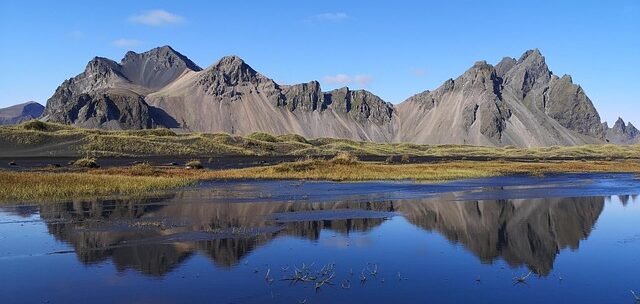
Reykjavik. The Westfjords. Akureyri. A capital city powered by the planet’s own heat, a peninsula so remote that most Icelanders haven’t been there, and a northern town where the sun circled the sky and refused to leave.
Iceland broke every rule I’d built over months of travel.
Every country so far had prepared me for the next one. Italy prepared me for Croatia. Spain connected to France. Britain connected to Ireland. Iceland connects to nothing. It sits in the middle of the North Atlantic on the Mid-Atlantic Ridge, the seam where the Eurasian and North American tectonic plates are pulling apart at two centimetres per year. The island is literally splitting in half. And on top of that split, 380,000 people built a country.
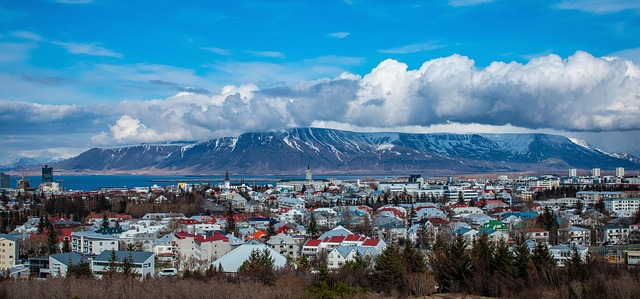
Reykjavik is the northernmost capital in the world, and it behaves like a village that accidentally became one.
I walked from my guesthouse to the city centre in twelve minutes. The entire downtown fits inside what most European cities would call a neighbourhood. Laugavegur — the main street — runs for about a kilometre, lined with shops, cafés, and restaurants painted in colours that feel deliberate against the grey sky. Reykjavik doesn’t have the monumental architecture of the capitals I’d walked through before. No medieval quarter. No imperial palaces. No Roman foundations. The oldest building in the city dates to 1762. Reykjavik is young by European standards, and it wears that youth like freedom rather than deficit.
Hallgrímskirkja stands above everything — the concrete church shaped like a basalt column formation, its tower visible from every part of the city. The design is based on the columnar basalt that forms when lava cools slowly, the same hexagonal patterns I’d later see at every waterfall and cliff face across the country. The architect, Guðjón Samúelsson, took his country’s geology and turned it into a church. The building doesn’t reference European Gothic or Baroque or Romanesque. It references Iceland. I took the elevator to the top and Reykjavik spread below me — low, colourful, surrounded on three sides by water and backed by mountains that were still holding snow in their creases. The city felt temporary in the best sense — like it was sitting lightly on the land, aware that the land was in charge.
The heat beneath Reykjavik is the thing that changed how I think about cities. Iceland generates nearly one hundred percent of its electricity from renewable sources — geothermal and hydroelectric. The hot water that comes out of every tap in Reykjavik smells faintly of sulphur because it comes directly from the earth, pumped from boreholes that reach into volcanic rock. The city’s pavements are heated from below to melt snow. The swimming pools — and Reykjavik has swimming pools the way other cities have cafés — are filled with naturally hot water and are open year-round, because Icelanders don’t treat swimming as a summer activity. They treat it as a civic ritual. I swam in the Vesturbæjarlaug pool on a grey afternoon, the water at 40 degrees, the air at 8, and the steam rising off the surface was the same steam that rises off the lava fields. The city runs on the same energy that built the island. There is no gap between the infrastructure and the geology. They’re the same system.
I went to the Harpa concert hall on the harbour — a glass and steel structure designed by Ólafur Elíasson, its façade made of geometric glass panels that change colour with the light and the weather, which in Reykjavik means the building looks different every hour. Inside, the national symphony plays, opera is staged, conferences are held. A country of 380,000 people built a world-class concert hall on the edge of the Arctic, and the building is named after a word that means both a musical instrument and a type of lava. Iceland doesn’t separate culture from the ground it stands on. It can’t. The ground won’t let it.
I ate lamb soup — kjötsúpa — in a café where the bowl was bigger than my head and the lamb had been raised on grass and wild thyme on hills I could see from the window. Icelandic lamb is unfenced. The sheep roam free all summer across the highlands and are rounded up in autumn in a communal gathering called réttir that has been happening since the settlement age. The flavour is different from any lamb I’ve had — wilder, more herbal, tasting of the landscape in a way that isn’t poetic but literal. The sheep eat what grows. What grows is specific to Iceland. The lamb tastes like Iceland because it ate Iceland.
I had fermented shark — hákarl — at a bar in the harbour because someone told me I should and because refusing felt like cowardice. Greenland shark, buried for months, fermented, cubed, served on a toothpick. The smell hit before the taste. Ammonia. Sharp, eye-watering, physically aggressive. The taste was milder than the smell but still unlike anything I’ve consumed voluntarily. I followed it with a shot of brennivín — the caraway-flavoured schnapps Icelanders call the Black Death — and the combination made a strange kind of sense. Both exist because preservation was survival. In a country with no trees for smoking, limited salt, and winters that lasted half the year, fermentation wasn’t cuisine. It was engineering. The food I was eating was a technology developed by people who needed to not die, and the fact that it became tradition tells you everything about what Icelanders do with adversity. They eat it.
The Westfjords broke something I didn’t know could break — my sense of scale.
I drove north and west from Reykjavik and the country emptied. The ring road gave way to smaller roads. The smaller roads gave way to gravel. The gravel gave way to single-track paths clinging to the edges of fjords so deep and narrow that the mountains on the far side felt close enough to touch but were kilometres away. The Westfjords are a claw-shaped peninsula in the northwest corner of Iceland, connected to the rest of the country by a neck of land seven kilometres wide. Around ten percent of Iceland’s landmass. Less than one percent of its population. Most Icelanders I spoke to in Reykjavik had never been.
The drive to Ísafjörður — the largest town in the Westfjords, population roughly 2,600 — took longer than it should have because every fjord required driving in and then back out, the road tracing the waterline, the mountains above, the sea below, and the silence so complete I turned off the radio because it felt like an interruption. The Westfjords don’t have the famous landmarks — no Gullfoss, no Geysir, no Jökulsárlón. What they have is absence. The absence of people, of noise, of anything that suggests the 21st century is aware this place exists.
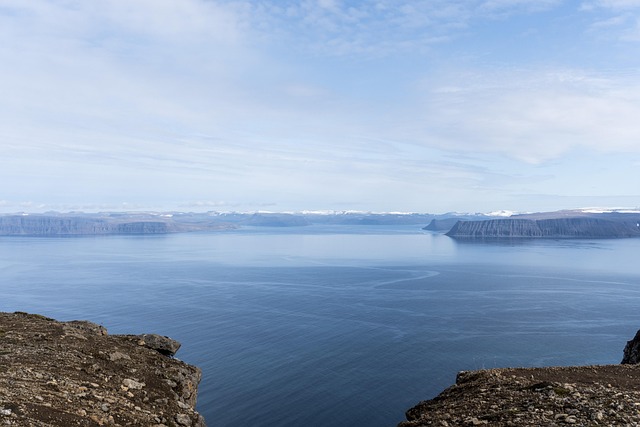
I reached Látrabjarg — the westernmost point of Europe — and stood on the edge of a cliff that drops 441 metres to the Atlantic. The cliff stretches for fourteen kilometres and is home to millions of seabirds. Puffins nested in burrows at my feet, close enough to photograph without a zoom, unbothered by my presence because in the Westfjords, humans are the unusual species. The puffins were ridiculous and dignified simultaneously — small, overdressed, flying with a wing speed that looked like panic but was apparently just their design. They’d dive into the sea, resurface with fish stacked crosswise in their beaks, and waddle back to their burrows. I watched them for an hour and it was the most entertained I’d been since Doolin.
Dynjandi — the waterfall in the southern Westfjords — is a thing I don’t have adequate words for. The river drops in a broad cascade, widening as it falls, shaped like a bridal veil or a trapezoid, one hundred metres of freefall that fans from a narrow top to a wide base. Below the main fall, five more cascades step down to the fjord. I hiked to the base and the mist soaked me and the sound filled the valley and I stood there understanding that this waterfall exists in one of the least visited corners of one of the least populated countries in Europe, doing this, every day, for thousands of years, with no audience. Dynjandi doesn’t need me. Nothing in the Westfjords does. That’s the point. The beauty is not performed. It is simply happening, and you are either there for it or you aren’t.
I stayed in a farmhouse in Heydalur — a geothermal valley where a hot spring feeds a small outdoor pool surrounded by nothing but grass and mountains. I sat in the water at eleven at night and the sky was still bright. Not twilight — bright. The sun was low but present, turning the valley gold, and the only sound was the water and a horse standing in a field across the river, watching me with the patient indifference that Icelandic horses have perfected over a thousand years. This was the moment on the entire journey — all the countries, all the cities, all the cathedrals and markets and cliffs — when I felt most completely present. Warm water. Cold air. No sound. No schedule. No one.
Akureyri was the north, and the north had its own rules.
I arrived in Iceland’s second city — population 19,000, which tells you everything about Iceland’s sense of proportion — and the sun was circling. Not rising and setting. Circling. In June, the sun in northern Iceland doesn’t set. It dips toward the horizon, hovers, changes its mind, and climbs again. Midnight sun isn’t a metaphor. It’s a scheduling problem. My body didn’t know when to sleep. The light didn’t give permission. Akureyri at midnight looked like Akureyri at noon, only quieter, and the confusion was physical — a jet lag caused not by distance but by the planet’s tilt.
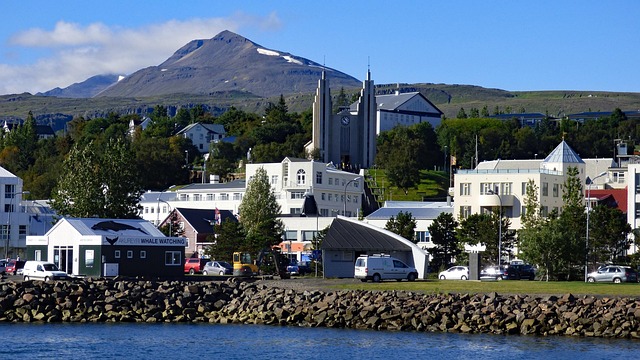
The town sits at the head of Eyjafjörður — Iceland’s longest fjord, sixty kilometres of water framed by mountains — and the setting is gentler than the Westfjords. Akureyri has trees. That sounds unremarkable until you’ve driven through a country where trees are so rare that the joke goes: if you’re lost in an Icelandic forest, stand up. The botanical garden — the northernmost in the world — grows species that have no business surviving at this latitude, sheltered by the fjord and the town’s microclimate. Akureyri is Iceland’s proof that stubbornness and geography can produce exceptions.
I drove to Goðafoss — the Waterfall of the Gods — thirty minutes from town. In the year 1000, the lawspeaker Þorgeir Ljósvetningagoði made the decision that Iceland would convert to Christianity. According to the sagas, he threw his carved statues of the Norse gods into this waterfall to seal the decision. A country changed its religion and marked the moment by throwing its old gods into water. The waterfall is wide, curved, turquoise-blue, and powerful without being violent. I stood on the rim and thought about the weight of the act — not just the conversion, but the choice of this place to do it. Þorgeir understood that some decisions need a location that matches their scale. Goðafoss is that location.
I drove further east to Mývatn — the lake of midges — where the landscape turned volcanic again. Pseudocraters formed by steam explosions when lava flowed over wetland. Mud pots bubbling at Hverir, the stench of sulphur so strong it was almost a flavour. Lava formations at Dimmuborgir — the Dark Castles — where cooled lava has been eroded into arches, pillars, and chambers that Icelandic folklore populated with trolls and hidden people. I walked through them in the midnight light and the shadows didn’t behave normally because the sun was at the wrong angle for shadows. Everything looked shifted. Familiar shapes in unfamiliar light. Iceland at midnight is the same country as Iceland at noon, but it doesn’t feel like it. The light rewrites the place.
I ate Arctic char at a restaurant in Akureyri — pulled from a river that morning, pan-fried in butter, served with potatoes and a simplicity that felt like respect. Skyr with blueberries for dessert — the cultured dairy product that Icelanders don’t call yogurt because it isn’t, it’s closer to a fresh cheese, thick, tangy, high in protein, developed over a thousand years of making do with what the cows and the climate provided. Icelandic food is survival food that became comfort food without changing the recipe. The constraint was the creativity.
I stood on the shore of Eyjafjörður at one in the morning and the sun was above the mountains on the far side, painting the fjord in colours that don’t exist at normal hours — pink, copper, silver, a blue that was closer to white than to any blue I’ve seen at sea level. The water was still. The mountains were still. The town behind me was still. And the sun just sat there, low and golden, refusing to set, holding the day open like it had something left to say.
Three stops. A capital the size of a neighbourhood that heats its pavements with volcanic energy and treats swimming pools as democratic infrastructure. A peninsula so empty that the waterfalls perform for no one and the cliffs hold millions of birds but almost no people. A northern town where the sun forgets to set and a waterfall holds the old gods at the bottom of its pool.
Iceland isn’t a country. It’s a negotiation between humans and a planet that hasn’t finished forming. The lava is still cooling. The plates are still moving. The glaciers are still carving. And 380,000 people looked at all of it and said the Icelandic equivalent of ejebiga — this will do, this rock in the middle of the ocean, this island that’s still being built. We’ll take it.
The Nordic chapter opens here. And Iceland already feels like the planet cleared its throat and said something important that I’m still trying to hear.
Beyondia
Trusted Travel CompanionReal digital nomad. I travel. I learn. I grow.
What about you? Where are you going?