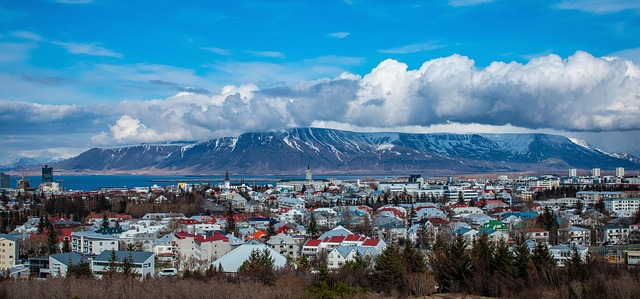
🌐 Around the World with Beyondia 🧵 Nordic & Western Europe Region 🪡 Episode 67: Reykjavik
Reykjavík is the capital and largest city of Iceland. It sits on the southwestern coast at Faxa Bay (Faxaflói). It lies about 40 kilometers west of Thingvellir and about 50 kilometers from Keflavík International Airport.
The commune population is about 140,000. The Greater Reykjavík Metropolitan Area reaches about 240,000 people. This area contains roughly two-thirds of Iceland’s total population of about 400,000. It is the world’s northernmost sovereign capital city, at about 64.13 degrees north. It lies roughly 240 kilometers south of the Arctic Circle. The substantial daylight variation includes about 21 hours of daylight in midsummer and about 4 hours in midwinter.
Origins of Reykjavík
Iceland’s foundational history centers on the Norse settlement of the previously uninhabited island. Before Norse arrival, Iceland hosted Irish monks (papar) who established small hermitages in the 8th and 9th centuries. The early monastic tradition in Iceland linked to Ireland extended to the North Atlantic. When Norse settlers arrived, many monks departed, unwilling to live with the pagan Norse. The site later known as reykjavik began its Norse settlement around 874 AD. Ingólfur Arnarson, a Norwegian chieftain, established the first permanent Norse settlement there.
The name of the city translates to ‘Smoky Bay’ or ‘Bay of Smokes’ and refers to steam from geothermal springs. This etymology reveals the site’s distinctive geography and ongoing geothermal activity shaping it about 1,150 years after its Norse founding. Its enduring heat continues to shape the area.
The substantial Icelandic Commonwealth period (930-1262 AD) was unusual in medieval European history. Iceland operated as a substantial independent republic without a monarch. This arrangement was rare for medieval Europe, where most territories were organized under royal or ducal authority.
Iceland’s system consisted of about 36 regional chieftaincies (goðorð), each with goði authority over followers. The Althing, established at Thingvellir in 930 AD, met to make laws, adjudicate disputes, and settle conflicts. In reykjavik today, such gatherings echo the open assembly tradition.
The Althing was legislative, judicial, and social at once. It met for about two weeks each summer. Booths (booths) were erected for each chieftaincy. The most consequential decision was around 999 or 1000 AD. Christianity became Iceland’s state religion by consensus.
The substantial Commonwealth period produced substantial specific literary output — the substantial specific Icelandic sagas that were substantially composed in the 13th-14th centuries about the substantial specific Commonwealth period events. The substantial specific Íslendingasögur (Sagas of Icelanders) include specific works like Njáls saga (approximately 1280 AD, substantially considered one of the specific greatest works of medieval European literature, documenting substantial specific feuds and legal disputes in the specific southern Icelandic Commonwealth), Egils saga (approximately 1230 AD, attributed sometimes to Snorri Sturluson, documenting the substantial specific life of the substantial specific 10th-century Icelandic warrior-poet Egill Skallagrímsson), Laxdæla saga (approximately 1280 AD, documenting substantial specific family history in western Iceland), Grettis saga (approximately 1310-1320 AD, documenting the substantial specific outlaw Grettir the Strong), and dozens of specific others. The substantial specific Prose Edda by Snorri Sturluson (approximately 1220 AD) is the substantial specific primary source for Norse mythology as we now know it — Snorri’s substantial specific work systematically documented the substantial specific stories of Odin, Thor, Loki, and the substantial specific Norse pantheon, providing the substantial specific literary foundation for essentially all subsequent European engagement with Norse mythology. Without Snorri’s substantial specific work, substantial specific Norse mythological tradition would substantially have been lost during the specific Christianisation period. The substantial specific Poetic Edda (compiled approximately 1270 AD from substantially older oral tradition) provides substantial specific poetic sources for the same substantial Norse mythological content.
The substantial Commonwealth period ended in 1262 AD when substantial specific political crisis and civil war (the substantial specific Sturlung Era, approximately 1220-1264 AD) led substantially the Icelandic chieftains to accept substantial Norwegian sovereignty under the substantial Old Covenant (Gamli sáttmáli). Iceland became substantially part of the Kingdom of Norway from 1262-1380, then substantially part of the Kingdom of Denmark-Norway from 1380 (through the substantial Kalmar Union that unified the Scandinavian kingdoms), and specifically substantially remained under Danish sovereignty when the substantial Kalmar Union dissolved in 1523. Denmark ruled Iceland substantially from 1380 until 1944 — approximately 564 years of substantial Danish sovereignty. During this substantial specific period, Iceland experienced substantial specific challenges: substantial specific plague epidemics in the 15th century (with substantial specific population losses of approximately 50-60% during specific major outbreaks), substantial specific commercial restrictions (particularly the substantial Danish trade monopoly of 1602-1787 that substantially restricted Icelandic commerce to specific Danish merchants), substantial specific volcanic disasters (particularly the substantial 1783-1784 Laki eruption that killed approximately 25% of the Icelandic population through toxic gas release and subsequent famine), and substantial specific population stagnation (with Iceland’s population substantially remaining at approximately 40,000-60,000 for approximately 400 years while other European populations grew substantially). The substantial specific consequence was that Iceland substantially entered the 19th century as one of the poorest European countries, with substantial specific population barely recovered from earlier crises.
The substantial 19th century brought substantial specific Icelandic national revival — a substantial specific Romantic-era nationalist movement that substantially demanded political autonomy, cultural revival, and eventual independence. The substantial specific leader was Jón Sigurðsson (1811-1879), an Icelandic scholar and politician whose substantial specific advocacy substantially shaped Icelandic nationalism. Iceland gained substantial specific home rule in 1874 (with a substantial constitution granted by Danish King Christian IX), substantial specific extended autonomy in 1904, substantial specific status as an independent kingdom under the Danish crown (the substantial Union of 1918), and substantial specific full independence as a republic on 17 June 1944 (the substantial specific 133rd birthday of Jón Sigurðsson, deliberately chosen as the substantial specific independence date). The substantial specific 1944 independence referendum produced substantial specific 97% support for independence and 95% support for republican rather than monarchical government — one of the specific highest support levels in any modern European independence referendum. The substantial specific consequence was that Iceland has been substantially independent for approximately 81 years and has been a substantial specific republic without a monarchy for the same period.
The substantial 20th and 21st century transformation of Iceland was substantially rapid and substantially dramatic. Iceland substantially entered the 20th century as a substantial specific rural, agrarian, fishing-based society with approximately 78,000 total population, most of it distributed across substantial specific rural farmsteads. Iceland substantially entered the 21st century as one of the more urbanized European countries, with approximately two-thirds of the population living in the substantial Greater Reykjavík area, one of the highest per-capita GDPs in the world, and substantial specific integration into European and Nordic economic and political institutions (though notably not the European Union — Iceland is a substantial member of the European Free Trade Association and the European Economic Area, but not the EU, providing substantial specific access to European markets while retaining substantial national policy autonomy).
The substantial specific transformation of Reykjavík itself has been substantially dramatic. In 1900, Reykjavík was substantially a small town of approximately 6,700 residents, with substantial specific buildings concentrated in a small central area between the specific Tjörnin lake and the specific harbor. By 1950, the substantial specific population had reached approximately 44,000. By 2000, approximately 110,000. Currently approximately 140,000. The substantial specific tripling of population between 1950 and today reflects substantial specific factors: the substantial specific 20th-century rural-to-urban migration that reshaped substantially most European countries; the substantial specific post-1945 economic modernization of Iceland driven by fisheries expansion, geothermal energy development, and (from the 1990s onward) tourism; and the substantial specific ongoing consolidation of Icelandic national population into the Greater Reykjavík area.
The substantial specific consequence is that Reykjavík is a substantially young European capital — most of the built environment postdates 1950, and the substantial specific historic architecture is concentrated in a specific small central area (Old Reykjavík, roughly the specific area between Tjörnin lake and the harbor) with substantial specific 18th-19th century buildings. The substantial specific Old Reykjavík area — approximately 1 square kilometer — contains the substantial specific Alþingishúsið (Parliament House, built 1880-1881, one of the substantial specific 19th-century Icelandic Romantic-nationalist buildings), the substantial specific Dómkirkjan (Reykjavík Cathedral, the substantial main Lutheran cathedral, built 1787-1796), the substantial specific Menntaskólinn í Reykjavík (Reykjavík Junior College, one of the substantial specific 19th-century educational institutions), the substantial specific Tjörnin lake (the specific ornamental lake at the center of Old Reykjavík, providing substantial specific urban character), the substantial specific Ingólfstorg square, and the substantial specific 18th-century Governor’s residence (Stjórnarráðið, currently the substantial specific Prime Minister’s office). The substantial specific area is substantially walkable in an afternoon.
Beyond Old Reykjavík
Beyond Old Reykjavík, the substantial specific 20th-century built environment includes the substantial Hallgrímskirkja (the substantial specific Lutheran parish church, designed 1937 by substantial specific Icelandic State Architect Guðjón Samúelsson, constructed 1945-1986, with a substantial specific 74-metre tower that is one of the substantial specific tallest buildings in Iceland and provides substantial specific panoramic views over Reykjavík). The substantial Harpa (the substantial specific concert hall and conference center, opened 2011, designed by substantial specific Danish firm Henning Larsen Architects with substantial specific glass façade by artist Ólafur Elíasson, one of the substantial specific 21st-century Icelandic architectural achievements). The substantial specific Perlan (the substantial specific dome-topped observation building and museum, constructed 1988 on top of substantial specific geothermal hot water storage tanks, providing substantial specific panoramic views and substantial specific exhibitions on Icelandic nature and volcanology). The substantial specific Höfði (the substantial specific historic residence that was the substantial specific site of the 1986 Reagan-Gorbachev summit that substantially contributed to the end of the Cold War, currently used as a substantial specific Reykjavík Municipal Council reception building).
The substantial specific volcanic and geothermal character of Iceland substantially shapes Reykjavík’s specific identity. Iceland sits on the substantial Mid-Atlantic Ridge — the substantial specific boundary between the North American and Eurasian tectonic plates, which are actively pulling apart at approximately 2 centimetres per year across the substantial specific rift zone that runs through central Iceland from north to south. The substantial specific consequence is that Iceland experiences substantial ongoing volcanic activity: approximately 30 substantial specific active volcanic systems, with substantial major eruptions occurring on average every 3-5 years, and substantial specific geothermal activity across substantial specific regions. The substantial specific Reykjanes Peninsula — the specific region immediately west of Reykjavík where the substantial specific Keflavík International Airport is located — has experienced substantial specific ongoing volcanic activity since 2021, with substantial specific eruptions in specific 2021, 2022, 2023, 2024, and specific 2025, producing substantial specific lava fields and specific evacuation of substantial specific communities including the substantial specific town of Grindavík. This specific ongoing volcanic activity reminds substantial residents and visitors that Iceland is substantively one of the geologically active places on Earth.
Geothermal energy in Reykjavik
In reykjavik, geothermal energy heats most buildings. Iceland uses geothermal energy for about 90% of building heating. It accounts for about 70% of total energy use when hydroelectric power is included.
The district heating system draws hot water from geothermal fields around the city, Nesjavellir about 25 kilometers east. It also uses Hellisheiði about 30 kilometers east and distributes heat through insulated pipelines. The system provides space heating and hot water to essentially every building.
This results in one of the lowest per-capita heating emissions in Europe. It also ranks among the cleanest urban air qualities in Europe.
The Blue Lagoon (Bláa Lónið, opened as a public spa in 1992) is a byproduct of the Svartsengi Geothermal Power Station. Mineral-rich runoff water accumulated in a lagoon that was found to have therapeutic properties. This site became a major Icelandic tourism attraction.
The substantial Golden Circle tourism route — the substantial specific approximately 300-kilometer driving circuit from Reykjavík — connects the substantial three most-visited natural and historical landmarks in Iceland. The substantial specific first stop is Thingvellir (Þingvellir), the substantial specific rift valley approximately 45 kilometers northeast of Reykjavík where the substantial Althing was established in 930 AD, and where the substantial specific tectonic plate boundary is visible as a specific dramatic geological feature — visitors substantially walk between the two tectonic plates, with substantial specific cliffs on both sides representing the actively separating North American and Eurasian plates. The substantial specific Thingvellir was inscribed as a UNESCO World Heritage Site in 2004 for its substantial constitutional and geological significance. The substantial second stop is the substantial Geysir geothermal area — the substantial specific location of the original Geysir (which gave its name to the substantial English word “geyser”) and the substantial specific Strokkur geyser that erupts approximately every 5-10 minutes to substantial specific heights of approximately 20-30 metres. The substantial third stop is Gullfoss (the “Golden Falls”) — a substantial specific two-tiered waterfall on the Hvítá river with substantial specific water flowing approximately 140 cubic metres per second over the substantial specific approximately 32-metre total drop, one of the substantial specific most-photographed waterfalls in Iceland. The substantial Golden Circle route is substantially completed as a day trip from Reykjavík, and receives substantial specific tourism traffic — approximately 1.5 million visitors per year across the substantial three sites collectively.
The substantial contemporary Icelandic music scene is one of the substantial specific per-capita disproportionate cultural sectors. Björk Guðmundsdóttir (born 1965 in Reykjavík) has substantial specific international career from 1993 onward (following substantial specific earlier career with the substantial specific Icelandic band The Sugarcubes 1986-1992), with substantial specific commercial and critical recognition across substantial specific electronic, art pop, and experimental music. Sigur Rós (formed 1994 in Reykjavík) produced substantial specific post-rock music that substantially reshaped substantial specific European and American independent music, with substantial specific albums including Ágætis byrjun (1999), ( ) (2002), and specific others substantially recognised internationally. Of Monsters and Men (formed 2010 in Reykjavík) produced substantial specific indie folk music with substantial specific international commercial success including specific My Head Is an Animal (2011). Ólafur Arnalds (born 1986) is substantial specific contemporary composer producing substantial specific modern classical and electronic music. Dozens of substantial specific additional Icelandic musicians and bands contribute to the substantial specific music sector. The substantial specific per-capita music production of Iceland substantially reflects specific cultural factors including substantial specific state investment in music education, substantial specific rural traditions of communal music-making, and substantial specific creative infrastructure in Reykjavík. The substantial specific Iceland Airwaves festival (established 1999, held annually in November) is the substantial specific main Icelandic music showcase festival, providing substantial specific international exposure for Icelandic musicians.
The Contemporary Reykjavík
The contemporary Reykjavík is substantially a working capital city. The substantial specific Icelandic economy substantially depends on fisheries (approximately 40% of goods exports, though declining share as tourism grows), tourism (approximately 30% of total foreign exchange earnings, having grown substantially since approximately 2010), aluminum smelting (approximately 15% of goods exports, powered substantially by cheap Icelandic hydroelectric electricity), and financial services (with substantial specific recovery from the substantial 2008 financial crisis that substantially destroyed the substantial Icelandic banking sector). The substantial specific 2008 financial crisis was substantially transformative — Iceland’s three main banks (Kaupthing, Landsbanki, Glitnir) substantially collapsed in October 2008 with substantial specific combined assets approximately 10 times Iceland’s GDP, producing the substantial largest banking collapse relative to GDP in modern history. The substantial specific consequence was substantial specific economic crisis, substantial specific political crisis (with substantial specific mass protests — the substantial specific “Pots and Pans Revolution” — leading to substantial specific government resignation in early 2009), substantial specific IMF assistance, and substantial specific recovery process. Iceland substantially recovered by approximately 2015, with substantial specific tourism providing substantial specific economic diversification. The substantial specific ongoing negotiations of contemporary Reykjavík life include substantial specific housing pressure driven by tourism development, substantial specific tensions between preservation of Icelandic character and specific accommodation of substantial international tourism, and substantial specific ongoing debates about specific development policy.
This is the deeper character of reykjavik. The city is the world’s northernmost sovereign capital. It sits on the boundary between the North American and Eurasian tectonic plates. Geothermal energy from volcanic activity powers much of the area.
It is the political capital of the country. It has the world’s oldest continuous parliamentary tradition—the Althing. It was established at Thingvellir in 930 AD. It met continuously for about 1,095 years, with one interruption from 1799 to 1845. This predates the English Parliament by about 335 years.
Iceland was an independent Commonwealth from 930 to 1262 AD. It then endured Norwegian sovereignty from 1262 to 1380. It later came under Danish sovereignty from 1380 to 1944, and has been independent since 1944. The Icelandic sagas, written in the 13th and 14th centuries, represent a major medieval tradition. Snorri Sturluson’s Prose Edda, written about 1220 AD, is a key source for Norse mythology. The 20th century transformed Iceland from a rural fishing society. It became an urban nation with high per-capita GDP.
Some capital cities exist because of political decisions to place them at specific geographical points. This one exists because a Norwegian chieftain named Ingólfur Arnarson arrived at a specific bay in approximately 874 AD, observed substantial steam rising from natural hot springs, and named the location “Reykjavík” — Smoky Bay. Approximately 1,150 years later, the substantial specific bay is now the political capital of a substantially independent nation of approximately 400,000 people, the substantial oldest continuous parliament in the world still meets in the substantial specific city center, the substantial specific geothermal steam that gave the location its name still substantially heats every building in the city, and the substantial specific tectonic plates that shaped the substantial specific volcanic geology are still actively pulling apart at approximately 2 centimetres per year approximately 45 kilometers northeast of the city center. Very few capital cities carry this specific accumulated substantive continuity across this specific temporal scale. Very few sit substantially where the earth itself is still actively being made.
Nine regions. One hundred and twenty destinations. Two hundred and ninety-four weeks remaining.
The journey continues east across the Norwegian Sea. The next stop is a substantial specific Scandinavian country — a mountainous Nordic nation stretching approximately 1,750 kilometers from north to south, with substantial specific fjord landscapes shaped by substantial glacial action, substantial specific medieval history that includes the substantial Norse settlement that reached across the North Atlantic to Iceland and beyond, and substantial specific contemporary character that combines substantial oil wealth with substantial specific social democratic tradition.
Where are you going?

Beyondia
Trusted Travel CompanionReal digital nomad. I travel. I learn. I grow.
What about you? Where are you going?